
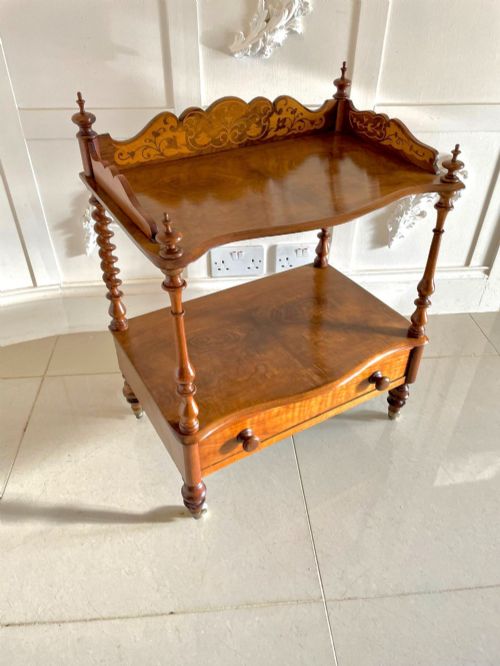

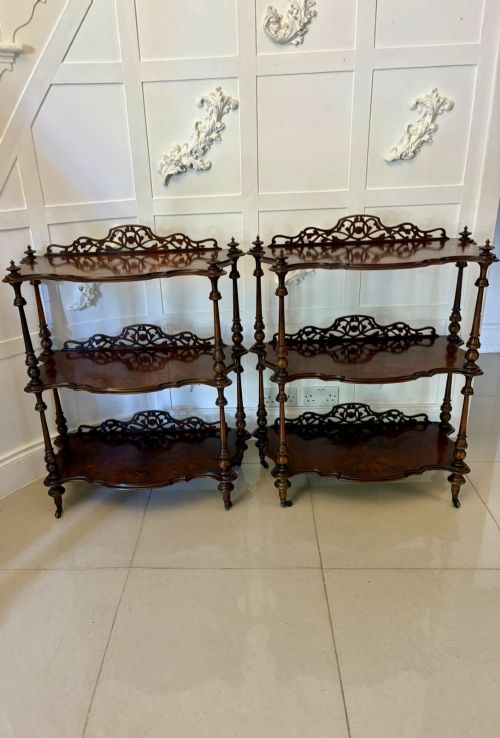
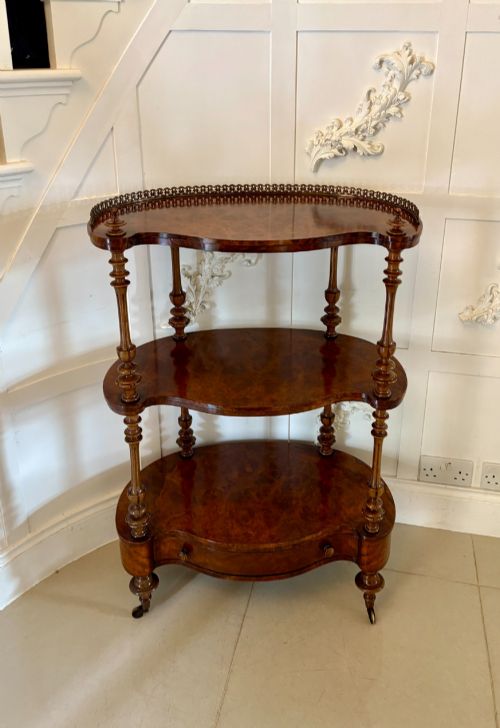
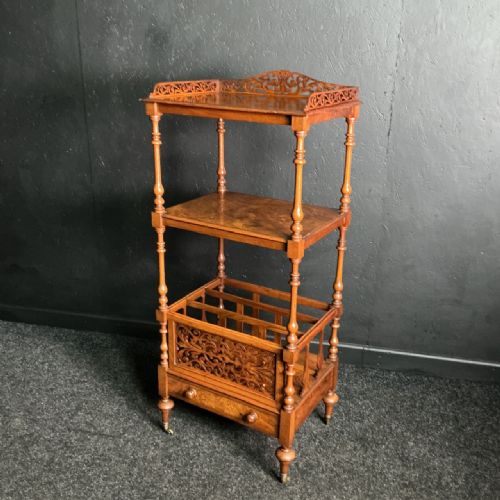


Walnut Tiered Etagere
A walnut tiered etagere brings layered display space and rich nineteenth-century grain to a room.
Walnut Tiered Etagere
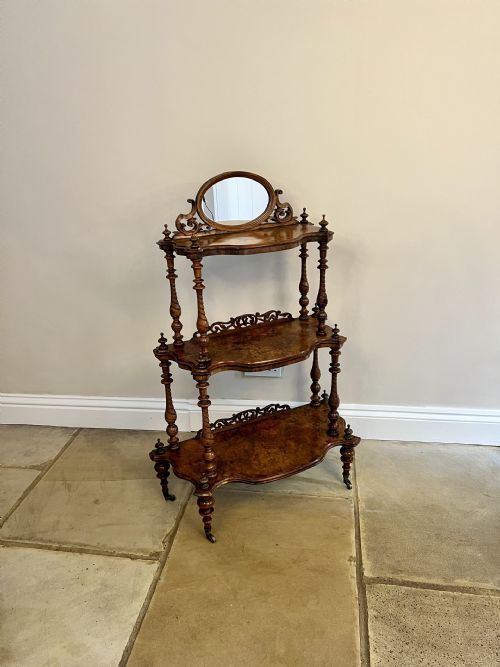
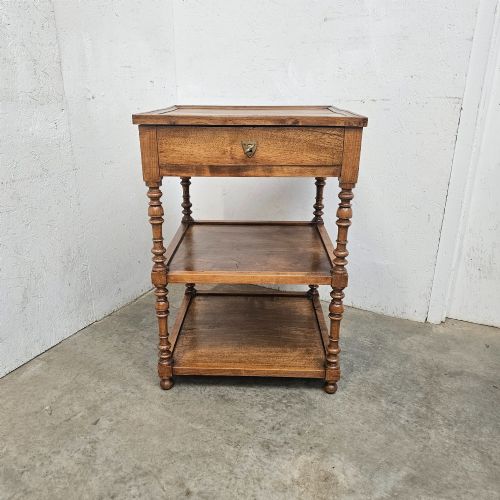
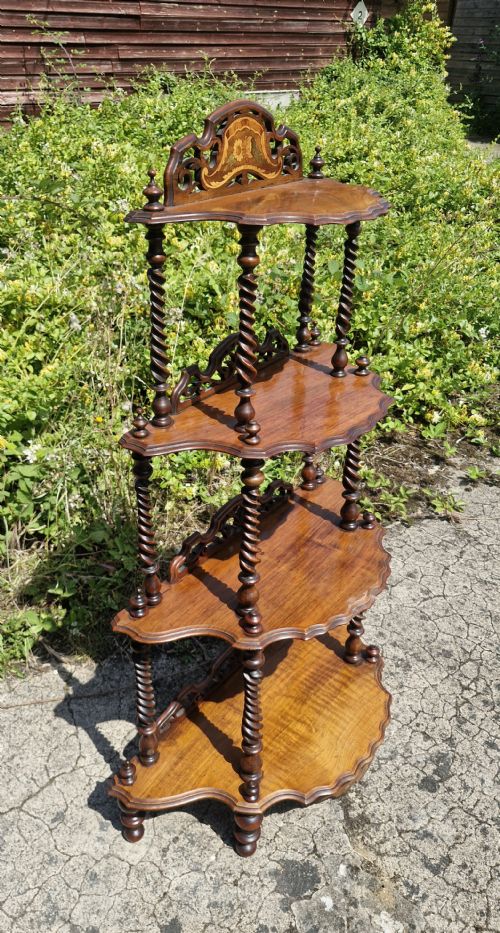
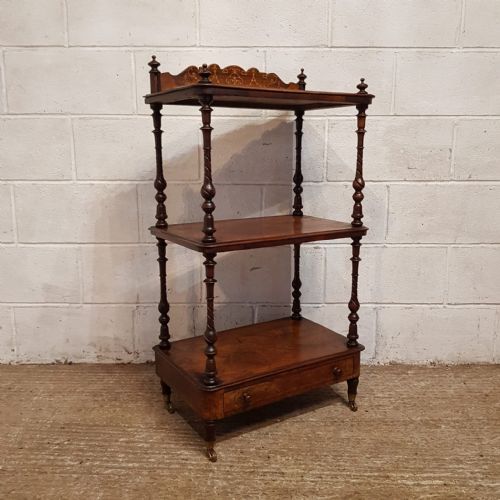
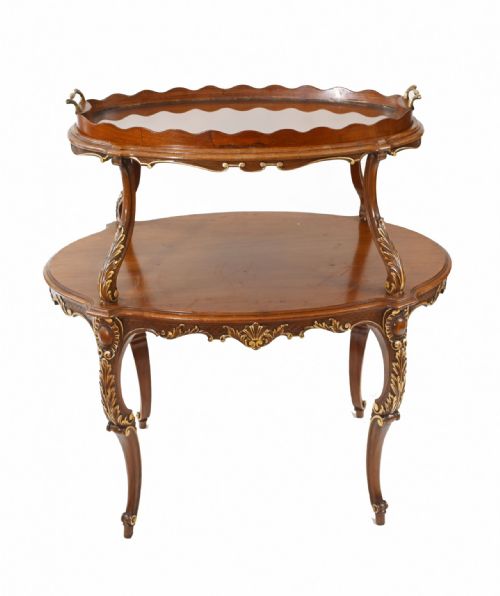
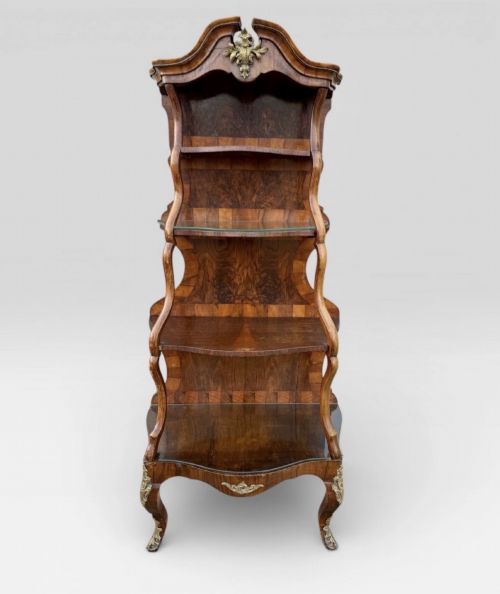
When you search for walnut tiered etagere, you are looking at multi-shelved display furniture designed for books, ornaments, and cabinet pieces. The examples seen here appear most frequently as nineteenth-century Victorian whatnots, alongside French and Italian tiered tables and wall shelves.
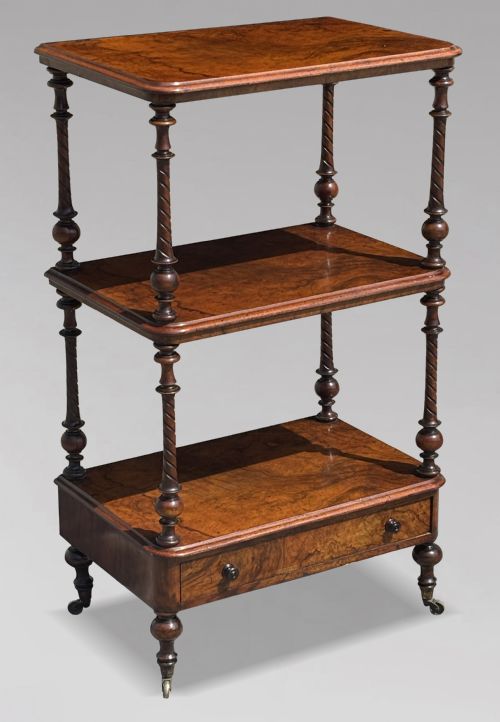
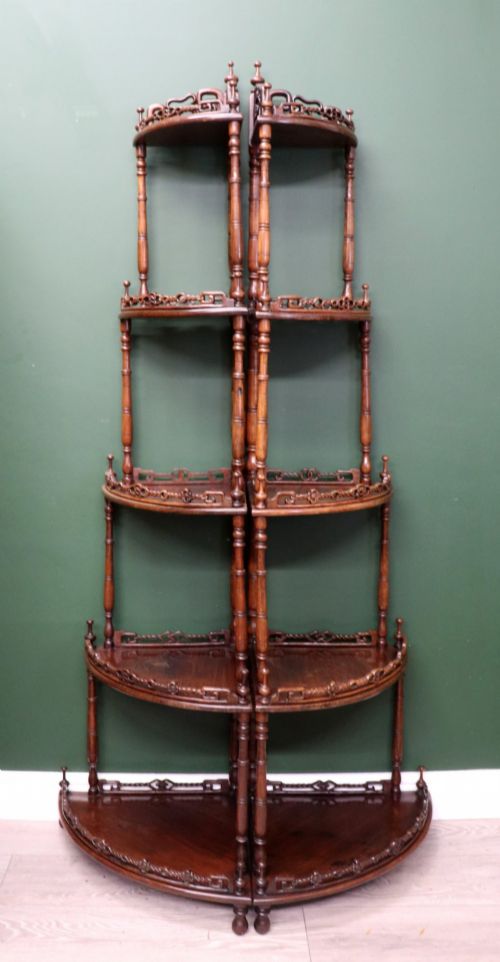
The forms range from serpentine freestanding three-tier stands and corner units to hanging cabinets and diminutive side tables. Walnut and burr walnut dominate the selection, often accompanied by open shelves supported on turned columns or brass mounts.
How they were made
Cabinet makers utilised figured burr walnut veneers to cover primary carcases, laying out swirling grain patterns across the main display surfaces. Marquetry inlay, ebonised wood details, and brass mounts were added to enrich the linear framework of the shelves.
Structural uprights often take the form of finely turned wooden supports or gilt metal columns that carry the tiered platforms. Ormolu mounts, glass panels, and campaign-style brass fittings appear across French Rococo Revival and English Victorian pieces alike.
Object forms include whatnots, corner shelves, display stands, etageres, and occasional tables in French and English styles.
What varies in quality
The distinction between standard examples and exhibition-quality pieces lies in the selection of the timber and the crispness of the carving. Richly figured burr walnut veneers with balanced grain matching separate ordinary production from superior workshop output.
Detailing such as delicate marquetry inlay, finely cast ormolu mounts, and substantial turned gallery supports elevate the status of an etagere. Construction rigour in the joints of the tiered uprights ensures that the piece retains its stability over time.
The Walnut Tiered Etagere Glossary
- Etagere
- A piece of furniture consisting of a set of open shelves for displaying small objects. These tiered stands date largely from the nineteenth century.
- Whatnot
- A multi-shelved open cabinet used for storing or displaying ornaments. It shares its form with the etagere in nineteenth-century interiors.
- Burr walnut
- A prized veneer taken from the knotted growth of a walnut tree. It yields highly figured, swirling grain patterns across table tops and shelves.
- Marquetry
- Decorative inlay work using various woods fitted into a veneer background. It often creates floral or geometric motifs on French and English tables.
- Ormolu
- Gilt bronze mounts applied to furniture edges and supports. This decorative technique appears frequently on French revival pieces.
Walnut Tiered Etagere: Frequently Asked Questions
What is a walnut tiered etagere used for?
These pieces were originally designed to display porcelain, small silver items, and decorative books in Victorian and continental drawing rooms. Today they serve the same purpose in modern interiors, offering vertical display space without heavy floor footprints.
The open shelves allow light to pass through while keeping collections arranged in a structured manner. Corner variants fit neatly into unused angles of a room.
How do I tell an etagere from a whatnot?
In practice, the terms overlap significantly within nineteenth-century furniture categories. Etageres more frequently point to French-influenced designs with ormolu mounts and marquetry, while whatnots often describe English tiered shelving units.
Both serve the primary function of multi-tiered display. The underlying construction and timber choices remain largely consistent across both designations.
Where should I place an etagere in my home?
Freestanding etageres suit living rooms and studies where they can be viewed from multiple angles. Corner whatnots provide a practical solution for dressing difficult wall junctions.
Wall-mounted versions require secure fixing to support the weight of the timber and displayed objects. Keeping them away from direct heat sources protects the walnut veneer.
How do I care for antique walnut furniture?
Maintain the finish by dusting with a dry, soft cloth and avoiding silicone-based polishes. Keep the wood away from direct sunlight and radiators to prevent the burr walnut veneer from drying and splitting.
Occasional application of appropriate wax feeds the timber and preserves the sheen of the polish. Check the stability of the upright supports periodically.