


Walnut Stock Pistol
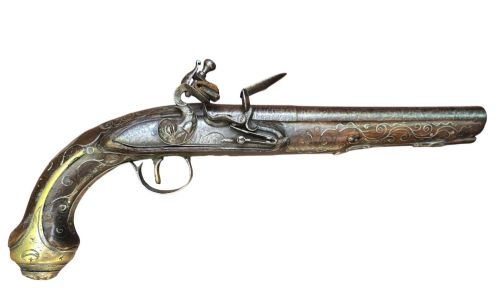
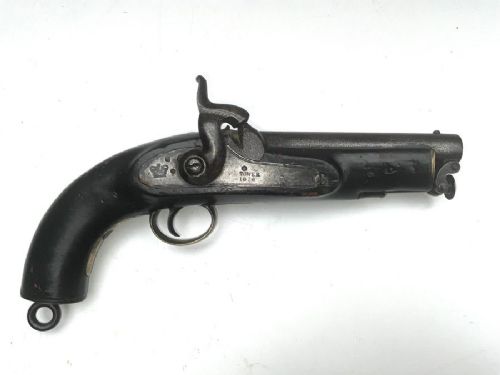
These walnut stock pistol examples combine rich timber grips with robust steel and brass mechanisms across Georgian, Victorian military and 18th century European eras.

Walnut Stock Pistol
A walnut stock pistol represents a historic firearm category defined primarily by its timber foundation and mechanical firing system, spanning the 18th century, Georgian and 19th century periods. Buyers searching this phrase encounter diverse forms ranging from military service arms to civilian travelling and pocket pieces.
The most common examples on this page are flintlock and percussion pistols featuring shaped walnut stocks paired with steel barrels and brass furniture. These arms originate from British, French, Italian, German and Ottoman makers, reflecting military contracts and civilian gunsmithing traditions.
What Varies in Quality
Quality rests in the harmony between the walnut stock's figure and the finesse of the metal furniture, distinguishing bespoke civilian pieces from standard military issues. Superior specimens display crisp carving around the lock mortises and refined metal engraving by named makers.
The integrity of the timber and the originality of the lock mechanism dictate the standing of an individual piece. Examples retaining crisp hallmarks, intact wire inlay and matching maker signatures on barrel and lock occupy the upper tier of the range.
Walnut Stock Pistol Retail Price Guide 2026
Typical asking prices for walnut stock pistol among the pieces listed under this phrase on Sellingantiques today, from the lower quarter to the upper quarter. They describe what is for sale here now, not the wider market.
Listings feature walnut stocks combined with steel, brass, silver and iron across 18th century, Georgian and 19th century periods.
La Motte·Timothy Hughes·Brasher·R. Willoughby·John Rimes·Wilson·Hofmann·Collumbell Of London
The Walnut Stock Pistol Glossary
- Flintlock
- An ignition mechanism that uses a piece of flint held in a cock to strike a steel frizzen, creating sparks to ignite the priming powder. This system dominated military and civilian firearms from the early 17th century through the early decades of the 19th century.
- Percussion
- A later firing system utilising a percussion cap struck by a hammer to ignite the gunpowder charge inside the barrel. It largely replaced the flintlock mechanism during the 19th century.
- Holster Pistol
- A large firearm designed to be carried in a saddle holster rather than on a belt. These pieces generally feature longer barrels and robust walnut stocks suited to mounted service.
- Turn-Off Pistol
- A firearm featuring a barrel that unscrews from the breech for easier loading. This design appears frequently on 18th-century pocket and travelling arms.
- Bore
- The interior diameter of the barrel, often measured by the weight of a lead ball that fits it. Smaller numbers indicate larger bore diameters.
Walnut Stock Pistol: Frequently Asked Questions
What is a walnut stock pistol?
A walnut stock pistol is a historic firearm built around a wooden stock fashioned from walnut timber. These pieces utilise flintlock or percussion mechanisms.
They encompass military service arms, naval weapons and civilian pocket or holster pistols dating from the 18th and 19th centuries.
What is the difference between flintlock and percussion?
Flintlock pistols use a piece of flint striking steel to create sparks that ignite priming powder in a pan. This technology was standard throughout the 18th century.
Percussion pistols, emerging in the 19th century, use an external hammer striking a small metal cap containing detonating compound placed on a nipple.
Were these pistols used by the military?
Many walnut stock pistols served active duty with land forces and naval units. Standard government contracts required robust construction.
Markings such as Tower stamps and crowned cipher proofs indicate official military issue for cavalry troopers, dragoon regiments and officers.