



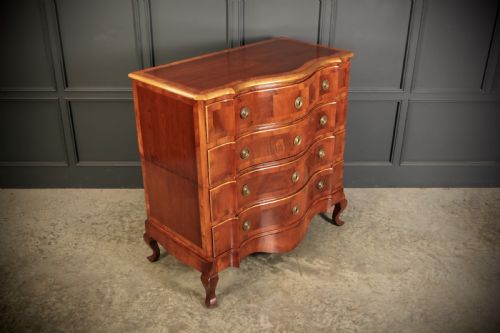
Walnut Sideboard with Drawers
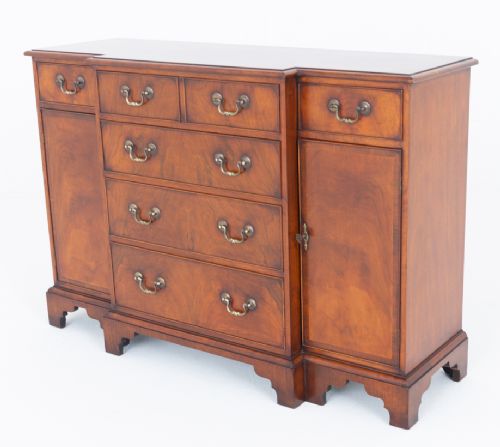
A walnut sideboard with drawers brings rich timber grain and useful storage into a room, offering both surface display and concealed compartments.
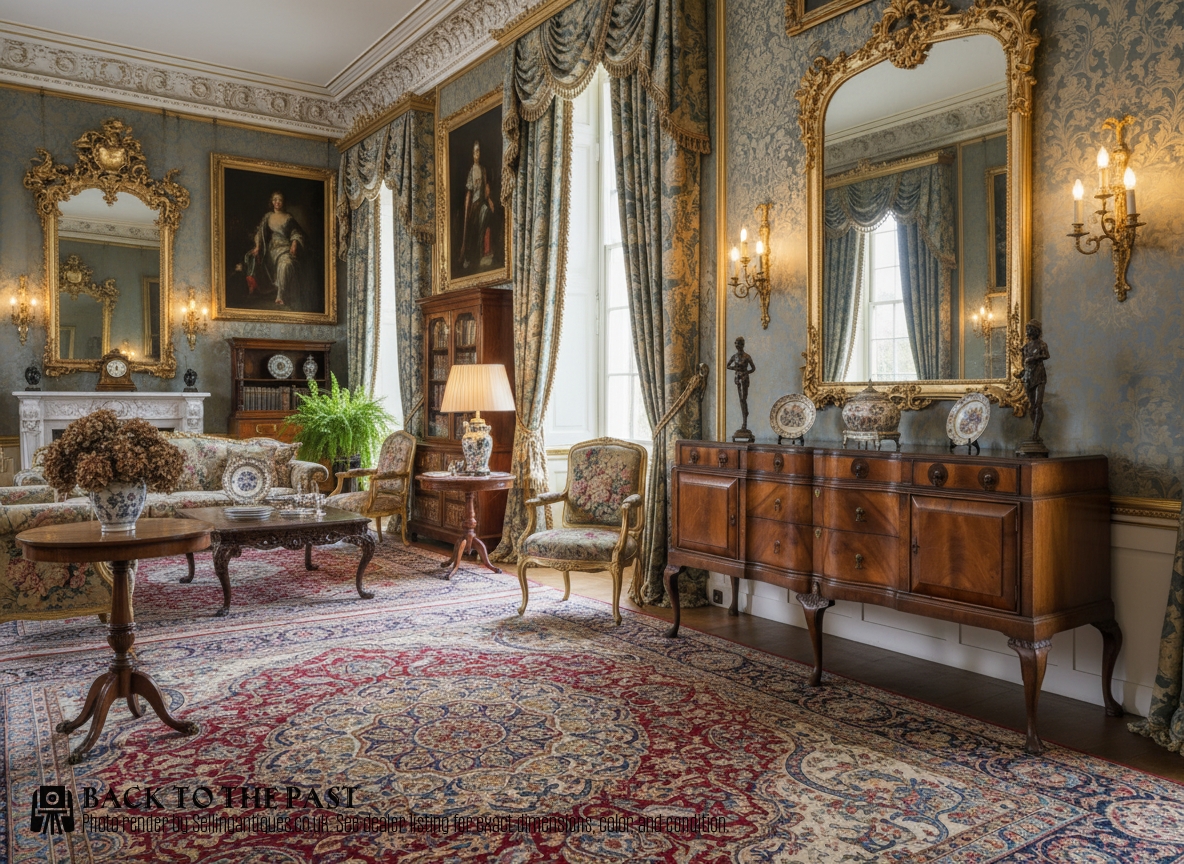
Walnut Sideboard with Drawers
Originating largely from country house or period settings, these items frequently integrate secondary timbers alongside primary walnut veneers. The distinct character of each piece derives from its specific period C19th or Edwardian construction and regional British or continental workshop traditions.
How they were made
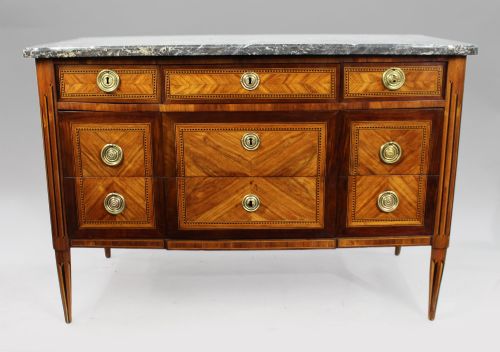
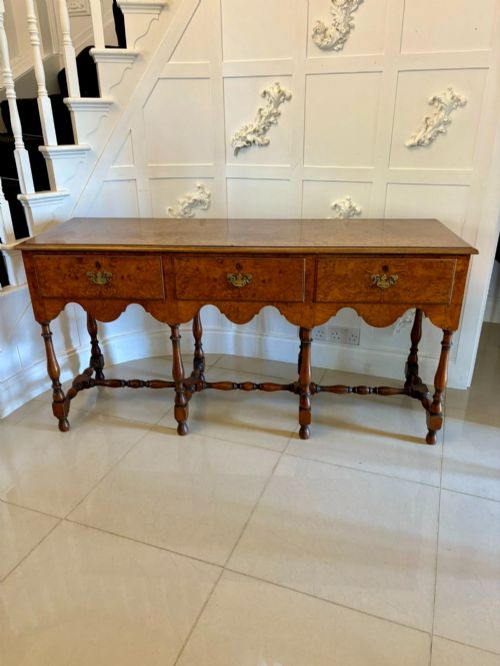
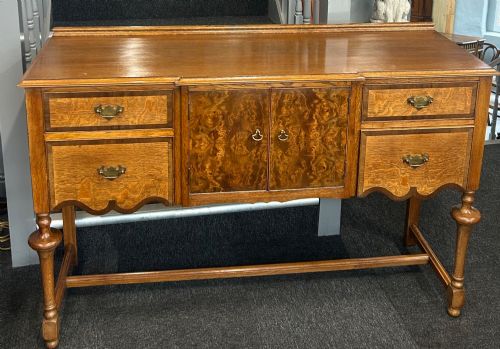
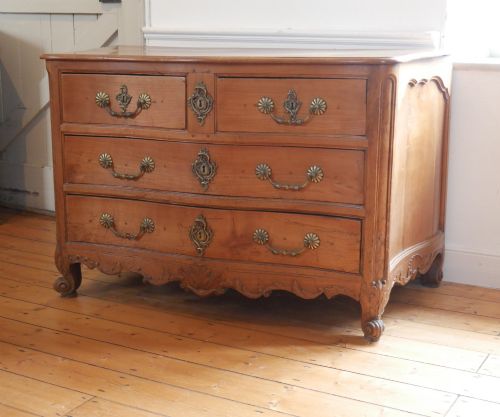
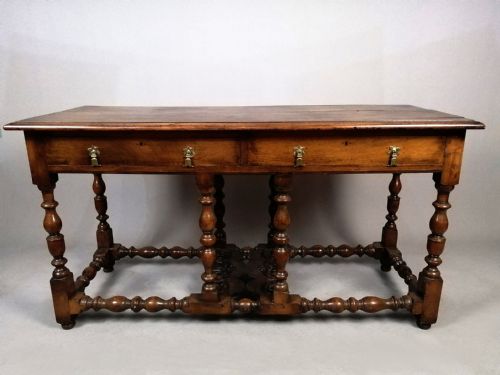
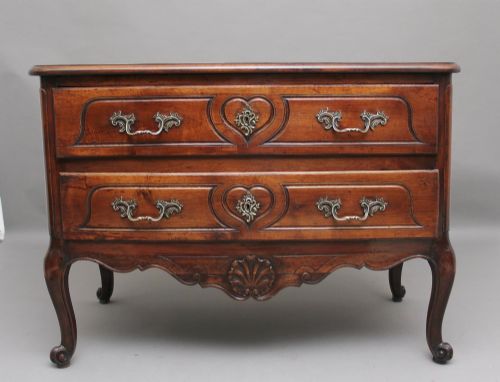
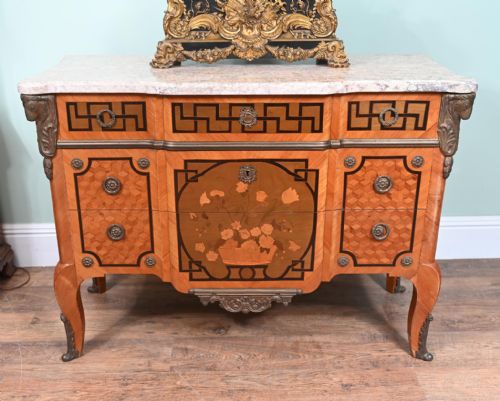
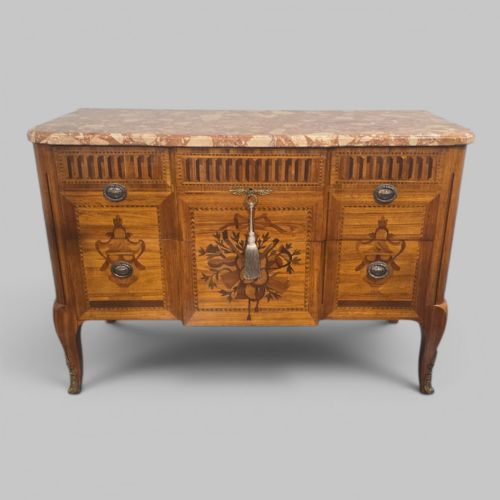
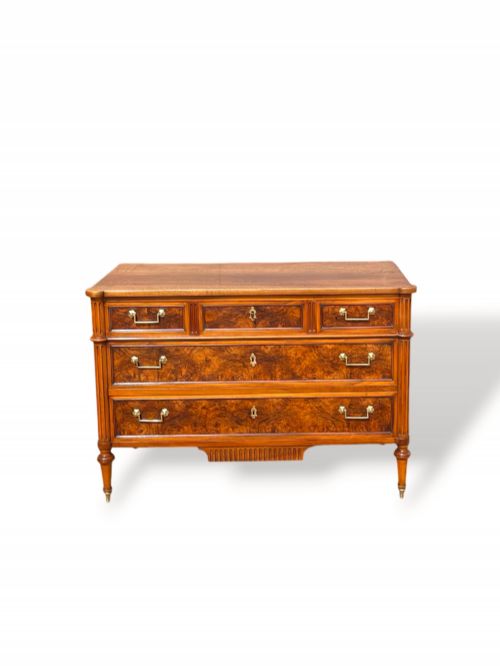
Cabinet makers utilised solid walnut and figured burr walnut veneers applied to carcass structures often built with oak or secondary timbers. Surfaces were frequently crossbanded or inlaid to highlight the rich grain patterns of the wood.
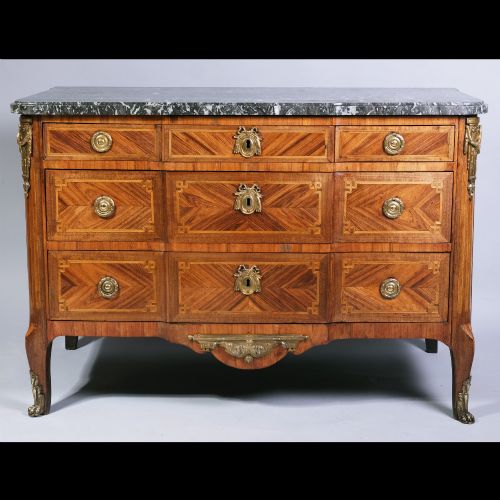
Decorative hardware played a significant structural and aesthetic role, incorporating cast brass handles, ormolu mounts, and occasionally inset marble tops. Glass panels, mirrors, and carved elements further define the detailing across these period items.
What varies in quality
The refinement of the timber selection dictates much of the distinction, separating plain walnut surfaces from highly figured burr walnut and intricate parquetry or inlaid work. Superior examples demonstrate meticulous grain matching across drawer fronts and top panels.
The sophistication of the mounts and hardware, such as chased ormolu or substantial brass drop handles, marks the difference between standard production and high-status execution. Construction integrity, including the smoothness of drawer operation and the retention of original marble tops, elevates specific pieces.
The Walnut Sideboard with Drawers Glossary
- Ormolu
- Gilt bronze ornamentation applied to furniture. This technique was popular in continental and revivalist pieces to accent corners and mounts.
- Crossbanding
- A border technique where strips of veneer are laid perpendicular to the grain of the main panel. This frames the drawer fronts and tabletops.
- Kneehole desk
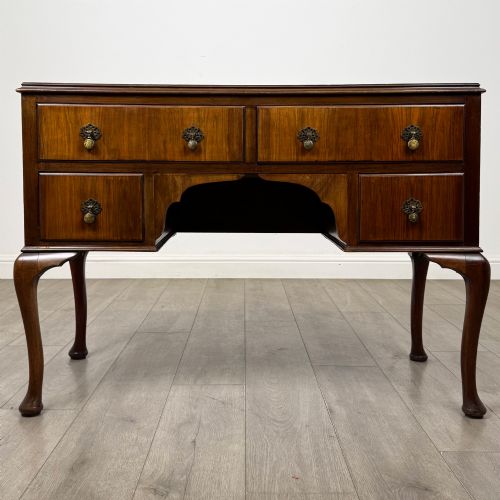
- A compact desk or writing table featuring a central recessed space for the legs flanked by columns of drawers.
- Parquetry
- Geometric wood inlay patterns forming mosaic designs on cabinet surfaces. It is commonly found on eighteenth-century commodes.
Walnut Sideboard with Drawers: Frequently Asked Questions
What periods do these sideboards come from?
The pieces span several centuries, including eighteenth-century Georgian works, nineteenth-century Victorian designs, and early twentieth-century Edwardian examples. Each era brings distinct proportions and stylistic revivals to the construction.
Craftsmanship and decorative motifs shifted across these periods, moving from early kneehole forms to later credenzas and mirror-backed sideboards.
How do I care for walnut furniture?
Walnut benefits from stable room environments away from direct heat sources and strong sunlight, which can dry out the timber or fade the veneers. Regular dusting with a soft, dry cloth preserves the polished finish.
Applying appropriate wood waxes occasionally helps nourish burr walnut and figured grain surfaces without building up heavy residues.
Where were these pieces used originally?
These sideboards and commodes were typically placed in dining rooms, grand hallways, or country house drawing rooms for serving and storage. Writing tables and kneehole desks functioned in libraries or private studies.
Their combination of drawers and cupboards made them practical for organising cutlery, linens, or writing materials.
Are marble tops original to these pieces?
Many continental commodes and revival cabinets incorporated fitted marble tops as a standard luxury feature to provide a durable surface. These stones were selected to complement the walnut and ormolu mounts.
Checking the fit and edges helps confirm the relationship between the stone top and the wooden carcass underneath.