



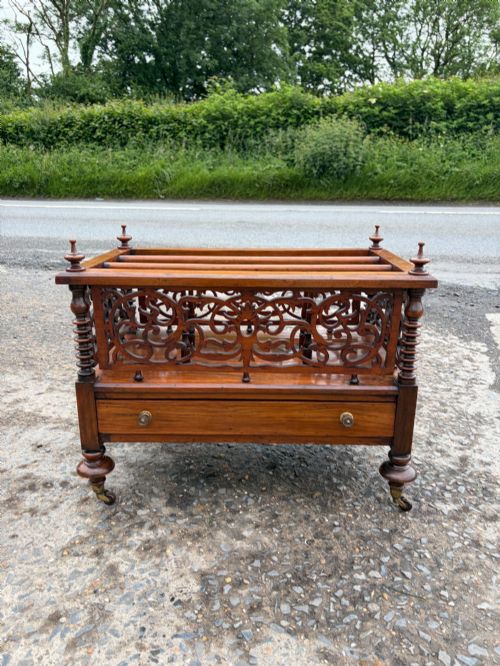


Walnut Sheet Music Rack
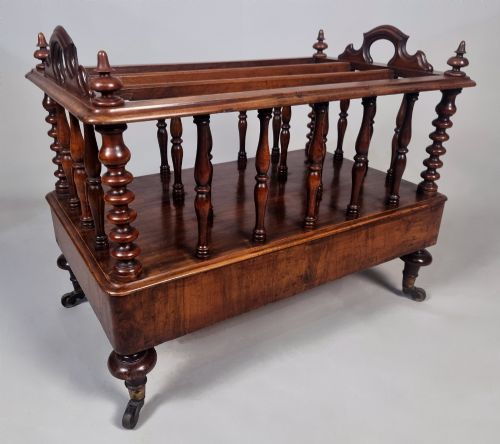
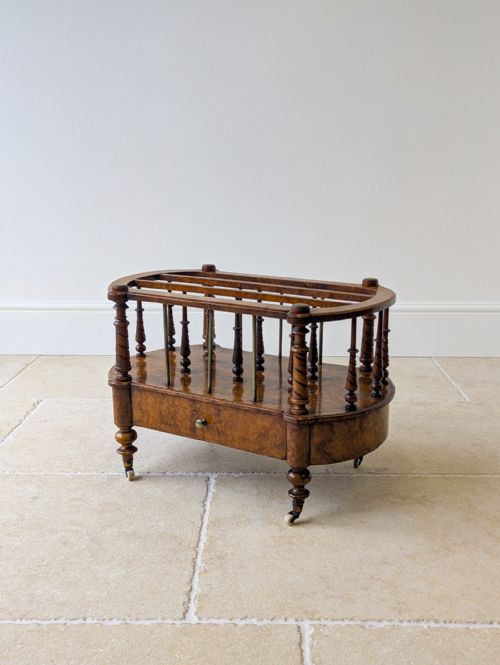
A walnut sheet music rack is a practical stand designed to hold scores and folios, mostly appearing here as Victorian burr walnut canterburys.
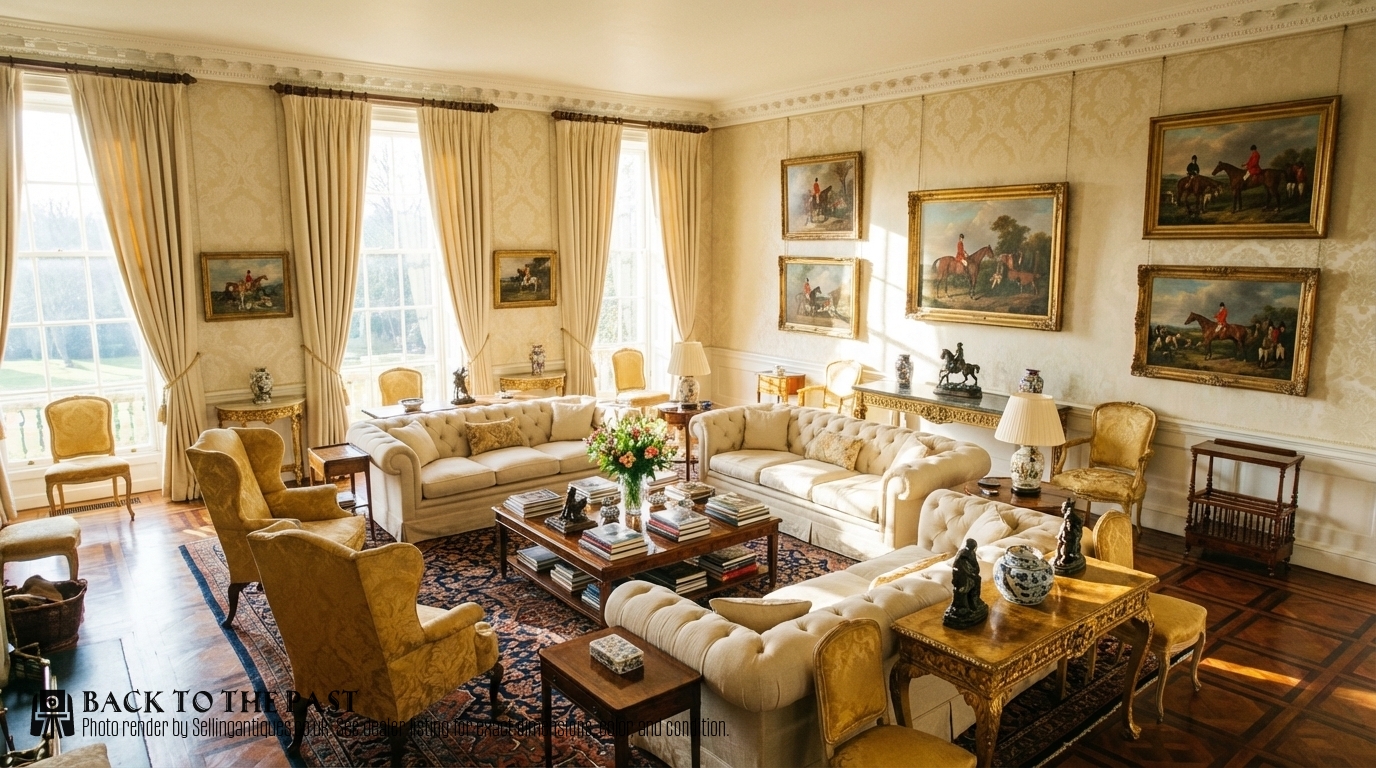
Walnut Sheet Music Rack
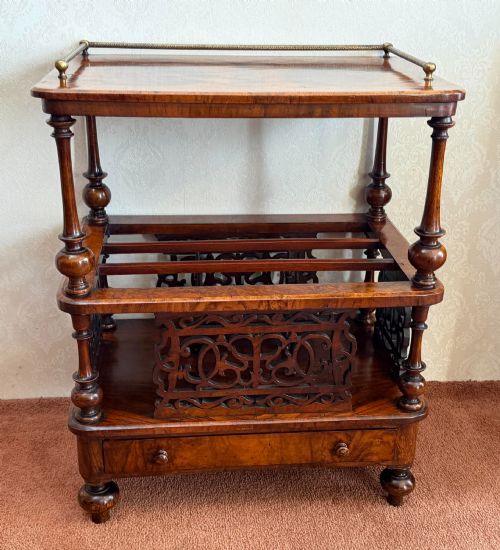
When you search for a walnut sheet music rack, you encounter sophisticated nineteenth-century furnishings designed to keep folios and part-songs close to the piano. The pieces listed on this page span the Regency period through the late Victorian era, appearing as freestanding items that often combine music storage with display tiers or occasional tables.
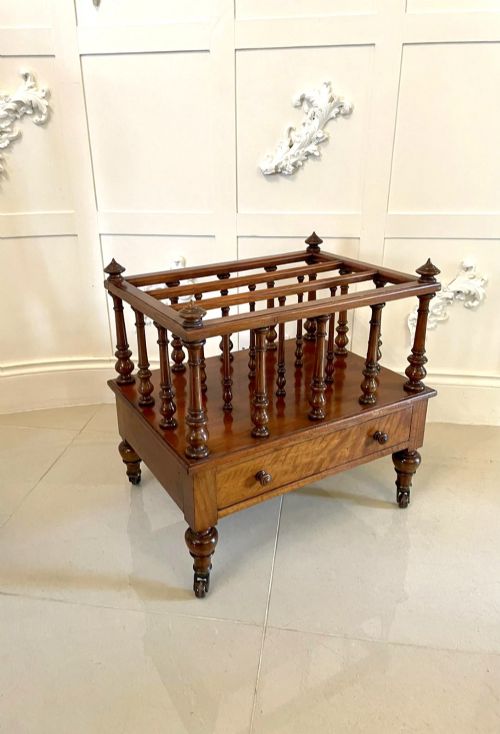
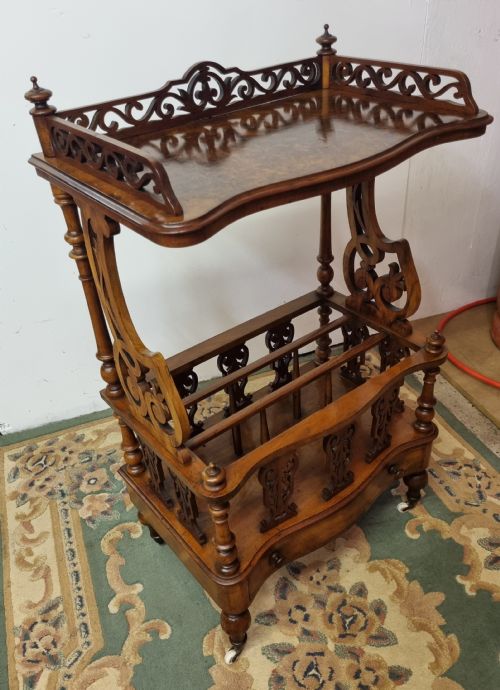
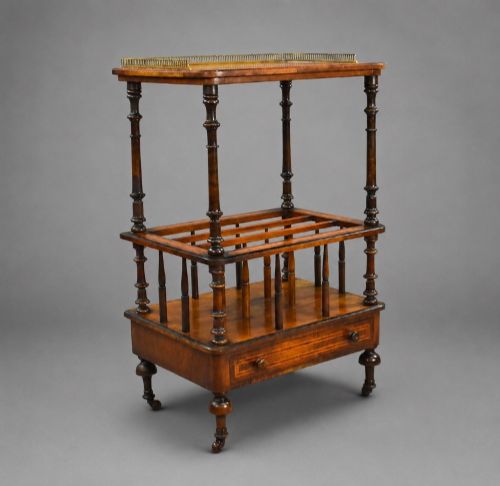
The most common form is the canterbury, a compartmentalised stand traditionally fitted with vertical partitions for upright sheets. Many examples incorporate lower drawers, slender turned supports, or combined whatnot and étagere structures, reflecting the domestic habits of the 1850s, 1860s, and 1870s.
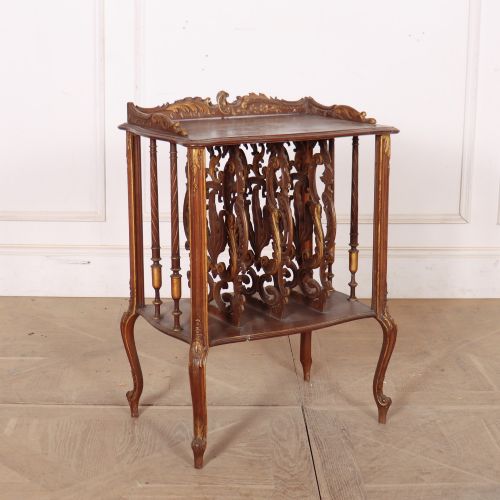
Origins represented in the current selection lean towards English workshops and French design influences, notably including French Rococo Revival and Black Forest carvings. These diverse types share a primary function as dedicated repositories for sheet music, periodicals, and portfolios.
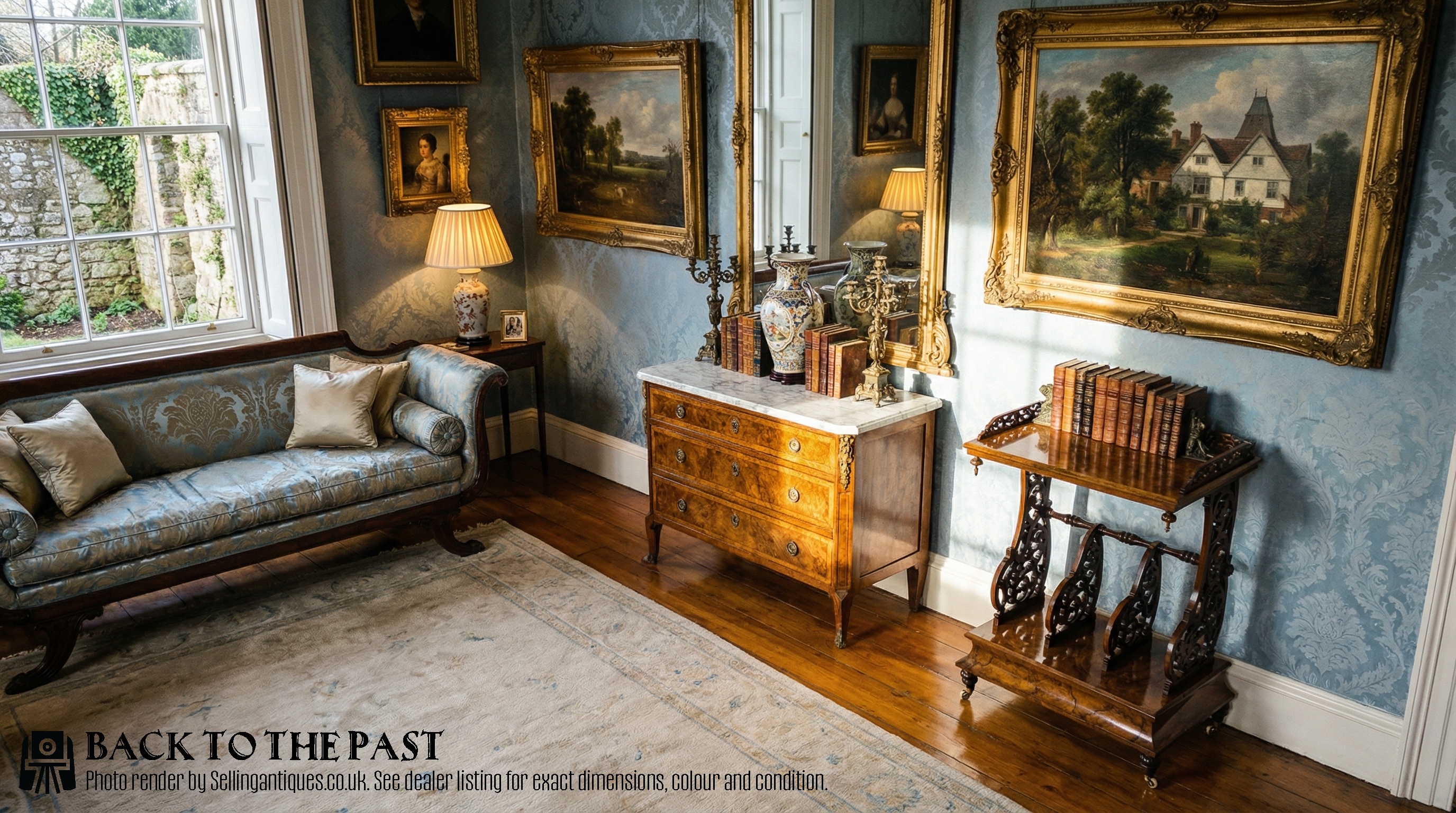
How they were made
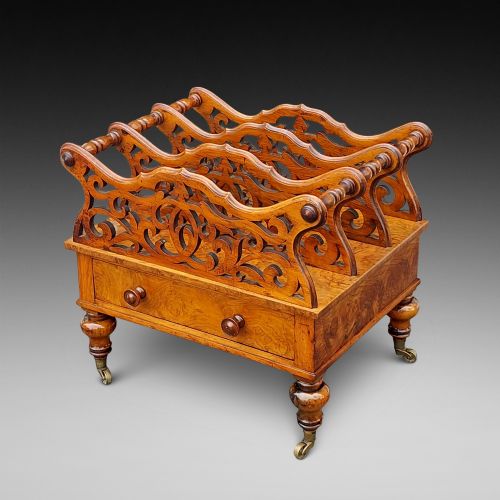
Cabinet makers utilised solid walnut and figured burr walnut veneers over secondary timbers, exploiting the rich grain patterns for visible surfaces. Workshops applied contrasting details such as boxwood and ebony inlay, marquetry, and carved fretwork to enhance the aesthetic of the music stands.
Structural hardware relied heavily on brass castors, hinges, and drawer pulls, while specific examples integrated ceramic elements or porcelain components. Carved structural elements demonstrate period joinery techniques, ranging from serpentine shaping to pierced fretwork panels and turned uprights.
Walnut Sheet Music Rack Retail Price Guide 2026
Typical asking prices for walnut sheet music rack among the pieces listed under this phrase on Sellingantiques today, from the lower quarter to the upper quarter. They describe what is for sale here now, not the wider market.
Some Victorian pieces incorporate intricate Black Forest carvings, ensuring your sheet music is watched over by miniature wooden wildlife.
What varies in quality
The distinction between standard items and the finest examples rests on the selection of figured burr walnut veneers and the crispness of inlaid marquetry. Finer pieces demonstrate meticulous attention to detail in pierced fretwork, serpentine shaping, and integrated drawer construction.
Makers such as Edwards & Roberts and Shoolbred produced pieces where the integration of upper display tiers, sturdy brass castors, and refined carving elevate the utility of the rack into high Victorian craftsmanship.
Edwards and Roberts·Shoolbred
The Walnut Sheet Music Rack Glossary
- Burr walnut
- A veneer sliced from the knotty growth of a walnut tree, highly prized for its swirling, intricate grain patterns. It forms the primary decorative surface on many Victorian music stands.
- Whatnot
- A piece of furniture consisting of several open shelves for displaying ornaments or books. These tiers are often added to the top of music canterburys in nineteenth-century designs.
- Marquetry
- The art of applying pieces of veneer to a structure to form decorative patterns and pictures. Makers used contrasting timbers like boxwood and ebony for this detailed work.
- Fretwork
- Ornamental woodwork perforated with patterns using a scroll saw or piercing technique. This technique appears on the vertical partitions and side panels of superior racks.
Walnut Sheet Music Rack: Frequently Asked Questions
What is a walnut sheet music rack?
A walnut sheet music rack is a period furniture piece built to store and organise musical scores near a piano or music room. Most examples date from the nineteenth century and take the form of canterburys or music stands.
These pieces feature partitioned sections to keep folios upright and prevent them from bending. Many also include display shelves, small drawers, or combination tables for everyday domestic use.
How were music racks used?
Victorian households placed these stands beside pianos, reading desks, or in drawing rooms to hold sheet music, songbooks, and periodicals. They kept working scores accessible while entertaining guests.
Additional tiers allowed owners to display small ornaments, while lower drawers stored smaller musical accessories or writing materials.
How do I date a walnut music rack?
Dating relies on observing structural characteristics, wood choices, and decorative motifs associated with specific decades. Pieces showing heavy burr walnut veneers, serpentine forms, and ebony inlay typically point to the 1850s to 1870s.
Earlier Regency items display simpler lines, while late-century Black Forest pieces exhibit distinct carved animal or foliage motifs. Cabinet maker stamps, where present, offer more precise chronological markers.
Are these racks suitable for modern homes?
These pieces integrate easily into contemporary interiors as functional accent furniture or side tables. Their compact footprints suit living rooms, studies, or hallways.
Beyond holding sheet music, modern owners use the compartments for magazines, art portfolios, or vinyl records, blending period craftsmanship with practical storage.