
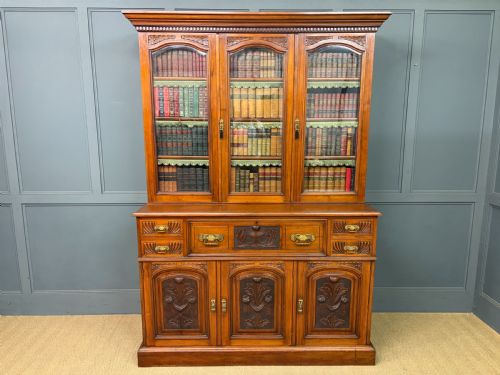

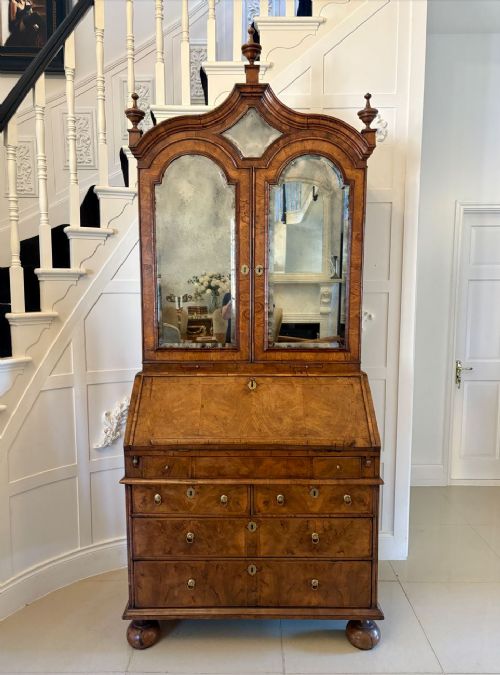
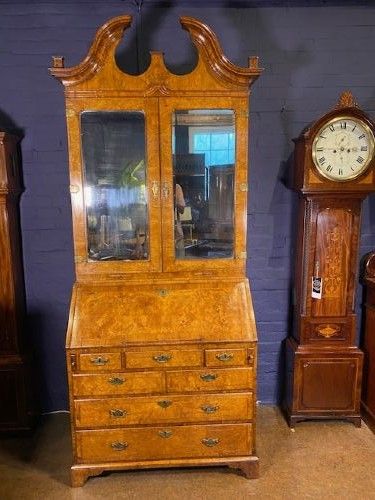
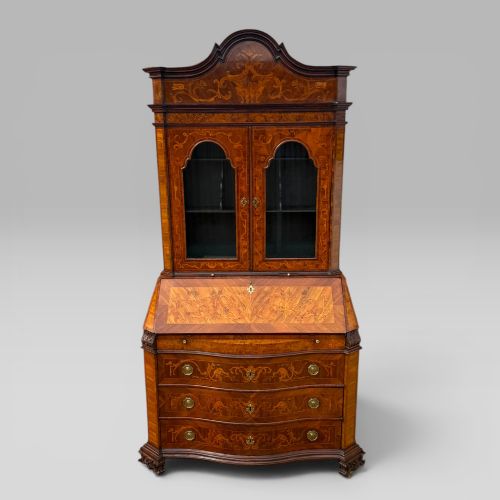
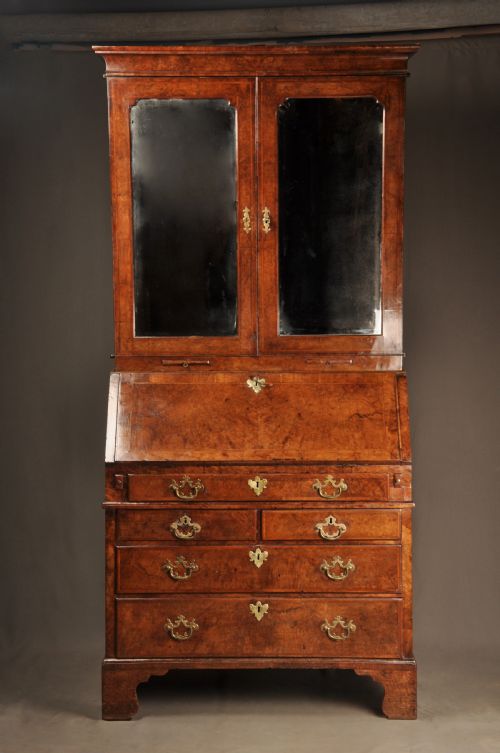
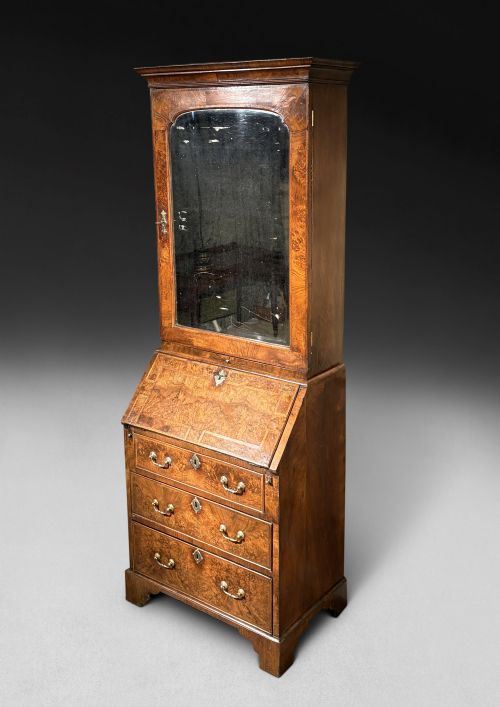
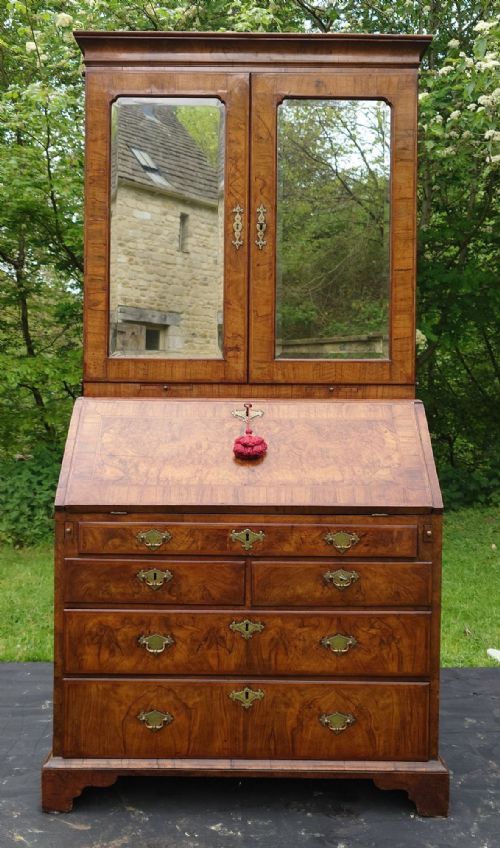


Walnut Secretary Bookcase
A walnut secretary bookcase combines a functional writing desk with upper display shelving, offering serious architectural presence and storage.
Walnut Secretary Bookcase
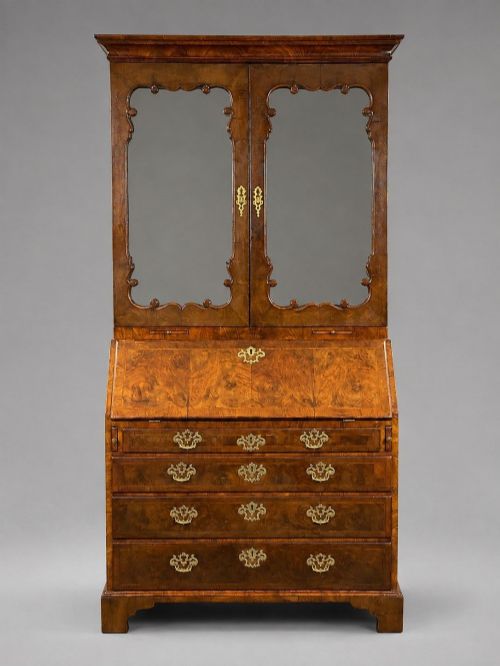
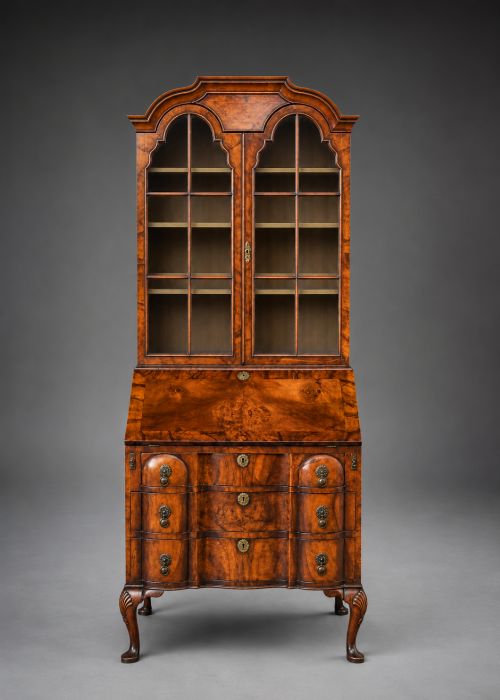
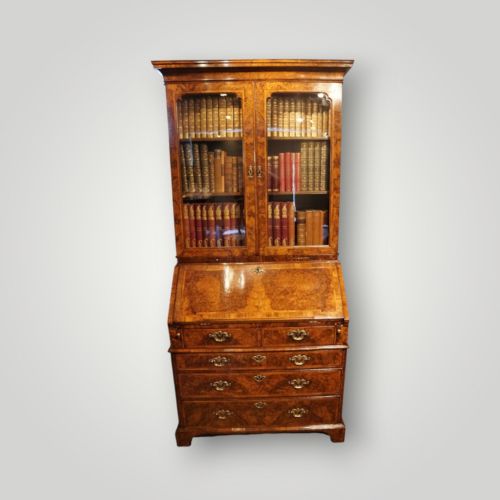
A walnut secretary bookcase serves as a dual-purpose item of furniture combining a lower bureau or writing compartment with an upper glazed or paneled bookcase section. When buyers search for a walnut secretary bookcase, they encounter tall cabinet forms designed to house libraries while providing a concealed writing surface.
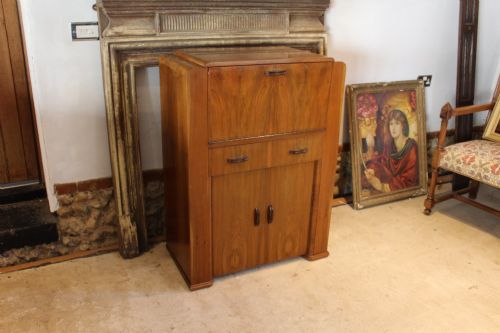
The selections span from early seventeenth-century examples and Queen Anne origin pieces through Georgian periods up to later Victorian, Edwardian, and Art Deco interpretations. Early iterations typically divide into distinct upper and lower sections, often incorporating candle slides or fitted interior drawers beneath double-dome or arched cornices.
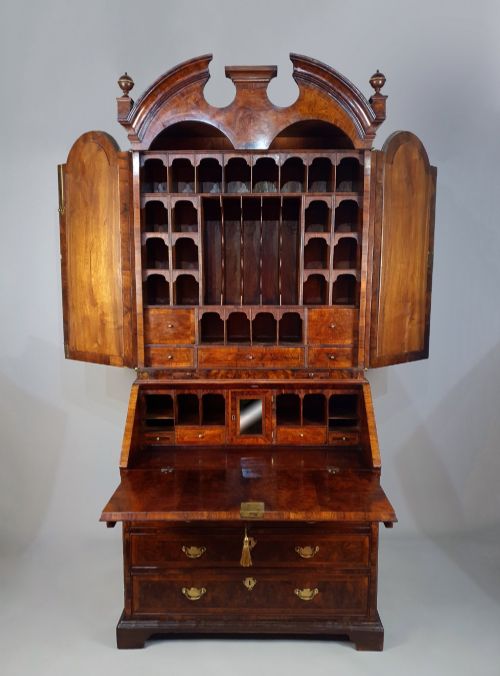
Regional variations appear across the inventory, including Dutch marquetry models, Italian Venetian and South German designs alongside traditional English craftsmanship. Bureau cabinets and secretaire cabinets share these core structural traits, utilising fall-front writing flaps that open to reveal pigeonholes and small compartments.
Materials and construction
Makers constructed these cabinets using solid timber foundations of oak or walnut, applied with finely figured burr walnut veneer to create symmetrical grain patterns on the principal surfaces. Cabinetmakers utilised featherbanding and marquetry inlay techniques to ornament the drawer fronts and doors with intricate botanical or geometric designs.
Glazing bars divided the upper cabinet glass panels, while brass hardware such as escutcheons and drop handles secured the doors and drawers. Secondary timbers like oak formed internal drawer linings, and leather inserts occasionally lined the fall-front writing surfaces.
Look closely inside the fitted writing compartments, where secret compartments and hidden drawers often wait to surprise new owners with centuries-old emptiness.
Distinctions in construction and finish
Quality rests upon the selection and matching of the burr walnut veneer, where superior examples exhibit complex, highly figured grain patterns distributed evenly across the facade. The depth of the carved details, the precision of the marquetry inlay, and the retention of original patination separate exceptional pieces from standard production.
Internal complexity also dictates the tier of the piece, with sophisticated fitted interiors containing secret compartments, well slides, and finely dovetailed small drawers indicating superior workshop origin. The integrity of the structural divisions, particularly in pieces built in multiple sections, reflects the original maker's joinery standards.
F.H. Marshall & Co Glasgow
The Walnut Secretary Bookcase Glossary
- Burr walnut
- A veneer sliced from the knotty growth of a walnut tree, prized for its swirling, decorative grain patterns. Makers applied this material to prominent exterior surfaces.
- Secretaire
- A piece of furniture containing a drawer or compartment that pulls down or drops open to form a writing desk. This term often interchanges with bureau.
- Featherbanding
- A type of inlay banding made by cutting veneers diagonally and arranging them in a herringbone pattern around panel borders. This technique frames drawer fronts and cabinet doors.
- Candle slide
- A narrow pull-out wooden board mounted beneath the upper bookcase doors to hold candlesticks for illumination. These slides retracted into the cabinet frame when not in use.
- Marquetry
- The art of applying pieces of veneer to a structure to form decorative patterns and pictorial scenes. Artisans used contrasting woods and tinted materials to achieve floral motifs.
- Double dome
- An upper cabinet pediment shaped into two adjoining rounded arches. This architectural roofline characterises substantial seventeenth and eighteenth-century pieces.
Walnut Secretary Bookcase: Frequently Asked Questions
What is a walnut secretary bookcase?
A walnut secretary bookcase is a tall standing cabinet that pairs an enclosed shelving unit at the top with a fold-down writing desk below. The lower section contains a hinged flap that opens to reveal a fitted interior of small drawers and pigeonholes.
These pieces served as private workspaces and libraries for homes, concealing correspondence and ledgers behind lockable doors. The upper glazed doors allowed owners to display leather-bound volumes while protecting them from dust.
How do I date a walnut secretary bookcase?
Dating relies on examining the cabinet construction, hardware, and decorative veneers. Early eighteenth-century examples from the Queen Anne and George I periods often feature solid walnut, herringbone featherbanding, and candle slides beneath the upper doors.
Later Victorian and Edwardian interpretations show heavier proportions, machine-cut dovetails, and different brass casting styles. Art Deco variations introduce streamlined geometry and specific maker markings typical of the twentieth century.
How were these bookcases constructed?
Craftsmen built the main carcase using sturdy secondary woods like oak, applying thin veneers of figured walnut or burr walnut across the visible exterior panels. They decorated the surfaces with crossbanding and marquetry inlay to create visual contrast.
The upper bookcase doors utilised individual glazed panes held together by wooden glazing bars, while the writing flaps depended on internal brass hinges or supporting desk arms.
How do I care for antique walnut furniture?
Maintain walnut secretary bookcases by placing them away from direct sunlight and heat sources, which can dry out the timber and crack the delicate veneers. Keep stable room humidity levels to protect the wood and glue joints.
Clean surfaces with a soft, dry cloth and apply occasional high-quality wax to nourish the finish and preserve the historic patina. Avoid liquid polishes and silicone-based sprays.