




Walnut Pedestal Drawers
Walnut pedestal drawers combine practical storage with rich timber figuring, making them a stately centrepiece for any study or bedroom.
Walnut Pedestal Drawers
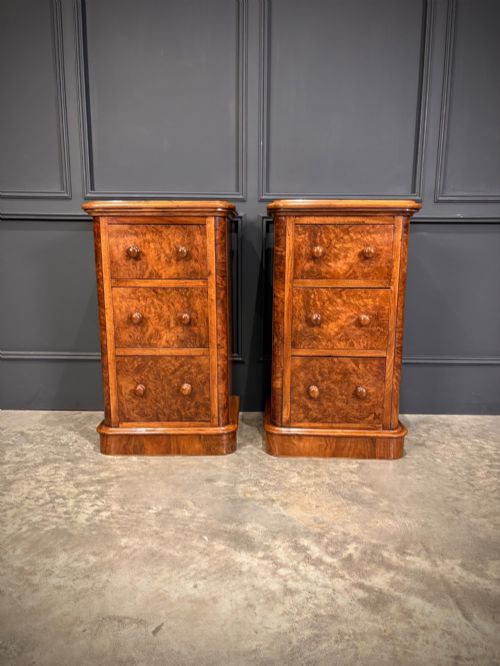
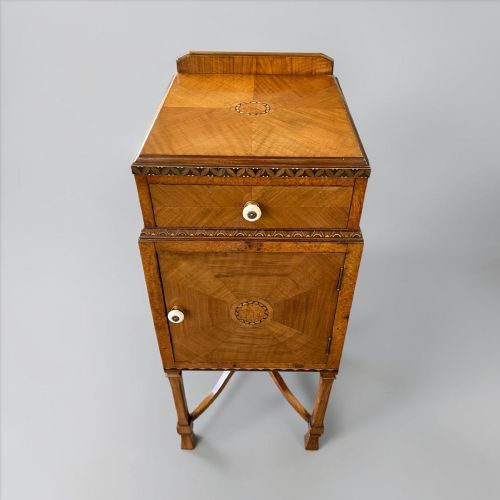
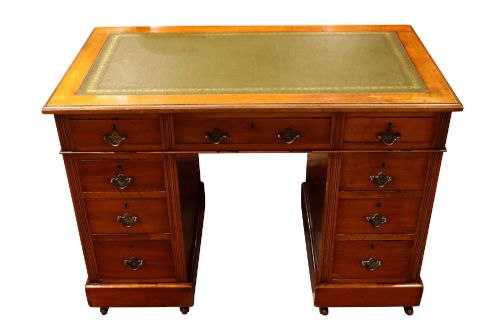
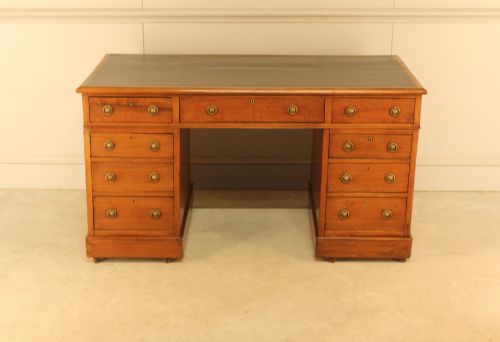
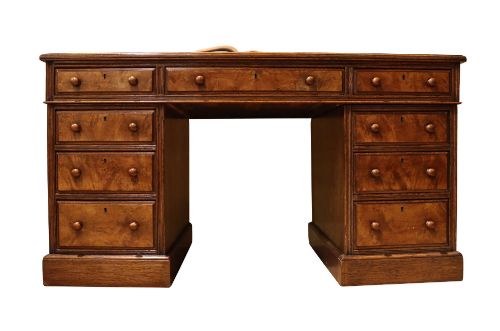
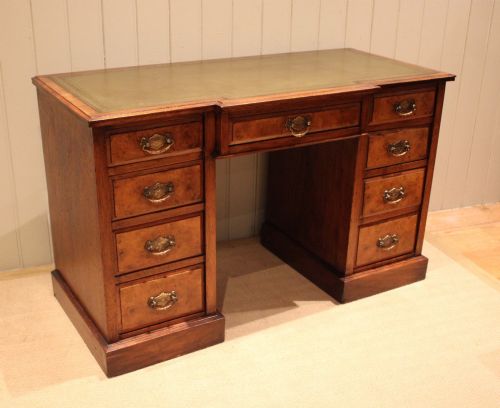
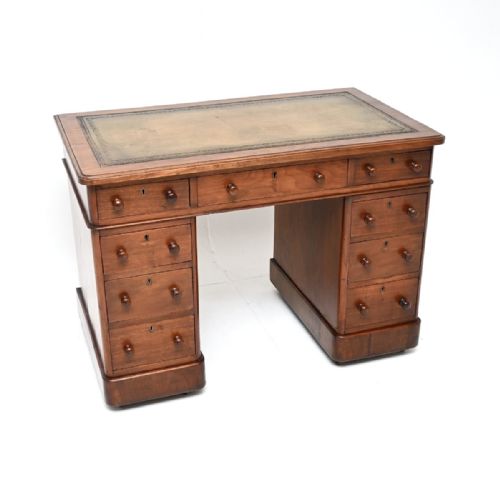
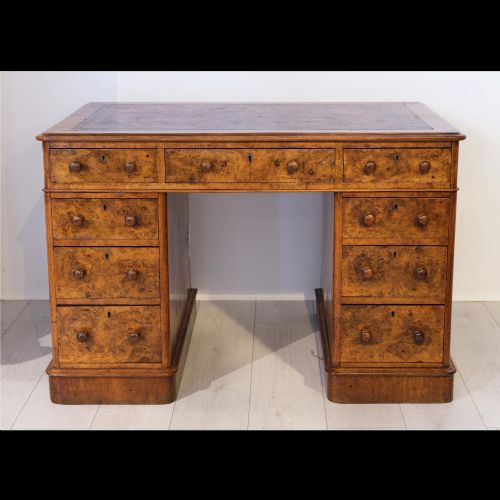
When you search for walnut pedestal drawers, you encounter a selection of freestanding desks, writing tables, and bedside cabinets dating from the Georgian period through to the Art Deco era. The majority of these pieces originate from the Victorian period, featuring twin pedestals flanking a central kneehole or single cupboards fitted with multiple internal drawers.
Forms range from large nine-drawer partner and Dickens desks down to compact bedside chests and lamp tables. Many incorporate secondary timbers such as oak and pine within their internal carcases, whilst the exterior surfaces display the distinct grain of walnut or burr walnut.
How they were made
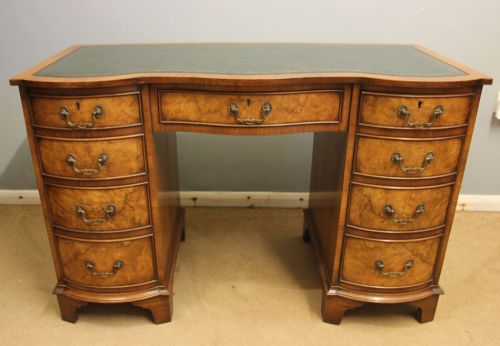
Cabinet makers utilised solid walnut and decorative burr walnut veneers applied over secondary woods like oak and pine to construct these pieces. Veneers were carefully matched and laid to create symmetrical patterns across drawer fronts and top surfaces.
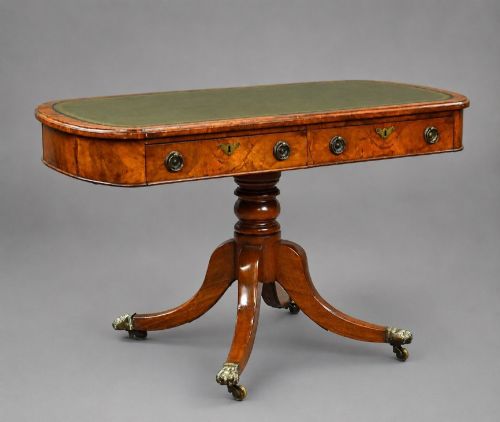
Hardware such as brass handles and leather writing inserts were integrated into desks and writing tables. Joinery techniques relied on dovetailed drawer construction and sturdy plinth bases to support the weight of the timber.
Listings span the Georgian period, the Victorian era, and the 1930s, constructed predominantly in walnut, burr walnut, oak, and pine.
What varies in quality
The sophistication of the timber figuring and veneer selection marks the distinction between standard examples and finer pieces. Highly figured burr walnut requires skilled sawing and application to maintain pattern continuity across multiple drawers.
The integrity of the internal construction, including secondary woods like oak and the precision of the dovetail joints, determines the durability of the piece. Retained original hardware and secondary materials also elevate the standard of a desk or cabinet.
Gill & Reigate·Maurice Adams·Maple & Co·Holland & Sons
The Walnut Pedestal Drawers Glossary
- Burr walnut
- A prized timber harvested from the irregular growths of walnut trees. It yields complex, swirling grain patterns highly valued for decorative veneer work on fine furniture.
- Pedestal desk
- A heavy writing table supported by two banks of drawers resting on the floor. These typically feature multiple small drawers flanking a central kneehole.
- Davenport
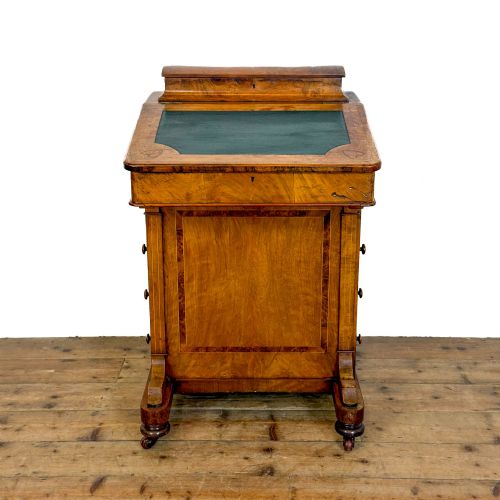
- A compact writing desk featuring a sloping, hinged desktop over a set of drawers accessed from the side. They often incorporate internal stationary compartments.
- Kneehole desk
- A smaller pedestal form with a central recess designed for sitting comfortably. They frequently appear in Queen Anne and Georgian styles.
- Crossbanding
- A decorative border technique where strips of veneer are laid perpendicular to the main grain. This frames the primary timber surface of a drawer front or top.
Walnut Pedestal Drawers: Frequently Asked Questions
How do I identify a Victorian desk?
Victorian desks generally display heavier proportions and rich burr walnut veneers, often accompanied by hand-tooled leather writing surfaces and brass hardware. They frequently utilise oak or pine as secondary woods within the drawer carcases.
Look for traditional construction methods such as hand-cut dovetails on the drawer sides, which indicate a 19th-century origin prior to mass mechanisation.
Where were pedestal drawers used?
Larger pedestal desks and writing tables were traditionally placed in studies, libraries, or offices for administrative work and correspondence. Smaller versions served bedrooms as bedside chests or nightstands.
Their finished backs often allowed them to stand freely in the middle of a room rather than pushed directly against a wall.
How do I care for walnut furniture?
Walnut benefits from being kept away from direct sunlight and severe temperature fluctuations to prevent the wood and delicate veneers from drying out. Regular dusting with a soft, dry cloth maintains the surface sheen.
Application of appropriate wax polish helps nourish the timber and protect the finish without building up heavy residue.
What is the difference between a pedestal desk and a Davenport?
A pedestal desk stands on two vertical banks of drawers with a central kneehole space for the user. It provides a wide flat surface, frequently lined with leather, for writing.
A Davenport is much more compact, featuring a sloping top for writing that lifts to reveal storage, with drawers positioned down one lateral side rather than flanking both legs.