
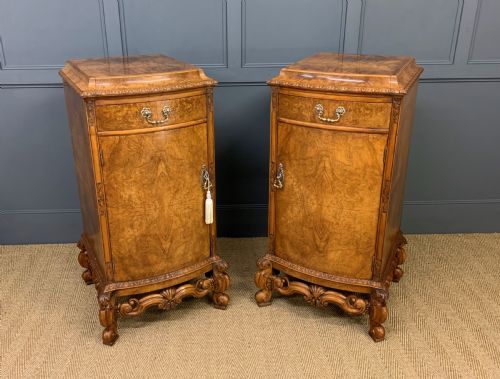
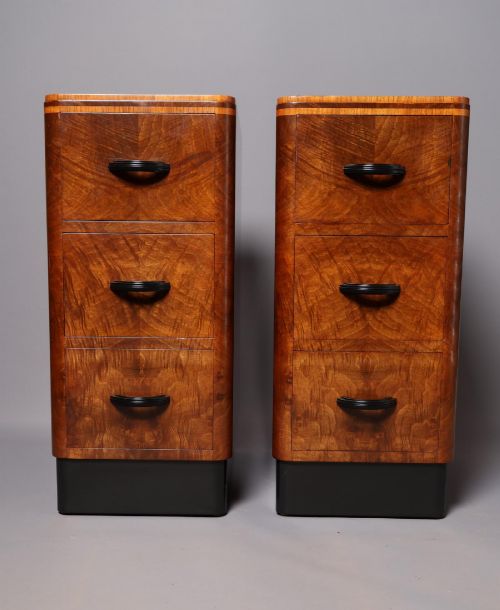


Pair Walnut Lockers
Pair walnut lockers bring matched utility to the bedside, combining rich timber grain with practical storage.
Pair Walnut Lockers
Pair walnut lockers encompass matched bedside storage units designed to sit beside a bed. When buyers search for pair walnut lockers, they encounter bedside cabinets, small chests of drawers, pedestal cupboards, and side lockers that date from the nineteenth century through the mid twentieth century.
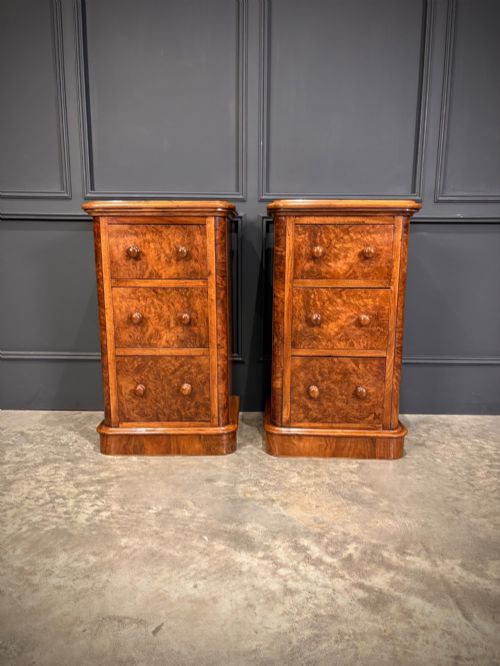
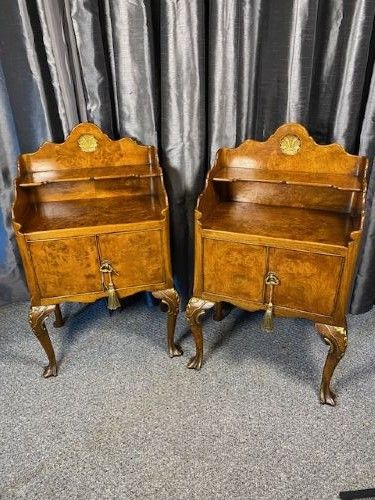
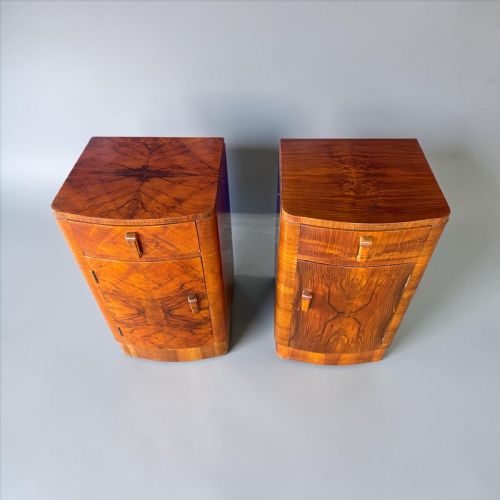
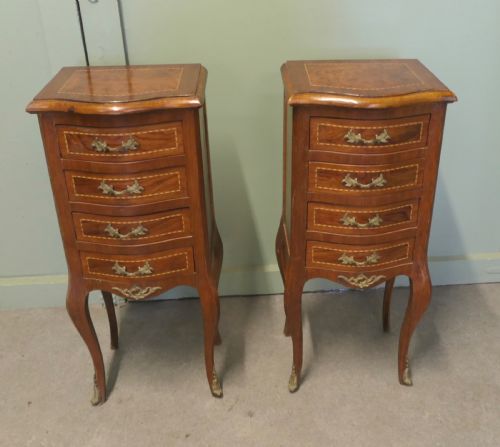
The most common examples on this page are Victorian pieces in burr walnut and twentieth century designs spanning Art Deco and French styles. These pieces function as bedside tables, lamp stands, and pot cupboards, offering enclosed shelving or multiple drawers.
Origins range widely across English, French, and Italian workshops, reflecting diverse regional tastes in domestic furniture. Buyers select these matched pairs to achieve symmetry and functional surface space in a bedroom scheme.
How they were made
Makers utilised solid walnut and decorative veneers applied over secondary timbers such as pine to achieve rich surface patterns. Burr walnut veneer and figured walnut feature prominently, displaying intricate natural grain swirls across the top and door surfaces.
Construction methods include brass mounts, marble tops, leather inserts, and marquetry or parquetry inlay depending on the period. Ormolu mounts and ebonised wood details appear on French and Victorian examples, while brass bound corners feature on military style pieces.
Listings span the Victorian era, 1910, 1920, 1930, and 1940, uniting walnut, burr walnut, brass, marble, and leather materials.
What varies in quality
Quality rests upon the selection and bookmatching of the walnut veneers, particularly in burr and figured varieties. Superior pieces display continuous grain patterns across drawers and doors, demonstrating careful timber preparation by the cabinetmaker.
Hardware and secondary materials also distinguish the range, from plain wooden knobs to cast brass handles, marble slabs, and fine parquetry geometric arrangements. The crispness of the carving and the precision of the joinery mark the distinction between standard workshop output and exceptional cabinet work.
The Pair Walnut Lockers Glossary
- Burr walnut
- A prized timber harvested from the irregular growth knots of the walnut tree, yielding swirling, highly decorative grain patterns. Cabinetmakers sliced this wood into thin veneers for decorative furniture fronts.
- Parquetry
- A geometric mosaic of wood pieces used for decorative floors and cabinet surfaces. Makers arranged contrasting timber veneers to form repeating patterns.
- Ormolu
- Gilt bronze mounts applied to furniture edges and feet, frequently seen on French style pieces. This decorative technique enhances the formal appearance of the cabinet.
- Pot cupboard
- A small bedside cabinet originally designed to house a chamber pot. These practical pieces evolved into general bedside lockers and tables.
- Marquetry
- The art of applying pieces of veneer to a structure to form decorative patterns such as floral scrolls. It requires precise cutting and fitting of different coloured timbers.
Pair Walnut Lockers: Frequently Asked Questions
How do I date a walnut locker?
Dating relies on construction methods, drawer linings, and overall style characteristics such as Victorian proportions or Art Deco geometric lines. Secondary woods like pine and the presence of specific hardware offer further clues to the decade of manufacture.
Victorian pieces often feature deep drawers and figured burr walnut, while twentieth century items show cleaner silhouettes or French influenced veneers.
Are these lockers suitable for modern beds?
Height and proportion vary across nineteenth and twentieth century pieces, so checking dimensions against your mattress height is essential. Many examples function ideally as bedside lamp stands or compact storage cabinets.
Matching pairs provide symmetrical surface areas for lighting and bedside items while concealing books or personal belongings inside.
What is the difference between a locker and a bedside table?
In this category, lockers typically feature enclosed storage such as a cupboard door or stacked drawers rather than an open shelf. The terms often overlap in historic descriptions.
Both forms served similar bedside functions, but lockers offered greater privacy for contents within a bedroom setting.
How should I care for walnut veneer surfaces?
Walnut benefits from occasional polishing with appropriate wax to nourish the timber and protect the delicate veneer layers. Avoid placing damp items or direct heat sources onto the polished top.
Gentle dusting with a soft cloth maintains the natural lustre of the grain without disturbing historic finishes.