

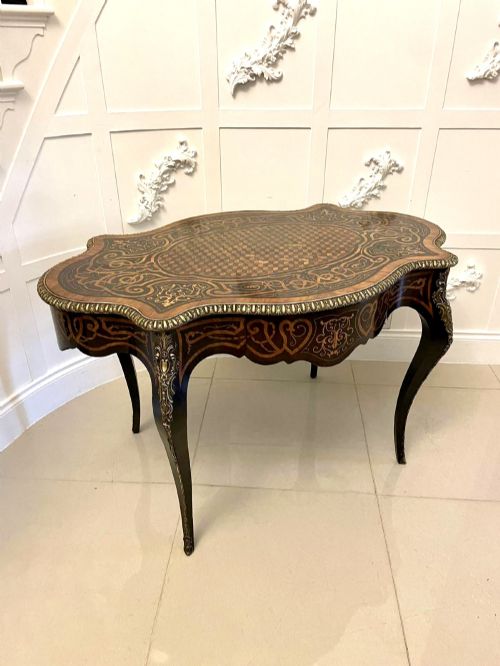
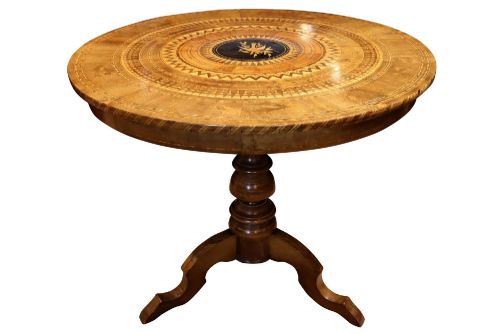
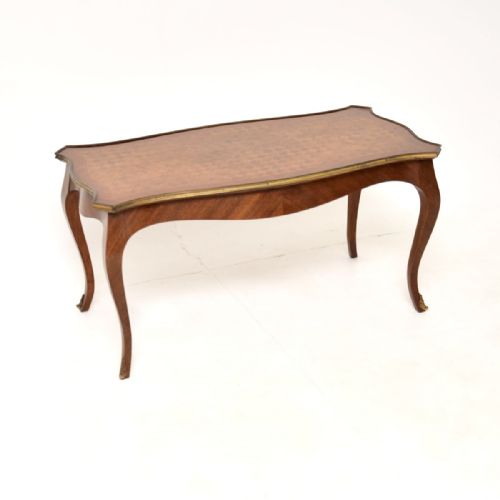
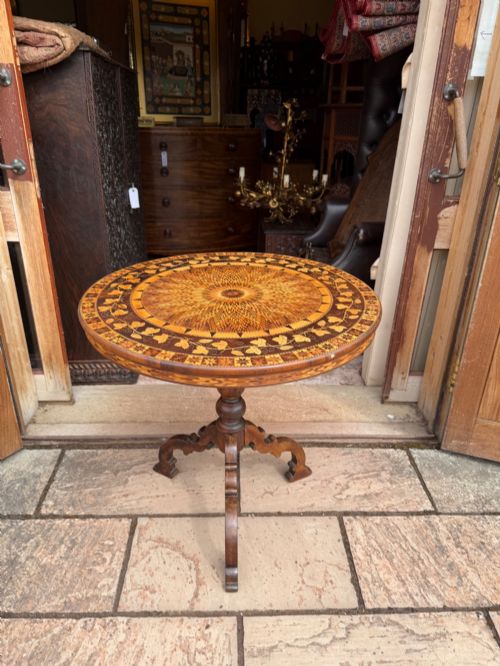






Walnut Parquetry Centre Table
A walnut parquetry centre table brings geometric wood patterns and freestanding presence to a room, drawing the eye with varied timbers.
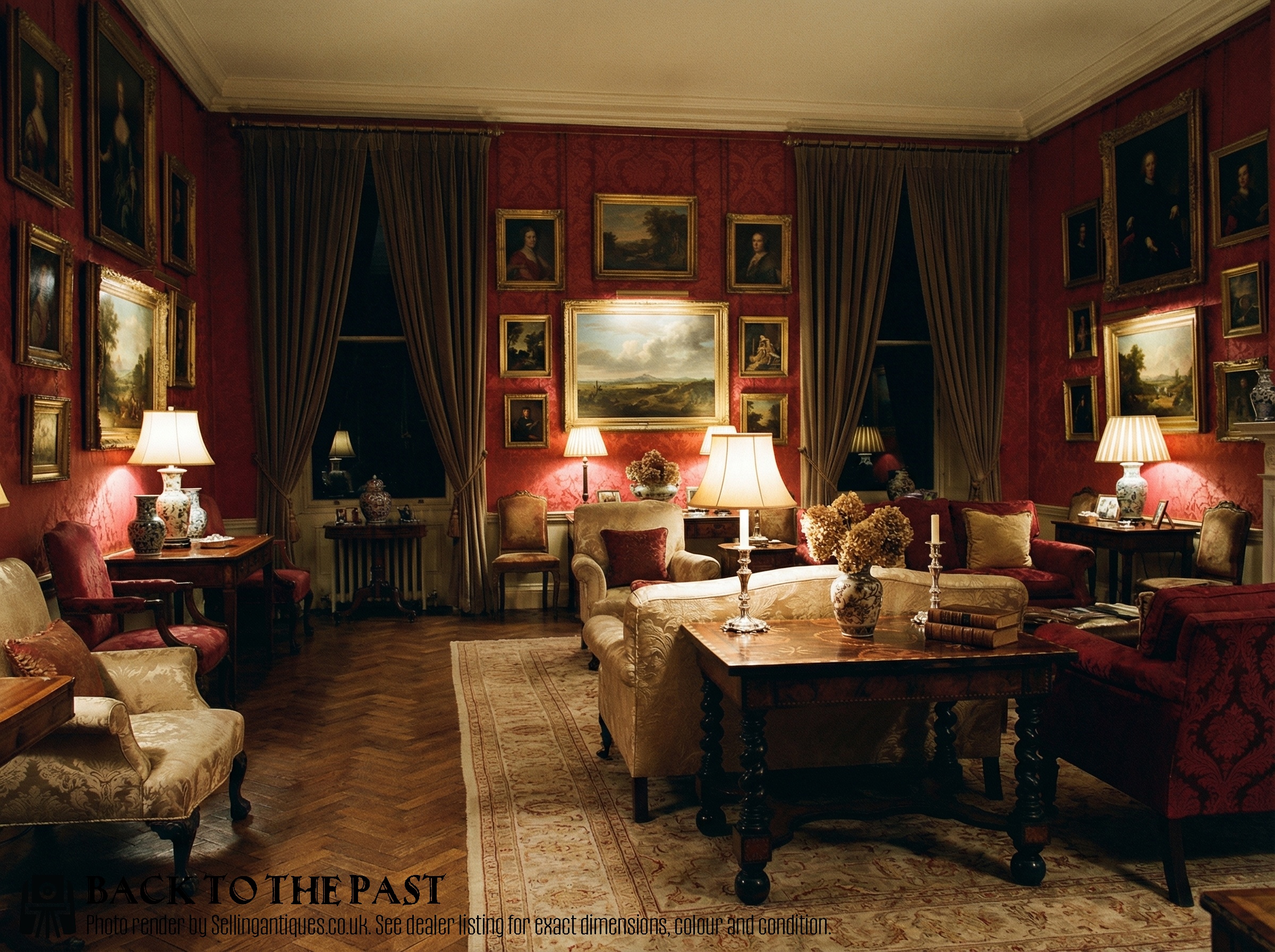
Walnut Parquetry Centre Table
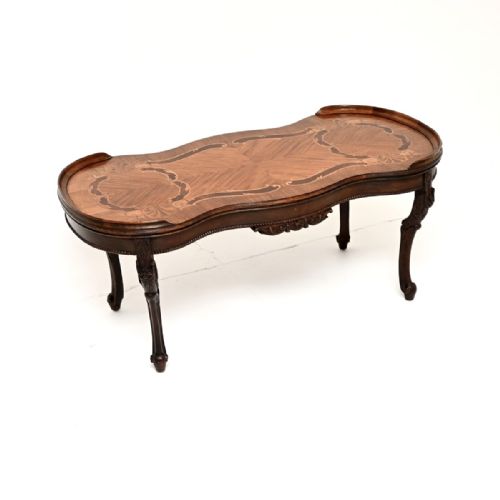
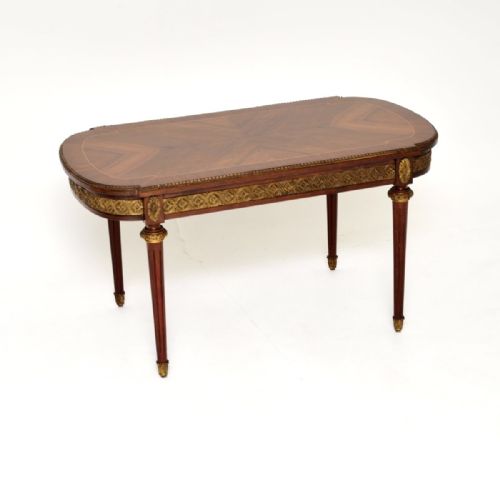
A walnut parquetry centre table sits in the middle of a room, finished on all sides for freestanding placement rather than pushed against a wall. The form includes dedicated centre tables alongside coffee tables, occasional tables, side tables, hall tables and pedestal tables.
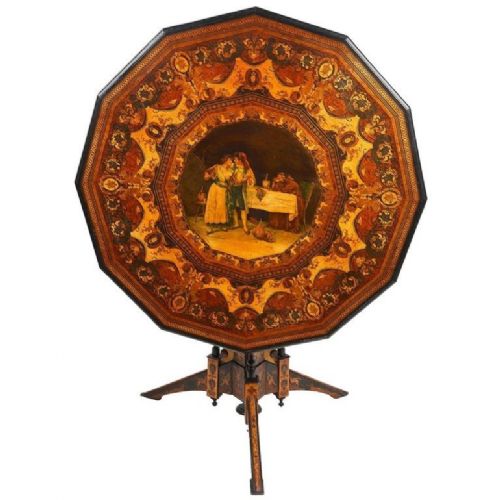
The pieces on this page span the nineteenth century, the Victorian era and the nineteen-thirties. Buyers encounter French Louis XV revival designs alongside Italian Sorrento and Dutch interpretations.
Makers utilised walnut as the primary timber, often paired with fruitwood, olive wood, coromandel, oak and rosewood to create geometric floor patterns across the top.
How they were made
Cabinetmakers cut small geometric tiles of walnut, fruitwood, olive wood and rosewood, then laid them meticulously onto a carcase to form complex parquetry and marquetry patterns. This surface work required precise hand-fitting of contrasting timbers.
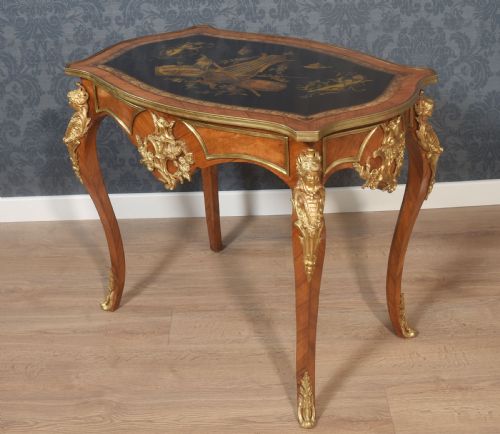
Mounts in brass, gilt bronze and ormolu decorate many of these tables, framing the aprons and edges. Oak and other secondary timbers provide structural support beneath the veneered and inlaid surfaces.
Walnut Parquetry Centre Table Retail Price Guide 2026
Typical asking prices for walnut parquetry centre table among the pieces listed under this phrase on Sellingantiques today, from the lower quarter to the upper quarter. They describe what is for sale here now, not the wider market.
Listings feature nineteenth-century and Victorian periods, with materials spanning walnut, ormolu, fruitwood, olive wood, oak, brass and rosewood.
What varies in quality
The complexity of the timber selection dictates the visual depth of the top. Pieces incorporating multiple contrasting woods like olive wood, fruitwood and coromandel alongside walnut demand greater skill from the maker than simpler single-wood tops.
The integration of cast metal mounts such as ormolu and gilt bronze separates standard production from finer cabinetwork. Precision in the geometric parquetry layout and the crispness of the inlaid lines define the upper tier of these tables.
Almerico Gargiulo
The Walnut Parquetry Centre Table Glossary
- Parquetry
- Geometric wood inlay forming patterned surfaces like cubes or chequers. This technique uses small blocks of timber arranged with mathematical precision.
- Ormolu
- Gilded bronze mounts applied to furniture edges and legs. The technique involves mercury gilding on a brass or bronze base.
- Marquetry
- Pictorial or floral wood veneer work using various coloured timbers. Unlike parquetry, it creates curves and pictures rather than geometric tiles.
- Specimen wood
- Furniture constructed from a multitude of different native and exotic timbers. Makers often showcased botanical variety within a single tabletop.
- Centre table
- A freestanding table designed to be viewed from all four sides in the middle of a room. These pieces lack a designated front or back.
Walnut Parquetry Centre Table: Frequently Asked Questions
Where should I place a centre table?
These tables are designed to stand freely in the middle of a room rather than against a wall. Their finished backs and detailed parquetry tops allow them to be viewed from every angle.
Position one where foot traffic permits walking all the way around it to appreciate the geometric wood patterns.
How do I tell Louis XV and Louis XVI styles apart?
Louis XV style tables feature curving cabriole legs, asymmetrical lines and flowing floral or geometric parquetry. They lean towards organic shapes and rounded corners.
Louis XVI pieces introduce straight tapered legs, neoclassical symmetry and architectural restraint, reflecting a shift back to classical straight lines.
What is the difference between parquetry and marquetry?
Parquetry uses geometric shapes like squares, triangles and diamonds to create repeating patterns across a wooden surface. It relies on sharp angles and tessellation.
Marquetry employs curved veneers to depict pictures, flowers or scrolls, allowing for pictorial storytelling rather than strict geometry.
Can I use a centre table as a desk?
Certain examples combine centre table proportions with writing surfaces, offering a dual purpose for a study or drawing room. Their freestanding nature makes them accessible from multiple sides.
Check the height and knee clearance beneath the apron to ensure comfortable seating if you plan to write at it.