

Walnut Office Furniture
Walnut office furniture brings warmth and grain to a room, offering desks and bureau bookcases built to last.
Walnut Office Furniture
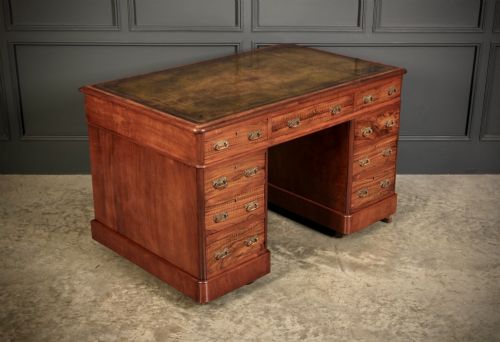
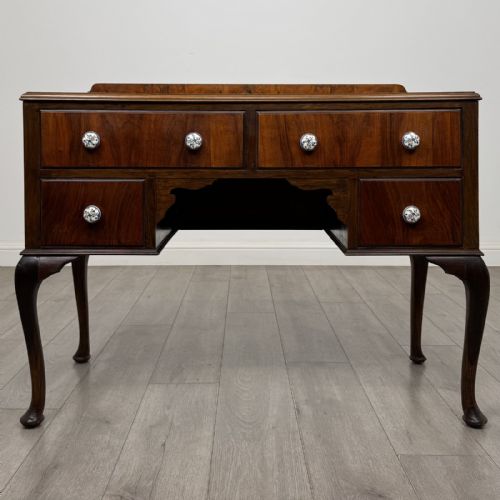
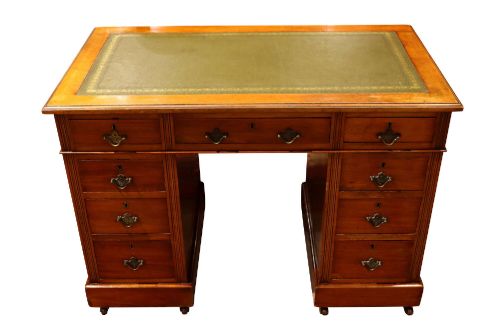
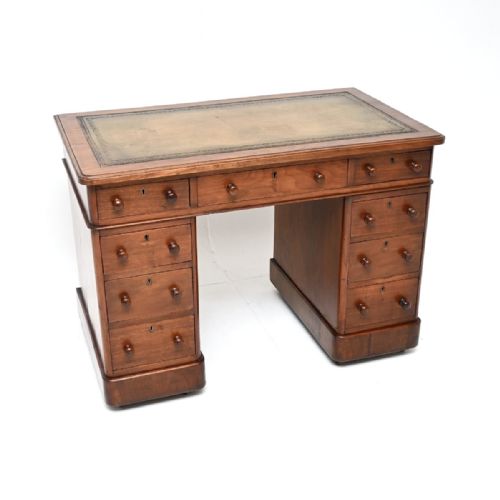
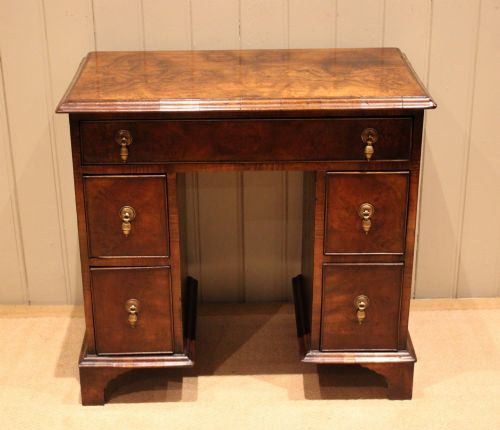
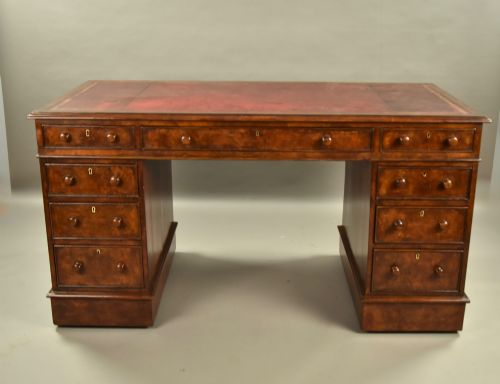
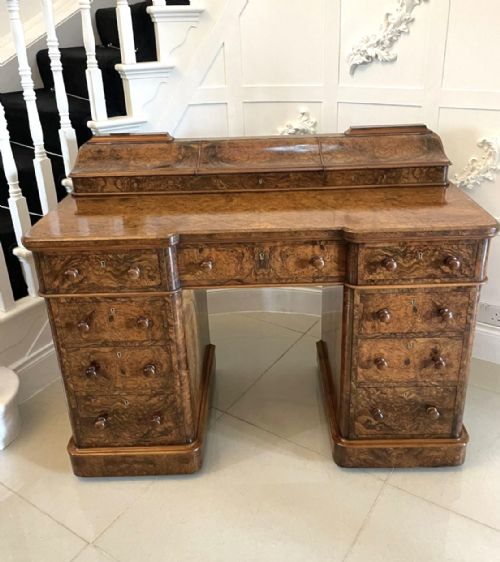
Walnut office furniture comprises desks, writing tables, bureau bookcases, and pedestal desks designed for workspaces. When exploring walnut office furniture, buyers frequently encounter Victorian and Edwardian pedestal desks alongside Georgian kneehole desks.
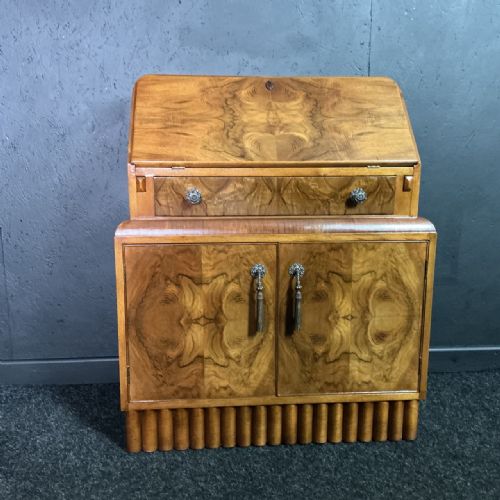
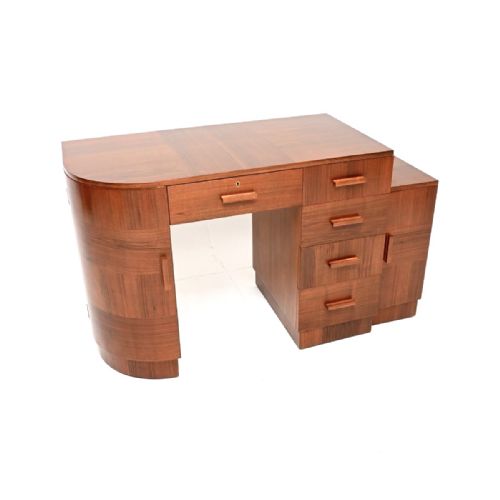
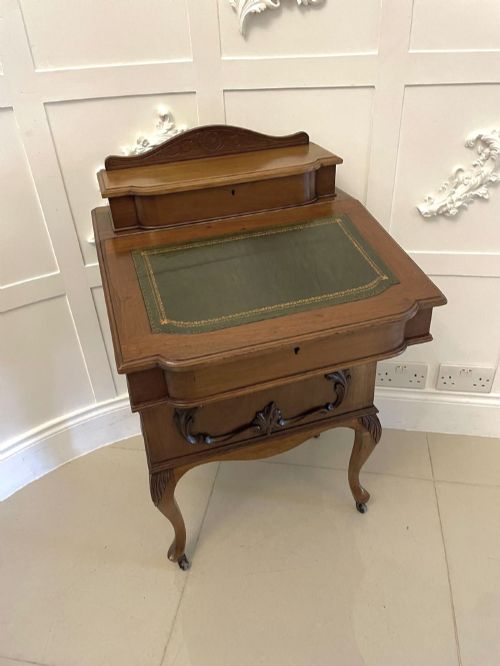
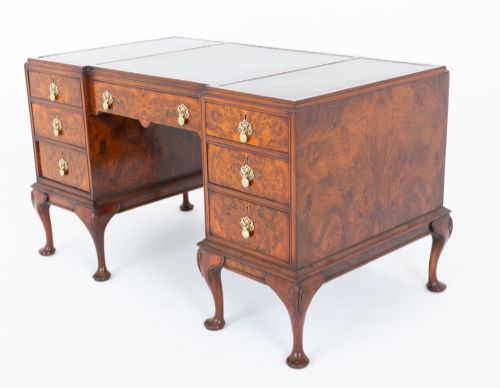
The selection ranges from compact Davenport desks to large partners desks and bureau bookcases. Art Deco pieces from the nineteen-thirties also appear, featuring figured veneers and clean geometric lines.
Makers such as Maple and Co., Gillows, and Wylie and Lochhead contributed substantial pieces to this tradition. Pieces span several centuries, moving from early Georgian craftsmanship through Victorian manufacturing to twentieth-century modernism.
How they were made
Cabinet makers utilised solid timber alongside walnut veneer and burr walnut, laying figured sections over secondary woods to create striking patterns across writing surfaces and drawer fronts. Brass handles, escutcheons, and leather inserts provide durable contrasting details.
Construction methods evolved from eighteenth-century dovetailed drawer construction to nineteenth-century pedestal frameworks and twentieth-century streamline designs. Internal drawers frequently incorporate secondary timbers such as oak or satinwood.
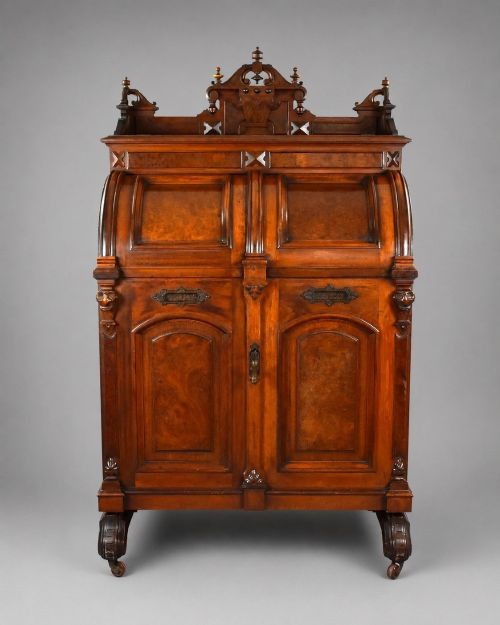
Polish and wax finishes were hand-applied to protect the timber while highlighting the natural grain. Carved elements and inlaid banding appear on specific Edwardian and Aesthetic movement examples.
Walnut Office Furniture Retail Price Guide 2026
Typical asking prices for walnut office furniture among the pieces listed under this phrase on Sellingantiques today, from the lower quarter to the upper quarter. They describe what is for sale here now, not the wider market.
Listings feature walnut office furniture spanning the Georgian, Victorian, Edwardian, and Art Deco periods, utilising brass, leather, and oak.
What varies in quality
The selection of the burl veneer dictates visual impact, with tighter, more complex grain patterns marking higher grades of furniture. Matching the grain across multiple drawers requires considerable skill from the cabinet maker.
Original hardware, including brass locks and pulls, elevates an item's integrity alongside the retention of period leather writing surfaces. Secondary timbers inside the drawers reveal the underlying standard of construction and materials.
Attribution to documented workshops like Gillows or Maple and Co. adds distinction. The crispness of carved details and the smoothness of drawer runners demonstrate maker proficiency.
Maple & Co·Wylie & Lochhead Glasgow·F.H. Marshall & Co Glasgow·Betty Joel·Gillows Lancaster·Maurice Adams
The Walnut Office Furniture Glossary
- Burr walnut
- A veneer sliced from the gnarled growth of a walnut tree. It produces intricate, swirling patterns highly prized by cabinet makers.
- Bureau bookcase
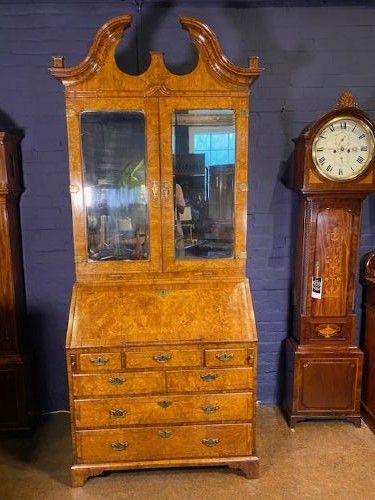
- A writing cabinet featuring a sloping fall-front desk combined with shelving enclosed by upper doors. This form offers integrated storage and workspace.
- Partners desk
- A large double-sided desk designed for two people to work opposite each other. These items feature drawers and cupboards on both sides.
- Davenport
- A compact compact writing desk with a sloping top and side drawers. It gained popularity during the nineteenth century for smaller rooms.
Walnut Office Furniture: Frequently Asked Questions
What is a kneehole desk?
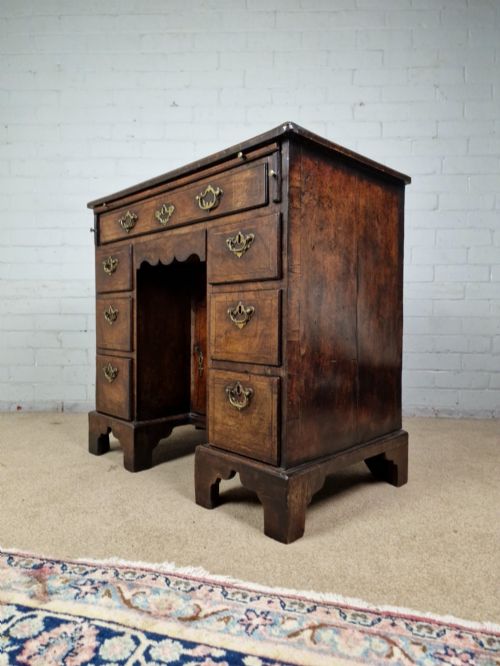
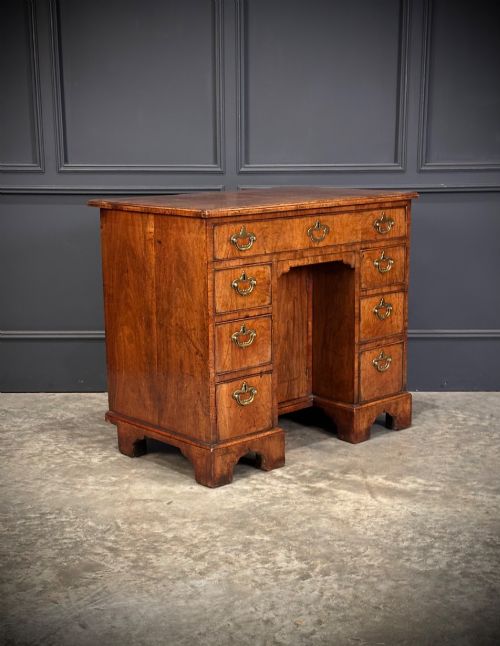
A kneehole desk is a smaller pedestal form featuring a recessed central cupboard beneath the writing surface, flanked by banks of small drawers.
Originating in the early eighteenth century during the Georgian era, these pieces provide compact workspace while concealing storage behind closed doors.
How do I identify a Victorian desk?
Victorian desks typically display heavier proportions, robust brass hardware, and rich burr walnut veneers over oak carcases. They often incorporate leather-lined writing surfaces and panelled sides.
Cabinet construction from this period employs machine-sawn elements alongside hand-cut dovetails, reflecting industrial manufacturing shifts.
What makes Art Deco walnut desks different?
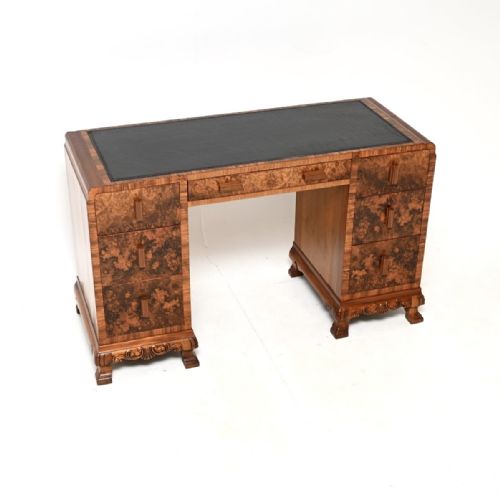
Art Deco walnut desks from the nineteen-thirties favour streamlined silhouettes, symmetrical figured veneers, and minimal ornamentation.
Designers like Betty Joel and Maurice Adams utilised the natural grain of burr walnut as the primary decoration, avoiding traditional carving.
Where should I place a partners desk?
A partners desk requires central placement within a room because drawers and cupboards finish both sides equally.
These large tables function well in spacious studies where access from multiple directions is necessary.