
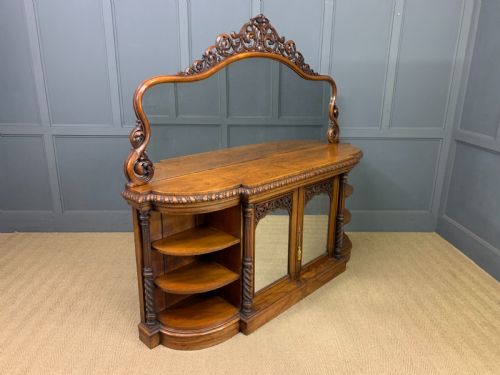


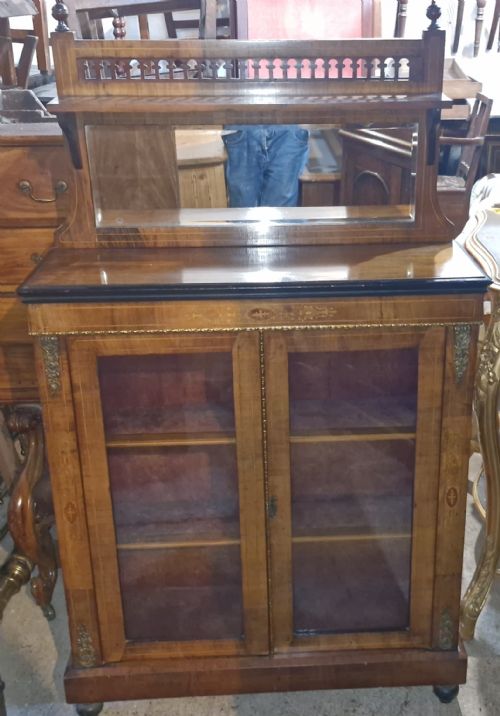


Walnut Mirror Back Sideboard
When you search for a walnut mirror back sideboard, you are looking at substantial Victorian and Edwardian reception furniture built to display prized possessions while reflecting light.
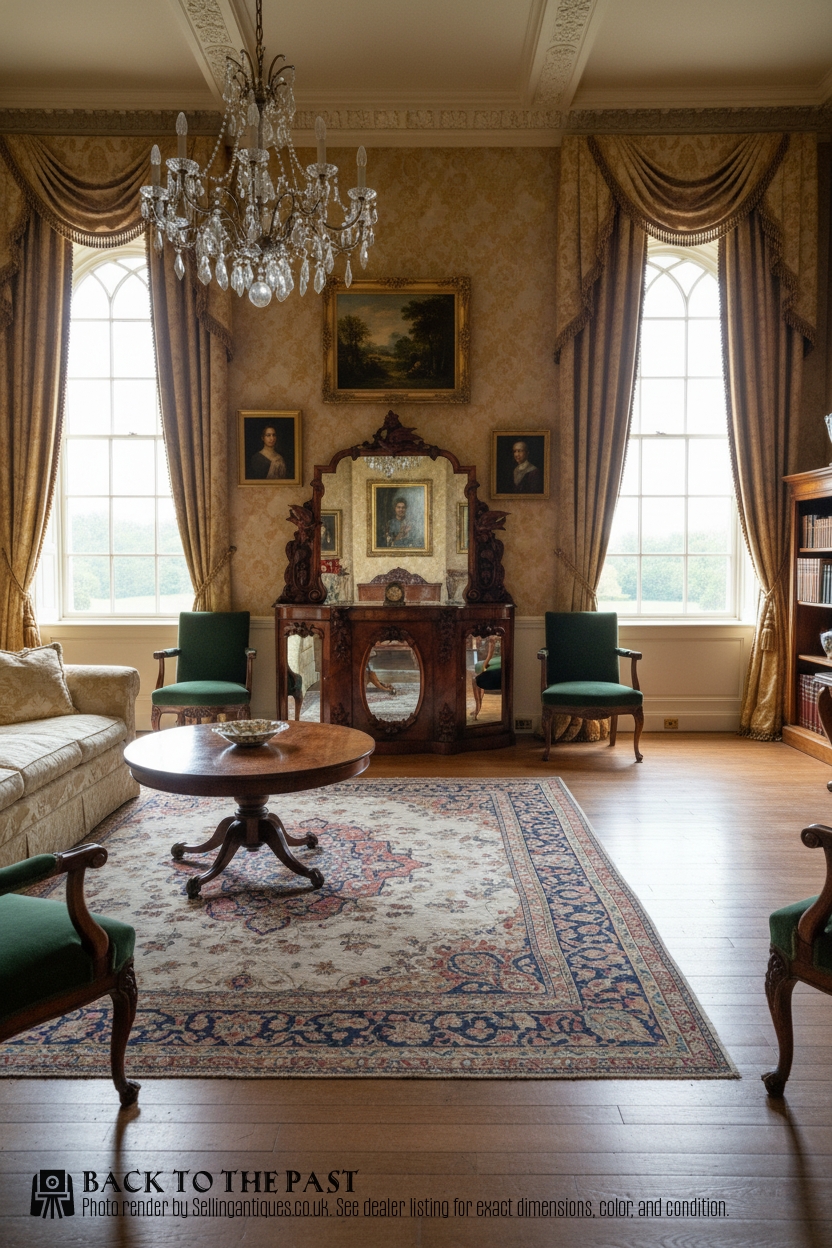
Walnut Mirror Back Sideboard
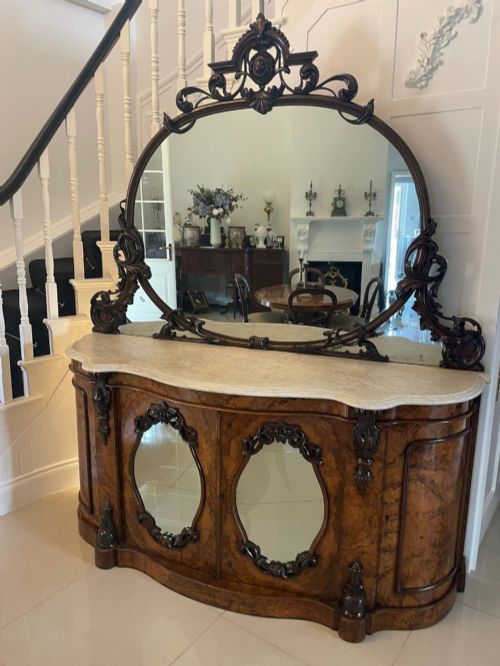
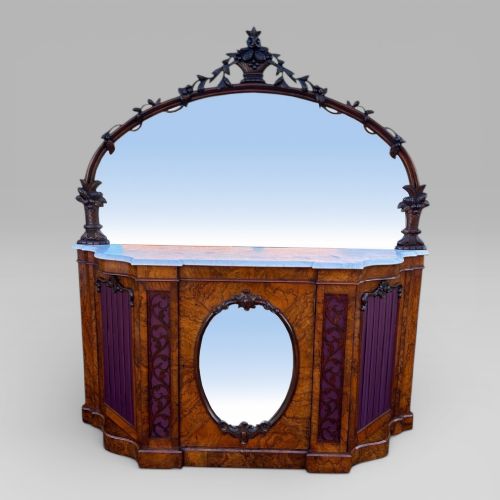
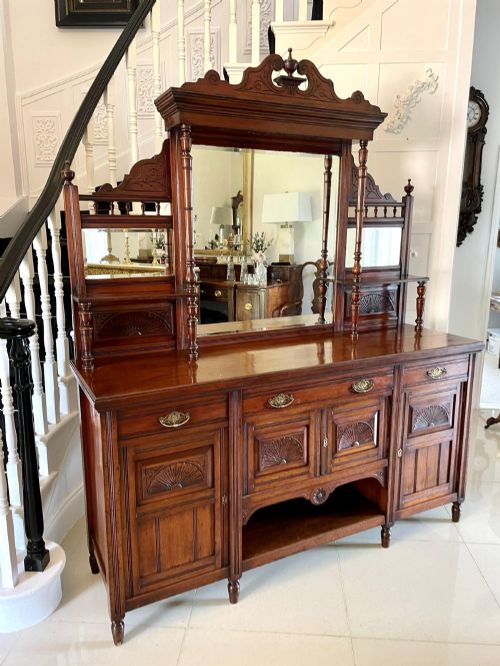
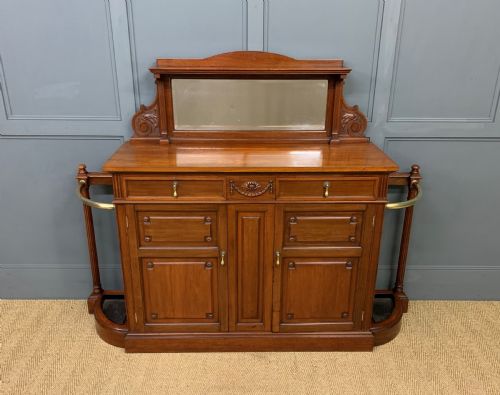
A walnut mirror back sideboard combines a low, enclosed cabinet base with an upright wooden frame holding an integrated glass mirror. These large statement pieces served formal reception rooms and dining spaces across the Victorian and Edwardian eras, functioning equally as credenzas, chiffoniers, or display cabinets.
The version you meet most frequently on this page is the Victorian burr walnut credenza or sideboard, dating from the mid to late nineteenth century. These pieces often pair heavily figured timbers with carved ornamentation, marble tops, or inset porcelain plaques.
Makers and workshops of the nineteenth and early twentieth centuries produced variations spanning the Rococo Revival, Aesthetic, and Art Nouveau styles. While many function primarily as low sideboards with mirror backs, others incorporate glass display doors, open shelving, or marble surfaces intended for serving and display.
How they were made
Cabinetmakers constructed these pieces using solid walnut frameworks overlaid with highly figured burr walnut veneers to create rich, swirling grain patterns on the doors and fascias. Ormolu mounts, brass fittings, and delicate marquetry inlay frequently accentuate the timber surfaces.
Mirror glass sits securely within carved or inlaid wooden frames attached to the rear of the cabinet base. Selected examples integrate heavy white or coloured marble tops into the cabinet structure, providing a durable surface above the main storage compartments.
Walnut Mirror Back Sideboard Retail Price Guide 2026
Typical asking prices for walnut mirror back sideboard among the pieces listed under this phrase on Sellingantiques today, from the lower quarter to the upper quarter. They describe what is for sale here now, not the wider market.
Listings feature Victorian, Edwardian, and Aesthetic period pieces constructed from walnut, burr walnut, marble, and mirror glass.
What varies in quality
The distinction between standard production and exhibition grade pieces rests in the depth of the hand carving and the selection of the burr walnut veneer. Superior examples display intensely figured timber matching symmetrically across doors and panels, alongside crisply chased ormolu mounts and integrated Sevres porcelain plaques.
Structural complexity also separates the tiers of craftsmanship, with finer specimens incorporating serpentine fronts, intricate marquetry inlay, and substantial marble tops. The integration of the mirror back frame and the precision of the joinery determine the overall permanence of the piece.
Shoolbred And Co
The Walnut Mirror Back Sideboard Glossary
- Burr walnut
- A specialised timber cut from the abnormal growth knots of walnut trees, yielding complex, swirling grain patterns highly prized for cabinet veneers.
- Credenza
- A low dining or reception room cabinet used for serving food or displaying decorative objects, frequently fitted with doors and a mirror back.
- Ormolu
- Gilded bronze ornamentation applied to furniture surfaces to provide metallic contrast against dark woods.
- Marquetry
- Decorative patterns formed by the precise fitting of thin veneers of various woods into a prepared wooden surface.
- Chiffonier
- A compact sideboard or cabinet featuring a raised shelf or mirror superstructure above enclosed lower storage cupboards.
Walnut Mirror Back Sideboard: Frequently Asked Questions
What is a walnut mirror back sideboard?
A walnut mirror back sideboard is a large nineteenth or early twentieth-century cabinet featuring an integrated glass mirror set into a wooden superstructure above a storage base.
These pieces were designed for formal rooms to provide both storage and reflected light.
How were these sideboards used?
Owners utilised the enclosed lower cabinets for storing tableware, linens, or drinks while employing the surface and upper mirror for display.
The reflective back increased ambient light in Victorian and Edwardian reception rooms and showcased decorative items placed upon the top.
How do you date a walnut sideboard?
Dating relies on identifying stylistic markers such as Victorian Rococo carving, Aesthetic Movement linearity, or Edwardian proportions alongside construction methods.
Pieces originating from the mid-nineteenth century frequently feature heavy burr walnut veneers and elaborate ormolu mounts.
How do I care for antique walnut?
Maintenance requires keeping the timber away from direct sunlight and fluctuating heat sources to prevent veneer lifting.
Regular dusting with a dry cloth and occasional light waxing preserves the traditional finish without damaging the grain.