
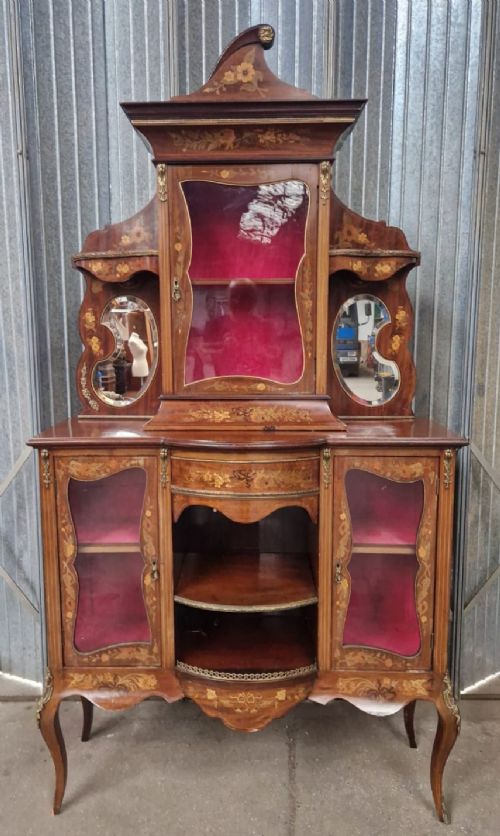
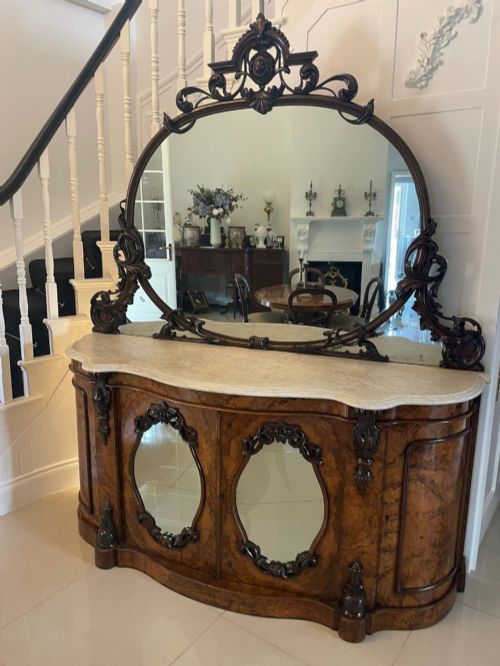
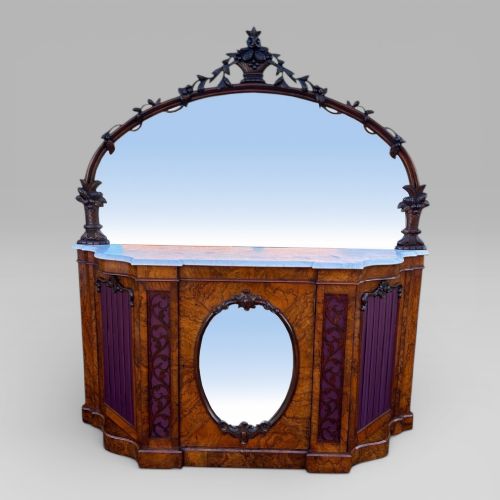
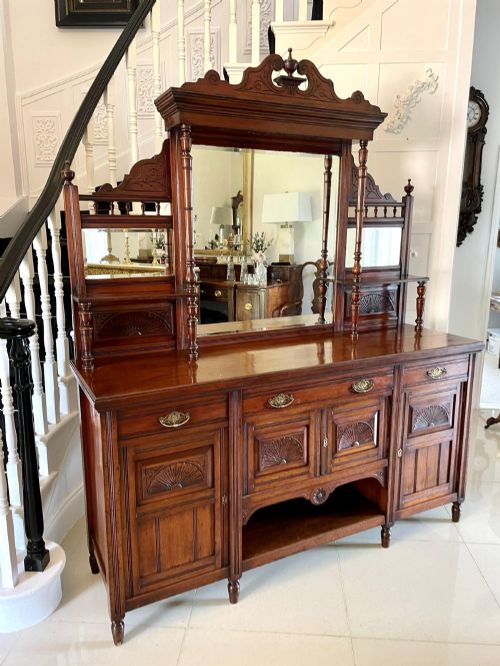
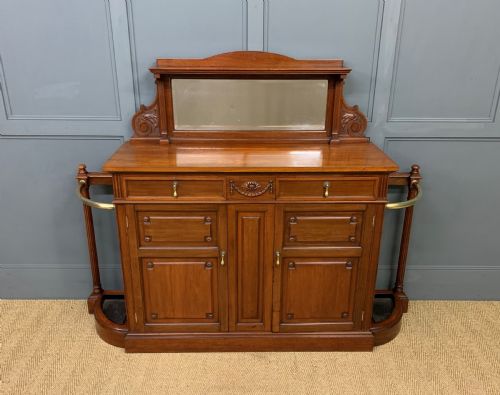
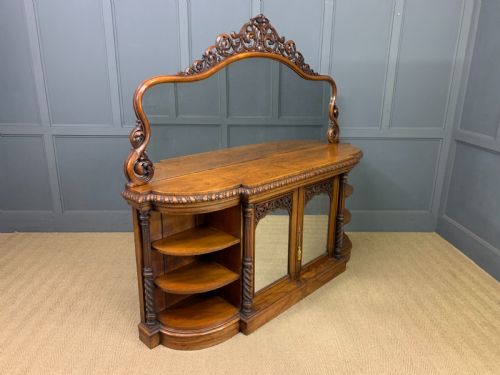


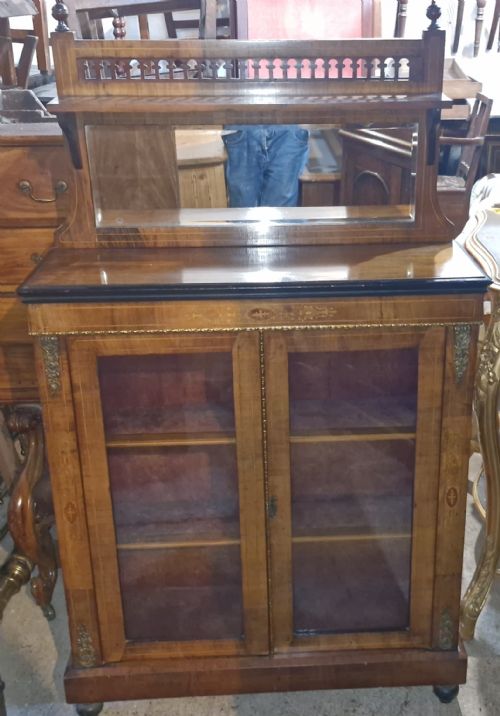


Walnut Mirror Back Credenza
A walnut mirror back credenza combines generous display timber with reflective glass, offering a grand focal point for a period dining room or parlour.
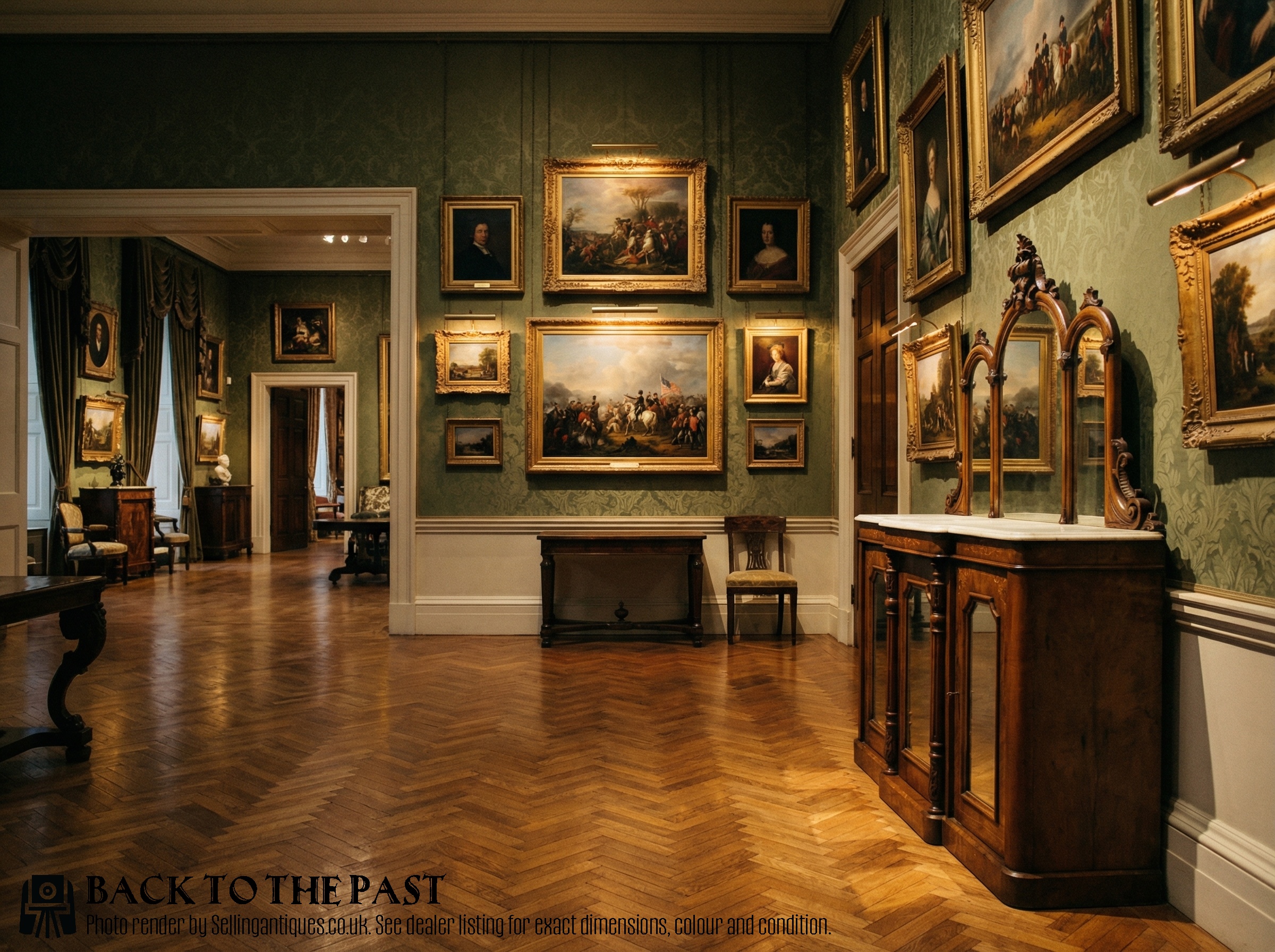
Walnut Mirror Back Credenza
A walnut mirror back credenza stands as a substantial piece of nineteenth-century reception furniture, designed to combine enclosed storage with display surfaces. When searching for this phrase, collectors encounter low-profile cabinets featuring integrated upright backboards inset with mirror glass.
The prevailing form on this page originates from the Victorian era, spanning decades from eighteen fifty to eighteen ninety. These examples frequently pair figured timbers with glazed side compartments and central doors.
Makers of the period adapted the credenza layout into varied formats, including sideboards and chiffoniers equipped with mirror backs. Buyers meet pieces ranging from simple two-door cabinets to elaborate architectural designs.

Materials and construction methods
Cabinet makers utilised solid walnut and figured burr walnut veneers applied to carcase timbers, generating rich surface grain patterns across the main body. Master craftsmen selected timber sections carefully to create symmetrical matches on door panels and friezes.
Workshops integrated mirror glass within carved wooden frames as the defining upper feature of the credenza. Artisans mounted brass hardware, ormolu mounts and porcelain plaques to embellish the cabinet structure.
Marquetry inlay work appears frequently, using contrasting woods to generate floral or geometric motifs across the door fronts and panels. Certain examples incorporate marble tops to provide a durable and decorative upper surface.
Carved acorns and oak leaves peek out from early nineteenth-century mirror frames, reminding makers to bring the forest indoors.
Distinguishing quality in period cabinets
The sophistication of the timber veneer selection dictates the visual impact of the piece, with complex burr patterns and figured grain marking superior execution. Plain surfaces indicate standard commercial production rather than exhibition standard craftsmanship.
The intricacy and depth of hand carving on the frame and mirror surround separate fine pieces from simpler workshop output. Integrated cast ormolu mounts and delicate marquetry inlay further elevate the status of the credenza.
Internal secondary timbers and the precision of drawer dovetailing reveal the competence of the original cabinet maker. Robust structural integrity combined with crisp decorative details defines the top tier of surviving examples.
Shoolbred & Co.·H. Ogden Manchester
The Walnut Mirror Back Credenza Glossary
- Credenza
- A low dining room or parlour cabinet used for serving food or displaying ornaments. This form evolved during the nineteenth century to incorporate mirrored upper sections.
- Burr walnut
- Timber harvested from tree growths that produce complex, swirling grain patterns. Cabinet makers prized this material for veneer work on primary display surfaces.
- Ormolu
- Gilded bronze ornamentation applied to furniture mounts and details. Workshops used these cast metal additions to enhance the visual richness of high-status Victorian pieces.
- Marquetry
- Decorative veneer patterns assembled from varied coloured woods. Artisans inlaid these intricate designs into the cabinet doors and friezes.
- Serpentine
- A furniture front or top shaped with a double curve, undulating outward and inward. This contour requires skilled carpentry to execute correctly on solid timber.
Walnut Mirror Back Credenza: Frequently Asked Questions
How were these credenzas used originally?
Victorian households utilised these cabinets in dining rooms and formal reception spaces to store glassware, silver and dining accessories. The top surface served as a sideboard for serving food during gatherings.
The integrated mirror glass and open shelving allowed families to display ceramic plates, ornaments and decorative porcelain plaques. This dual function of storage and display made the form central to interior decoration.
How do I date a walnut credenza?
Examining the secondary timbers inside drawers and the style of the carving helps determine the period of manufacture. Mid-Victorian examples often display rich burr walnut veneers and ornate ormolu mounts.
Later Victorian and Edwardian pieces shift toward lighter inlay patterns and different aesthetic influences. Comparing construction techniques with dated examples provides a reliable timeframe.
Will a credenza fit in a modern room?
These cabinets provide substantial storage capacity while maintaining a relatively shallow depth against the wall. Their low profile prevents them from dominating smaller modern living spaces.
The reflective glass backboards help bounce light around a room, making them functional additions to contemporary interiors as media consoles or display units.