

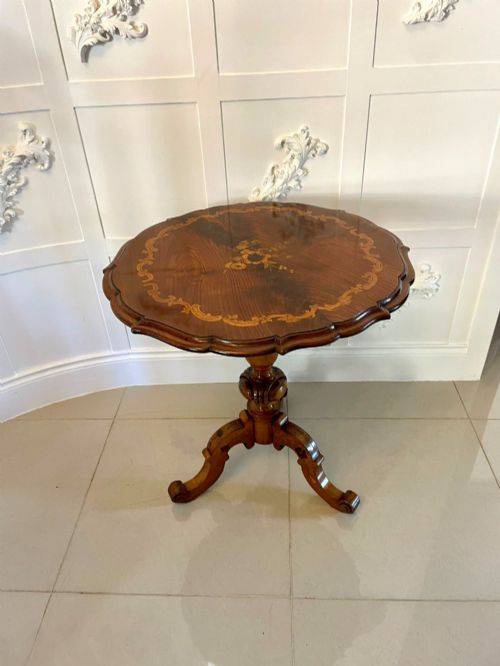
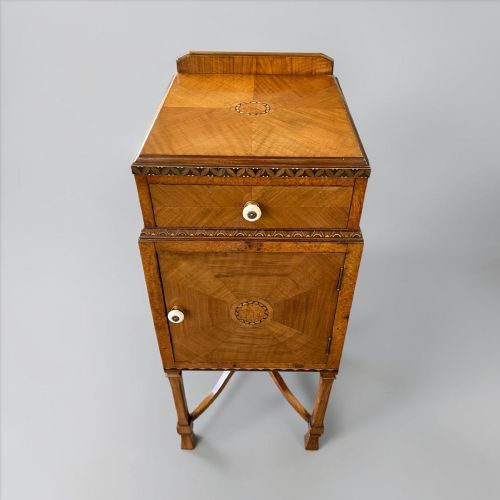
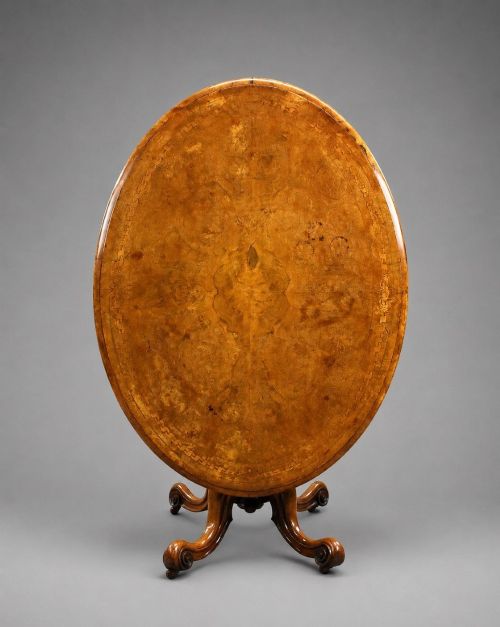
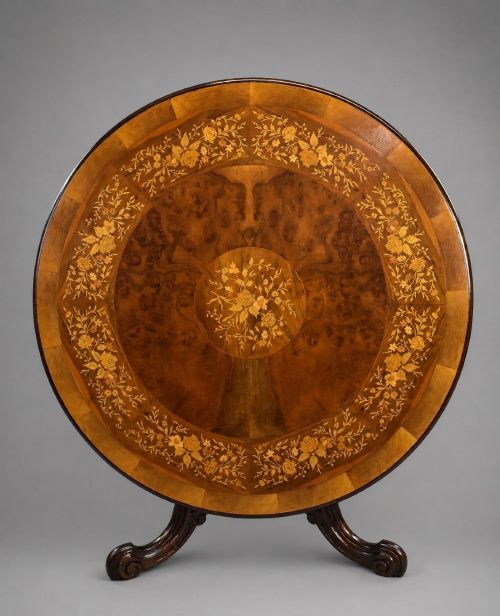

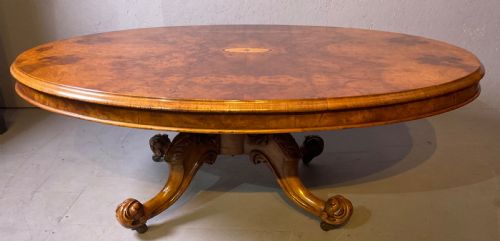

Walnut Marquetry Pedestal Table
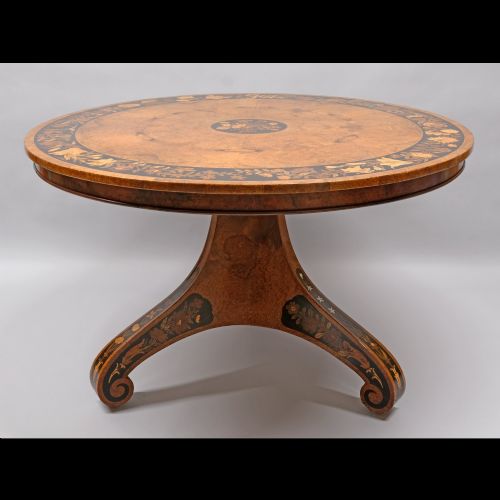
A walnut marquetry pedestal table brings together figured timber and intricate inlay on a central support, offering a striking centrepiece for a room.
Walnut Marquetry Pedestal Table
When you search for a walnut marquetry pedestal table, you encounter pieces primarily from the Victorian period, alongside 19th Century Italian examples and later iterations. These tables serve various functions in domestic spaces, appearing as centre tables, lamp tables, loo tables, breakfast tables, and games tables.
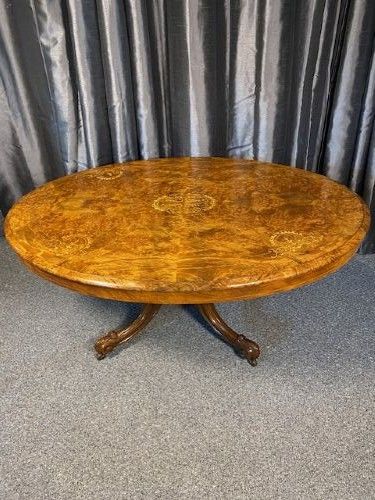
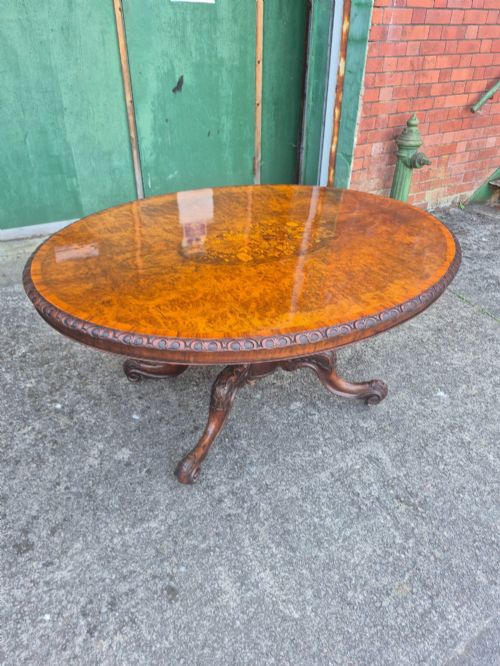
The form typically relies on a central column or pedestal rising from a shaped base, supporting a circular, oval, octagonal, or rectangular top. Victorian iterations frequently utilise burr walnut for its rich, swirling grain patterns, combined with elaborate decorative surfaces.
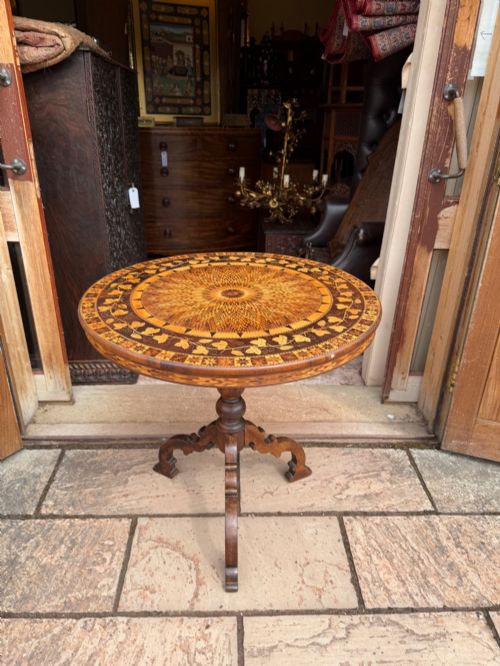
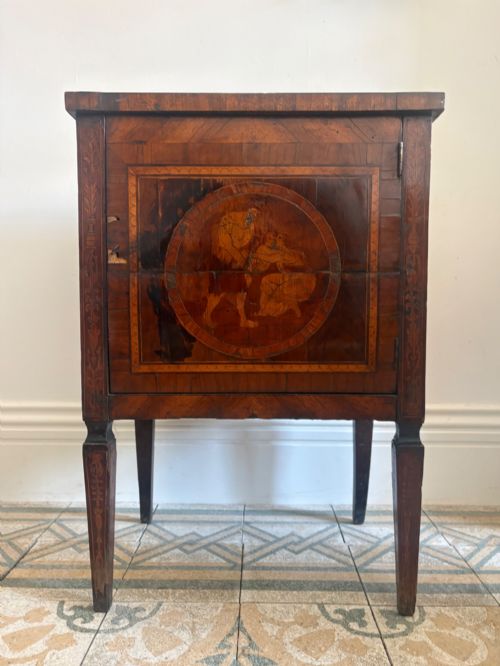
Italian Sorrento pieces and French regional variants also appear within this group, demonstrating distinct regional approaches to floral and geometric inlay work. Buyers often select these designs to anchor a traditional interior or to introduce textural contrast into a modern scheme.
How they were made
Cabinet makers built the structural carcases using solid walnut, mahogany, or fruitwood, applying fine veneers of burr walnut to the visible top and base surfaces to create dramatic figuring. They then cut intricate marquetry patterns from contrasting timbers such as boxwood, incorporating floral motifs and geometric arrangements directly into the surface.
The inlay pieces fit precisely into hand-cut recesses within the walnut ground before undergoing smoothing and polishing to achieve a unified plane. Central pedestals often feature turned wooden shafts or hand-carved supports that descend to tripartite or quadrupartite legs.
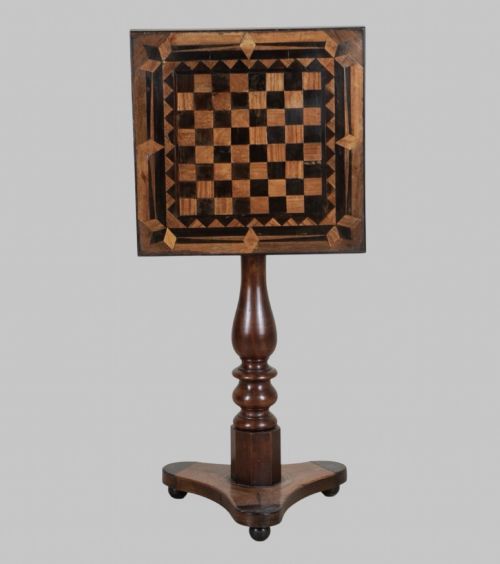
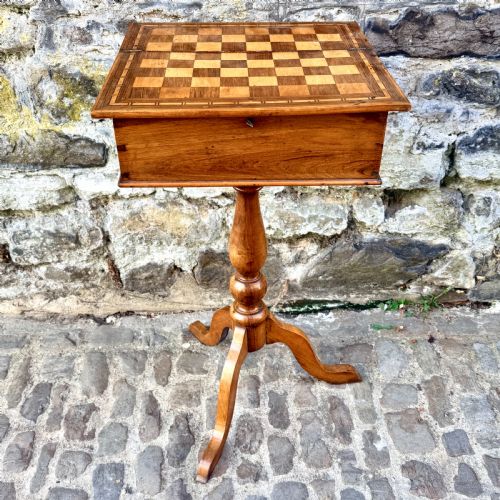
Tables featuring chess and backgammon boards concealed within their tops offered instant entertainment whenever unexpected visitors arrived for tea.
What varies in quality
The distinction between standard examples and the finest pieces rests upon the precision of the marquetry and the choice of veneer. Superior items display complex, multi-timber pictorial or floral arrangements with minimal filler between the inlaid elements.
Burr walnut selection dictates the visual depth of the top, with densely figured grain commanding greater attention than plain timber. Furthermore, the crispness of hand-carved elements on the pedestal and the stability of the central column construction define the overall execution.
Holmes Baldock·Gill & Reigate
The Walnut Marquetry Pedestal Table Glossary
- Marquetry inlay
- Decorative veneer work forming pictorial or geometric patterns using various coloured woods. It differs from simple inlay by covering the entire surface in a jigsaw of contrasting materials.
- Burr walnut
- Timber taken from the wart or growth on a walnut tree, yielding highly figured and swirling grain patterns. Cabinet makers prized this wood for its decorative impact on table tops.
- Centre table
- A freestanding table designed to be viewed from all sides rather than pushed against a wall. These forms often anchor the middle of a principal reception room.
- Loo table
- A large Victorian round or oval table with a tilting top, originally designed for the card game loo. The mechanism allows the top to fold vertically when not in use.
- Sorrento table
- Italian tables originating from the town of Sorrento, noted for intricate micro-mosaics and marquetry depicting local scenes or floral subjects.
Walnut Marquetry Pedestal Table: Frequently Asked Questions
Where should I place a pedestal table?
These tables suit placement in the middle of a reception room as a centrepiece, or positioned beside seating as a lamp table.
Their freestanding nature allows them to be viewed from all angles, making them effective focal points in hallways or studies.
How do I clean walnut marquetry surfaces?
Dust the surface regularly with a soft, dry cloth to prevent particulate accumulation within the fine lines of the inlay.
Apply a traditional beeswax polish sparingly to nourish the timber, avoiding modern silicone sprays that can damage the antique finish.
Can I use a card table for dining?
Many examples feature folding or rotating tops designed for games rather than heavy daily meals.
While occasional dining is possible, the folding mechanisms and delicate marquetry require careful treatment to prevent surface strain.
How do I distinguish Victorian from Georgian examples?
Georgian tables typically exhibit restrained classical proportions and simpler mahogany or walnut carcases with understated stringing.
Victorian versions frequently employ heavier burr walnut veneers, elaborate pedestal carvings, and dense floral marquetry.