
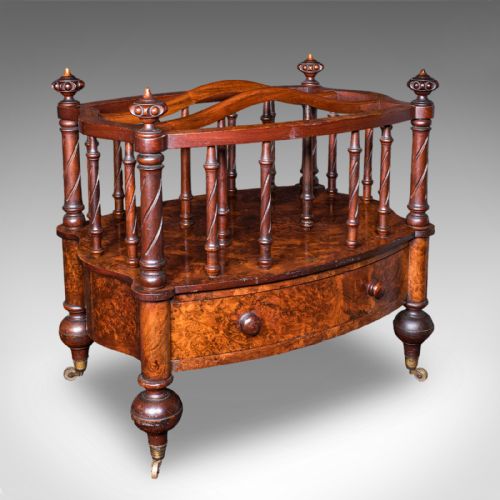
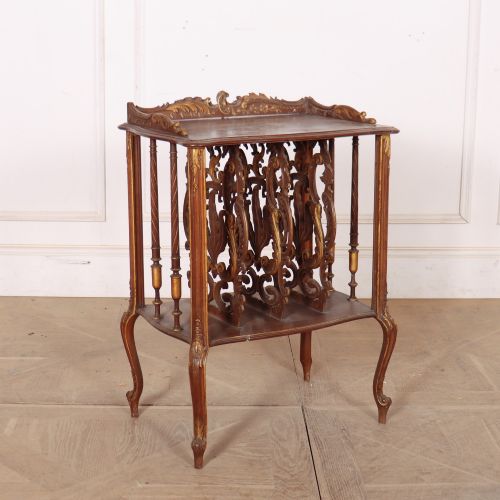


Walnut Magazine Rack Table
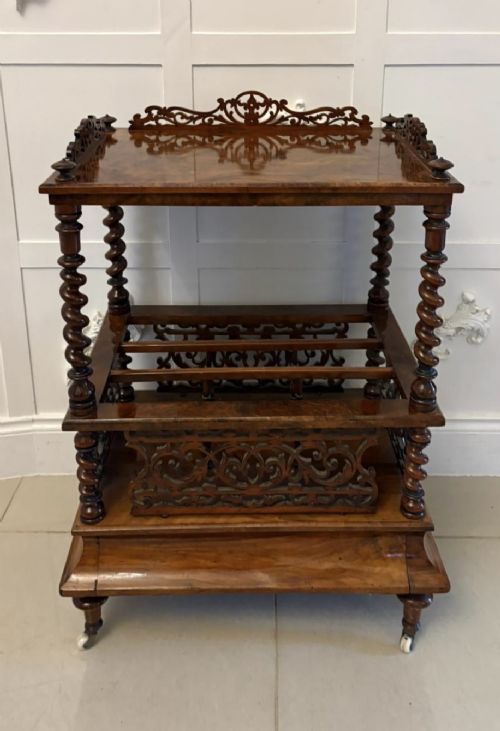
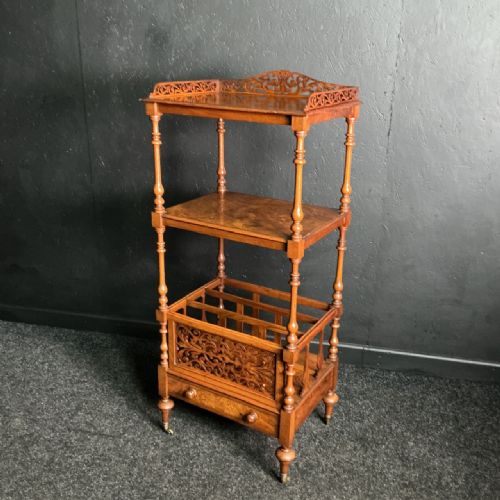
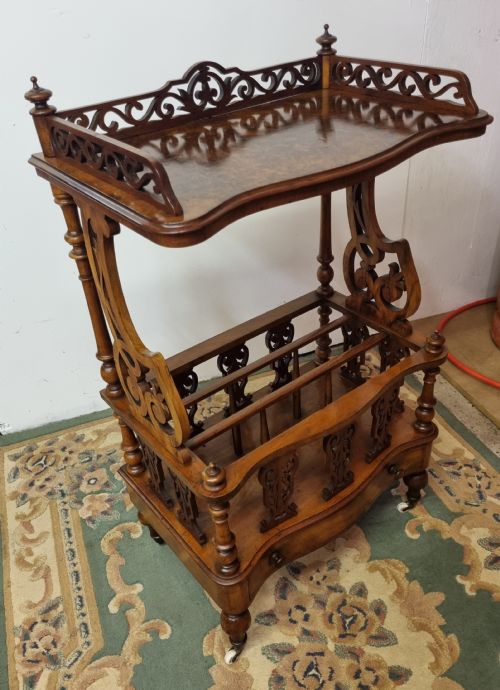
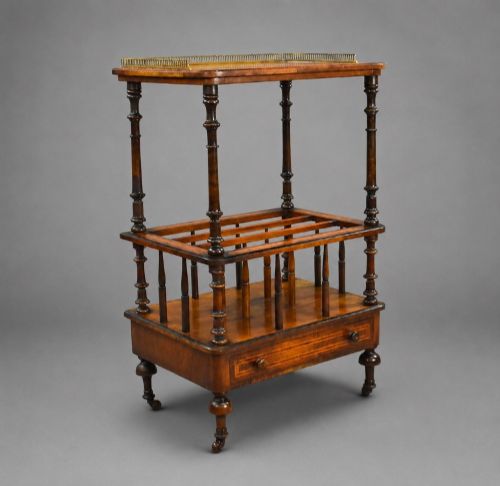
These walnut magazine rack table examples combine occasional display surfaces with structured compartments for periodicals, offering functional elegance for period interiors.
Walnut Magazine Rack Table
When you search for a walnut magazine rack table, you encounter a multi-purpose Victorian form that bridges the gap between occasional furniture and dedicated storage. These pieces combine flat table surfaces with dedicated vertical partitions designed for newspapers, sheet music, and periodicals.
The most common form on this page is the Canterbury, a traditional multi-tier stand originating in the late eighteenth century but heavily reinvented during the Victorian era. Many examples incorporate open tray tops, lower drawers, or combined whatnot shelving supported by turned or carved uprights.
Origins span the nineteenth century, with strong representation from the eighteen-sixties and eighteen-seventies alongside earlier Regency influences. The typical piece functions simultaneously as a lamp table, a side table, and an organised receptacle for reading material.
Materials and construction methods
Makers utilised walnut and burr walnut veneer extensively to achieve rich, figured surfaces with deep grain patterns. Solid walnut frames provide structural integrity while contrasting woods such as boxwood and ebony form delicate inlay work across tabletops and divisions.
Metal and ceramic accents appear frequently alongside the woodwork, including cast brass handles, ormolu mounts, and ceramic castors that facilitate movement. Turned columns, fretted slats, and serpentine shaping demonstrate the complex joinery and carving techniques of nineteenth-century cabinet makers.
Form variations include music stands, occasional tables, and combined whatnot shelving equipped with lower drawers.
Judging quality and craftsmanship
Quality reveals itself in the selection of the burr walnut veneer, where symmetrical figuring and depth of grain elevate the visual impact of the tabletop. Superior examples display crisp, hand-cut inlay and solid brass hardware rather than stamped or plated substitutes.
Structural refinement distinguishes finer pieces, particularly in the joinery of the vertical divisions and the integration of lower drawers. The presence of original turned supports, intact porcelain castors, and well-balanced proportions separates standard production pieces from master cabinet work.
The Walnut Magazine Rack Table Glossary
- Burr walnut
- A wood veneer taken from the warted growths on walnut trees, prized for its swirling, highly figured patterns. It forms the primary decorative surface on the finest Victorian examples.
- Canterbury
- A low stand featuring vertical partitions, originally designed for holding sheet music and later adapted for newspapers and magazines. These often incorporate lower drawers and occasional table tops.
- Whatnot
- An open set of tiered shelves used for displaying ornaments and books, frequently combined with Canterbury bases in nineteenth-century furniture. They provide vertical storage without heavy mass.
- Ormolu
- Gilded bronze mounts applied to furniture for decorative enrichment, common in French-influenced nineteenth-century pieces. The metalwork adds metallic contrast to dark walnut timbers.
- Serpentine shape
- A curved line that undulates gently, featuring a convex centre flanked by concave curves. Cabinet makers applied this profile to table edges and shelf fronts for fluid movement.
Walnut Magazine Rack Table: Frequently Asked Questions
What is a walnut magazine rack table?
It is a hybrid nineteenth-century furniture piece that combines a flat surface, such as a lamp or side table, with partitioned vertical compartments for storing periodicals and papers.
Most examples date from the Victorian period and take the form of Canterburys or whatnots, blending decorative wood veneers with practical domestic storage.
How were these tables used originally?
Victorians used them in drawing rooms and parlours to keep sheet music, daily newspapers, and current magazines neatly organised near seating areas.
The flat top surface served to hold small lamps, decorative ornaments, or cups of tea while seated nearby.
Can I use one as a modern side table?
They function exceptionally well beside modern sofas and armchairs as compact side tables with built-in storage for books and tablets.
The sturdy walnut construction and flat tops accommodate modern lighting while the partitions hold contemporary reading material.