


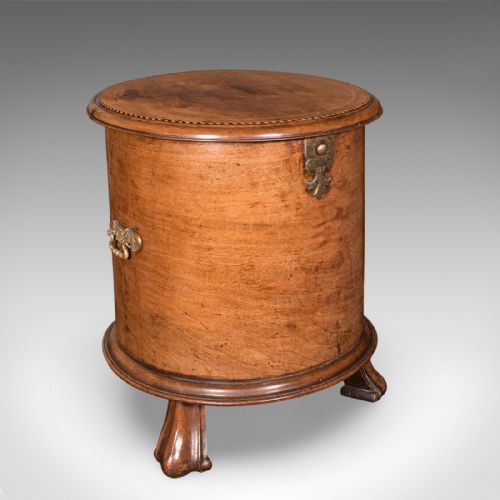


Walnut Liquor Stand
A walnut liquor stand brings together fine cabinet-making and practical service, offering a handsome station for bottles and glassware.
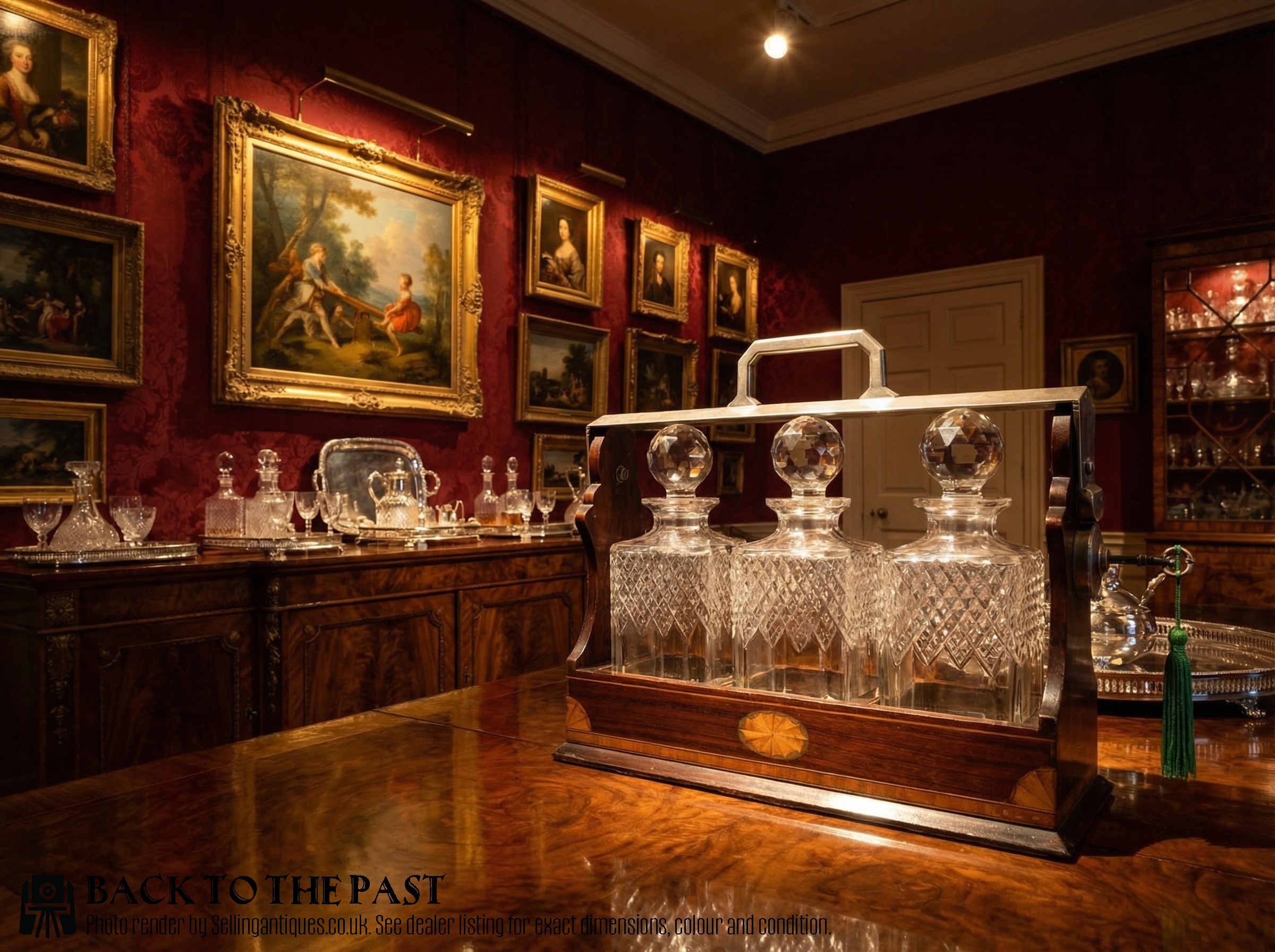
Walnut Liquor Stand
When you search for a walnut liquor stand, you encounter a specialised form of furniture designed to hold drinks, decanters, and glasses. These pieces range from Regency wine cooler stands to Victorian tantalus sets and 1930s cocktail cabinets.
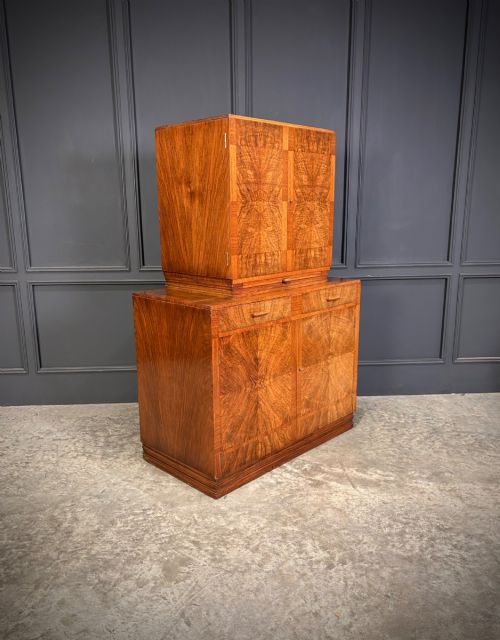
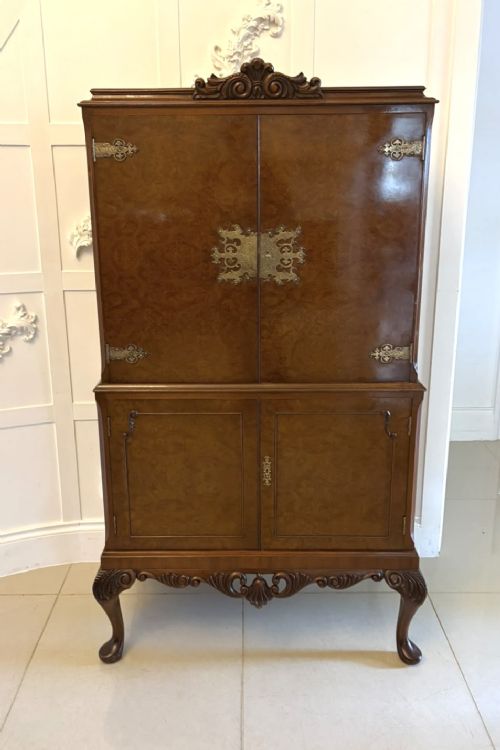
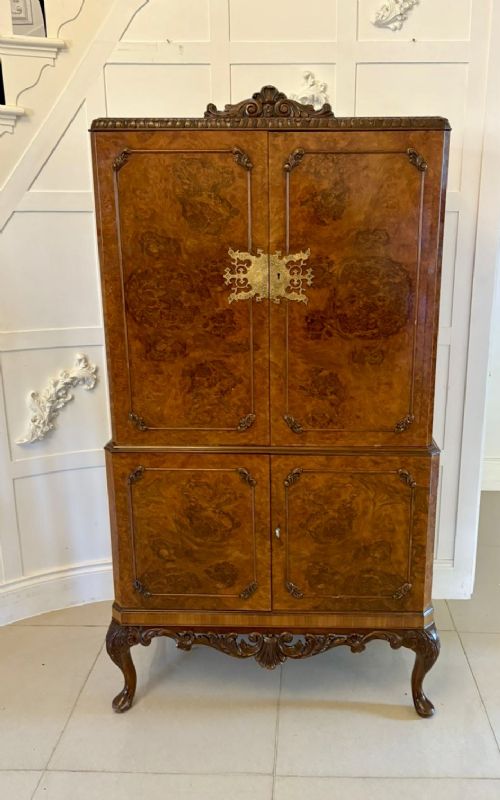
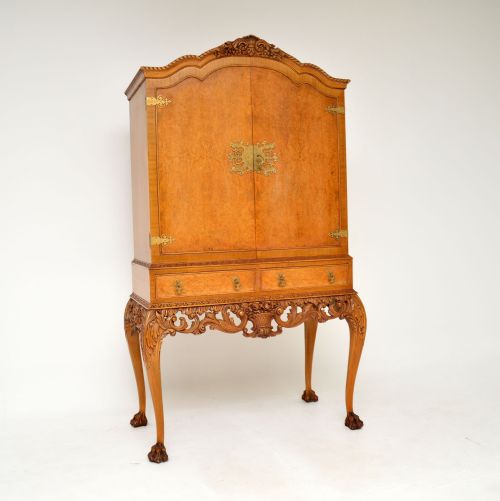
The version you are most likely to meet on this page is the burr walnut cocktail or drinks cabinet from the 1920s and 1930s, often raised on a stand or legs. These items provide dedicated storage for entertaining.
Earlier examples, such as those from the Regency period or 1870, take the form of cellarettes and fitted tantalus frames with cut crystal decanters. The variety spans distinct decades of British design and social habit.
How they were made
Maker's workshops built these stands using solid walnut and decorative burr walnut veneers applied to carcases. The distinct grain patterns provide the primary visual decoration across the surfaces.
Metal and brass hardware, including locks, handles, and framing mounts, secure the structure and protect the edges. Fitted interiors often incorporate mirror glass panels to reflect the light behind glassware.
Walnut Liquor Stand Retail Price Guide 2026
Typical asking prices for walnut liquor stand among the pieces listed under this phrase on Sellingantiques today, from the lower quarter to the upper quarter. They describe what is for sale here now, not the wider market.
What varies in quality
The selection of the burr walnut veneer dictates much of the visual impact, with tighter, more even figuring commanding greater attention. Cabinet-making standards show in the neatness of the joinery and the smooth movement of doors and sliding shelves.
Fittings also differentiate the range, particularly the inclusion of original cut crystal decanters in tantalus sets and the complexity of internal shelving arrangements. Maker attribution, such as pieces by Hille or Epstein and Co, marks out specific workshops of note.
Hille·Epstein and Co·Liberty's of London
The Walnut Liquor Stand Glossary
- Burr walnut
- A veneer taken from the growth excrescences of a walnut tree, yielding a swirling, highly figured grain pattern. It is prized for decorative furniture surfaces.
- Cellarette
- A lockable container or stand designed to hold bottles of wine and spirits securely. They are typical of the Regency period.
- Tantalus
- A locking drink stand that displays decanters in a metal framework while preventing access without a key. The name comes from the mythological figure.
- Queen Anne Revival
- A style drawing on the early eighteenth-century aesthetic, characterised by cabriole legs and restrained decorative carving. It appears frequently in twentieth-century cabinet work.
Walnut Liquor Stand: Frequently Asked Questions
What is a walnut liquor stand?
A walnut liquor stand is a piece of furniture designed to store and serve alcoholic beverages, decanters, and glasses. The category includes drinks cabinets, cellarettes, and tantalus sets.
These items serve both a decorative and a practical function in a room. They keep entertaining accessories organised and secure.
How do I date a walnut liquor stand?
Dating relies on the overall style, construction methods, and materials associated with specific periods. Regency examples feature classical lines and wine cooler forms, whereas 1930s pieces often show Art Deco influences.
Looking at the internal hardware, glass, and veneer work helps narrow down the decade of production. Twentieth-century cocktail cabinets typically present distinct proportions compared to nineteenth-century cellarettes.
How were these stands used historically?
Historically, these stands provided a secure place to store expensive wines and spirits in a dining room or drawing-room. Servants or hosts used them to dispense drinks to guests during social gatherings.
Tantalus sets kept the contents locked away from unauthorized access. Cocktail cabinets from the interwar period catered to the rising popularity of home mixology and entertaining.
How do I care for burr walnut furniture?
Burr walnut requires gentle cleaning with a soft, dry cloth to remove dust. Avoiding direct sunlight and sudden temperature changes protects the delicate veneer from splitting or fading.
Applying a suitable wax polish periodically helps maintain the lustre of the timber. Keeping the environment stable preserves both the wood and the internal mirrors.