



Edwardian Tantalus Frame
These pieces of edwardian tantalus frame are secure locking mechanisms designed to keep fine spirits safe from unauthorised access.
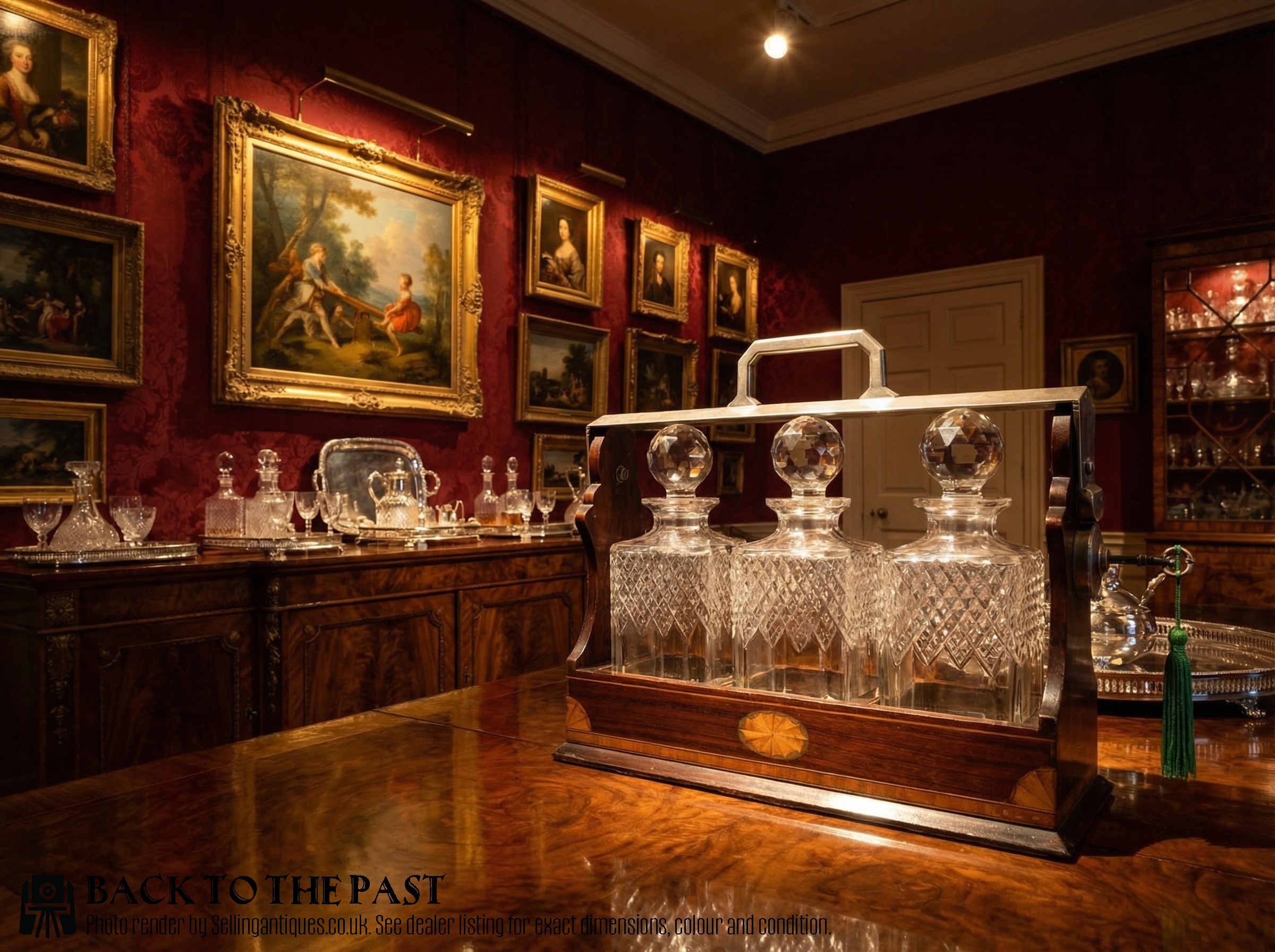
Edwardian Tantalus Frame
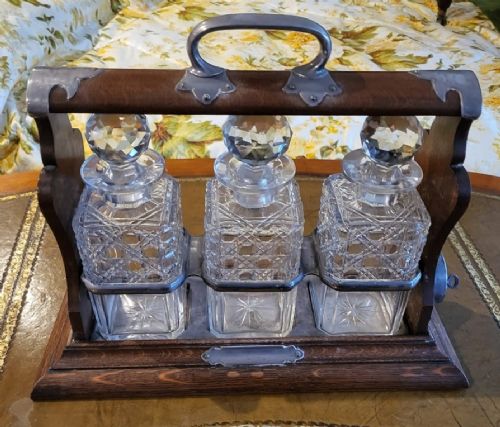
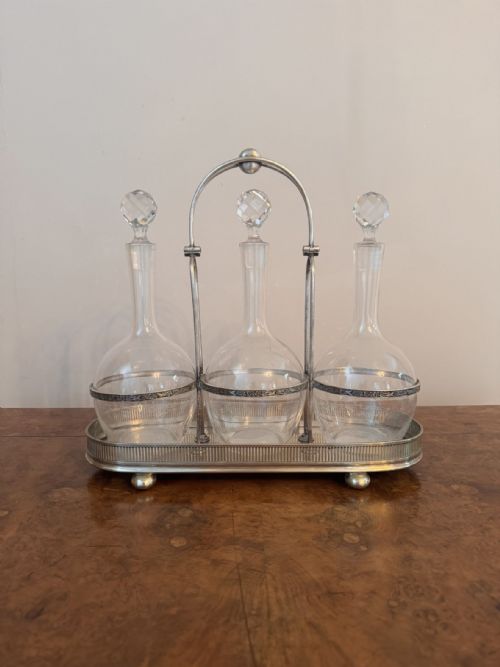
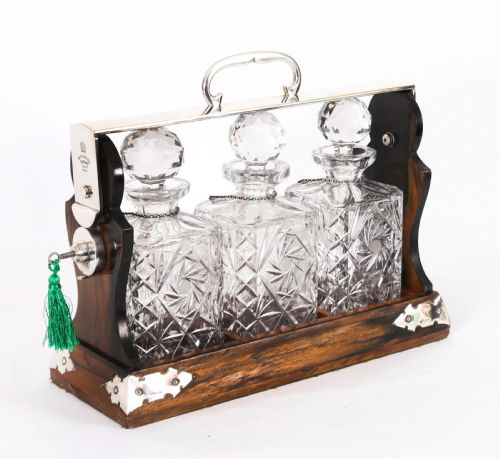
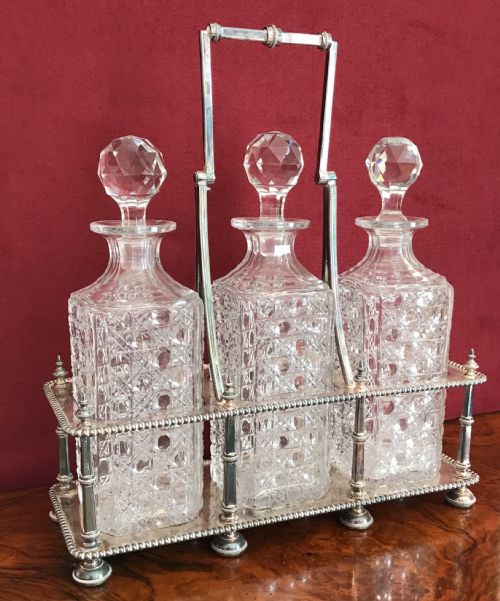
An edwardian tantalus frame comprises a wooden or metal chassis fitted with a locking bar that secures the necks of several decanters. When locked, the stoppers cannot be removed and the bottles cannot be withdrawn from the stand.
The versions met most frequently on this page date from the Edwardian period and around nineteen hundred, alongside Victorian examples in oak, walnut, and coromandel wood. They take the form of two or three bottle decanter sets designed for barware display.
Makers such as Betjemann and Hukin and Heath produced these locking decanter stands, pairing cut crystal or glass bottles with silver plated mounts and brass fittings.
How they were made
The frames rely on sturdy timber construction using oak, walnut, and coromandel wood, often enhanced with inlay and fitted with cast metal locking mechanisms. Silver plating is applied to the metal mounts, handles, and lock plates.
The accompanying decanters are formed from heavy cut glass or cut crystal, shaped to fit precisely within the wooden base compartments and beneath the retaining metal bars.
Edwardian Tantalus Frame Retail Price Guide 2026
Typical asking prices for edwardian tantalus frame among the pieces listed under this phrase on Sellingantiques today, from the lower quarter to the upper quarter. They describe what is for sale here now, not the wider market.
Listings feature oak, walnut, and coromandel wood frames fitted with cut crystal decanters and silver plated mounts dating from eighteen eighty to nineteen thirty.
What varies in quality
Quality depends upon the choice of cabinet wood and the intricacy of the metalwork, with coromandel and figured oak marking the upper end of production. The presence of hallmarked silver mounts rather than standard plating elevates the standing of a piece.
The integrity of the locking mechanism and the match between the decanters and the frame dictate the overall standard. Original matching cut crystal bottles that fit the frame without wobble indicate superior manufacture.
Betjemann·Hukin and Heath
The Edwardian Tantalus Frame Glossary
- Tantalus
- A locking drink cabinet or frame that displays decanters while preventing access to the contents. The term derives from Greek mythology, as the drinks are visible yet out of reach.
- Coromandel wood
- A dense, heavy timber with dark brown and black grain patterns imported from Asia. It was utilised for luxury boxes and frames during the nineteenth century.
- Silver plate
- A thin layer of silver fused to a base metal foundation, commonly used for the handles, lock plates, and carrying handles of barware frames.
- Cut crystal
- High clarity glass containing lead oxide, cut with facets that refract light. It forms the decanters housed within these locking frames.
Edwardian Tantalus Frame: Frequently Asked Questions
How does a tantalus lock work?
A metal bar drops across the glass stoppers of the decanters and is secured at the side with a key-operated lock. Turning the key releases the bar so it can swing upward to free the bottles.
Without the key, the stoppers remain firmly trapped beneath the metal strap, preventing anyone from pouring the contents.
Why are they called tantalus frames?
The name comes from Tantalus in Greek mythology, who was condemned to stand in a pool of water beneath fruit trees with the water and fruit ever receding from his reach.
These frames apply the same principle to hospitality, displaying the whiskey and brandy decanters clearly to guests while keeping the spirits locked away.
Are the decanters original to the frame?
Many frames survived with their matching cut crystal or glass decanters, though replacements occur frequently due to accidental breakages over the decades.
Original bottles sit snugly in the wooden base recesses and align precisely beneath the locking bar without excessive clearance.
What woods were used for these frames?
Oak is the timber most commonly encountered, alongside walnut and denser exotic woods like coromandel. The frames often feature brass hinges and silver plated mounts.
Selected examples incorporate decorative inlay work around the base or handles to complement formal dining and smoking rooms.