






Walnut Library Book Cabinet
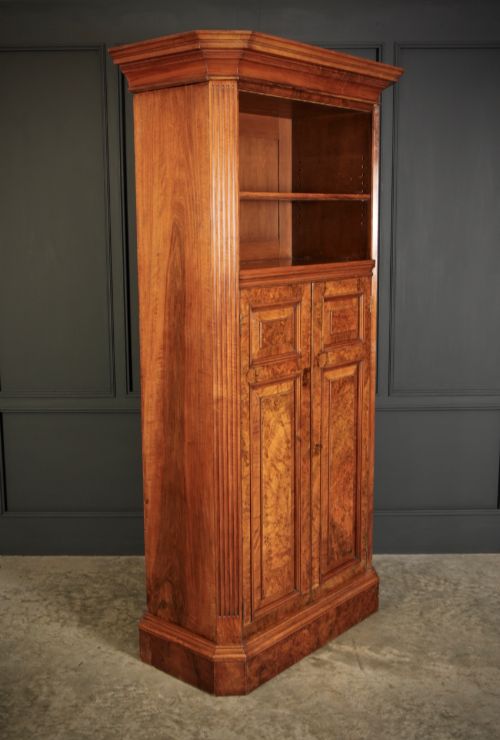
A walnut library book cabinet brings warmth to a study, offering timber grain and adjustable shelving to house a working library.
Walnut Library Book Cabinet
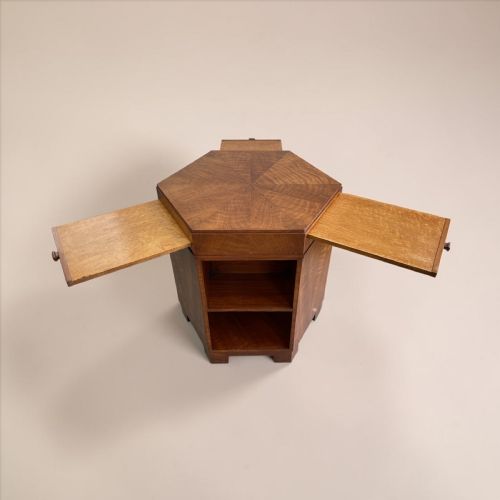
When searching for a walnut library book cabinet, a buyer encounters pieces designed to store and display books within domestic or institutional studies. These forms span Victorian, Edwardian, and Art Deco periods, drawing on styles such as Queen Anne Revival and William IV.
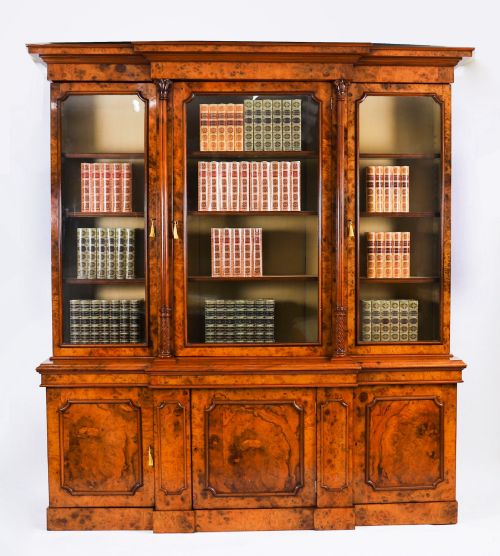
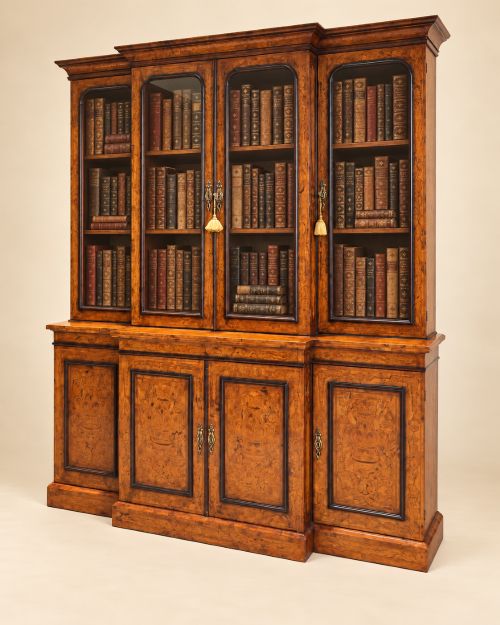
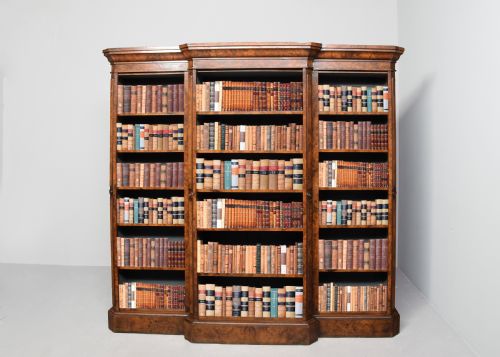
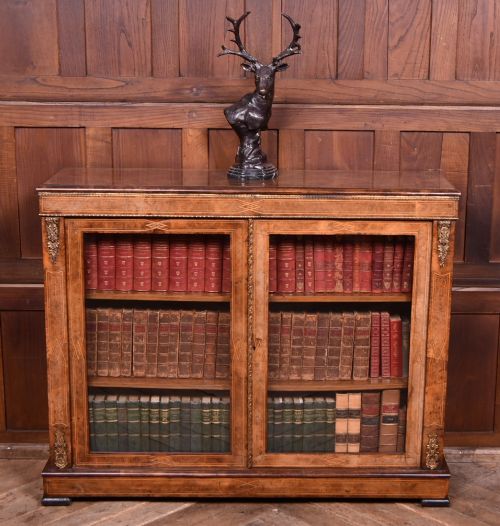
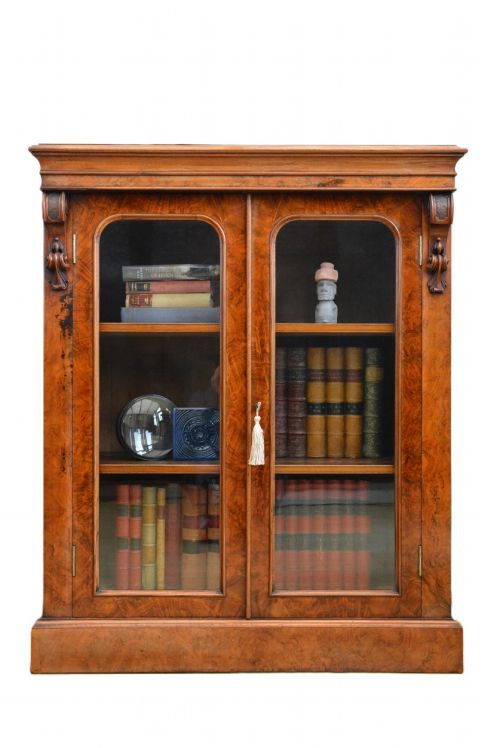
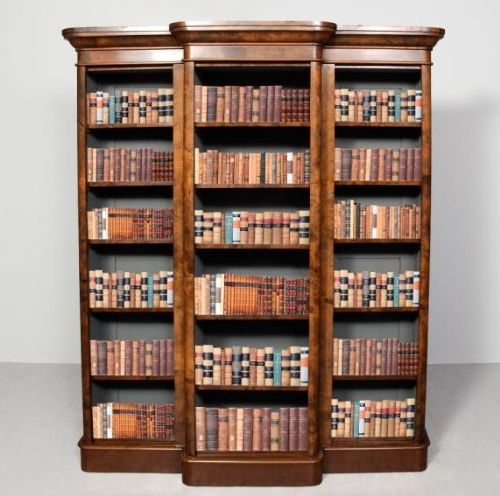
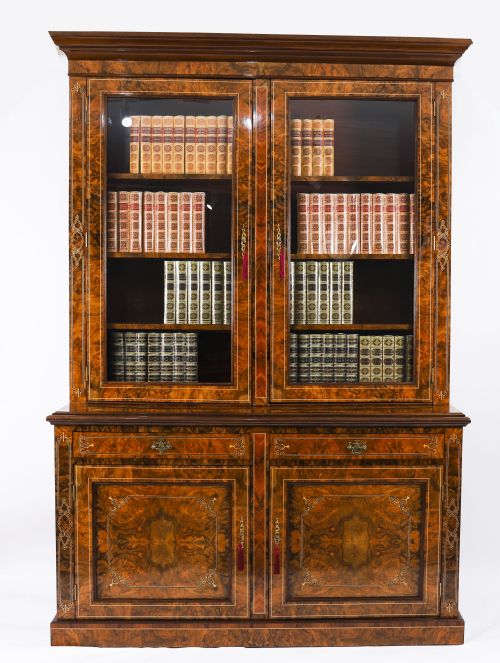
The version most commonly met on this page is the Victorian breakfront open bookcase or glazed display cabinet, often configured in sections with adjustable shelves. These examples rely on the visual weight of walnut timber to anchor a room.
Origins stretch from English workshops to French provincial makers, yielding both grand multi-section breakfronts and neat, single-door cupboards. Such furniture serves to organise private collections while displaying fine timber figures.
How they were made
Cabinet makers utilised walnut timber, frequently selecting burr walnut, figured walnut, or walnut veneer to achieve striking grain patterns across large flat surfaces like doors and cornices. Secondary timbers provided internal structure for shelves and carcass frames.
Glazing bars held glass panes securely within doors designed to protect volumes from dust while maintaining visibility of the bindings inside. Brass hardware, including hinges, locks, and handles, added functional detail to the timber framework.
Inlaid decorative elements and satinwood banding occasionally accented the primary walnut surfaces, reflecting the stylistic preferences of Victorian and Edwardian workshops.
Listings feature walnut library book cabinets spanning the Victorian, Edwardian, and Art Deco periods, alongside Queen Anne Revival styles.
What varies in quality
The choice of veneer sets the baseline for visual impact, with figured and burr walnut requiring superior skill to lay evenly across expansive breakfront surfaces without lifting or cracking. Plain timber surfaces rely entirely on the natural depth of the grain and the precision of the joinery.
Internal engineering distinguishes standard utility furniture from finer commissions, particularly in the construction of adjustable shelving systems that operate smoothly within heavy upright partitions. Good execution ensures that doors hang square and locks engage without binding.
Proportion and scale dictate the success of the silhouette, whether in a tall Edwardian cabinet or a low three-section Victorian breakfront. Refined proportions separate standard production items from pieces executed by notable cabinet makers.
Waring and Gillow·Holland and Sons
The Walnut Library Book Cabinet Glossary
- Breakfront
- A cabinet design where the central section projects forward from the flanking wings, creating visual depth and architectural presence.
- Burr walnut
- A specialised wood cut from the abnormal growth of a walnut tree, prized for its swirling, highly figured grain patterns.
- Figured walnut
- Timber exhibiting distinctive, attractive grain patterns caused by local growth irregularities or branch junctions.
- Satinwood
- A pale, hard wood utilised for stringing and decorative inlay work to contrast against darker walnut surfaces.
- Veneer
- A thin layer of superior timber applied over a secondary wood base to provide a decorative exterior finish.
- Glazing bar
- A wooden strip that holds individual panes of glass within a cabinet door frame.
Walnut Library Book Cabinet: Frequently Asked Questions
Are the shelves adjustable?
Many library cabinets on this page include adjustable shelving supported by pegs, ratchets, or traditional track systems.
This adaptability allows owners to accommodate volumes of varying heights, from octavo novels to tall folios.
How do I care for walnut furniture?
Walnut furniture requires placement away from direct heat sources and strong sunlight to prevent the timber and veneers from drying out.
Routine dusting with a dry cloth and occasional application of appropriate wax preserves the sheen of the figured grain.
What is the difference between open and glazed cabinets?
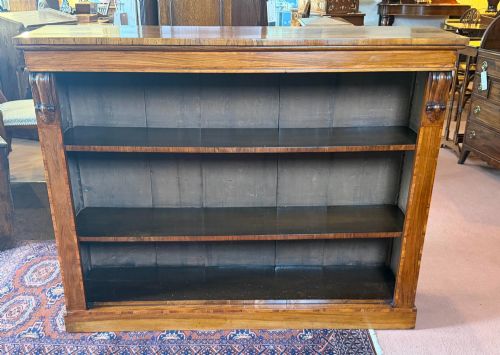
Open cabinets provide immediate access to books without the barrier of doors, suiting volumes in frequent daily use.
Glazed cabinets protect delicate bindings from dust and environmental moisture while maintaining a clear display of the contents.