
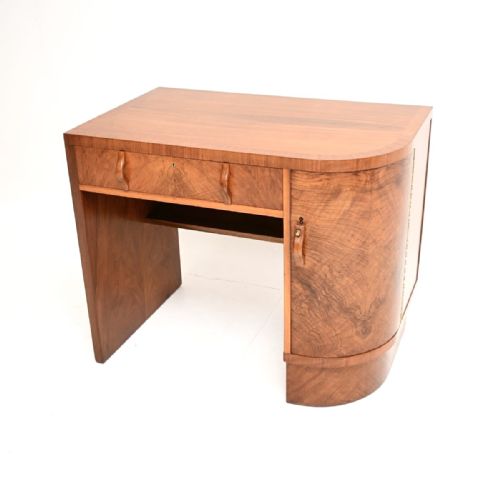
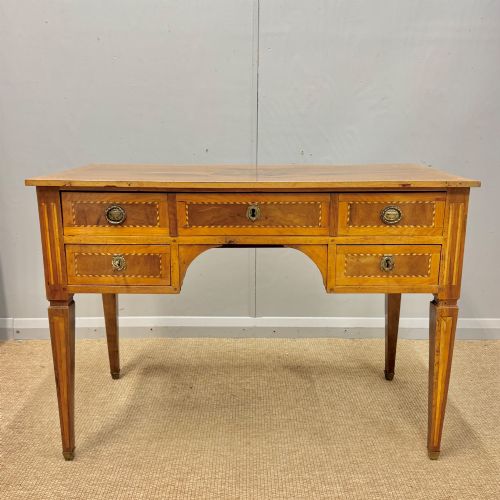
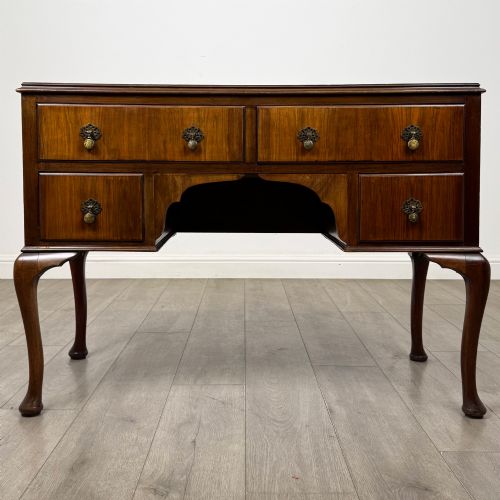
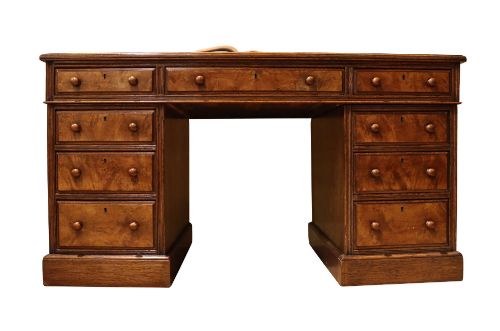
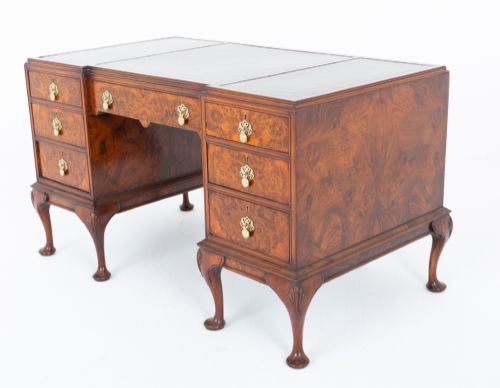
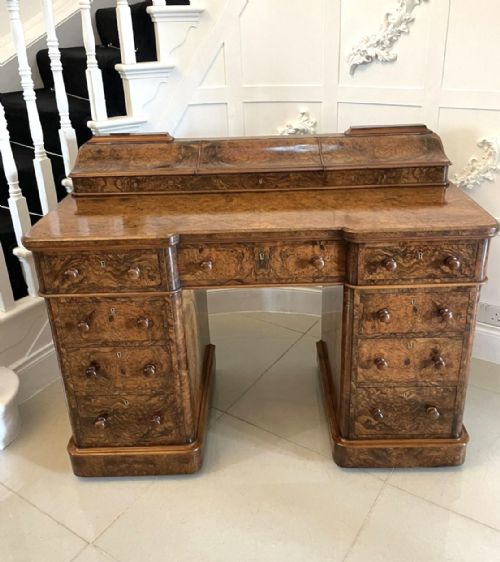
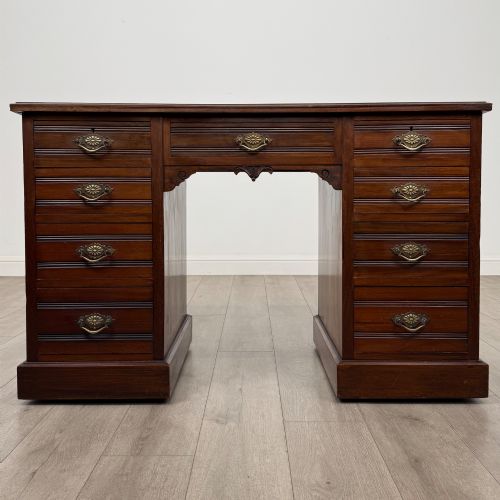
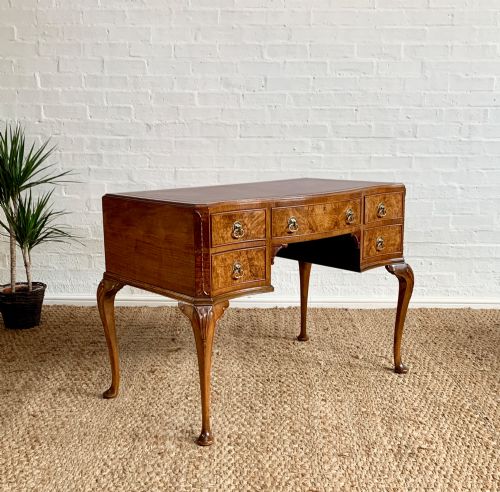
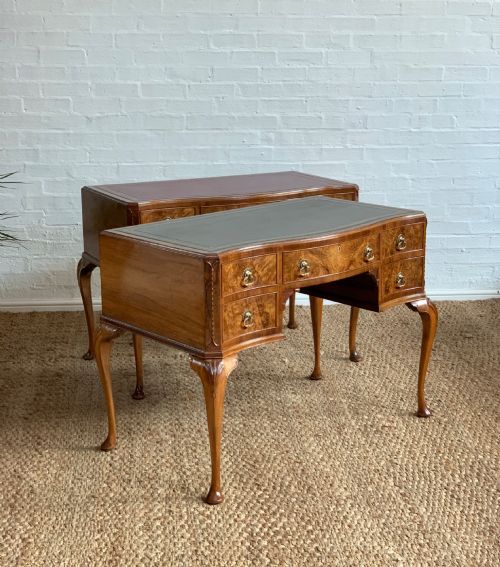
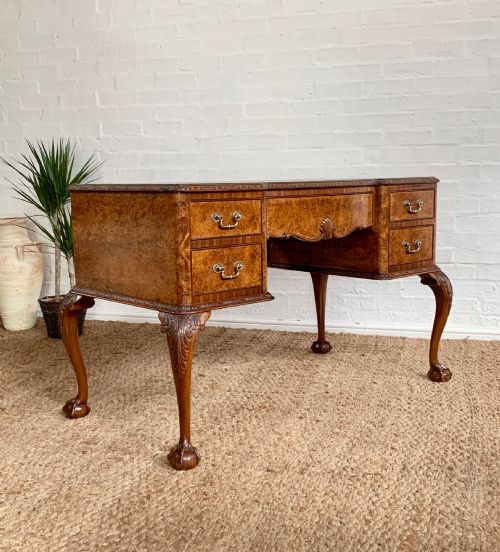
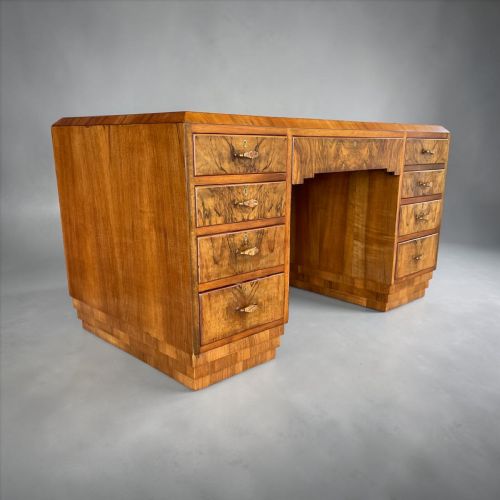

Walnut Kneehole Writing Desk
A walnut kneehole writing desk offers compact elegance and neat storage beneath a fitted writing surface, making it a timeless study centrepiece.
Walnut Kneehole Writing Desk
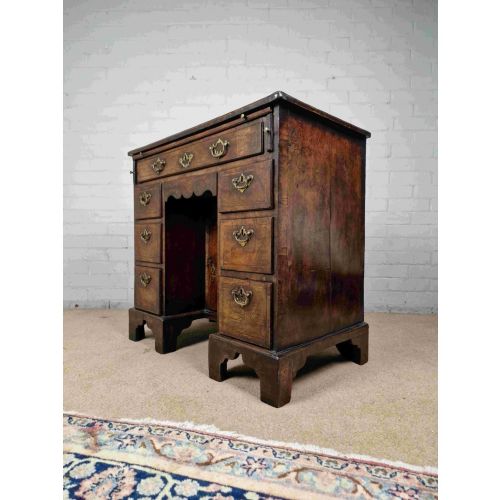
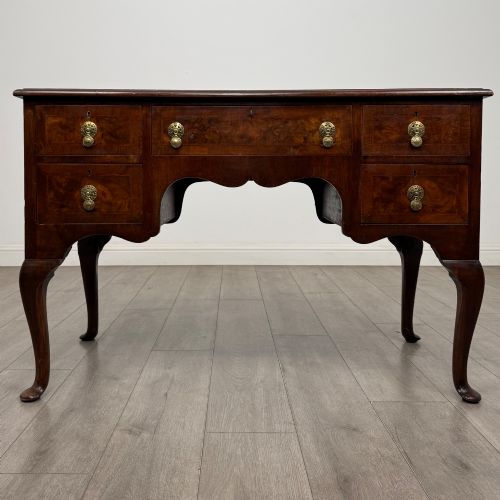
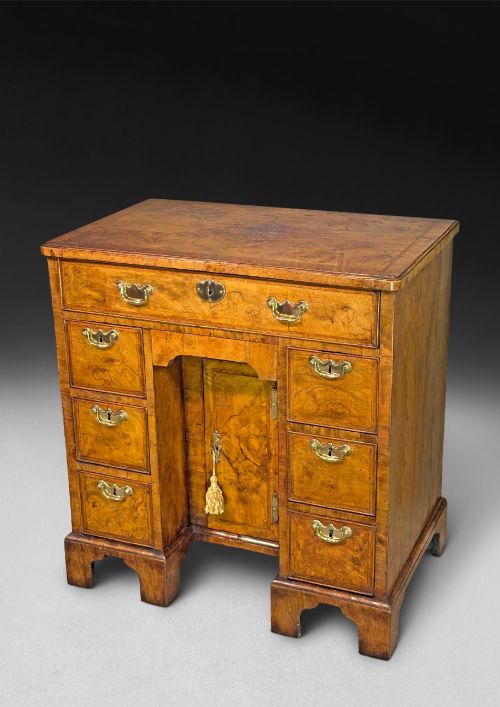
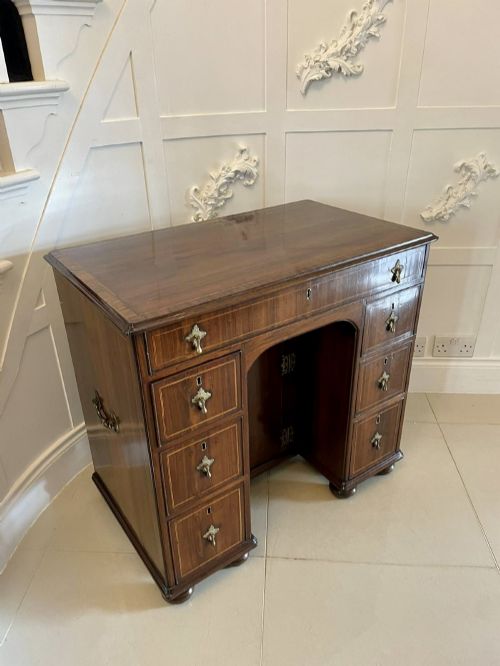
A walnut kneehole writing desk provides a central recessed cupboard flanked by banks of small drawers, all contained within a manageable footprint suitable for period and modern interiors. These pieces appear in forms ranging from eighteenth-century Georgian originals to twentieth-century revivals.
The most common examples encountered on this page date from the Edwardian period and the 1930s, alongside eighteenth-century pieces built during the Georgian and Queen Anne eras. Buyers frequently find variations including serpentine fronts, leather-insets, and freestanding layouts.
The layout typically incorporates nine drawers arranged around the central kneehole, sometimes concealing a small hidden compartment or secret drawer beneath the top surface. Proportions range from small ladies' writing desks to larger pedestal formats.
Materials and Construction
Cabinet makers utilised solid oak or pine for internal carcases and drawer linings, applying figured walnut, burr walnut, or fiddleback veneers to the external surfaces to display complex grain patterns. Crossbanding and stringing often edge the top and drawer fronts to frame the timber.
Brass hardware, including drop handles and escutcheons, fastens the drawers, while inset writing surfaces frequently consist of green or red leather tooled with gilt decoration. Ebonised wood, fruitwood, and satin walnut also appear across different periods and regional workshops.
Materials documented across the inventory include solid oak, brass hardware, tooled leather, and diverse walnut veneers such as burr and fiddleback.
Evaluating Quality and Craftsmanship
The visual appeal relies heavily on the choice of timber, where tightly swirled burr walnut or symmetrically matched figured veneers elevate the appearance above plain surfaces. Exceptional execution shows seamless veneer wrapping around edges and harmonious grain continuity across drawer tiers.
Structural integrity depends on traditional joinery methods, such as finely cut dovetails on drawer construction and original backboards. Pieces bearing stamps or labels from established cabinet makers demonstrate documented provenance that distinguishes standard workshop output from premier commissions.
Maple and Co·Wylie and Lochhead Glasgow·Betty Joel·Gill and Reigate·Heals
The Walnut Kneehole Writing Desk Glossary
- Kneehole desk
- A compact desk featuring a central recessed space for the legs, flanked by two pedestals of small drawers. This layout became popular in the late seventeenth century and persisted through various revival periods.
- Burr walnut
- A specialised timber harvested from the wart-like growths on walnut trees, yielding intricate swirling patterns highly prized for cabinet fronts. Craftsmen slice this wood into thin veneers to display the ornamental figuring.
- Crossbanding
- A decorative border technique where strips of veneer are laid so the grain runs perpendicular to the main panel. This frames the primary timber surface on drawer fronts and desk tops.
- Fiddleback walnut
- A figured variation of walnut displaying parallel rippling waves reminiscent of the wood used for violin backs. The optical effect shifts when viewed from different angles under light.
Walnut Kneehole Writing Desk: Frequently Asked Questions
What is a kneehole desk?
A kneehole desk is a form of writing table featuring a central recessed space beneath the desktop, allowing the user to sit comfortably between two vertical stacks of drawers. This configuration provides ample compartmentalised storage without requiring a massive floor footprint.
Historically designed for private correspondence and estate management, these pieces combine a formal appearance with practical utility. The central recess often contains a concealed cupboard door or a shallow hidden drawer.
How do I date a walnut desk?
Dating relies on examining construction techniques, hardware styles, and timber preparation methods used within the carcase and drawer interiors. Eighteenth-century examples typically feature hand-cut dovetails and solid timber carcases, while later revival pieces often incorporate machine-sawn elements and distinct veneer thicknesses.
Stylistic cues such as bracket feet, cabriole legs, or Art Deco geometric lines provide further chronological markers. Maker marks or stamps found inside drawer boxes offer definitive attribution when present.
Are these desks suitable for daily laptop use?
Many desks provide adequate surface area and comfortable knee clearance for contemporary laptop placement and writing tasks. However, historical dimensions often feature lower working heights and shallower writing surfaces compared to modern office furniture.
Leather-tooled surfaces require protective blotting pads to prevent wear from modern writing instruments and devices. Buyers should verify internal dimensions and drawer clearances against their specific equipment requirements.
How do I care for walnut veneer?
Walnut veneer benefits from placement away from direct sunlight and strong heat sources to prevent timber drying, fading, and veneer lifting. Regular dusting with a soft, dry cloth preserves the polished finish without introducing moisture.
Occasional application of appropriate wax polish maintains the lustre of the timber grain. Avoider chemical cleaners and excessive water contact to protect the antique polish and leather inserts.