



Walnut Hallway Console Table
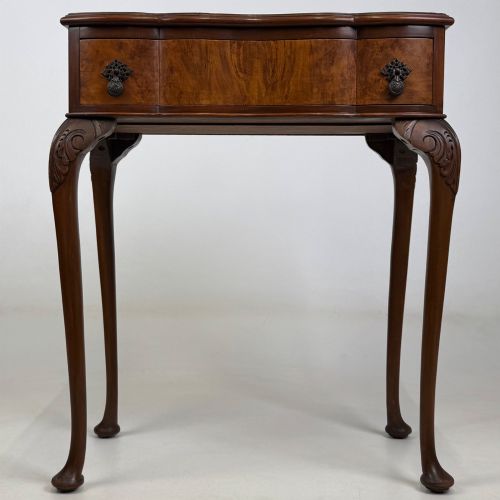
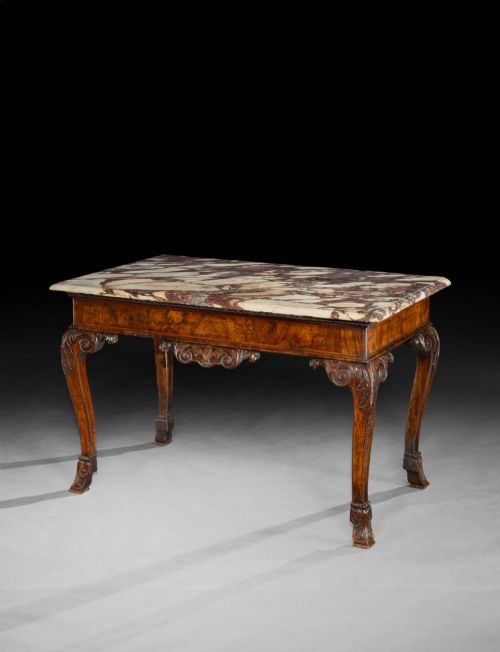
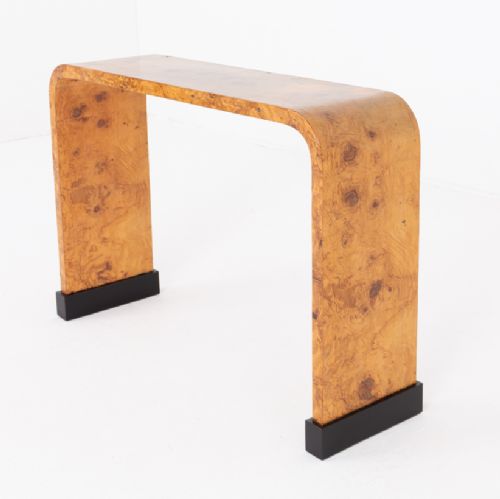
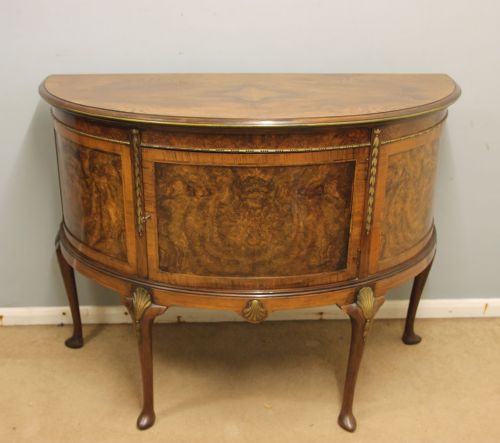
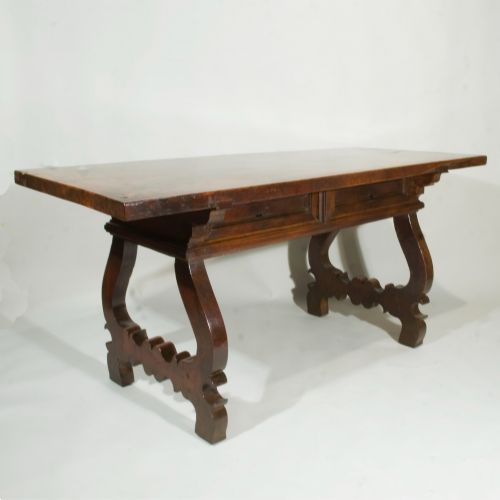
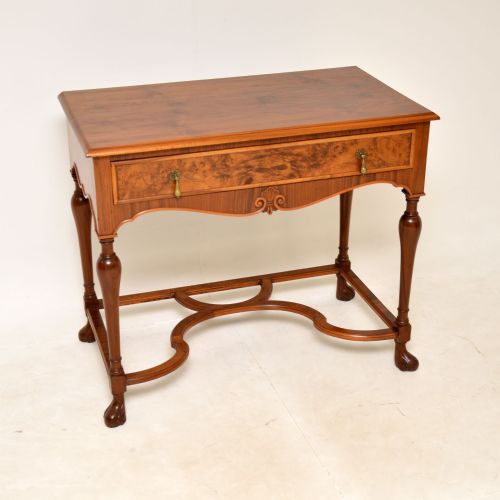
These walnut hallway console table examples bring rich timber grain and period presence to a narrow passage.

Walnut Hallway Console Table
A walnut hallway console table sits against an interior wall to hold lighting, mirrors, or small objects without obstructing a passage. The form spans several centuries, ranging from seventeenth-century Spanish and French designs to eighteenth-century lowboys and twentieth-century Art Deco interpretations.
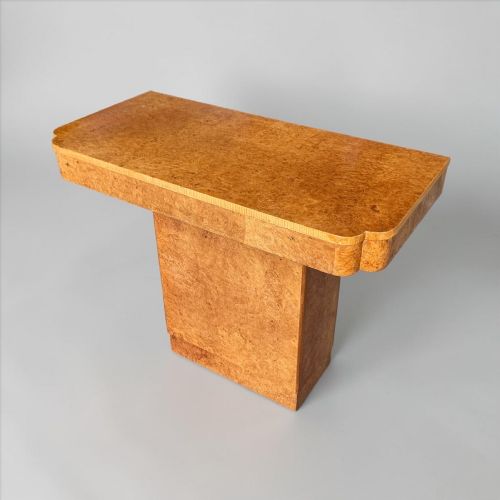
Buyers frequently encounter twentieth-century examples on this page, particularly pieces from the nineteen-twenties and nineteen-thirties utilising burr walnut and figured veneers. Earlier Georgian and Victorian iterations also appear, alongside continental styles from Italy and France.
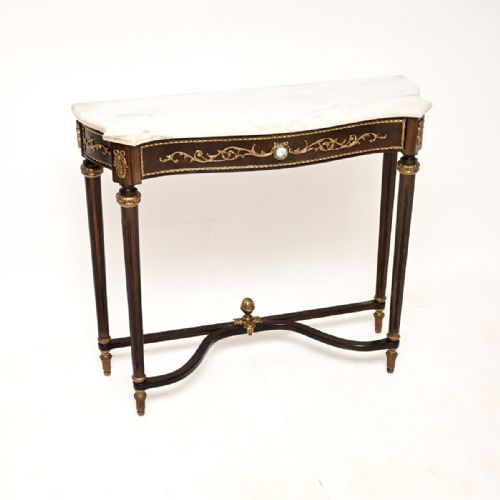
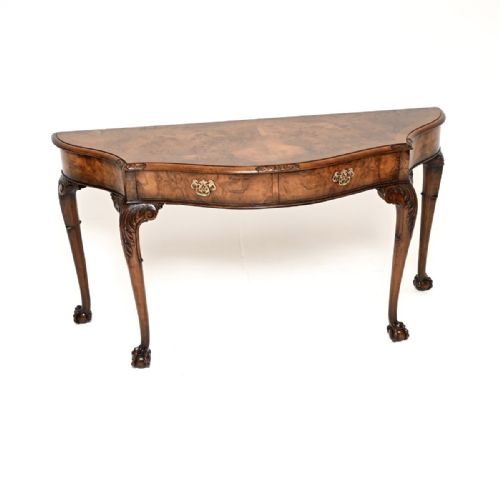
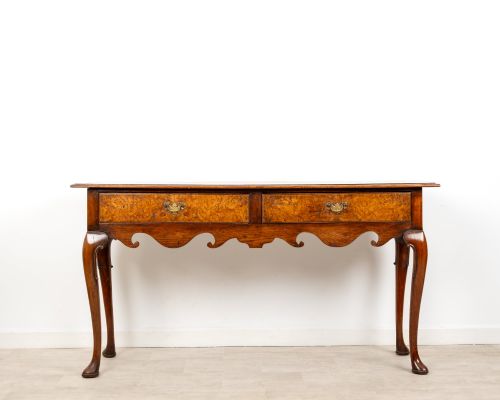
The selection includes console tables, side tables, serving tables, and demi-lune formats. Many pieces incorporate drawers or paired pier mirrors, matching the varied spatial demands of period hallways.
Materials and construction
Makers utilised solid walnut and decorative veneers such as burr walnut to create striking surface patterns across the top boards. Timber was often selected for rich figuring, giving each console table a distinct visual depth.
Secondary materials supplement the primary wood structure, including marble tops, brass mounts, and occasional ormolu or parcel gilt highlights. Construction methods range from traditional hand-carved joinery on earlier pieces to streamlined veneered frames on Art Deco designs.
Listings feature walnut console tables spanning from the seventeenth century through to Art Deco designs, incorporating marble, brass, and glass.
What separates the grades
Quality rests primarily in the selection of the timber veneer and the crispness of any carved detailing. Finer examples display symmetrical burr walnut figuring and proportioned cabriole legs, whereas simpler utility pieces rely on plain timber surfaces.
The integration of secondary materials such as marble inserts and brass hardware distinguishes standard production from high-end commissions. Construction integrity, seen in drawer linings and joint tightness, dictates the longevity of each console.
Hille·Maple and Co
The Walnut Hallway Console Table Glossary
- Burr walnut
- A prized timber veneer showing swirling, knotty growth patterns. This figuring creates highly decorative surfaces on table tops.
- Demi-lune
- A half-moon shape used for console tables designed to sit flush against a wall. This profile saves floor space in narrower hallways.
- Lowboy
- A small seventeenth or eighteenth-century table with drawers, raised on tall legs. The form often functions as a compact console.
- Ormolu
- Gilded bronze ornamentation applied to furniture mounts. It appears on continental console tables from the empire period.
- Pier mirror
- A tall looking glass designed to hang directly above a console table. The combination was standard in period entrance halls.
Walnut Hallway Console Table: Frequently Asked Questions
Where should I place a walnut console table?
These tables fit naturally in entrance halls, corridors, and reception rooms where floor space is limited. Their shallow depth allows them to sit against walls without blocking walkways.
Posing a lamp, bowl, or mirror above the table completes a functional entryway arrangement.
How do I identify Art Deco console tables?
Art Deco pieces typically date from the nineteen-twenties and nineteen-thirties, exhibiting geometric lines and smooth, highly polished burr walnut surfaces. They omit traditional carved ornamentation in favour of sleek, streamlined silhouettes.
French examples from this period often display particularly bold veneer work.
What is the difference between a console and a lowboy?
A console table is primarily designed to stand against a wall, sometimes fixed in place or paired with a matching mirror. A lowboy is an independent small table featuring one or more rows of drawers beneath the work surface.
Both serve similar placement roles in modern hallways.
How do I care for walnut veneer surfaces?
Walnut benefits from occasional polishing with appropriate waxes to maintain the lustre of the grain and protect the timber. Direct sunlight and excessive moisture should be avoided to prevent the veneer from fading or lifting.
Gentle dusting with a soft cloth preserves the finish over time.