


Brown Walnut Hallway Table
A brown walnut hallway table brings rich timber grain and classic proportion into a narrow space, offering a practical surface with historic character.

Brown Walnut Hallway Table
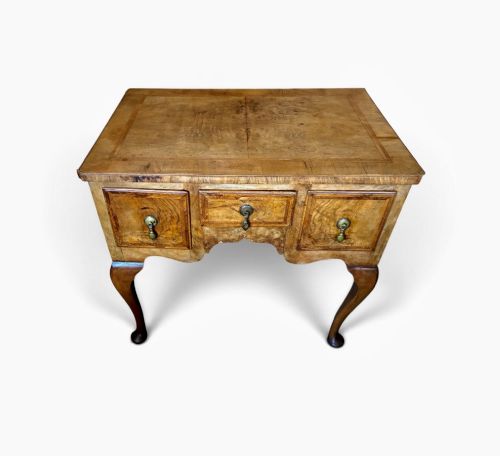
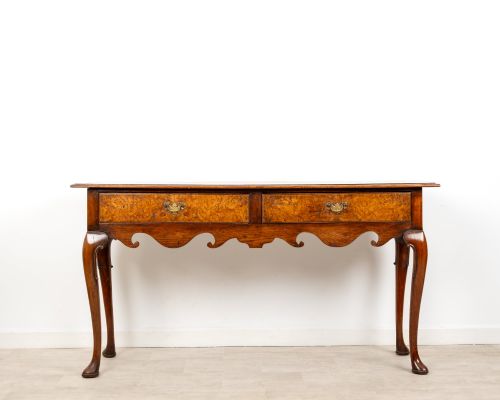
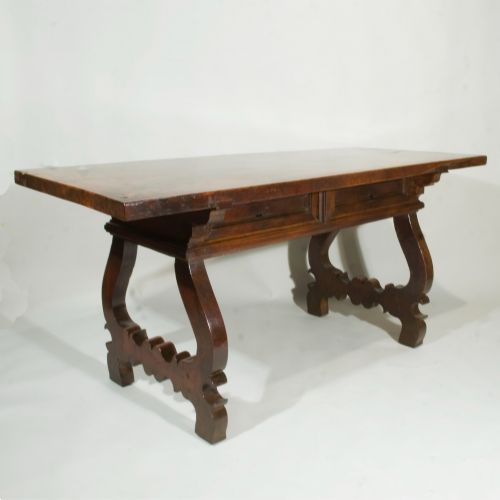
A brown walnut hallway table is a narrow surface designed for entryways and narrow passages, spanning forms such as console tables, side tables, lowboys, and serving tables. When you search for this phrase, you meet pieces originating across several centuries, from seventeenth-century Spanish and French designs to nineteenth-century Victorian pieces and twentieth-century revivals.
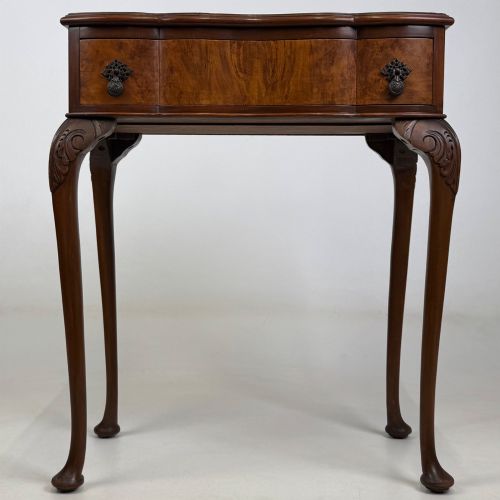
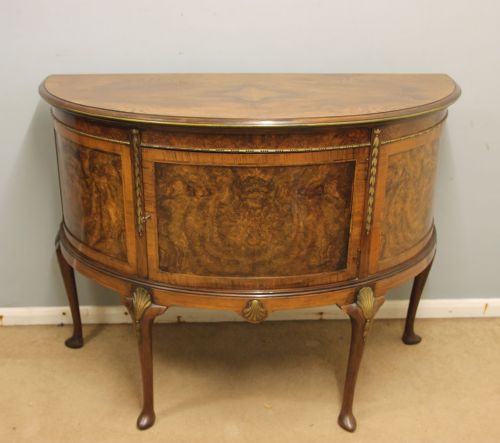
The selection on this page leans heavily towards twentieth-century Edwardian and Art Deco examples, alongside nineteenth-century interpretations of earlier Georgian and Queen Anne styles. These tables often feature distinctive silhouettes like demi-lune shapes, cabriole legs, or barley twist supports suited to compact domestic layouts.
How they were made
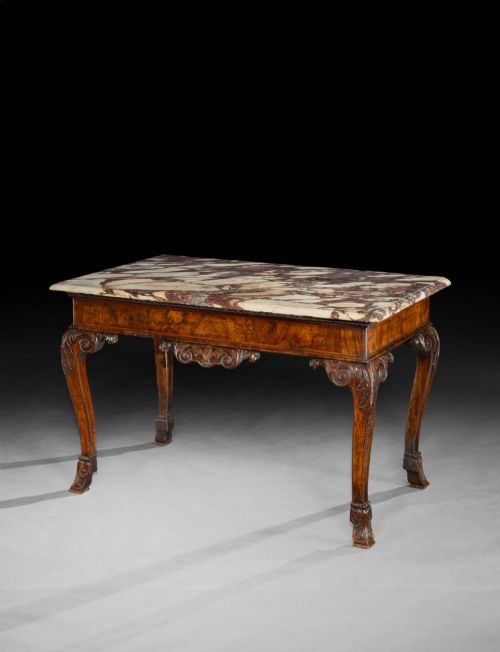
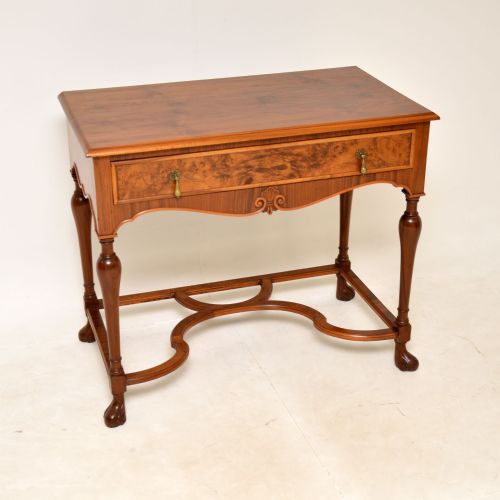
Cabinet makers utilised solid walnut and figured burr walnut veneers applied to secondary timbers like oak, selecting cuts for pronounced grain patterns. Surfaces often incorporate shaped marble or glass tops, while structural joins are strengthened with metal or brass fittings.
Construction techniques range from traditional hand-carved joinery seen in seventeenth-century and revival pieces to the sleek geometric lines of Art Deco modernist fabrication. Makers shaped timber using turning lathes for barley twists and hand-formed cabriole legs to achieve stability and balance.
Periods represented span from the 17th Century through Victorian, Edwardian, and 1930s modernist designs.
What varies in quality
Quality varies significantly in the selection of the timber veneer, with highly figured burr walnut commanding attention for its intricate, swirling patterns compared to plain walnut boards. The depth of hand-carved detail on legs, aprons, and friezes also separates standard utility furniture from pieces finished with artistic precision.
Proportion and structural integrity define the upper tier of these tables, where original brass hardware, uncompromised marble tops, and balanced eighteenth or nineteenth-century revival proportions demonstrate superior workshop standards.
The Brown Walnut Hallway Table Glossary
- Lowboy
- A small dressing or side table with a low profile, typically featuring one or more rows of drawers beneath the working surface. These tables originated in the seventeenth century and often stand on slender cabriole legs.
- Demi-lune
- A half-moon shape used for console tables designed to sit flush against an entryway wall. This format maximises surface area while minimising the depth footprint in narrow corridors.
- Burr walnut
- A prized timber veneer sourced from the deformed growths or burrs on walnut trees. It yields complex, swirling grain patterns highly valued in cabinet making.
- Cabriole leg
- A furniture leg that curves outward in a convex arc at the top and inward in a concave arc below, ending in a pad, claw, or scroll foot. This form is common in Queen Anne and Georgian designs.
- Barley twist
- A type of furniture turning resembling a rope wound tightly around a cylinder. This decorative technique appears frequently on legs and stretchers of seventeenth and early twentieth-century tables.
Brown Walnut Hallway Table: Frequently Asked Questions
What is a brown walnut hallway table used for?
These tables provide a compact surface in entryways and corridors for placing everyday items like keys, post, or small decorative lamps. Their narrow proportions allow them to fit into confined spaces without blocking pathways.
Historically, larger versions served as side or serving tables in dining rooms and parlours before finding a dedicated role in modern hallways.
How do I style a brown walnut hallway table?
Pair the table with a matching pier mirror or a piece of framed artwork hung directly above to anchor the arrangement in a narrow entrance. Keep tabletop accessories minimal to let the figured walnut grain or burr veneers remain visible.
Introduce contrast through metallic items like brass bowls or glass vases that complement the secondary materials found in older pieces.
How can I tell an eighteenth-century table from a revival piece?
Examine the construction methods, tool marks on secondary timbers, and the natural wear patterns accumulated over centuries of use. Eighteenth-century pieces often display hand- cut joinery and timber shrinkage consistent with age.
Revival pieces from the Edwardian era or the 1920s imitate earlier George II or Queen Anne styles but generally show machine-assisted manufacturing and different internal wood species.
What is the difference between a console and a side table?
A console table is traditionally designed to be fixed against a wall, sometimes relying on front legs while securing to the structure behind it. Side tables are free-standing units with four legs that can stand independently anywhere in a room.
In modern hallway contexts, both terms frequently overlap to describe narrow rectangular or demi-lune surfaces.