


Walnut Grip Percussion Pistols
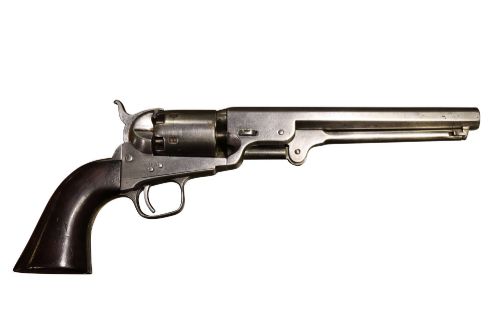
Walnut grip percussion pistols combine nineteenth-century mechanical ingenuity with timber stocks, offering collectors a tangible link to military and civilian history.
Walnut Grip Percussion Pistols
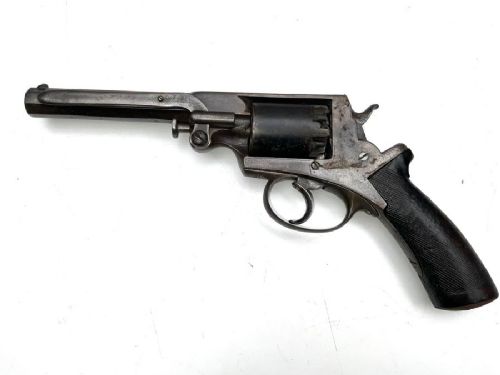
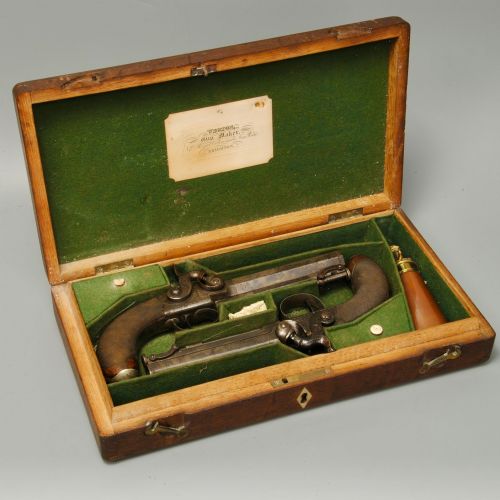
Walnut grip percussion pistols comprise nineteenth-century antique firearms spanning pocket revolvers, military issues, and boxed sets. These pieces originate from British, American, and European makers during the Victorian era and mid-nineteenth century.
The selection here encompasses pepperboxes, double-barrelled variants, and transitional six-shot revolvers. Buyers encounter domestic pocket pieces alongside martial issue revolvers bearing matching serial numbers.
How they were made
Makers shaped the stocks from walnut timber, pairing them with forged steel barrels and iron mechanisms. Many examples incorporate brass components and silver details, whilst fitted cases often feature baize linings.
Gunsmiths utilised percussion cap ignition systems alongside rifled barrels and sliding rear sights. Birmingham and London proof marks verify the origin and testing of these nineteenth-century arms.
Listings feature nineteenth-century materials including walnut, steel, brass, iron, baize, and silver across Victorian and Regency styles.
What varies in quality
The distinction between standard commercial pieces and superior arms rests upon the integration of matching serial numbers and maker signatures. High-quality examples exhibit crisp checkering on the walnut grips and refined metal engraving.
Original casing, such as fitted wooden boxes with complete accessories, elevates an arm above unboxed counterparts. The reputation of the maker, from London workshops to Liège manufacturers, dictates the standing of the piece.
Mortimer·J.R. Cooper·Deane Adams and Deane·Auguste Francotte·John Manton
The Walnut Grip Percussion Pistols Glossary
- Percussion system
- An ignition method using a small percussion cap struck by the hammer to detonate the main charge. This innovation replaced flintlocks in the nineteenth century.
- Pepperbox pistol
- A multi-barrel firearm where the entire cylinder rotates with each shot. These multi-shot weapons preceded standard revolvers.
- Proof mark
- An official stamp verifying that a firearm barrel withstood testing pressures. These marks indicate the place of manufacture, such as Birmingham or London.
- Matching numbers
- Serial numbers repeated across multiple metal components of a single firearm. This indicates original factory assembly rather than composite restoration.
- Transitional revolver
- A mid-nineteenth-century firearm design bridging older pepperbox systems and later solid-frame revolvers. These pieces often feature an independent hand-rotated or self-cocking action.
Walnut Grip Percussion Pistols: Frequently Asked Questions
What is a percussion pistol?
A percussion pistol is a nineteenth-century firearm that utilises a percussion cap system for ignition. The hammer strikes a small cap containing fulminate of mercury, sending a flash through the nipple to ignite the powder charge.
These arms superseded flintlock mechanisms due to their reliability in wet weather. They form a major category within antique firearms collecting.
How do I identify a nineteenth-century pistol?
Identification relies upon examining proof marks, maker inscriptions on the barrel or frame, and mechanical layout. Styles shift from early nineteenth-century transitional designs to regulated military issues of the American Civil War period.
Materials such as walnut stocks, steel barrels, and brass trigger guards help anchor pieces to specific decades. Comparing serial numbers across components confirms the manufacturing era.
Were these pistols used in combat?
Many walnut grip percussion pistols saw active service, particularly martial issue revolvers from the American Civil War and British military campaigns. Officers purchased private-purchase arms for personal defence and field use.
Civilian pocket revolvers served for personal protection during the Victorian era. Documentation and martial stamps often indicate military deployment.
How should I display a cased revolver?
Cased revolvers are best displayed flat within their original fitted wooden boxes, away from direct sunlight and damp environments. Baize-lined interiors protect the metal finish and accompanying accessories from abrasion.
Stable room temperatures prevent the walnut stocks and timber cases from warping. Allowing airflow around the display area preserves the condition of both wood and steel.