

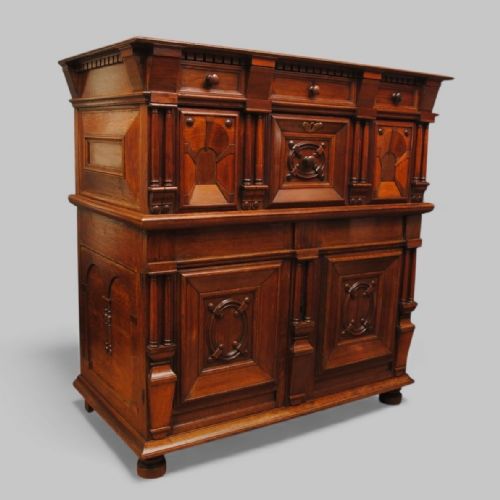
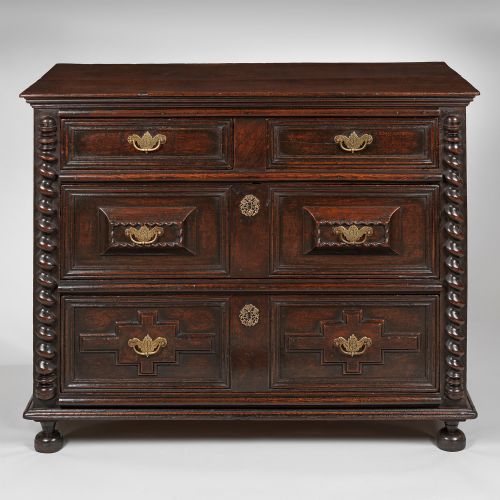


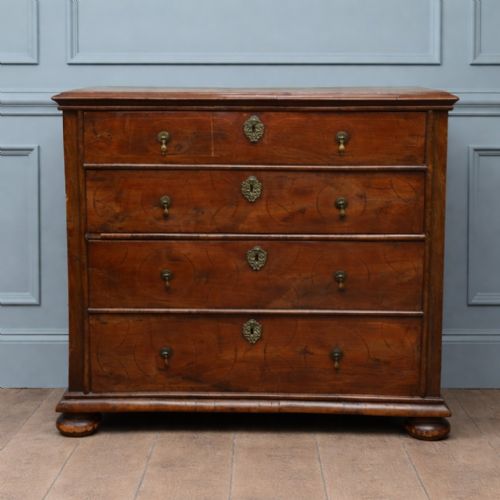
Walnut Geometric Chest
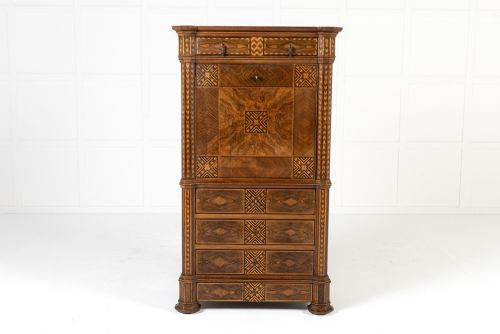
A walnut geometric chest brings the striking, linear ornamentation of the seventeenth century directly into a modern interior.
Walnut Geometric Chest
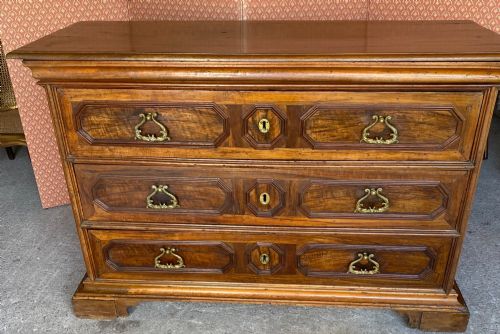
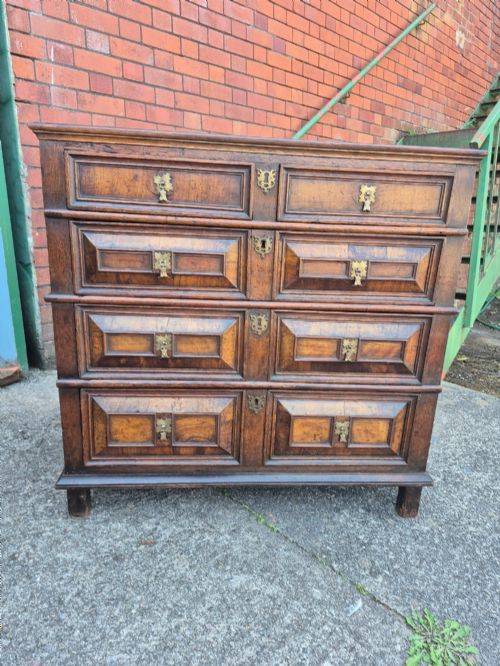
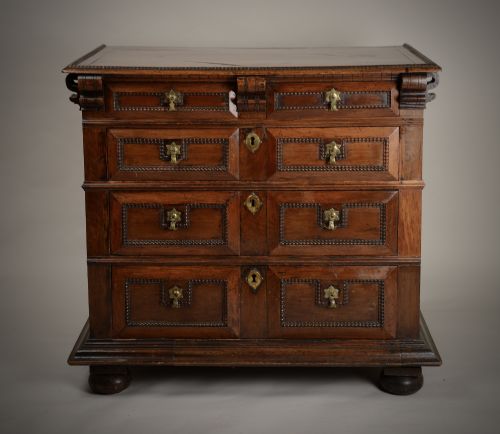
A walnut geometric chest is a storage piece defined by disciplined, applied mouldings on the drawer fronts that form rectilinear patterns and panels. Buyers searching this phrase look for substantial case furniture carrying the distinct visual weight of the seventeenth century.
The pieces appearing on this page span several eras, with seventeenth-century examples forming the core alongside later interpretations. Alongside standard chests of drawers, the record includes two-part chests and larger mule chests utilising similar vocabulary.
Origins stretch across English workshops of the Charles II and William and Mary periods, with occasional continental iterations like eighteenth-century Italian commodes appearing in the broader family of heavy timber storage.
Materials and construction
Makers built these carcases using primary timbers of walnut and oak, frequently introducing fruitwood and specialised wood veneers to create contrasting tones. Surfaces often display intricate wood inlay and geometric mouldings built up from small sections of timber applied directly to the drawer fronts.
Hardware played a functional and decorative role, with brass drop handles and escutcheons fitted to secure the heavy drawers. Secondary woods like oak provided structural stability for the internal framing and drawer linings while walnut faced the exterior.
Walnut Geometric Chest Retail Price Guide 2026
Typical asking prices for walnut geometric chest among the pieces listed under this phrase on Sellingantiques today, from the lower quarter to the upper quarter. They describe what is for sale here now, not the wider market.
Listings for this phrase are dominated by seventeenth-century pieces utilising walnut, oak, and fruitwood alongside later nineteenth-century interpretations.
Assessing quality and character
Quality rests in the crispness of the applied mouldings and the preservation of the original wood veneers. Pieces where the grain patterns of the walnut match symmetrically across the drawer fronts display a higher level of initial craftsmanship.
The integrity of the structural timbers and the retention of period brass hardware influence the standing of an individual chest. Greater distinction belongs to examples maintaining their original two-part form and unrestored geometric decoration.
The Walnut Geometric Chest Glossary
- Geometric moulding
- Raised wooden strips applied to drawer fronts in rectilinear patterns such as mitred octagons and rectangles. This technique defines the architectural facade characteristic of seventeenth-century case furniture.
- Veneer
- A thin slice of figured walnut applied over a secondary timber carcase to display decorative grain. It allows makers to create striking visual patterns without relying on solid timber for the entire structure.
- Two-part chest
- A case piece constructed in two separate stacking sections to ease transport. This format is frequently encountered in seventeenth-century examples.
- Mule chest
- A storage box featuring one or more drawers built into the base beneath the main compartment. These large pieces combine the functions of a blanket box and a chest of drawers.
Walnut Geometric Chest: Frequently Asked Questions
What is a walnut geometric chest?
A walnut geometric chest is a seventeenth-century style storage piece featuring applied wooden mouldings arranged in patterns on the drawer fronts.
These pieces rely on architectural facades and contrasting veneers rather than carved ornamentation to create visual depth.
How were these chests used originally?
Households utilised these substantial chests primarily for storing textiles, linens, and personal valuables securely in bedchambers or parlours.
The compartmentalised drawers helped organise garments in eras before fitted wardrobes became standard in domestic interiors.
How do I date a geometric chest?
Dating relies on examining the construction methods, secondary timbers, and the specific style of the applied mouldings.
Seventeenth-century examples typically feature hand-cut joints, oak carcases, and pegged framing beneath the walnut veneers.
Where do these pieces fit in a home?
These chests function well as focal storage units in hallways, living rooms, or bedrooms where their dark timber tones stand out.
Their flat tops provide a stable surface for displaying lamps, ceramics, or mirrors while keeping contents enclosed.