


Walnut Dry Bar Cabinet
A walnut dry bar cabinet brings period glamour to a room, offering fitted storage for bottles and glassware.
Walnut Dry Bar Cabinet
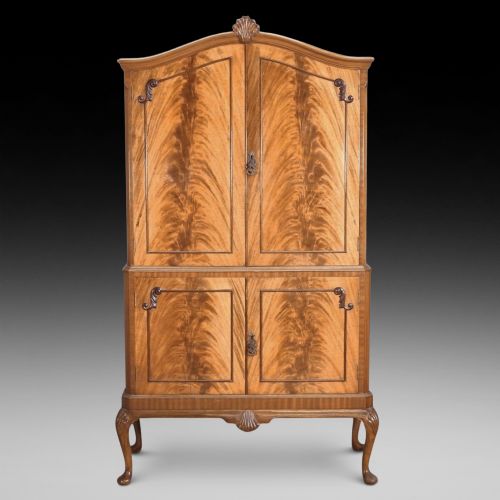
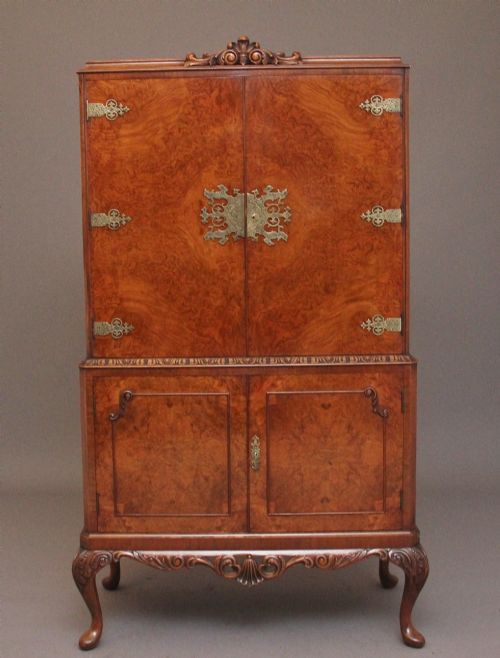
A walnut dry bar cabinet combines the dedicated storage of a drinks service with the striking geometry of twentieth-century design. These pieces appear primarily from the nineteen-twenties and nineteen-thirties, spanning Art Deco aesthetics and Queen Anne revivals. The form manifests as cocktail cabinets, drinks cabinets, and low tables designed specifically for entertaining.
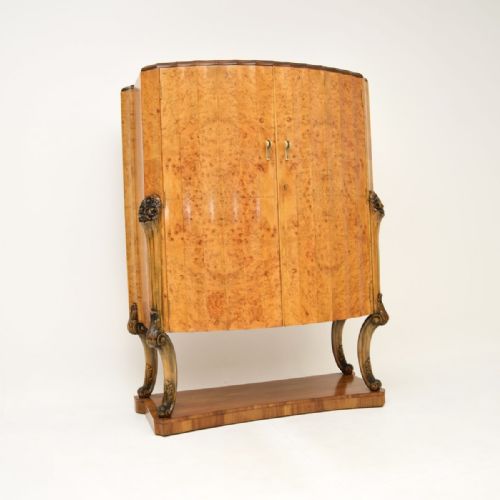
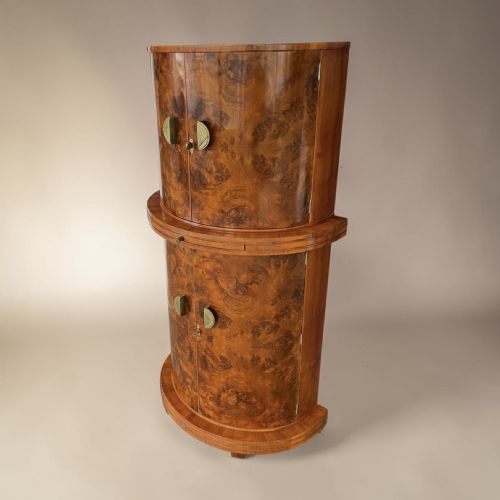
The prevailing format on this page is the Art Deco cabinet, often shaped from burr walnut and configured with drop-down writing or mixing surfaces, internal lighting, and mirrored backs. Alongside upright cabinets, one finds corner units and revolving tables that serve the same domestic function. English origins dominate the records, reflecting the prominent workshops of the period.
Materials and construction
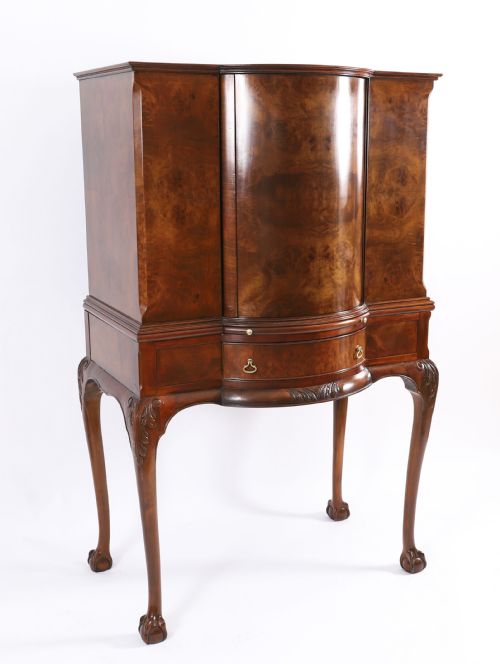
Makers utilised walnut and burr walnut veneer laid over solid carcases to create rich, figured grain patterns on the primary surfaces. The distinct swirling patterns of burr walnut provide the dominant visual texture across the exterior doors and drop-fronts. Secondary woods and oak provide structural stability to the internal frameworks and drawers.
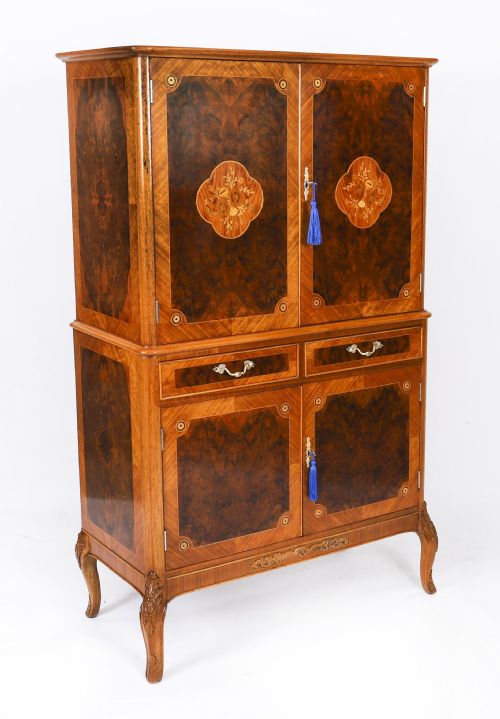
Interiors frequently incorporate mirror glass panels, chrome hardware, and brass fittings to catch the light behind bottle shelves and glass racks. Marquetry details occasionally punctuate the walnut surfaces, whilst specialised electrical wiring was integrated into many cabinets to illuminate the interior compartments upon opening.
Listings span the nineteen-twenties and nineteen-thirties, showcasing walnut, burr walnut veneer, brass, glass, mirror, and chrome across Art Deco and Queen Anne styles.
Distinctions in quality
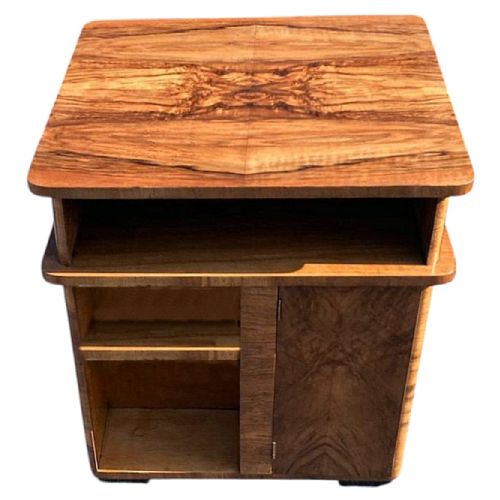
The selection of timber veneer dictates the primary visual appeal, with dense, highly figured burr walnut commanding greater presence than plain grain. Superior examples exhibit precise book-matching across double doors, ensuring symmetrical grain patterns that draw the eye across the front elevation.
Maker attribution separates standard production from elite workshop output. Cabinets originating from prominent firms such as Epstein, Hille, or Waring and Gillow demonstrate superior internal joinery, heavier brass and chrome hardware, and more elaborate mirrored or glass-fitted compartments.
Epstein·Hille·Waring and Gillow
The Walnut Dry Bar Cabinet Glossary
- Burr walnut
- A prized timber harvested from the irregular growths on walnut trees, yielding intricate, swirling grain patterns. It is typically sliced into thin veneers for application onto cabinet doors.
- Dry bar
- A household cabinet or small piece of furniture designed for storing bottles, glasses, and bar accessories without a permanent plumbed water supply. These units centre entirely on bottle storage and glass display.
- Marquetry
- The art of applying pieces of veneer to a structure to form decorative patterns and pictures. In these cabinets, contrasting woods create geometric or floral motifs.
- Art Deco
- A design style of the nineteen-twenties and thirties characterised by sleek geometric shapes, stylised motifs, and modern industrial materials. It forms the dominant stylistic language for these drinks cabinets.
Walnut Dry Bar Cabinet: Frequently Asked Questions
What is a walnut dry bar cabinet?
A walnut dry bar cabinet is a dedicated piece of furniture designed to store and serve alcoholic drinks, glassware, and bar accessories. These units typically feature internal shelving, mirror glass backs, and drop-down mixing surfaces.
The exterior surfaces showcase figured walnut and burr walnut veneers, predominantly reflecting the design movements of the nineteen-twenties and nineteen-thirties.
How were these cabinets used?
These cabinets served as the social centrepiece for home entertaining during the interwar period, keeping spirits, mixers, and glassware concealed behind decorative doors until required for guests.
The drop-down flap often doubled as a preparation shelf for mixing drinks, while internal mirrors and lights displayed the glassware collection when opened.
How do I distinguish Art Deco from revival styles?
Art Deco cabinets rely on bold geometric lines, streamlined silhouettes, and book-matched burr walnut veneers without traditional historical ornamentation. The aesthetic prioritises modern luxury and symmetry.
By contrast, Queen Anne revival pieces incorporate traditional elements such as cabriole legs and pad feet, reflecting eighteenth-century revivalism rather than modernist geometry.
How do I live with a walnut dry bar cabinet?
Integrating one of these cabinets into a modern interior involves placing it as a focal point in a living room, dining room, or home study where its decorative veneer can be appreciated. The internal depth requires adequate clearance for doors or drop-fronts to open fully.
Care involves keeping the walnut away from direct sunlight to preserve the warm tones of the timber and maintaining consistent indoor humidity to protect the veneer.