
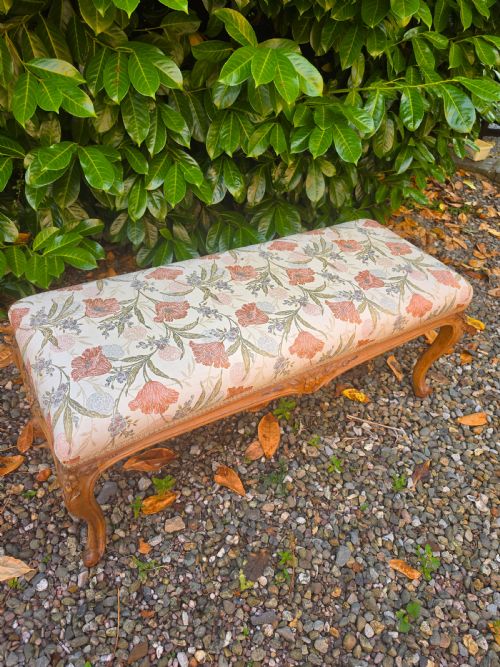


Walnut Dressing Bench
These walnut dressing bench designs offer low, padded seating in rich timber, pairing period carved frames with traditional upholstery for bedroom schemes.
Walnut Dressing Bench
A walnut dressing bench provides compact seating for a bedroom or dressing room, frequently matching a mirror or vanity unit. The selection centres on 19th-century Victorian examples, alongside 18th-century revival pieces and 1930s Art Deco designs.
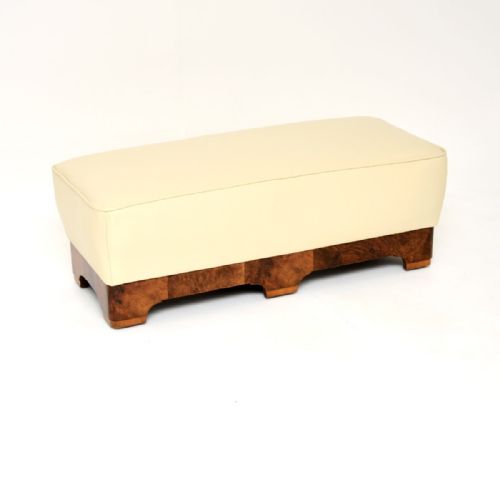
The silhouettes range from cabriole-legged Victorian frames and carved window seats to streamlined Art Deco pieces with integrated storage. Makers constructed these stools in various formats including X-frame window seats, salon stools, and dedicated dressing table variants.
Timber and upholstery
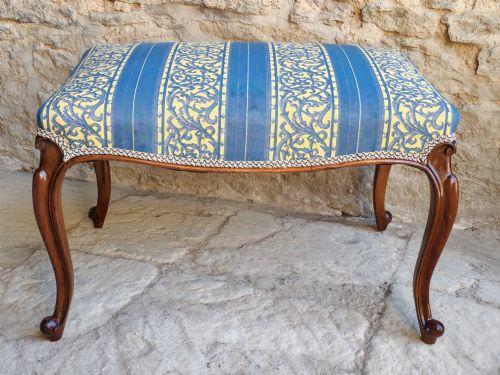
Cabinet makers utilised solid walnut and figured burr walnut for the structural frames, often enriching the timber with carved cabriole legs, claw and ball feet, or twisted rope turnings. The show-wood frames display natural grain patterns developed through traditional polishing methods.
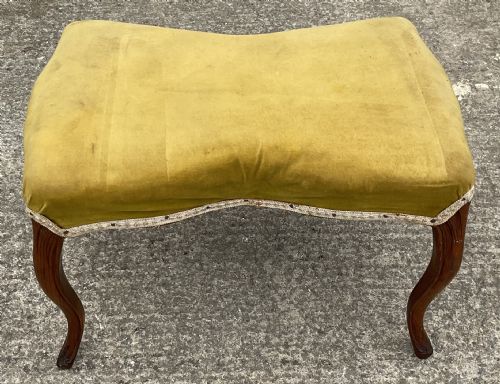
Makers upholstered the seat pads using a variety of textiles such as leather, velvet, tapestry, needlepoint, and patterned fabric. Some iterations incorporate buttoned padding or decorative trimming to complete the top surface.
Listings span from George I revival designs through Victorian carved seating up to 1930s Art Deco burr walnut dressing stools.
Craftsmanship and distinction
The distinction between standard and superior pieces rests in the crispness of the timber carving and the architectural balance of the frame. Robust joinery in the legs and aprons ensures the structural integrity of the seat over generations of daily use.
Finer examples display figured or burr walnut veneers with harmonious grain matching across the rails, coupled with hand-carved details like cabriole knees or animal motifs.
Harry and Lou Epstein
The Walnut Dressing Bench Glossary
- Cabriole leg
- A furniture leg that bends outward in a convex curve and tapers inward to a concave curve near the foot. This design mimics animal limbs and appears frequently on Victorian and revival walnut frames.
- Burr walnut
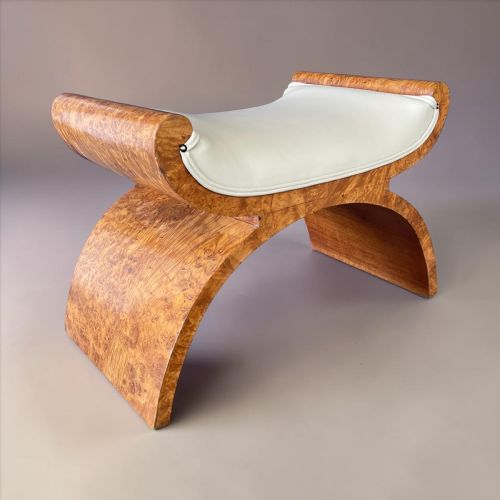
- A specialised timber cut from a tree growth or burl, yielding intricate, swirling grain patterns. Cabinet makers prized this veneer for decorative surfaces on Art Deco dressing stools.
- Needlepoint
- A form of canvas work embroidery using wool yarn to create dense, pictorial patterns. This textile often appears as the historic covering on Victorian and Queen Anne style seat pads.
- X-frame
- A structural base formed by intersecting diagonal timbers that create an X shape when viewed from the side. This classical support system underpins window seats and occasional benches.
Walnut Dressing Bench: Frequently Asked Questions
Where do you place a walnut dressing bench?
These low seats fit naturally in front of a bedroom dressing table or vanity mirror. They also serve as window seats or occasional perches in a hallway.
Their compact dimensions allow them to tuck neatly beneath furniture surfaces when not in use.
How do I identify a Victorian walnut stool?
Victorian examples typically feature rich walnut timbers shaped with cabriole legs, carved scrollwork, or buttoned upholstery. The joinery and wood patination reflect mid-to-late nineteenth-century cabinet making techniques.
Later revival pieces often emulate these earlier nineteenth-century and Georgian aesthetic forms.
What is the difference between Art Deco and Victorian versions?
Art Deco benches from the 1930s display streamlined geometric forms, smooth burr walnut veneers, and often incorporate leather upholstery or hidden storage compartments. Victorian variants rely on ornate carved woodwork, cabriole legs, and traditional textile covers.
Both styles utilise walnut timber but interpret decorative trends from entirely different eras.
Are these benches comfortable for daily use?
Most pieces feature padded upholstery designed for short-term seating at a dressing table or desk. The firmness depends on the historical padding materials or modern restoration work.
Many surviving examples have received new covers while retaining their underlying period frames.