
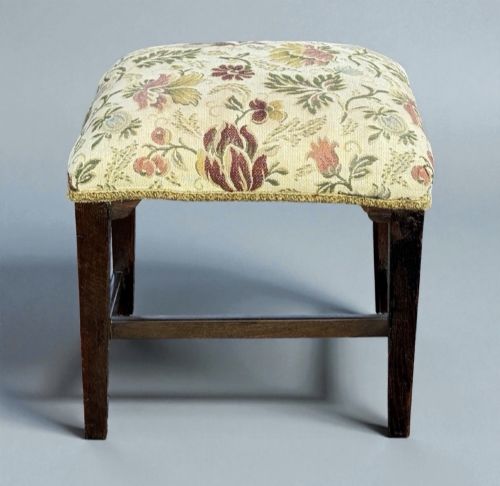


Georgian Foot Stool
A georgian foot stool brings domestic comfort and solid cabinet-making into a room, offering low seating or a rest for the feet.
Georgian Foot Stool
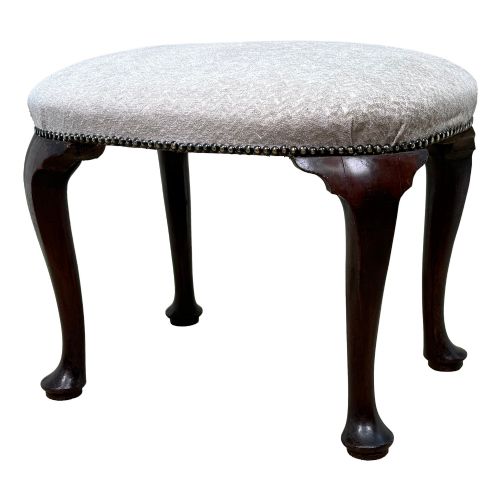
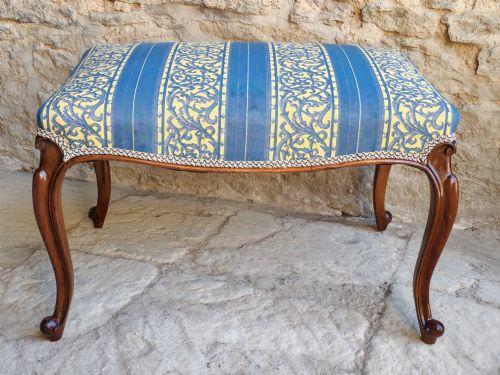
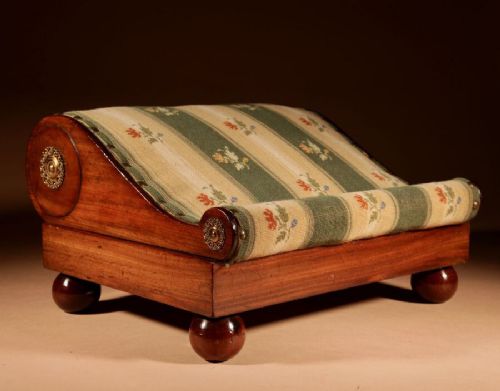
A georgian foot stool serves as a low seat or rest, appearing in forms ranging from compact square blocks to long benches and adjustable gout stools. Walnut and mahogany predominate, often paired with traditional textile upholstery, needlepoint, or leather.
The selection spans genuine 18th-century pieces alongside later revival interpretations built in the Georgian, Queen Anne, or Chippendale style. Buyers encounter specific regional variations, including Irish pieces with cabriole legs or distinct frame designs.
Materials and Construction
Cabinet-makers relied heavily on dense timbers like mahogany and walnut, occasionally utilising oak, beech, or giltwood for frames. Joinery typically involved traditional methods to support upholstered drop-in seats or fixed pads covered in velvet, damask, or tapestry.
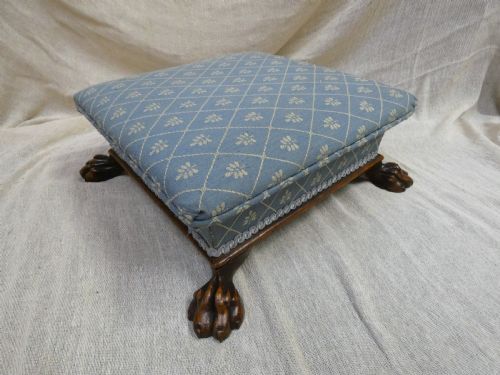
Decorative detailing on the timber frames includes carved cabriole legs, pad feet, lions paw feet, and sabre legs, sometimes complemented by brass hardware or elaborate X-frame structures.
Listings feature mahogany, walnut, oak, and beechwood frames paired with needlepoint, velvet, tapestry, and damask upholstery.
Judging Quality and Execution
The standard of a piece rests on the crispness of the timber carving and the integrity of the frame construction. Superior examples display fluent lines in the legs and frame, while lesser items show heavier, less refined proportions.
Original upholstery elements, such as period needlepoint or traditional ticking, preserve historical context, though many pieces rely on later fabric renewals that reflect subsequent interior tastes.
Miles & Edwards·I.M. Gillows of Lancaster
The Georgian Foot Stool Glossary
- Cabriole leg
- A furniture leg that curves outward at the knee and tapers inward to an ankle, finishing in a pad, claw, or paw foot. This form was widely adopted during the early 18th century.
- Gout stool
- An adjustable foot rest designed to elevate the foot for those suffering from joint ailments. These often feature mechanical tilting actions and specific padding.
- Needlepoint
- A type of canvas work embroidery used extensively for historical seat covers and upholstery. It provides a durable and decorative surface.
- X-frame
- A furniture base constructed with intersecting diagonal members forming an X shape. This configuration adds structural strength and visual drama to stools.
- Tapisserie
- Woven textile used for upholstery, often depicting pictorial scenes or floral patterns. It appears frequently on formal period seating.
Georgian Foot Stool: Frequently Asked Questions
What is a gout stool?
A gout stool is a specialised adjustable rest designed to elevate the foot at various angles. They often include mechanical ratchets to suit the user.
These pieces were particularly common in domestic interiors for comfort and health management during the 18th and 19th centuries.
How do I identify a revival piece?
Revival pieces, often built in the Georgian or Chippendale style during the Victorian era or later, show standardised machine-cut timber characteristics. Their secondary woods and construction methods differ from genuine 18th-century work.
Examining the underside and joint construction helps clarify whether a piece dates to the original period or a later interpretation.
Were these stools used for seating?
While many served as foot rests, larger forms and piano stools functioned as primary seats. Their sturdy mahogany or walnut frames supported regular daily use.
Upholstery varied from plain leather to decorative needlepoint depending on the intended room and social context.
How should I clean the wood frame?
Wooden frames benefit from gentle dusting with a dry cloth to protect the aged surface and polish. Avoid modern chemical sprays that can strip historical finishes.
Maintaining a stable indoor humidity prevents the mahogany or walnut from drying out and cracking over time.