

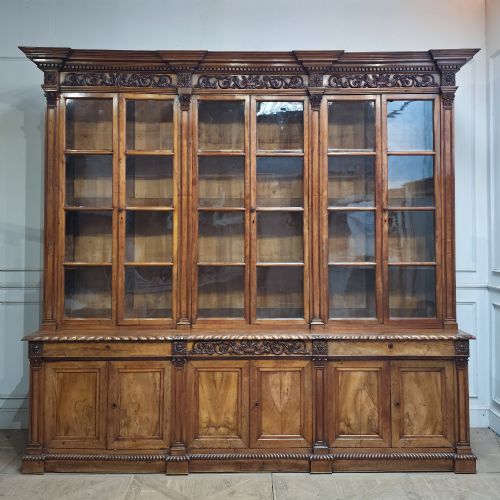
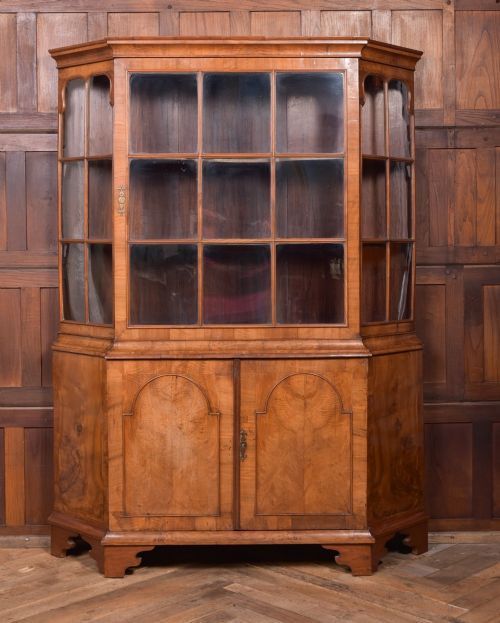


Walnut Cupboard Dresser
A walnut cupboard dresser brings together rich timber and practical storage, offering a commanding focal point for any room.
Walnut Cupboard Dresser
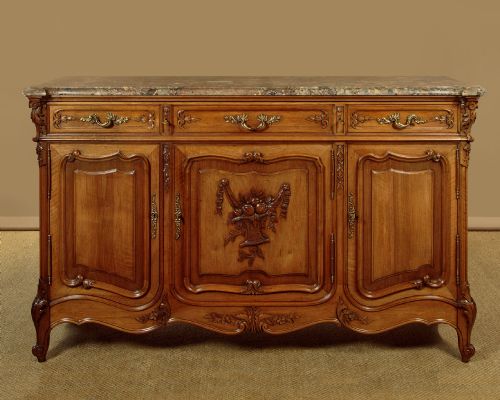
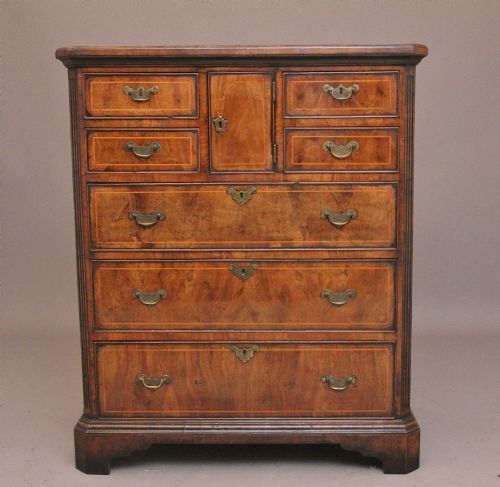
A walnut cupboard dresser serves as a substantial storage item, combining display space and enclosed shelving within a single architectural form. Buyers searching for a walnut cupboard dresser frequently encounter 18th century French provincial buffets, Victorian display cabinets, and George II case pieces.
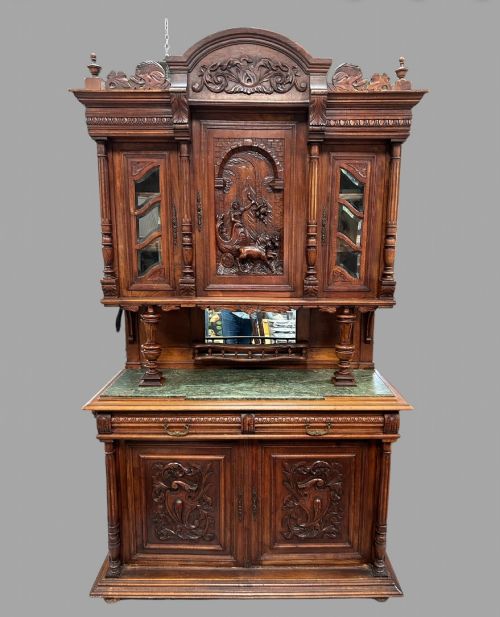
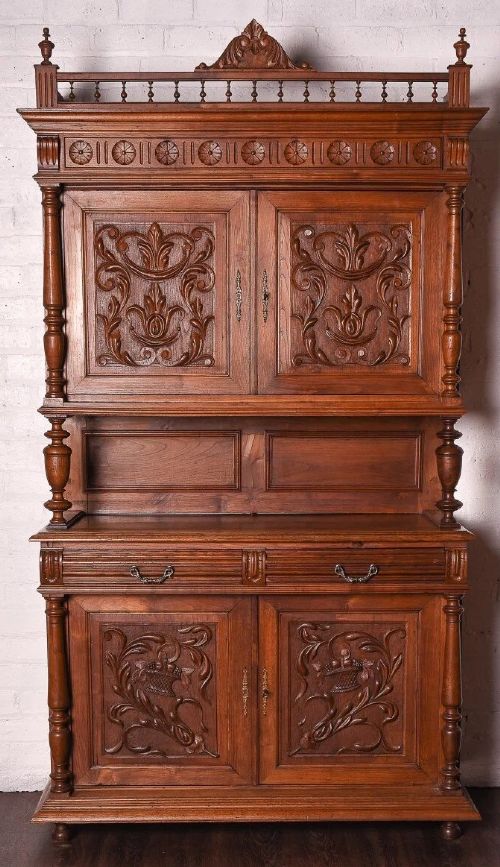
The selection ranges from tall two-part dressers and buffet deux corps to compact side cupboards and glazed kitchen bookcases. Continental workshops and British makers alike produced these in distinct regional styles, utilising the deep grain of walnut to anchor the piece.
Georgian examples lean towards refined burr veneers and kneehole desk configurations, while later Victorian and Revival iterations showcase heavier carved panels and marble surfaces. Domestic interiors benefit from the sheer presence of these larger timber storage units.
Materials and construction methods
Makers built these pieces primarily using solid walnut and burr walnut veneers, often incorporating secondary timbers such as oak for internal drawer linings and structural framing. The grain patterns dictate how the timber was cut and laid across the primary doors and drawer fronts.
Brass handles, escutcheons, and hinges provide functional hardware, while occasional examples incorporate glass panes for upper display sections and marble inserts on top surfaces. Mother of pearl inlay and detailed hand carving appear on specific revival and continental items to accentuate the timber.
Joinery techniques rely on traditional mortise and tenon frames, dovetailed drawer construction, and panelled door assemblies designed to accommodate the natural movement of timber over decades.
Walnut Cupboard Dresser Retail Price Guide 2026
Typical asking prices for walnut cupboard dresser among the pieces listed under this phrase on Sellingantiques today, from the lower quarter to the upper quarter. They describe what is for sale here now, not the wider market.
Several cabinets were built specifically to store game from hunting expeditions, complete with carved depictions of feathered and horned quarry.
Distinguishing quality across periods
Quality reveals itself in the selection of the timber veneer, where book-matched burr walnut creates a symmetrical pattern across larger cupboard doors. Superior pieces maintain crispness in hand-carved mouldings and applied ornamentation, avoiding the soft edges seen in hurried or later mechanical production.
The internal construction of drawers and the weight of the brass or iron hardware indicate the standard of the workshop. Original glazing, intact marble tops, and well-fitted doors that hang true within their frames distinguish finer examples from standard utility items.
Bowman Brothers
The Walnut Cupboard Dresser Glossary
- Burr walnut
- A figured timber harvested from the irregular growth knots of the walnut tree, prized for its swirling grain patterns. Cabinetmakers sliced this wood into thin veneers for decorative drawer fronts and panel inserts.
- Buffet deux corps
- A large two-part storage piece featuring a lower cupboard section surmounted by a smaller upper cabinet. This architectural form originated in France and provided extensive storage for household provisions.
- George II
- An 18th century design period associated with architectural proportions, walnut veneers, and polished brass hardware. Pieces from this era emphasise clean lines and fine cabinet work.
- Louis XIII Revival
- A 19th century style drawing on earlier French Baroque motifs, characterised by heavy geometric carvings and imposing proportions. These pieces often incorporate rich walnut and substantial panel work.
- Kneehole desk
- A compact writing or storage table featuring a recessed central space flanked by pedestals of drawers. Georgian makers frequently executed these in burr walnut with fitted desk interiors.
Walnut Cupboard Dresser: Frequently Asked Questions
What is a walnut cupboard dresser used for?
These pieces function primarily as storage and display furniture for dining rooms, kitchens, and living spaces. The upper sections hold glassware or books, while lower cupboards conceal tableware and linens.
Their substantial internal volume makes them practical for organising household goods while adding traditional architectural weight to a room.
How do I identify an 18th century piece?
Eighteenth century examples rely on hand-cut dovetails, pegged mortise and tenon joinery, and specific regional proportions found in French provincial or Georgian workshops. The timber patination develops a deep, warm glow through decades of waxing and handling.
Construction details inside the drawers and behind the backboards confirm the age and hand-built nature of the cabinet.
Where were walnut cupboard dressers made?
Makers across Britain, France, Italy, Holland, and America produced these cabinets, each region applying local design traditions to the timber. French provincial workshops favoured fruitwood and walnut in large buffets, while English cabinetmakers focused on burr veneers.
Continental pieces often display distinct regional carving styles, such as Renaissance Revival or Dutch traditional motifs.
How should I care for walnut furniture?
Protect antique walnut by keeping it away from direct heat sources and strong sunlight, which can dry out the timber and fade the finish. Regular application of a traditional beeswax polish maintains the moisture and sheen of the wood.
Avoid using silicone-based sprays, as they build up a residue and alter the natural patination of the vintage surface.