


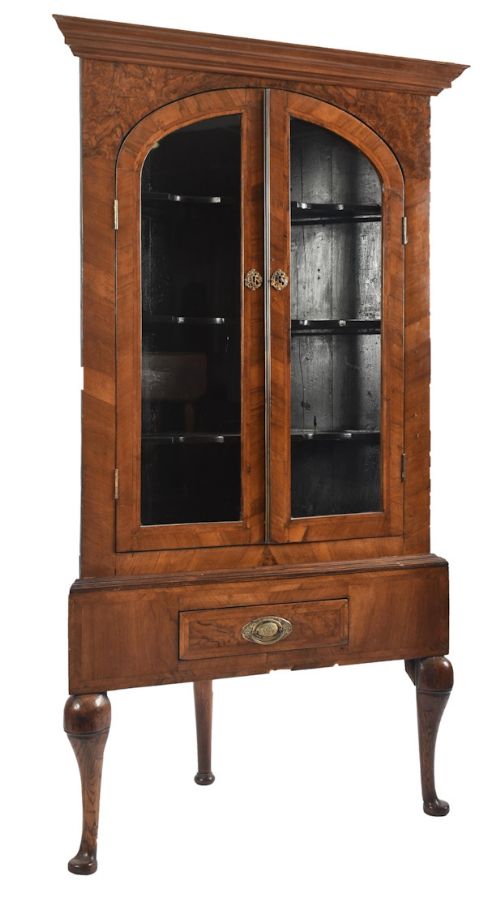


Walnut Corner Vitrine
A walnut corner vitrine turns dead corner space into an elegant display for small treasures.
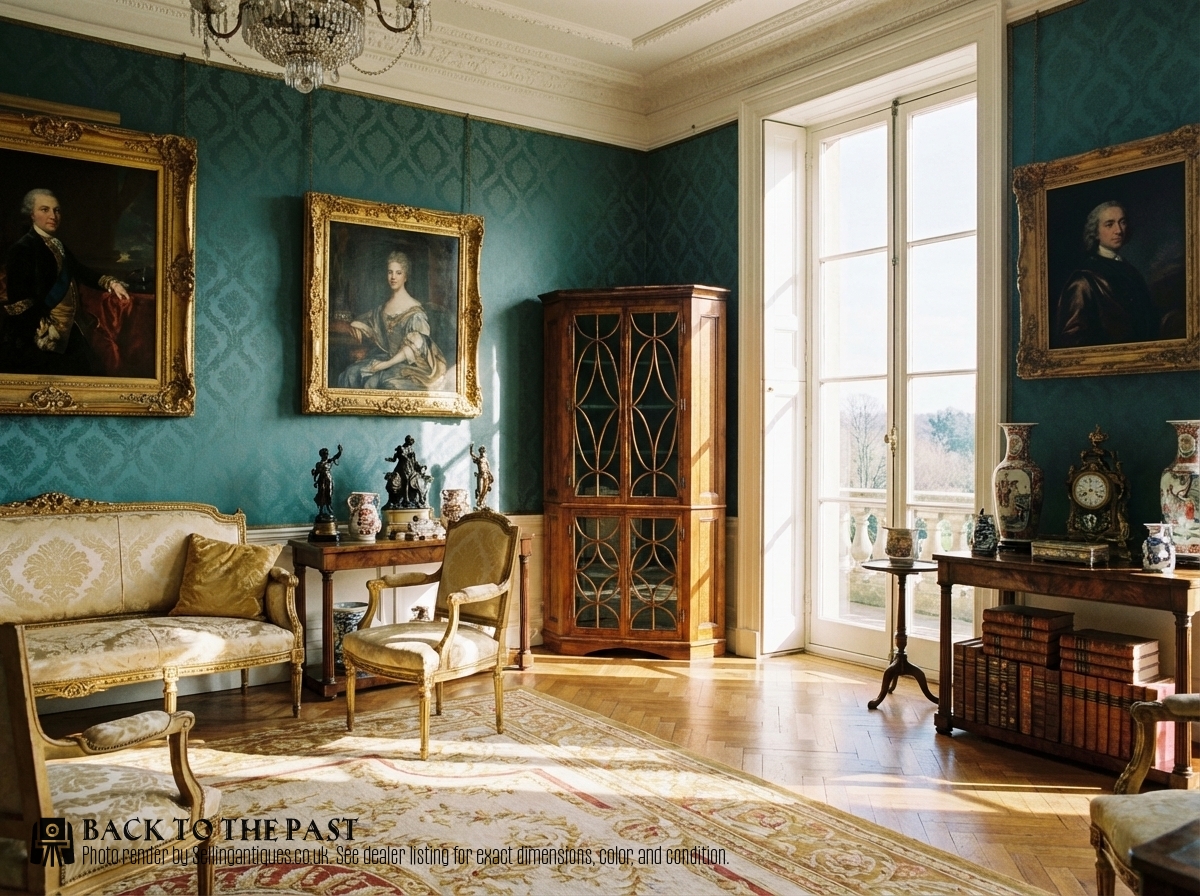
Walnut Corner Vitrine
When you search for a walnut corner vitrine, you meet tall display cabinets and cupboards built to fit snugly into the angle of a room. The walnut corner vitrine takes many forms on this page, spanning periods from the eighteenth century through the Victorian era up to Art Deco pieces.
You will encounter single and two-part corner display cabinets alongside glazed cupboards and bow front designs. Styles range from simple Georgian and Queen Anne revival pieces to Dutch marquetry and Neoclassical shapes.
Most examples rely on glazed doors to protect porcelain and silver while keeping them visible from across the room. Burr walnut surfaces and boxwood inlay appear frequently among these listings, often paired with brass or ormolu mounts.
How they were made
Cabinet makers constructed these pieces using solid timber frames overlaid with burr walnut veneer to create rich grain patterns across the front doors and panels. Boxwood inlay adds delicate contrasting lines and geometric motifs into the dark timber surface.
Glazing bars divide the glass panes into intricate patterns, such as ovoid and diamond interlaced designs seen on nineteenth-century revivals. Ormolu mounts and brass hinges provide functional reinforcement while adding metallic detail to the corners and doors.
Materials appearing across these corner cabinets include burr walnut veneer, boxwood inlay, glass, marble, and brass.
What varies in quality
Quality rests upon the selection of the burr walnut veneer and the crispness of the boxwood inlay work. Cabinets featuring complex marquetry or finely interlaced glazing bars demand greater skill from the maker than plain glazed doors do.
Proportion and cabinet construction dictate the visual balance of the piece within a room. Well-executed revival pieces display a close adherence to eighteenth-century proportions, whereas simpler utilitarian versions focus purely on storage.
Maurice Adams
The Walnut Corner Vitrine Glossary
- Vitrine
- A glass-fronted display cabinet used for showing porcelain, glassware and small objects. These pieces often feature glazed doors on the upper section to protect the contents from dust.
- Burr walnut
- A prized timber harvested from the irregular growths of walnut trees. The wood yields complex swirling grain patterns that cabinet makers slice into thin veneers for decorative surfaces.
- Marquetry
- The art of applying thin slices of various woods and other materials to a timber structure to form decorative pictures or patterns. Dutch examples often display floral designs executed in this technique.
- Ormolu
- Gilded bronze applied to furniture mounts and decorative accents. It provides a bright metallic contrast against dark walnut timber.
Walnut Corner Vitrine: Frequently Asked Questions
Where should I place a corner vitrine?
These cabinets fit directly into the ninety-degree angle of a room, which makes use of space that standard rectangular furniture leaves empty. They anchor awkward corners while drawing the eye upward with their height.
Position a walnut corner vitrine away from direct sunlight to protect the timber grain and any fragile items displayed inside from fading over time.
How do I distinguish eighteenth-century pieces from later revivals?
Eighteenth-century originals show construction methods and timber ageing consistent with their period, whereas revival pieces built in the Victorian or later eras often utilise machine-cut elements and standardised fixings.
Style labels such as George I style or revival indicate a later nineteenth-century interpretation rather than a piece made during the actual reign.
How do I care for burr walnut veneer?
Burr walnut requires stable indoor humidity levels to prevent the thin decorative veneer from lifting or cracking over time. Keep the timber away from direct heat sources such as radiators.
Dust the surface regularly with a soft dry cloth and apply a quality wax sparingly to maintain the natural sheen of the wood.