
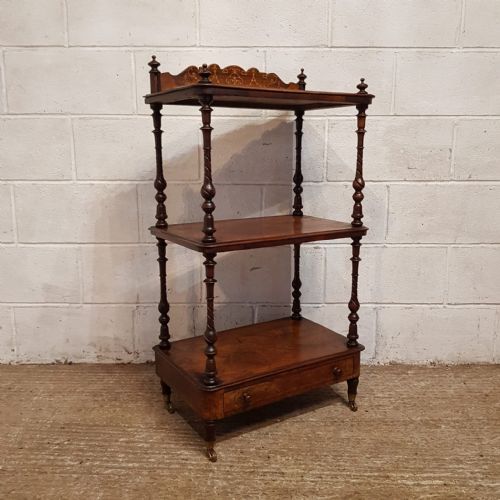


Walnut Corner Unit
A walnut corner unit brings warmth and architectural presence to an awkward room angle, offering display or storage space in rich timber.
Walnut Corner Unit
When you search for walnut corner unit, you encounter a distinct category of antique furniture designed to utilise domestic angles, spanning enclosed cupboards and open tiered shelving forms.
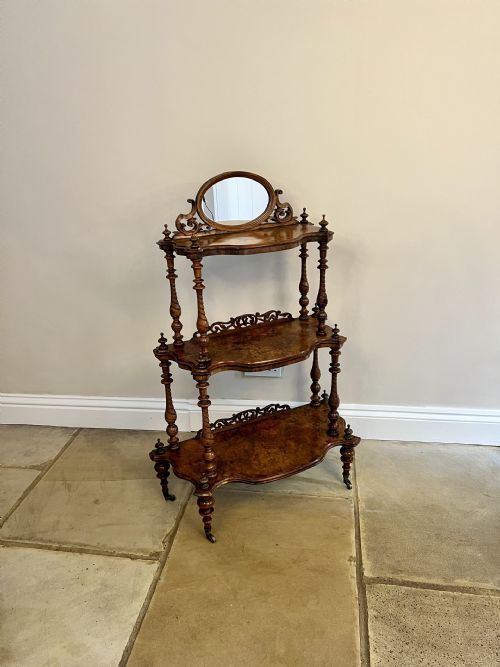
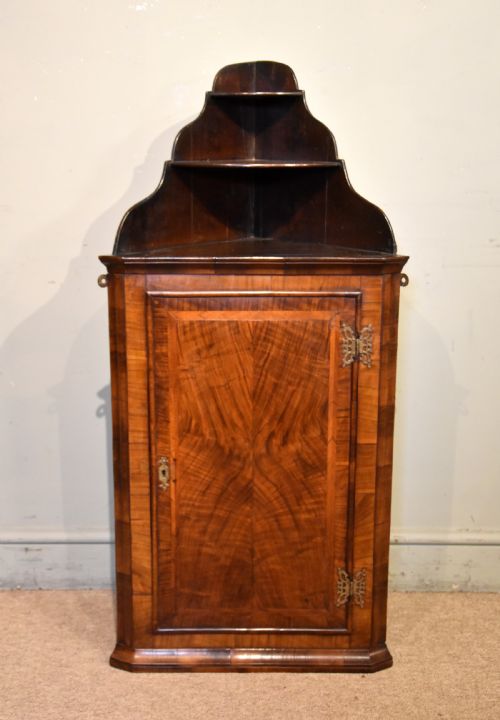
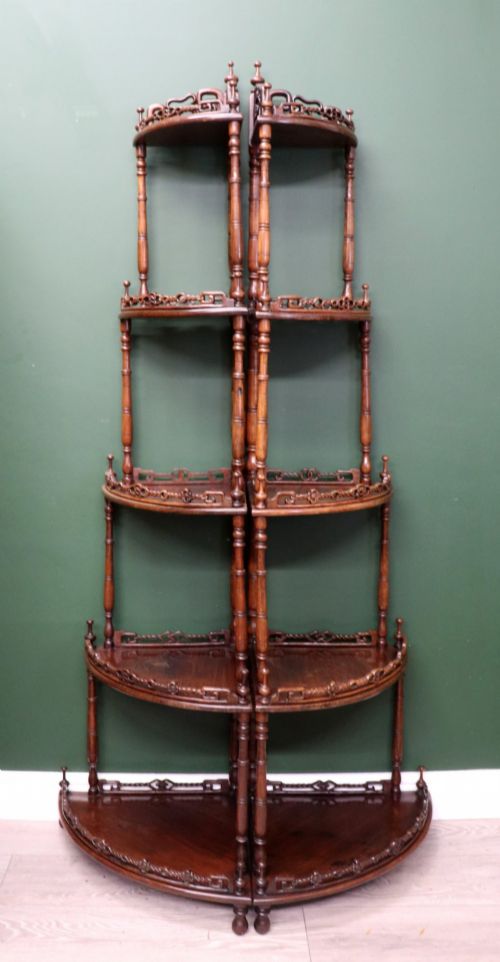
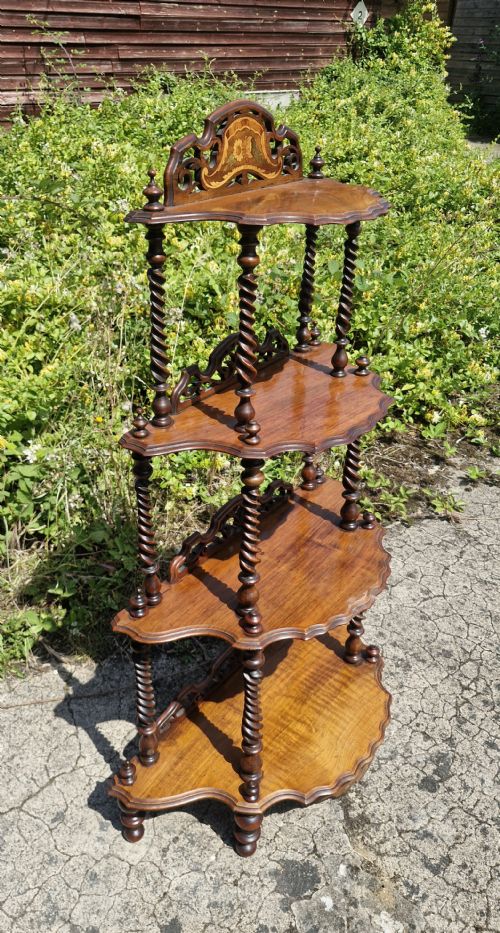
The pieces appearing on this page range from compact hanging wall cupboards to substantial floor-standing whatnots and multi-tiered display stands.
Victorian and eighteenth-century examples dominate the selection, utilising rich figured veneers and fitted interior shelving to maximise display potential in a room.
How they were made
Cabinet makers utilised solid walnut alongside decorative burr walnut veneers, often applied over secondary timbers such as oak or mahogany to create striking grain patterns.
Decoration frequently incorporates marquetry inlay, delicate brass mounts, and glazed doors, while structural elements rely on traditional joinery tailored to angled walls.
Standing whatnots incorporate turned supports, barley twist columns, or carved fretwork tiers to connect multiple display surfaces securely.
Listings feature walnut timber combined with secondary materials like oak, mahogany, glass, and mirror glass across various eras.
What varies in quality
Quality rests in the choice and symmetry of the walnut veneer, particularly where burr walnut figures are matched across door panels or tiered shelves.
Finer pieces display crisper carved detailing, superior marquetry work, and robust internal construction that maintains the rigidity of taller multi-tier shelving units.
Liberty & Co.
The Walnut Corner Unit Glossary
- Burr walnut
- A highly figured timber harvested from walnut tree growths, prized for its swirling grain patterns. It provides a decorative surface on cabinet doors and tabletops.
- Whatnot
- An open shelving unit designed for displaying ornaments and books, popular in the Victorian period. These pieces often feature multiple tiers supported by turned columns.
- Marquetry inlay
- The art of applying small pieces of veneer to form decorative patterns or pictures. Craftsmen use contrasting woods to achieve this detailed surface ornamentation.
- Demi-lune
- A half-moon shape used for the footprint of specific console tables and display pieces. This curved profile allows the furniture to sit flush against a wall.
- Barley twist
- A spiral turning technique used on wooden supports and columns. This decorative turning style appears frequently on Victorian shelving stands.
Walnut Corner Unit: Frequently Asked Questions
How do I secure a hanging corner cupboard?
Hanging cupboards rely on sturdy internal fixing points attached directly to the wall studs to support the weight of the timber and its contents.
Given the dense nature of walnut and oak, professional installation ensures the piece remains level and secure.
How do I tell an eighteenth-century piece from a Victorian revival?
Eighteenth-century pieces typically exhibit simpler, architectural lines with heavy cornices and primary structural timbers like oak, whereas Victorian interpretations often feature elaborate marquetry inlay, burr walnut veneers, and lighter tiered framing.
Examining the secondary woods inside and the style of the hinges provides further clues to the actual manufacturing period.
Where should I place a multi-tier whatnot?
A multi-tier whatnot fits neatly into an empty room corner, drawing the eye upward and utilising vertical space that standard furniture leaves blank.
They serve well in reception rooms or hallways for displaying small collections without dominating the floor area.