

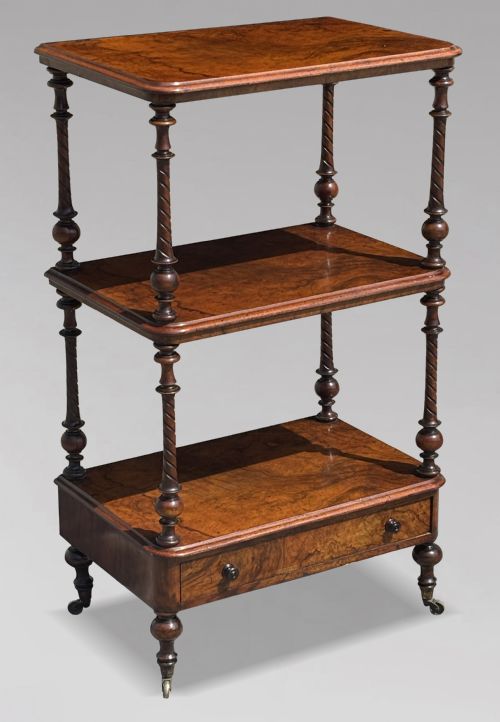
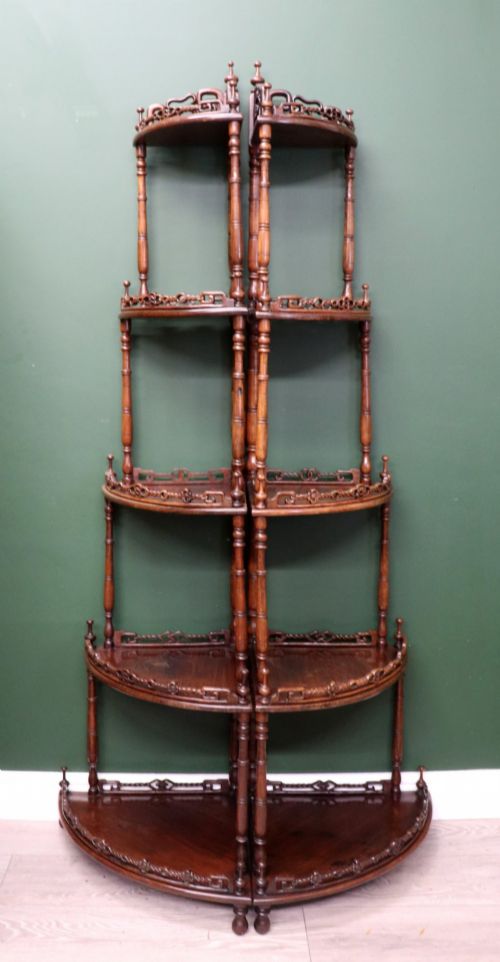
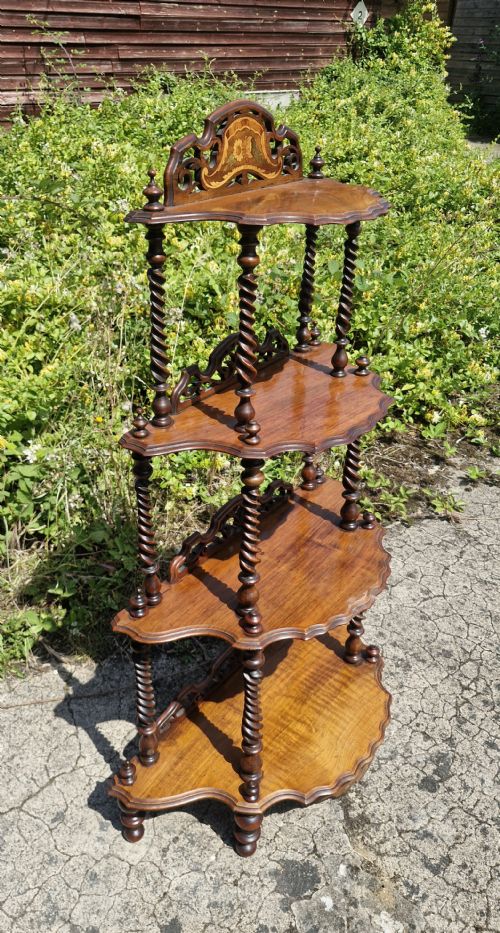
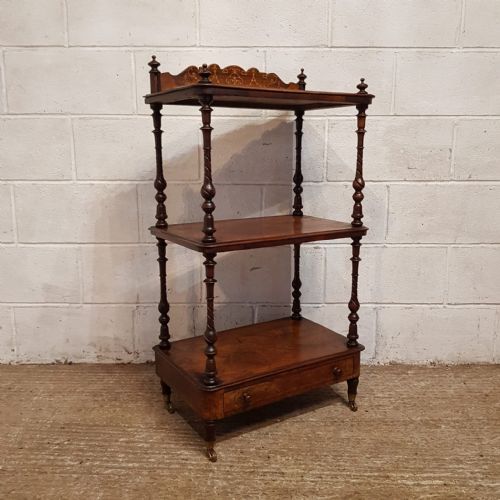

Walnut Corner Stand
A walnut corner stand brings architectural timber into neglected room angles through tiered display shelves and enclosed cupboard storage.
Walnut Corner Stand
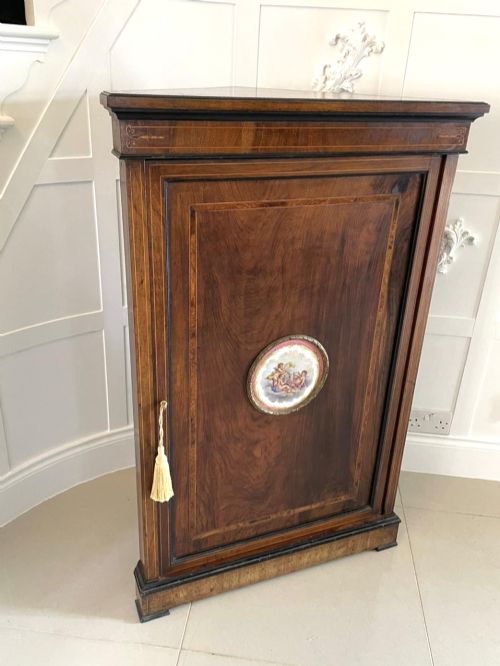
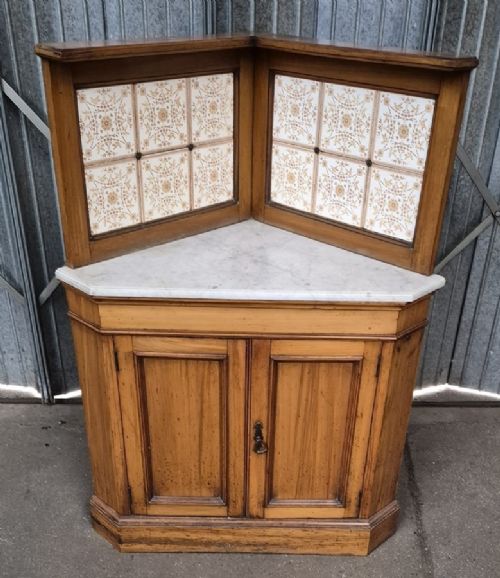
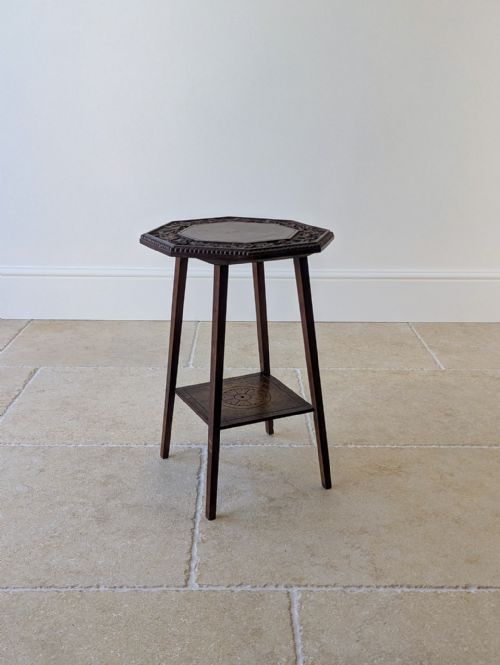
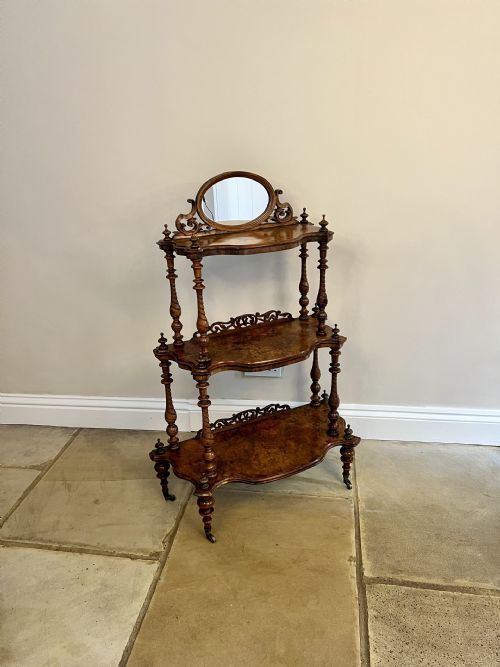
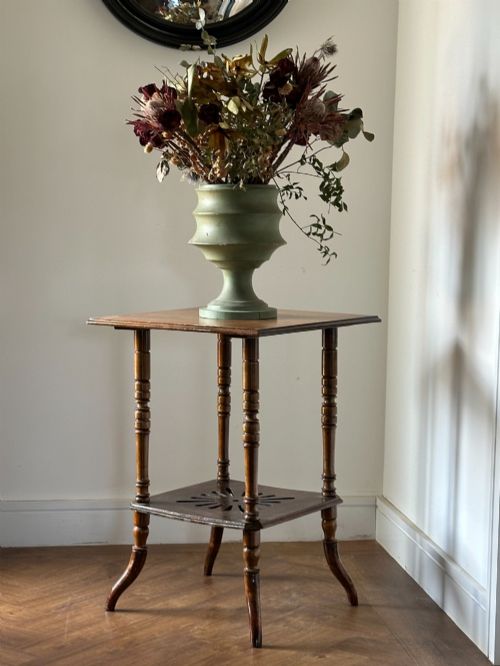
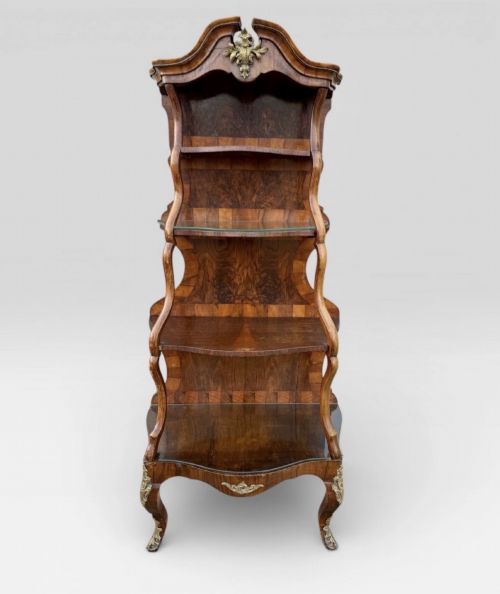
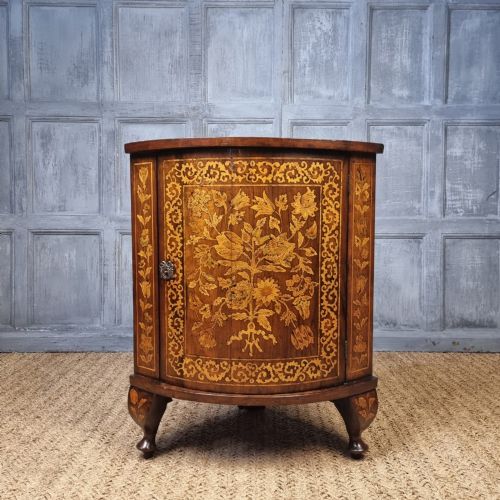
A walnut corner stand fits directly into room angles to utilise dead space for storage and display. These pieces range from open multi-tiered whatnots and etageres to glazed corner cabinets and enclosed cupboards.
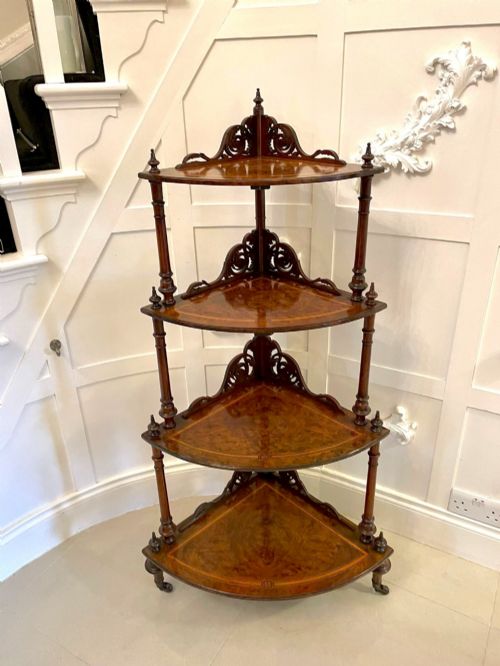
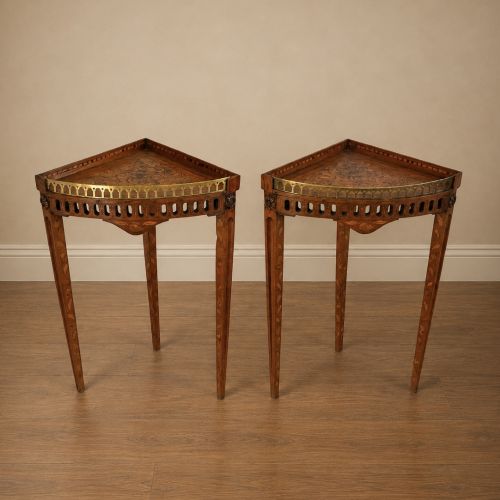
Victorian examples dominate the selection, often rendered in burr walnut with multiple tiers supported by turned columns. Earlier 18th-century pieces favour solid walnut veneers, marquetry inlay and architectural panel doors.
How they were made
Cabinet makers utilised dense walnut and highly figured burr walnut veneers applied to secondary softwood or hardwood carcases. Marquetry inlay, brass galleries, and gilt metal mounts frequently complement the timber surfaces.
Tiered whatnots rely on turned uprights and sturdy supports to join multiple shelves, while corner cupboards employ traditional dovetail joints and panel construction for stability.
Listings feature walnut corner stands spanning the 18th, 19th, and early 20th centuries, alongside Edwardian and Arts and Crafts examples.
What varies in quality
The choice of timber creates the primary distinction between pieces, with matched burr walnut veneers and intricate marquetry marking out superior examples. Plain walnut and simpler construction sit lower on the scale.
Fine craftsmanship shows in the crispness of turned supports, the tightness of mitred joints, and the retention of original glass or brass hardware rather than later replacements.
Walker And Sons·E W Godwin
The Walnut Corner Stand Glossary
- Whatnot
- A piece of furniture consisting of a set of open shelves for displaying small objects. These tiered stands frequently incorporate corner designs.
- Burr Walnut
- A figured timber obtained from walnut tree growths, prized for swirling grain patterns. Cabinet makers prized this veneer for principal display surfaces.
- Marquetry Inlay
- Decorative patterns formed by fitting contrasting veneers into timber panels. Geometric and floral motifs appear across 18th-century and Victorian examples.
- Demi-Lune
- A half-moon shape used for console tables and certain corner-fitting display units. This profile softens rigid room angles.
- Etagere
- A French term for a piece of furniture with several shelves for ornaments. These open display units match the function of tiered whatnots.
Walnut Corner Stand: Frequently Asked Questions
What is a corner whatnot?
A corner whatnot is a tiered open shelving unit designed to fit into the corner of a room for displaying ornaments.
Victorian makers built these stands with multiple stacked platforms supported by turned wooden columns.
How do I style a walnut corner stand?
Place the unit in an empty room angle to draw the eye upwards and utilise neglected floor space.
Fill the tiers with ceramics, glassware, or small framed objects to balance the dark timber tones.
How do I identify burr walnut?
Burr walnut displays swirling, knotty grain patterns created by irregular tree growth.
Cabinet makers sliced this timber into thin veneers to cover prominent display surfaces on tables and cabinets.