
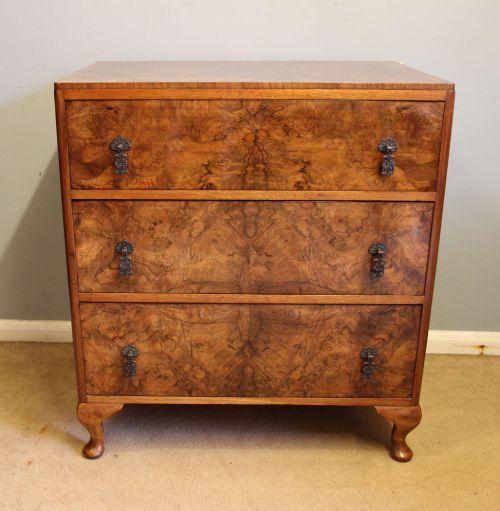
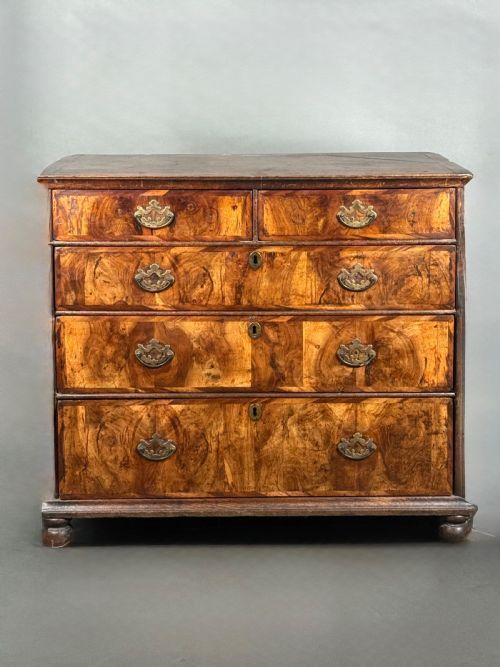
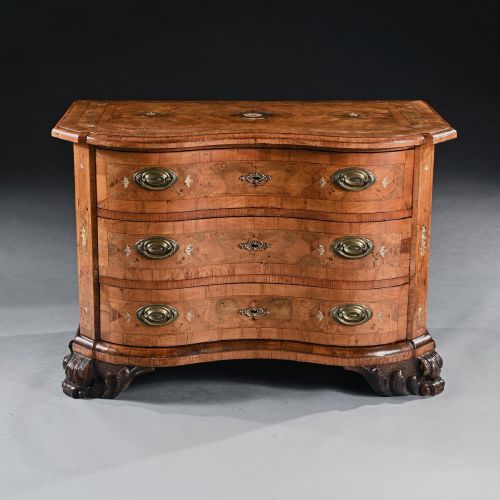
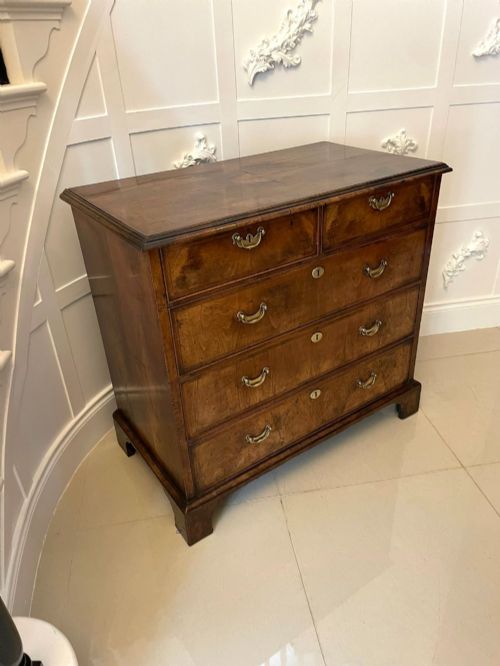
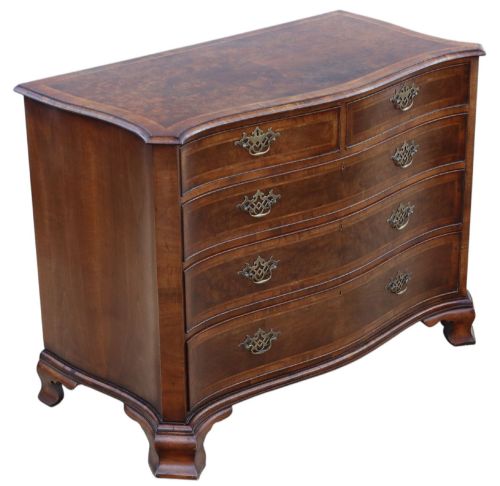



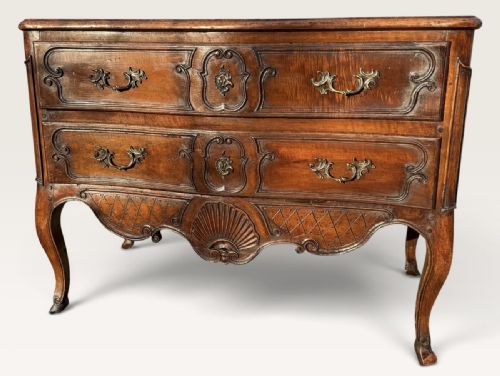
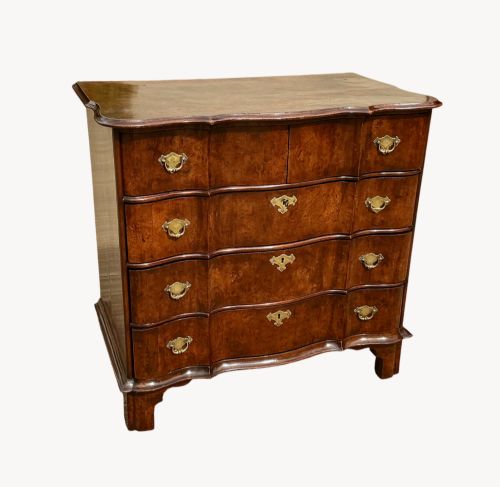
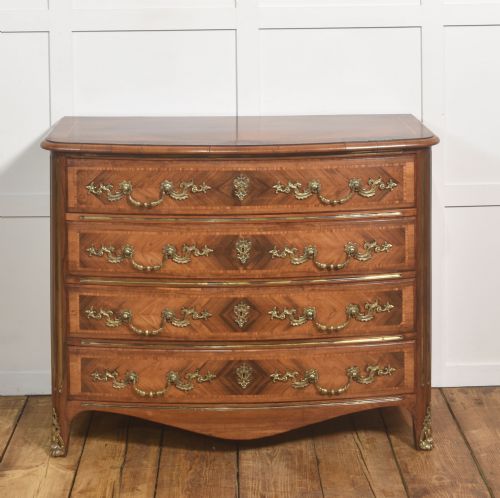
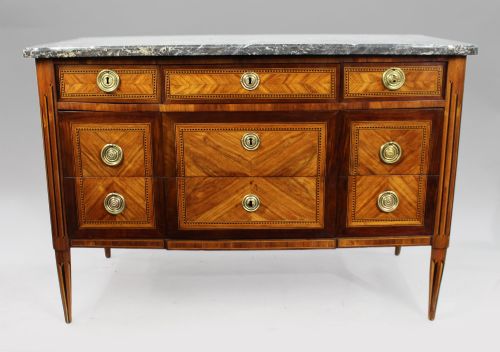
Walnut Commode Chest Drawers
A walnut commode chest drawers brings rich grain, deep warmth and considerable practicality to a room.
Walnut Commode Chest Drawers
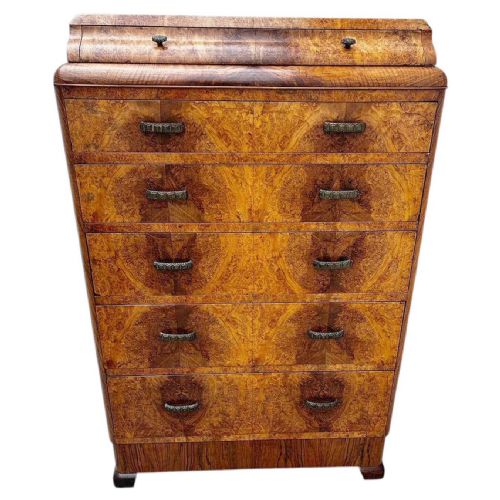
The walnut commode chest drawers encompasses versatile storage pieces spanning multiple centuries, originating from early English, Continental and later revival periods. Buyers frequently encounter eighteenth-century Georgian forms alongside nineteenth-century French commodes and twentieth-century burr walnut variations.
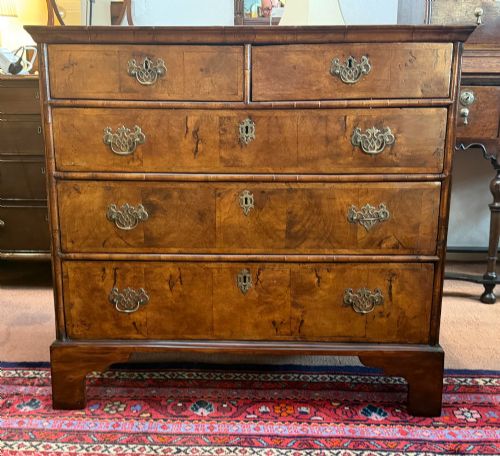
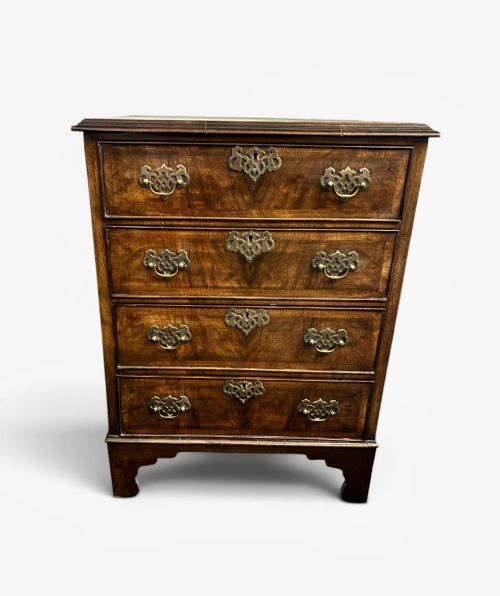
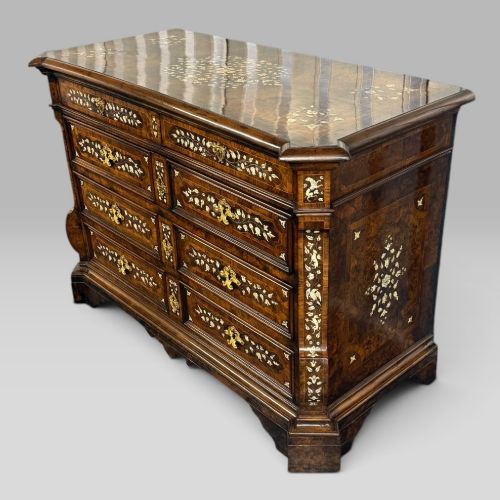
These pieces function primarily as bedside or principal room storage, featuring horizontal banks of drawers or curved serpentine fronts. Continental examples often incorporate marble tops and elaborate marquetry, while English pieces emphasise figured wood grain and herringbone banding.
Materials and construction methods
Cabinet makers utilised solid walnut, oak and secondary softwoods as foundational carcase structures, applying highly figured burr walnut, straight-grained veneers or delicate oyster veneers across the exterior surfaces. Crossbanding and stringing in contrasting timbers framed the drawer fronts.
Surface decoration frequently involved intricate marquetry, parquetry, pewter and ivory inlay, particularly on continental European commodes. Brass drop handles, escutcheons and occasional ormolu mounts completed the hardware assembly.
Listings feature walnut commode chest drawers spanning the seventeenth century through to the 1930s, incorporating oak, marble, brass and ormolu.
Factors determining quality
Quality rests upon the selection and matching of the walnut veneers across the drawer fronts and top surfaces. Uniformity in grain patterns and meticulous alignment of crossbanding indicate superior craftsmanship.
The structural integrity of the drawer carcases, smoothness of drawer action and retention of original brass hardware or marble slabs distinguish finer examples from standard production.
The Walnut Commode Chest Drawers Glossary
- Oyster veneering
- A technique of slicing small branches horizontally to produce circular or oval patterns resembling oyster shells. This decorative method appears frequently on seventeenth-century pieces.
- Serpentine front
- A furniture front characterised by a central convex curve flanked by two concave curves. It requires advanced woodworking skill to execute properly.
- Marquetry
- The art of applying decorative veneer pieces in geometric patterns or pictorial designs onto a carcase. Craftsmen often combine various woods alongside pewter and ivory.
- Ormolu
- Gilded bronze mounts applied to furniture for decorative enrichment. These mounts are typical of French provincial and continental commodes.
- Herringbone banding
- A narrow strip of veneer laid in a V-shaped pattern resembling the skeleton of a fish. It serves to frame drawer fronts and borders.
Walnut Commode Chest Drawers: Frequently Asked Questions
How do I date a walnut commode?
Dating relies upon examining construction methods, timber choices and hardware styles. Earlier pieces from the seventeenth and eighteenth centuries often feature hand-cut dovetails and native oak linings, whereas later revival items display nineteenth or twentieth-century manufacturing traits.
Secondary woods and veneer thicknesses also provide clear chronological markers. English pieces frequently align with reigning periods such as Queen Anne or George I, while continental examples reflect regional stylistic shifts.
What is the difference between a chest and a commode?
While both terms frequently describe drawer storage, a commode traditionally refers to continental European low chests, often fitted with marble tops and decorative mounts. Chests of drawers more commonly denote English upright forms.
In modern usage, the terms overlap considerably, particularly when describing continental pieces imported into Britain. Both serve identical domestic storage functions within the bedroom or principal living spaces.
How do I care for walnut veneer?
Walnut veneer requires protection from direct sunlight and extreme humidity fluctuations to prevent warping or lifting. Maintaining stable indoor room temperatures preserves the integrity of the underlying adhesives and timber.
Regular dusting with a soft, dry cloth is sufficient for daily maintenance. Traditional wax polishing applied sparingly maintains the lustre of the wood without building up heavy residues.
Are marble-topped commodes fragile?
The marble slabs resting atop many continental commodes are heavy and robust, yet they remain susceptible to chipping along the edges if struck sharply. These tops are typically loose or secured with traditional fixings rather than permanently glued.
Lifting the marble requires caution during relocation or cleaning. The underlying wooden carcase supports the weight evenly during everyday use.