



Walnut Cocktail Bar
A walnut cocktail bar brings the distinct glamour of the interwar period directly into a modern reception room.
Walnut Cocktail Bar
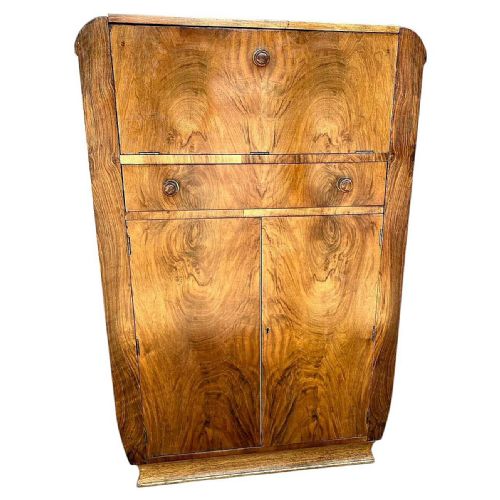
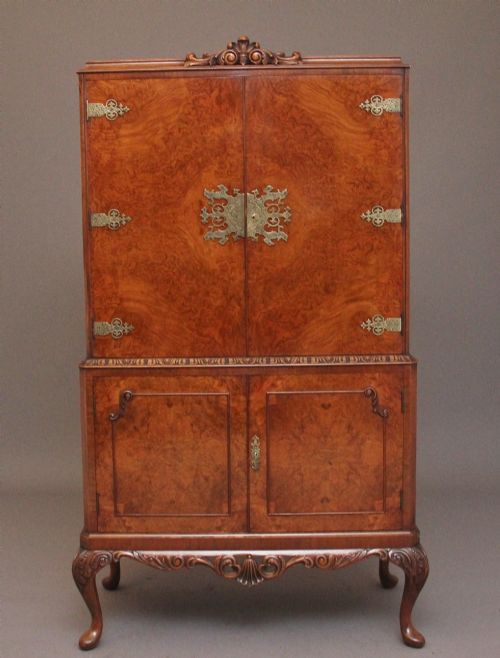
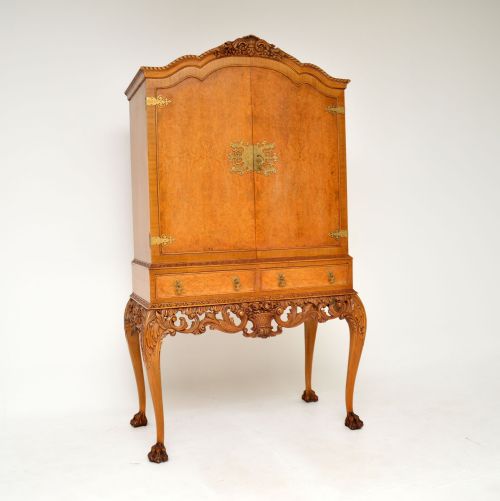
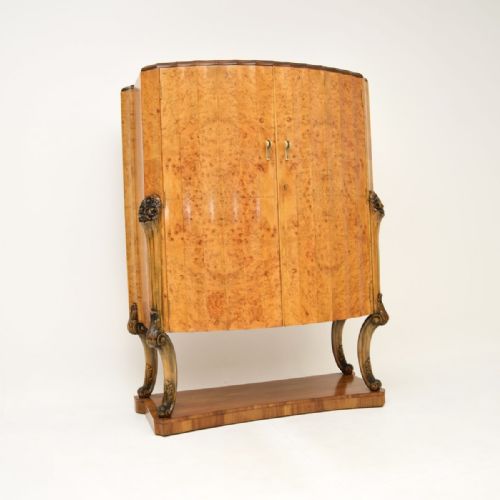
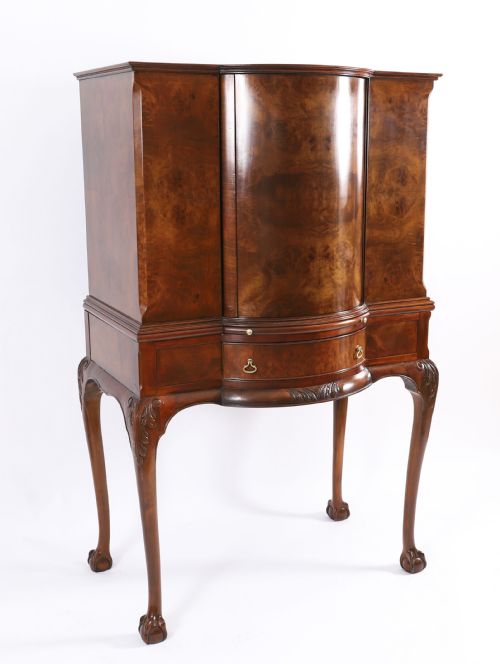
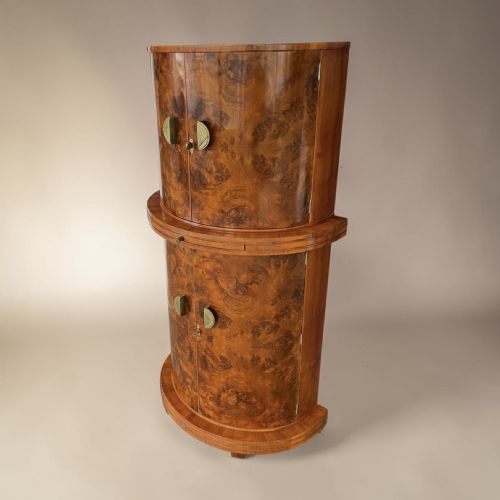
When searching for a walnut cocktail bar, a buyer encounters a specialised piece of entertainment furniture designed for mixing and serving drinks. The most common form on this page is the cocktail cabinet or dry bar, typically dating from the 1930s or the 1920s.
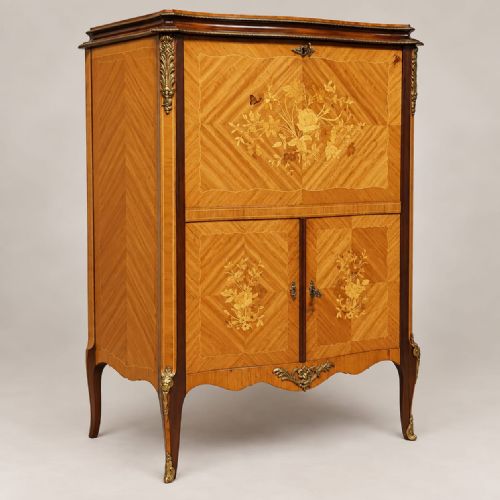
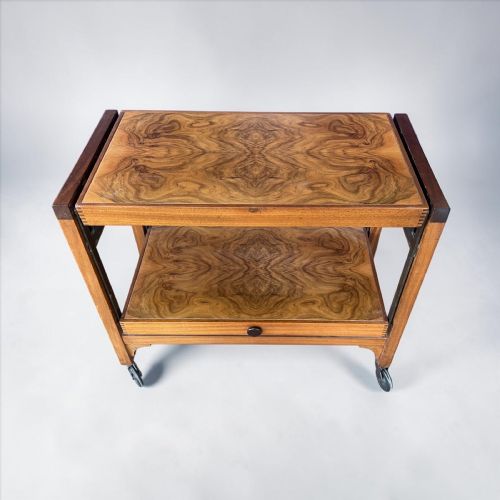
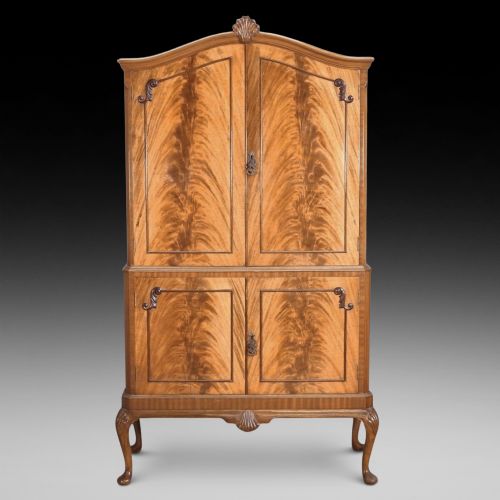
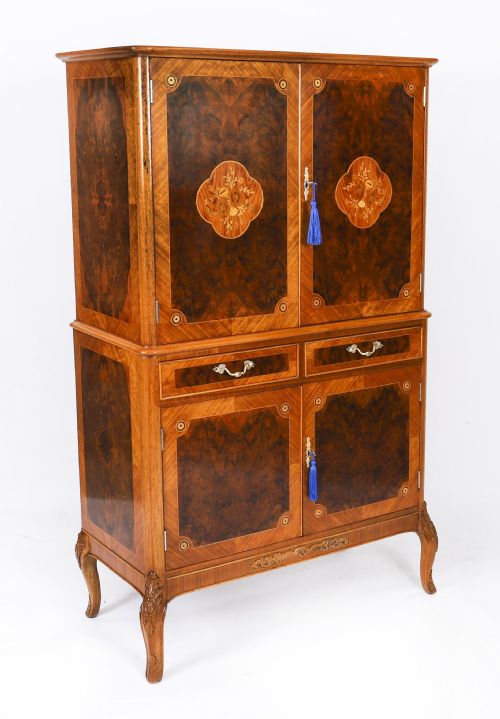
These pieces range from substantial standing cabinets with fitted internal compartments to smaller serving trolleys and bar carts. Alongside the dominant Art Deco style, examples reflect revival designs drawing on Queen Anne, William and Mary, and French traditions.
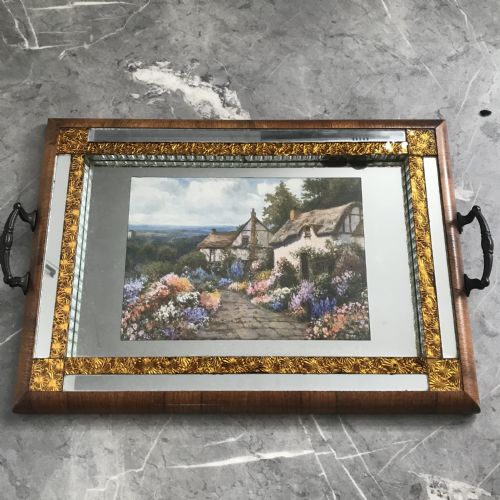
Interiors often include mirrored glass panels, pull-down shelves, and dedicated storage for glassware and bottles. The overall form prioritises both formal display and functional hospitality.
How they were made
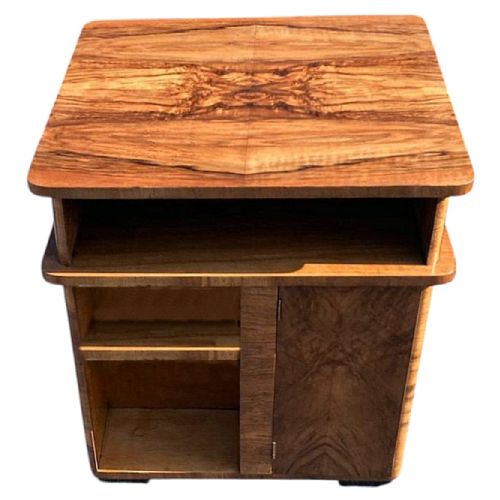
Cabinet makers utilised dense timber foundations overlaid with finely figured walnut veneer and burr walnut to create striking natural patterns on the exterior surfaces. Marquetry details occasionally provide geometric or floral contrast across the main body of the furniture.
Metal components play a structural and decorative role, with brass, chrome, and standard metal hardware applied to hinges, handles, and framework. Mirrored glass and standard glass frequently line the interior mixing spaces and serving trays.
Some of these cabinets feature revolving compartments designed to spin your favourite gin selection right into view with a gentle push.
What varies in quality
The distinction between standard production and the finest work lies in the selection of the timber grain and the complexity of the internal engineering. Cabinets attributed to notable makers display superior book-matching in the burr walnut veneer across the doors.
Internal mechanisms, such as metamorphic folding actions, revolving sections, and drop-down serving surfaces, separate robust daily furniture from intricate luxury pieces. The integration of specialised lighting and original mirrored glass further elevates the standing of an individual bar.
Epstein·Hille·Harry and Lou Epstein·Waring and Gillow·Incorporall·Harrods
The Walnut Cocktail Bar Glossary
- Burr walnut
- A figured wood grain derived from the wart-like growths on walnut trees, prized for its swirling patterns.
- Metamorphic
- Furniture engineered to transform its shape or function through folding, sliding, or revolving mechanisms.
- Art Deco
- A design style from the interwar period characterised by sleek lines, geometric forms, and streamlined elegance.
- Marquetry
- The art of applying small pieces of veneer to a structure to form decorative patterns and pictures.
- Demi-lune
- A half-moon shape commonly found in the footprint of specialised cabinets and side tables.
Walnut Cocktail Bar: Frequently Asked Questions
What is a dry bar?
A dry bar is a cabinet designed specifically for storing bottles, glassware, and mixing equipment without integrated refrigeration plumbing.
These pieces focus entirely on elegant presentation and convenient access during social gatherings.
How do I identify Art Deco pieces?
Art Deco design relies on symmetrical geometric shapes, streamlined contours, and rich wood veneers without heavy historical carving.
In these items, the aesthetic appears through clean architectural silhouettes and contrasting grain patterns.
Where were these cabinets placed?
Original placement was typically in the reception room, drawing room, or dedicated home bar space of interwar residences.
They served as both functional furniture for entertaining guests and decorative focal points for the interior.
What is the difference between a cabinet and a trolley?
Cabinets provide enclosed storage with doors and drop-down flaps to conceal glassware and bottles when not in use.
Trolleys and bar carts offer open-frame mobility on wheels for serving drinks directly to guests across a room.