
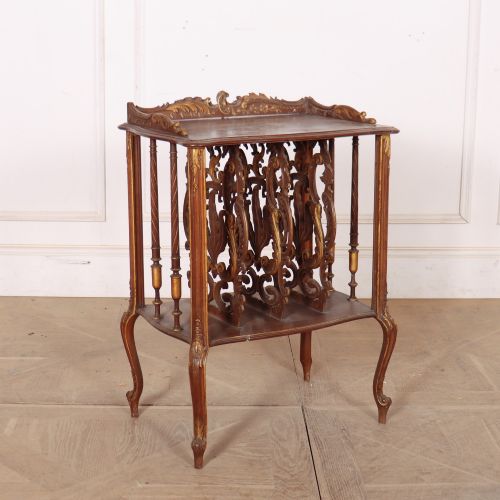


Walnut Canterbury Rack
A walnut canterbury rack combines compartmented storage with a low table form, offering a refined way to hold newspapers, music or magazines.
Walnut Canterbury Rack
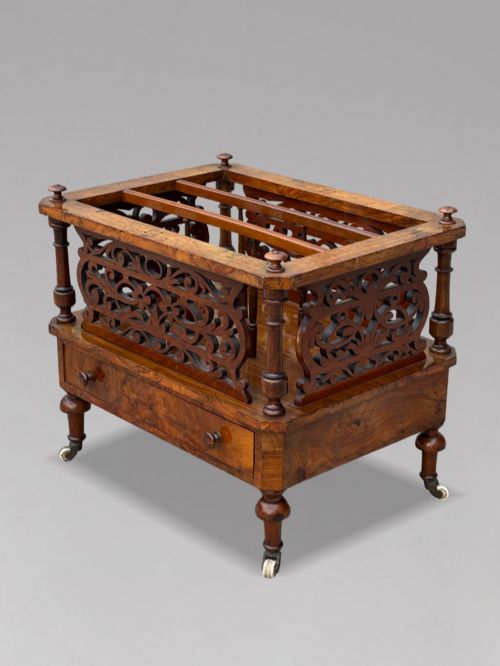
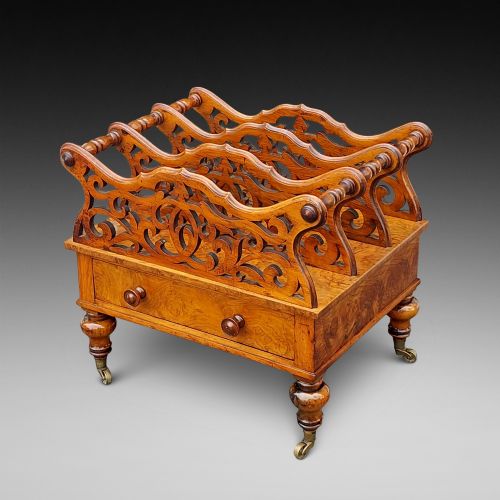
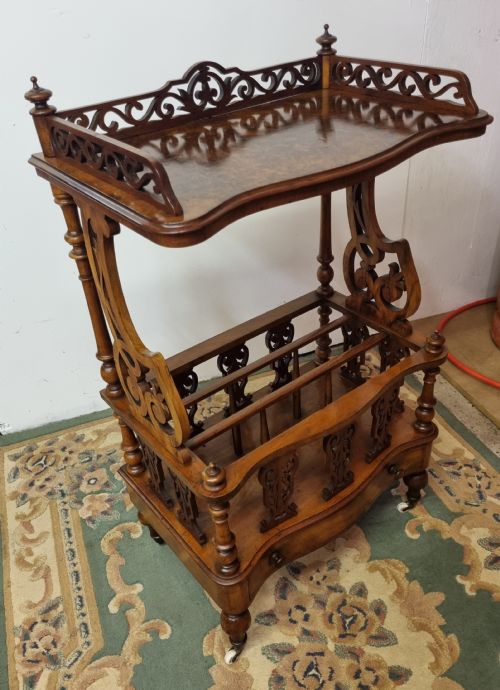
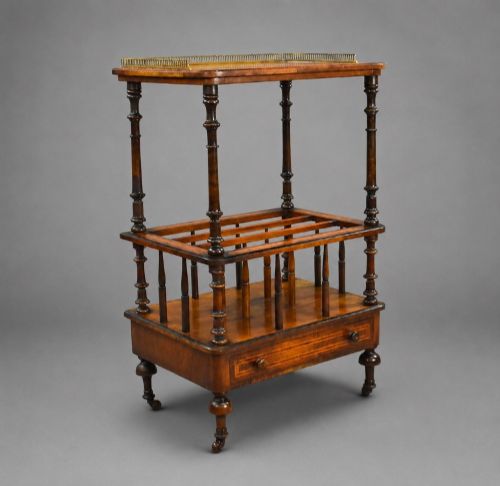
A walnut canterbury rack serves as a multi-compartment stand designed originally for sheet music or periodicals, frequently doubling as an occasional table or whatnot. The pieces found here date predominantly from the Victorian period and the nineteenth century, spanning decades from eighteen-forty to eighteen-ninety.
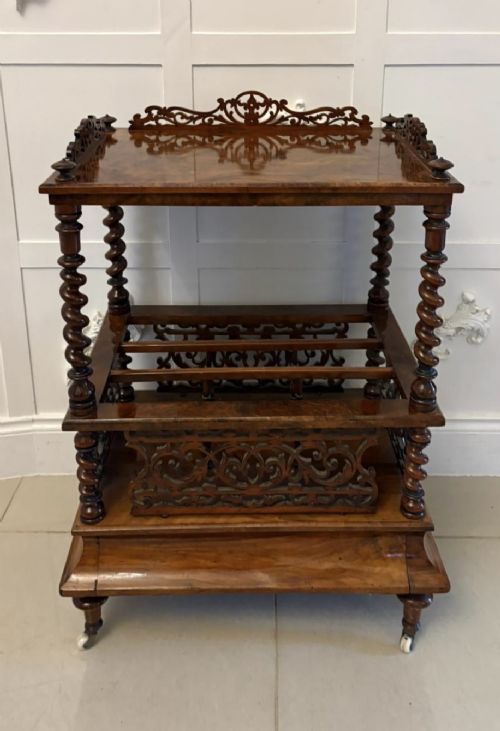
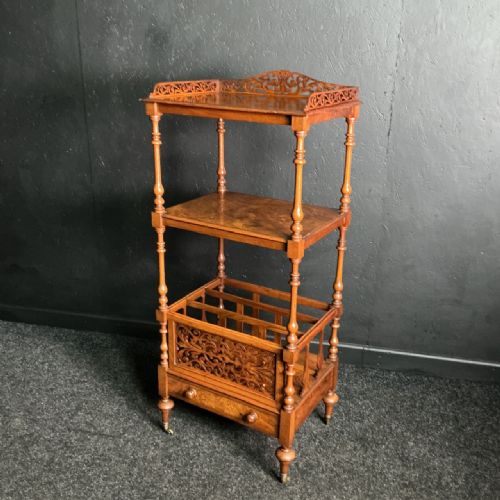
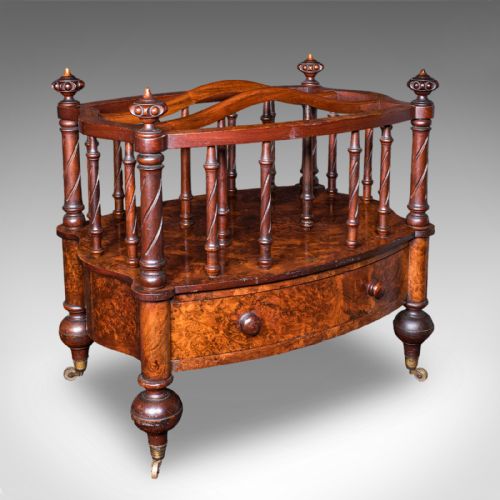
Most examples rely on figured timbers such as burr walnut, often paired with lower drawers, turned supports or wheels. Makers combined compartmentalised divisions for reading material with display tiers above, producing versatile stands for drawing rooms and parlours.
How They Were Made
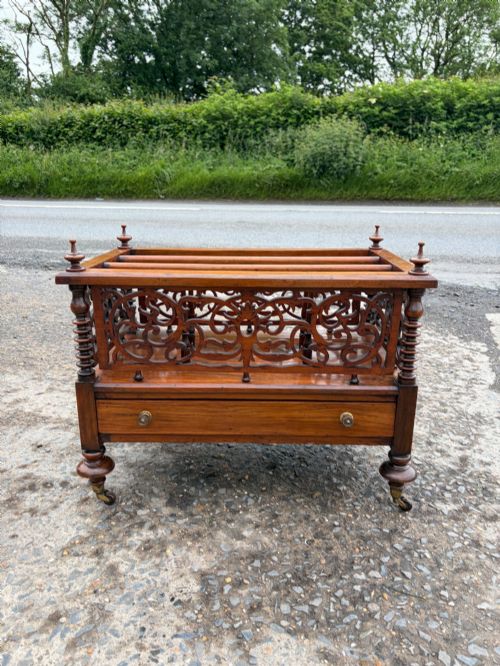
Cabinetmakers utilised solid walnut and decorative burr veneers over secondary timbers, often applying boxwood or ebony stringing to define panel borders. Marquetry inlay, pierced fretwork and turned wooden spindles added textural detail to the partitions and shelves.
Structural elements incorporated brass castors for mobility and porcelain or ceramic details on related tables. Joinery relied on precise framing to support the vertical divisions without adding excessive weight to the freestanding frame.
Materials recorded across the archive include brass, copper, porcelain and boxwood inlay alongside standard wood construction.
What Varies in Quality
The choice of timber creates a distinct visual hierarchy, ranging from plain dark walnut to highly figured burr walnut with rich grain movement. Elaborate marquetry, serpentine shaping and fine pierced fretwork separate standard compartment stands from more ambitious display furniture.
Construction details distinguish workshop output, particularly the integration of dovetailed drawers, substantial brass castors and crisp carving on turned supports. Pieces bearing identified cabinetmaker signatures demonstrate superior finishing in internal framing and secondary timbers.
Edwards and Roberts·Shoolbred
The Walnut Canterbury Rack Glossary
- Canterbury
- A low stand featuring vertical partitions designed to hold newspapers, magazines or sheet music. It frequently includes a drawer below or a small tabletop surface above.
- Burr walnut
- A veneer sliced from walnut tree growths, prized for its swirling, highly figured grain pattern. Cabinetmakers selected it for prominent surfaces on high-status Victorian furniture.
- Whatnot
- An open set of freestanding display shelves supported by slender columns. These tiers were often incorporated directly above the compartment section of the stand.
- Marquetry
- The art of forming decorative patterns using fitted pieces of contrasting wood veneer. Craftsmen applied these geometric or floral designs to table tops and cabinet fronts.
- Fretwork
- Ornamental woodwork pierced with a pattern using a fine saw. It appears on the partitions and side panels of finer stands.
Walnut Canterbury Rack: Frequently Asked Questions
What is a walnut canterbury rack used for?
These stands were built to hold loose periodicals, daily newspapers and bound sheet music near seating areas. Their compartmented sections kept reading materials organised and upright in nineteenth-century parlours.
Many examples also functioned as small side tables or whatnots, providing a surface for lamps or decorative objects alongside their primary storage role.
How do you date a Victorian walnut canterbury?
Dating relies on stylistic shifts across the nineteenth century, moving from early Victorian simplicity to high Victorian revival styles and later French-influenced designs. Details such as serpentine shaping, marquetry inlay and brass hardware help narrow the decade of production.
Earlier pieces from the mid-nineteenth century often favour clean architectural lines, whilst later examples incorporate heavier carving and varied display tiers.
Where were canterbury racks placed in a home?
They sat beside armchairs, near pianos or within drawing rooms where guests gathered to read or play music. Their freestanding design allowed owners to move them easily across carpets using small castors.
Because they combined display surfaces with practical storage, they served as versatile furniture pieces rather than fixed architectural fittings.
What is the difference between a music canterbury and a magazine rack?
Music canterburys were constructed specifically to hold heavy folios and sheet music near instruments, often featuring deeper or sturdier vertical partitions. Magazine and newspaper racks tended to focus on lighter periodicals and daily reading.
In practice, many nineteenth-century stands accommodated both functions, evolving into multipurpose occasional tables with integrated storage.