

Walnut Cabinet with Marble
A walnut cabinet with marble brings together heavy timber and cool stone in forms that range from Victorian credenzas to French commodes.
Walnut Cabinet with Marble
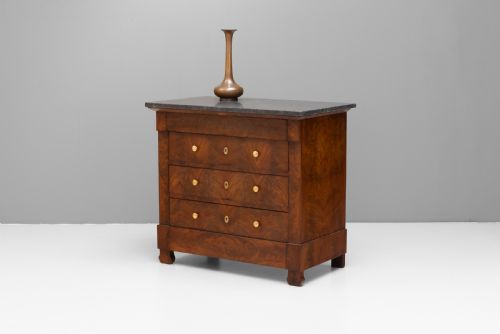
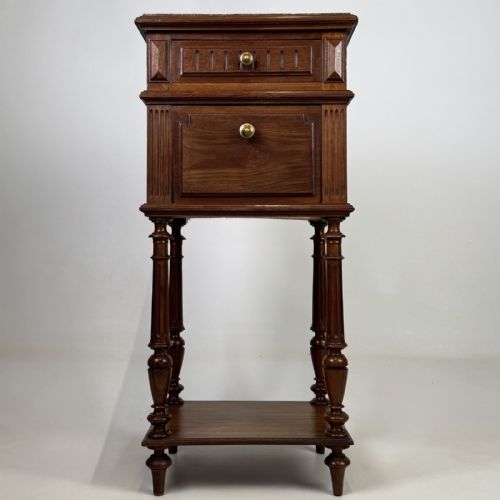
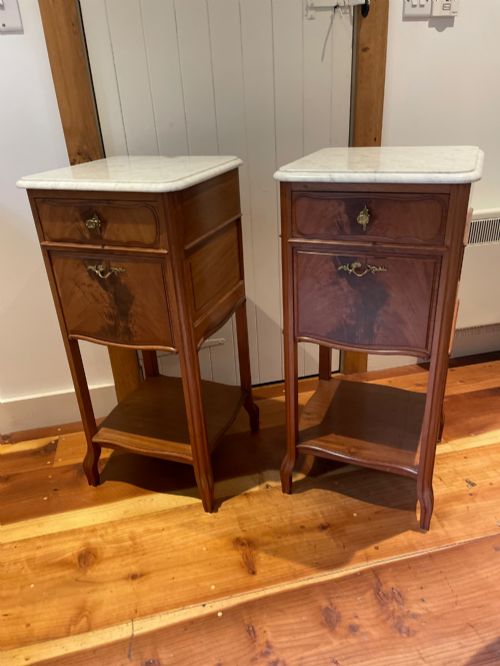
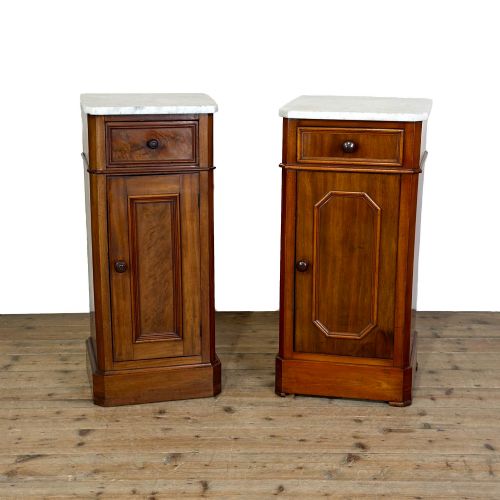
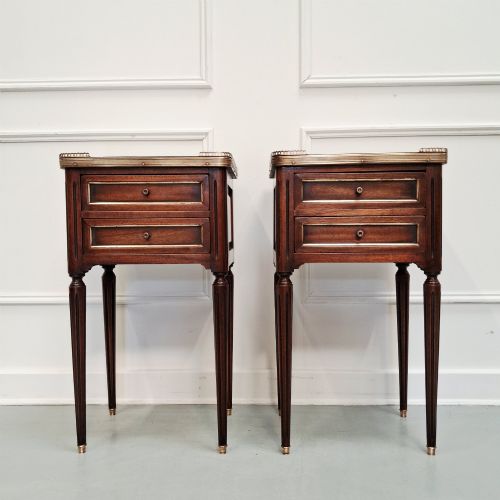
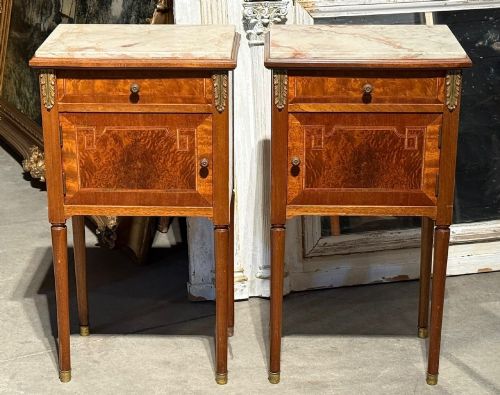
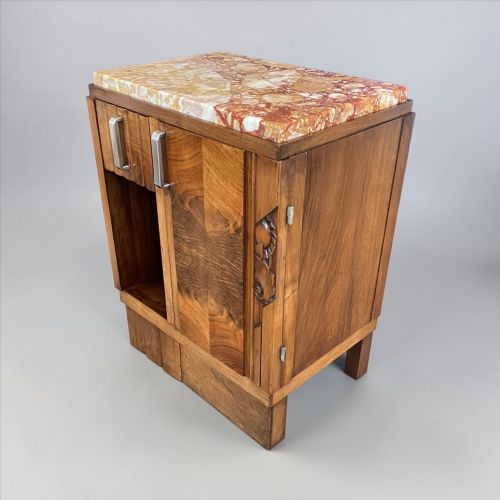
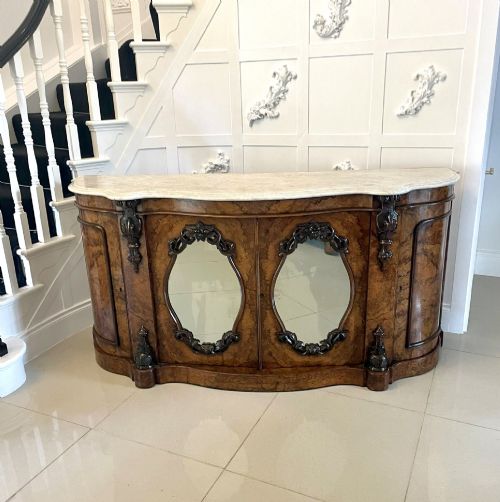
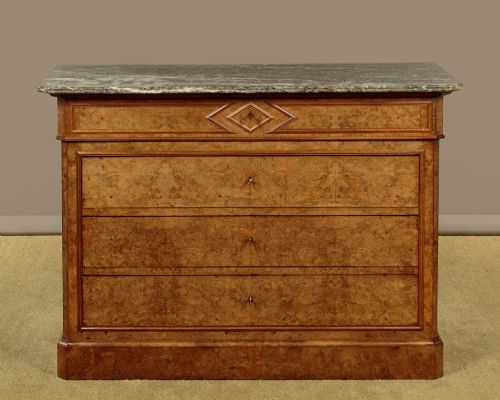
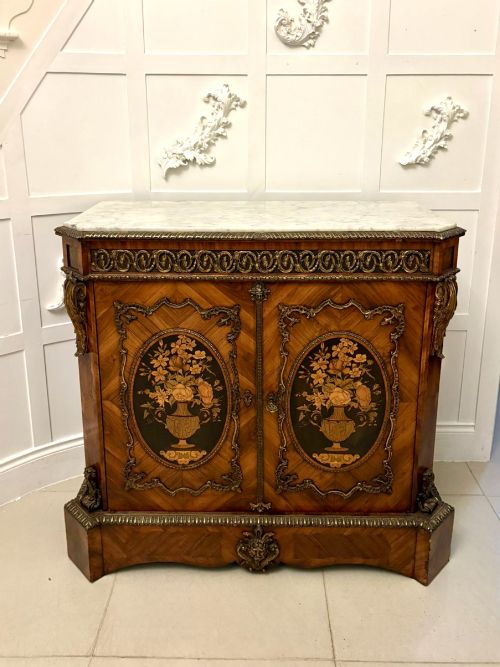
A walnut cabinet with marble spans several forms, appearing most frequently as commodes, bedside tables, and sideboard credenzas. The selection leans heavily toward French provincial and revival styles, alongside robust Victorian pieces from the nineteenth century.
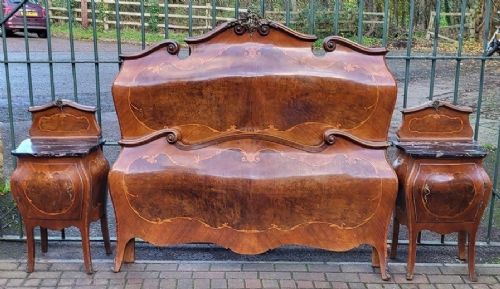
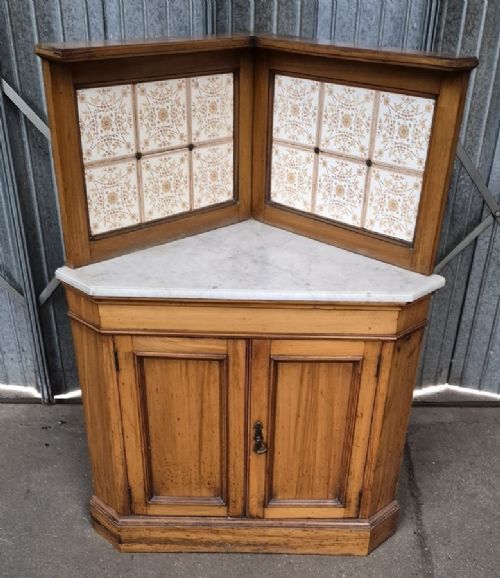
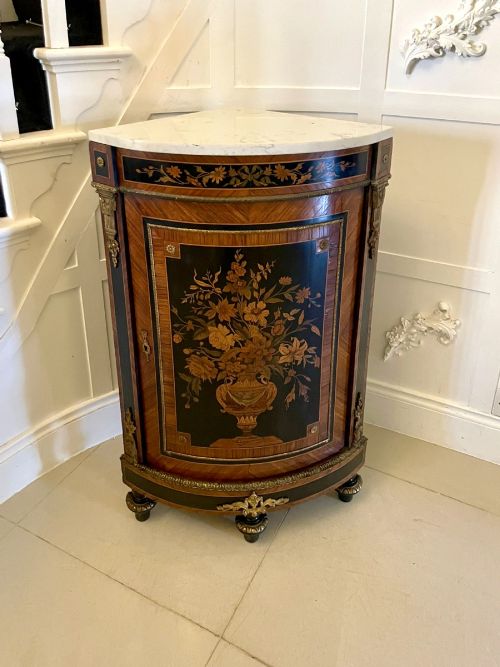
Makers utilised the dense grain of walnut, often enhanced by burr figuring or marquetry inlay, to frame substantial slabs of marble in shades such as rouge, breccia, and Carrara. These pieces serve practical storage roles in bedrooms and living spaces while displaying prominent stone surfaces.
Originating across the nineteenth and early twentieth centuries, with occasional examples from the eighteenth century, the range includes corner cabinets, washstands, and writing desks alongside standard bedside cabinets.
How they were made
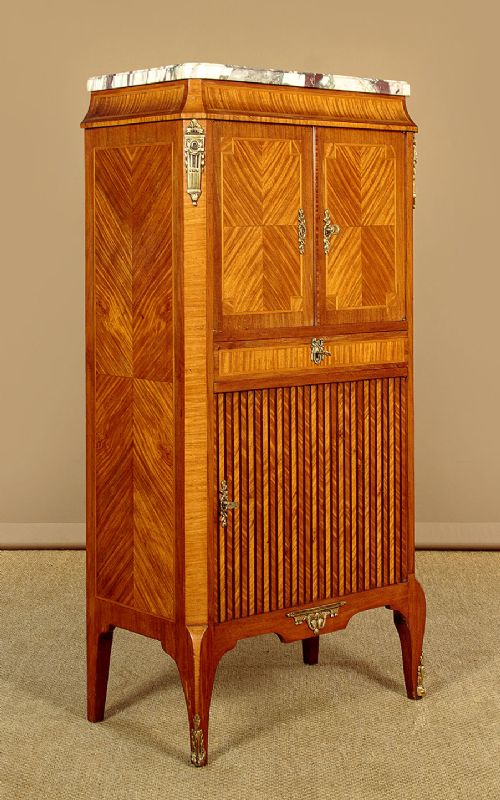
Carpenters constructed carcasses from solid walnut, applying burr walnut veneers or delicate marquetry patterns to drawer fronts and door panels. Mounts in gilt bronze, ormolu, and brass often accent corners and key escutcheons.
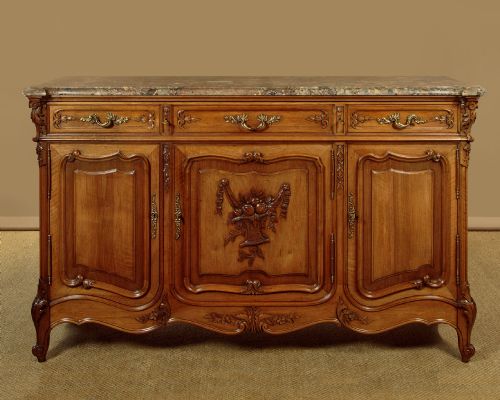
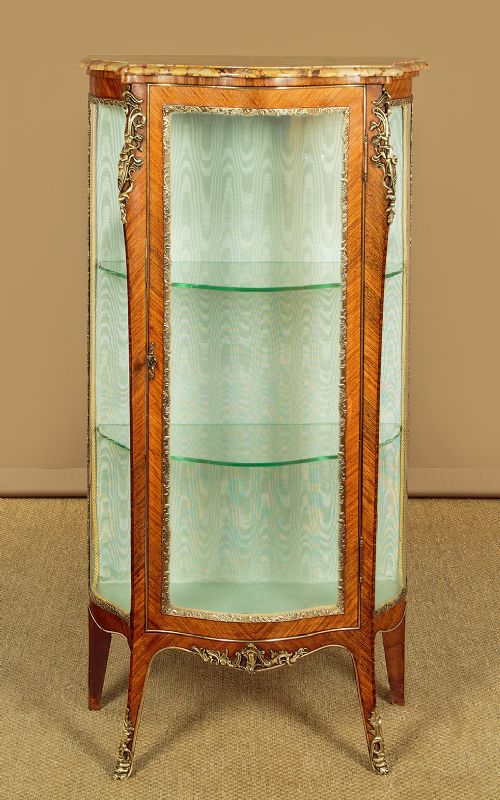
Heavy stone slabs, selected for their colour and veining, sit atop each cabinet, sometimes shaped to serpentine or demi-lune contours to match the timber base. Mirror backs and carved details appear on larger Victorian sideboards.
Walnut Cabinet with Marble Retail Price Guide 2026
Typical asking prices for walnut cabinet with marble among the pieces listed under this phrase on Sellingantiques today, from the lower quarter to the upper quarter. They describe what is for sale here now, not the wider market.
Listings feature walnut cabinets with marble dated across the 18th, 19th, and early 20th centuries, alongside Edwardian and Victorian periods.
What varies in quality
The refinement of the timber work defines the upper tiers of these cabinets, seen in intricate floral marquetry and well-matched burr walnut veneers rather than plain surfaces. Cabinetry with serpentine fronts and disciplined carving demonstrates superior craftsmanship.
The choice and thickness of the marble top also distinguish the work, with specialist stones like breccia and Carrara shaped precisely to the carcass curves. Integrated gilt bronze mounts and original hardware elevate the overall execution.
The Walnut Cabinet with Marble Glossary
- Marquetry
- The art of applying pieces of veneer to a structure to form decorative patterns. Craftsmen use various coloured woods to create floral or geometric designs across cabinet doors.
- Commode
- A low chest of drawers or cabinet originating in France. These pieces typically feature marble tops and decorative mounts.
- Credenza
- A sideboard or buffet cabinet used for storage. Victorian examples often incorporate mirror backs and carved walnut detailing.
- Ormolu
- Gilt bronze mounts applied to furniture. This technique adds metallic highlights to corners and framing.
- Serpentine front
- A furniture front curved in a wave shape with a convex centre flanked by concave sides. This profile requires skilled shaping of both timber and stone.
Walnut Cabinet with Marble: Frequently Asked Questions
Where should I place a walnut cabinet with marble?
These cabinets suit living rooms, hallways, and bedrooms where the combination of timber and stone adds texture.
Smaller bedside tables and commodes fit well beside low beds or in compact corners.
How do I care for the marble top?
Marble requires gentle cleaning with warm water and soft cloths to preserve the polished surface.
Acidic liquids can etch the stone, so coasters protect the surface during daily use.
What periods do these cabinets come from?
The selection spans the eighteenth, nineteenth, and early twentieth centuries.
Victorian and French provincial examples appear alongside Edwardian washstands and revival commodes.
Are the marble tops attached to the cabinets?
Most marble slabs rest freely on top of the wooden carcass under their own weight.
This allows the stone to be lifted separately when moving heavy furniture.