


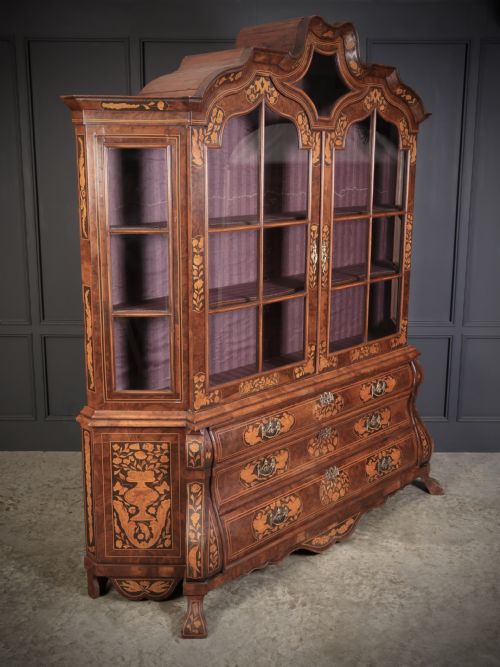
Walnut Bombe Vitrine
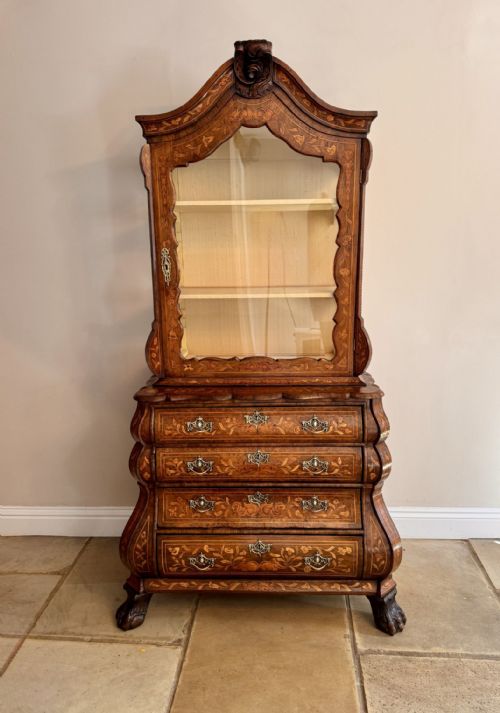
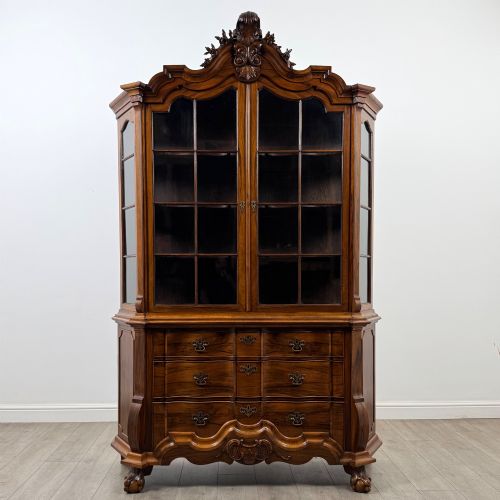
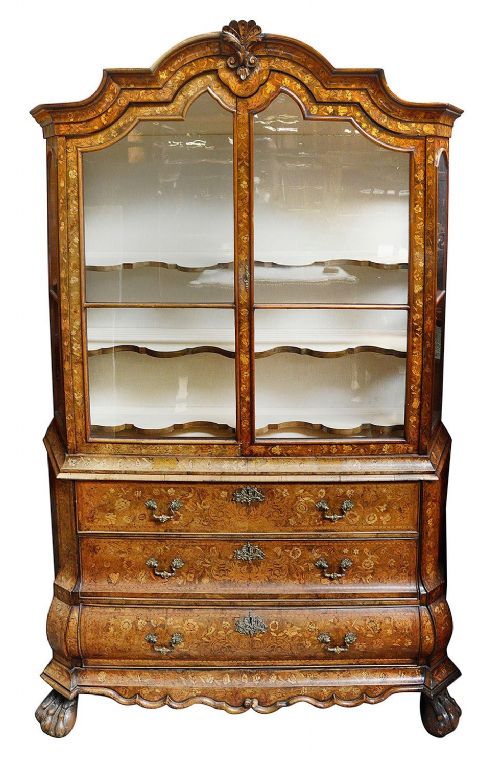
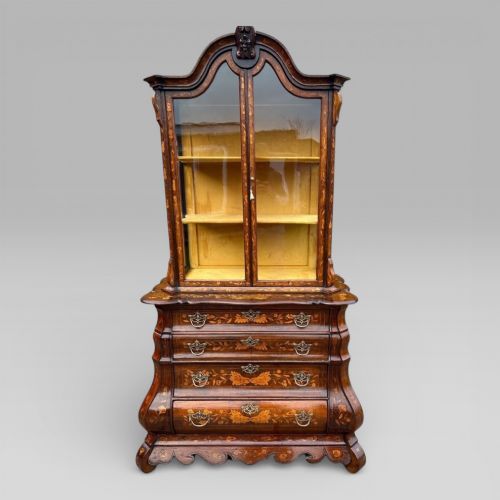
A walnut bombe vitrine brings sculptural curves and rich timber grain to a room, offering display space for treasured objects within an ornate cabinet.

Walnut Bombe Vitrine
A walnut bombe vitrine is a display cabinet defined by its swelling, outward-curving lower section and glazed upper doors. These grand storage pieces emerge primarily in 18th Century Dutch designs, alongside later revivals from the Edwardian era through to the 1920s and 1930s.
The form functions as a hybrid display case and cabinet on chest, designed to showcase porcelain and curiosities behind glass panes while concealing larger items below. Buyers encounter authentic 18th Century examples as well as later revival interpretations sharing the characteristic rounded profile.
Dutch Baroque and Dutch Rococo styles dominate the aesthetic, carrying elaborate floral marquetry across the entire wooden surface. Cabinets range from tall bookcase combinations to smaller display cases resting on carved bracket feet.
How they were made
Cabinetmakers constructed these forms using solid oak or pine carcases covered in figured walnut veneers and burr walnut. Complex curves require layered timber construction to achieve the bulging bombe contour without warping over time.
Surfaces receive intricate fruitwood marquetry and fruitwood inlay depicting floral and botanical motifs across the doors, sides, and sloping fronts. Brass mounts, escutcheons, and hinges provide functional hardware that punctuates the dark timber.
The furniture forms span display cabinets, bookcases, and cabinets on chest built in Dutch Baroque and Rococo styles.
What varies in quality
The refinement of the marquetry inlay defines the upper tier of these pieces, showing crisp botanical detail and balanced composition across the swelling timber panels. Simpler surfaces or later revival interpretations often display less intricate floral work.
Proportion and scale dictate the visual success of the curved bombe silhouette, where harmonious bulging lines command presence without appearing heavy. The integration of the glazed vitrine top with the lower chest demands precise joinery to maintain structural grace.
Edwards & Roberts
The Walnut Bombe Vitrine Glossary
- Bombe
- An outward-swelling, convex shape characteristic of continental furniture fronts and sides. This bulging contour requires skilled veneer work to follow the complex curves.
- Vitrine
- A glass-fronted cabinet designed for displaying fine objects and porcelain. The glazed panels allow light to illuminate the contents from multiple angles.
- Marquetry
- Decorative patterns formed by fitting contrasting pieces of wood veneer onto a carcase. Floral motifs in lighter fruitwoods frequently contrast against a darker walnut background.
- Cabinet on Chest
- A tall furniture form featuring a display section mounted directly upon a lower drawer base. This configuration maximises vertical storage and display floor space.
Walnut Bombe Vitrine: Frequently Asked Questions
What is a bombe vitrine?
A bombe vitrine is a display cabinet featuring swelling, convex curves on its lower body and glass doors above for exhibiting objects. The form originated in continental Europe, particularly associated with Dutch cabinetmaking.
These pieces combine enclosed storage in the lower chest with glazed shelving in the upper section. Walnut and floral marquetry provide the primary decorative treatment.
How do I date a walnut vitrine?
Dating relies on examining the construction methods, timber selection, and prevailing decorative styles present in the piece. Eighteenth-century examples display period joinery and hand-cut veneers, while revival pieces from the 1920s and 1930s show later manufacturing techniques.
Style markers such as Dutch Baroque or Rococo details help situate the cabinet within its historical period. Secondary woods like oak or pine inside the carcase also offer clues to age.
Where should I place a vitrine?
These large display cabinets require a prominent wall location with sufficient floor space to accommodate their swelling proportions. Placing them away from direct sunlight protects the walnut veneer and fruitwood marquetry from fading.
Rooms with stable ambient temperatures prevent the timber and veneer from shifting over time. Adequate clearance allows the doors to open fully for accessing the interior shelves.
What is Dutch marquetry?
Dutch marquetry involves intricate wood inlay work depicting elaborate floral and botanical arrangements across furniture surfaces. Artisans cut contrasting woods like fruitwood to form petals, leaves, and stems against walnut backgrounds.
This decorative technique covers the doors, drawers, and sides of period cabinets. The density and complexity of these floral scenes vary across different pieces and eras.