

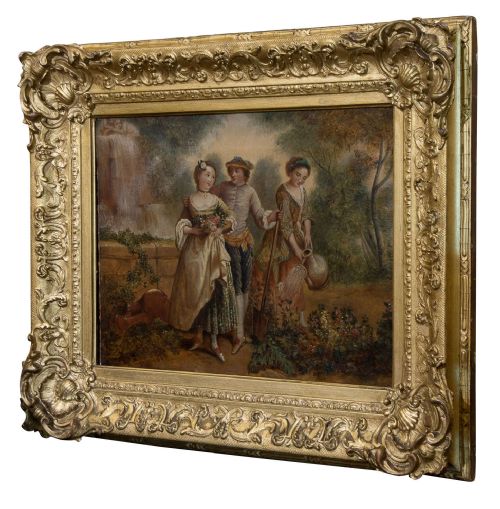


Walled Garden Canvas Art
Walled garden canvas art brings quiet domestic retreats and lush horticulture into interior spaces through oil paintings on canvas.
Walled Garden Canvas Art
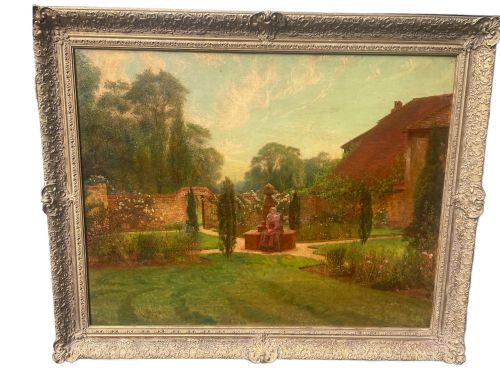
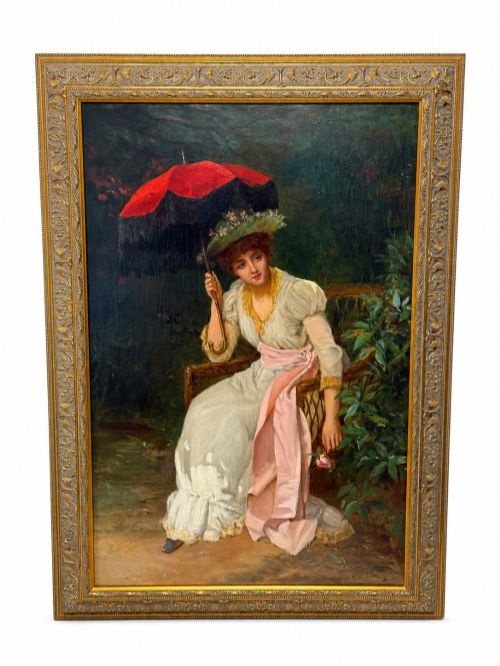
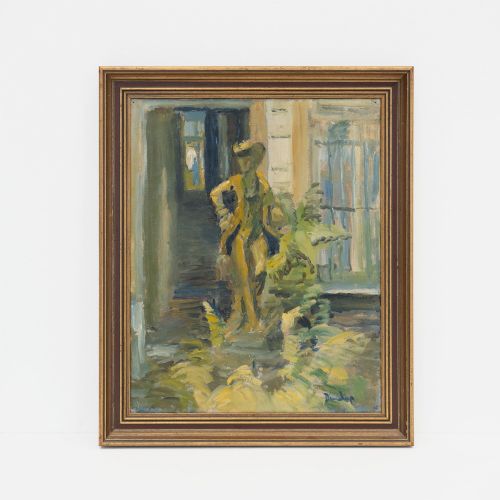
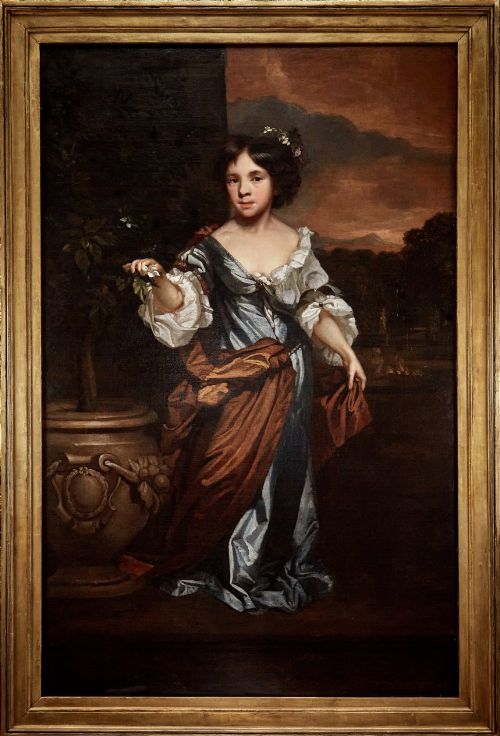
Walled garden canvas art encompasses oil paintings on canvas depicting secluded floral sanctuaries, domestic garden landscapes, and figures amongst borders or terraces. These works range from late seventeenth-century Flemish compositions to twentieth-century British impressionist and modern pieces.
The selections frequently feature oils on canvas supported by wooden stretches, often housed within gesso and gilt wood frames. Buyers encounter British schools alongside French and Flemish pieces spanning the Victorian era through the mid-twentieth century.
Materials and construction methods
These works utilise oil paint applied directly to woven canvas supports, capturing texture and light within garden scenes. Canvases are secured to wooden stretcher frames, providing stability for the pigment layers.
Many surviving examples retain period frames constructed from wood, finished with gesso layers and gilt or gilded surfaces. These surrounds complement the depth of the oil paintings while protecting the canvas edges.
Walled Garden Canvas Art Retail Price Guide 2026
Typical asking prices for walled garden canvas art among the pieces listed under this phrase on Sellingantiques today, from the lower quarter to the upper quarter. They describe what is for sale here now, not the wider market.
Listings feature oil paintings on canvas spanning the seventeenth century to nineteen fifty, incorporating works by the Staithes Group and British Impressionists.
Factors determining quality
Quality rests in the handling of brushwork and light, distinguishing masterly impressionist or baroque depictions from standard school pieces. The precision of botanical detail and figure integration shapes the visual impact.
The integrity of the canvas and the preservation of the original oil paint layer dictate the overall merit. Original gilt wood frames that match the period of the painting add significant contextual value.
Louis Reid Deuchars·William Oliver·Ronald Ossory Dunlop·John Riley·John Closterman·Ernest Higgins Rigg·Kershaw Schofield·Samuel Sidley·John Emms·Edgar Bundy·Edmund Alphonse Andre·Hermoine Hammond·Ralph Hedley·Fred Merriman·John F. Pasmore
The Walled Garden Canvas Art Glossary
- Canvas
- A heavy woven fabric used as a surface for oil paintings. It provides the primary support stretched across wooden frames for the pigment.
- Gesso
- A plaster-like mixture applied to wooden frames before gilding. It creates a smooth base for carving and metallic leaf application.
- Gilt wood
- Wood coated with gold leaf or metallic powder to create a lustrous finish. This material characterises period frames surrounding fine art.
- Impressionism
- An art style focusing on accurate depiction of light and fleeting visual moments. Painters utilise visible brushstrokes to capture outdoor garden atmospheres.
- Baroque
- An elaborate artistic style originating in the seventeenth century, known for drama and rich detail. Flemish baroque works in this category often depict complex allegorical garden scenes.
Walled Garden Canvas Art: Frequently Asked Questions
What periods do these paintings span?
The selection includes works from the seventeenth century through to the nineteen fifties. Victorian and early twentieth-century pieces form a substantial portion of the available art.
Artists from British Impressionist and Staithes groups are represented alongside earlier Flemish and French school paintings.
What subjects appear in these works?
Paintings depict enclosed garden terraces, water lilies, cottage doors, and figures tending lawns or herbaceous borders. Domestic animals and portraits set against garden backdrops also feature.
The compositions capture both formal country house grounds and intimate domestic spaces.
How should oil paintings on canvas be maintained?
Canvas works require stable indoor humidity and protection from direct sunlight to preserve the oil paint and prevent canvas degradation. Dusting should be undertaken gently with a soft, dry brush.
Professional conservation is recommended for any structural repairs to the canvas or wooden stretcher.