
19th Century Garden Painting
These 19th century garden painting works capture pastoral scenes and botanical settings, offering buyers a glimpse into historic landscapes through oil and watercolour.
19th Century Garden Painting
Buyers will encounter framed watercolours bearing signatures alongside uncredited oil paintings on canvas and card. Subjects range from English abbey gardens and river views to continental landscapes featuring figures amongst foliage and architecture.
How They Were Made
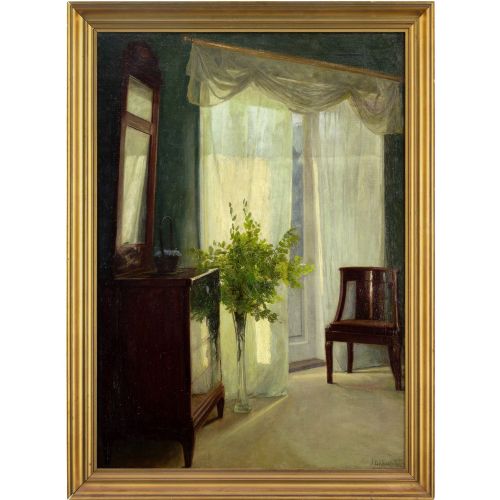
Artists utilised oil on canvas, oil on card, and watercolour on paper, often framing the finished pieces in ornate gilt wood. Pigments were applied by hand to capture natural light and botanical detail in outdoor settings.
Support materials include nineteenth-century canvas, paper, and card, occasionally accompanied by artist signatures and monograms indicating British and European execution.
Lovers promenade through painted shrubbery while ladies wash clothes by historic garden streams.
What Varies in Quality
The degree of refinement in brushwork and the handling of light distinguish standard topographical watercolours from finished oil paintings with complex figures and architectural elements. Compositional balance and the preservation of the original pigments influence the visual impact of each piece.
The presence of identifiable artist signatures, original gilt framing, and documented provenance elevate specific canvases and watercolours above anonymous examples from the period.
John Lübschitz·Harry Wanless·Arthur Hopkins·William James Boddy·Alfred Walter Williams·Martinetti
The 19th Century Garden Painting Glossary
- Oil on canvas
- Pigments bound in a drying oil applied to a stretched cloth surface. This technique allows for rich colour blending and textured brushwork.
- Watercolour
- A paint consisting of water-soluble pigments applied to paper. It produces translucent washes of colour well suited to luminous landscape studies.
- Gouache
- An opaque watercolour paint containing pigment mixed with a binding agent. It provides solid fields of colour and sharp detail in works on paper.
- Provenance
- The documented history of ownership of an artwork. It helps establish authenticity and records the journey of the piece over time.
19th Century Garden Painting: Frequently Asked Questions
What subjects appear in these paintings?
The works depict botanical settings, country house gardens, architectural ruins, and river landscapes populated by figures.
Many examples focus on specific historic locations such as abbey gardens and continental estates.
How should these paintings be displayed?
Display these framed watercolours and oil paintings away from direct sunlight to prevent fading of the pigments and paper.
Maintaining stable indoor humidity protects both the canvas supports and the original gilt frames.
Are the paintings signed by artists?
Certain pieces feature artist signatures, monograms, or attribution to specific European and British schools of the era.
Other works remain anonymous representations created by provincial artists of the period.
What framing do these works have?
Surviving examples often retain their period framing, including ornate gilt wood surrounds suited to nineteenth-century display.
Some works on paper and canvas may be presented in simpler traditional wooden mouldings.