





Vintage Portrait in Garden
A vintage portrait in garden captures a sitter outdoors, offering a glimpse of historic domestic life framed by nature.
Vintage Portrait in Garden
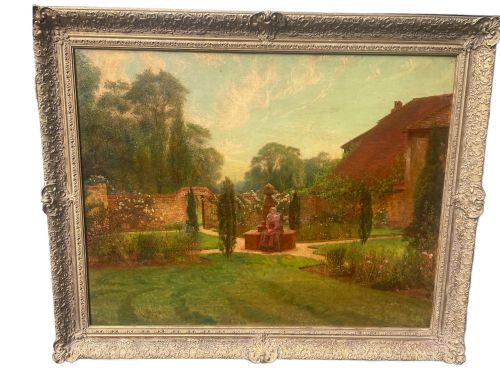
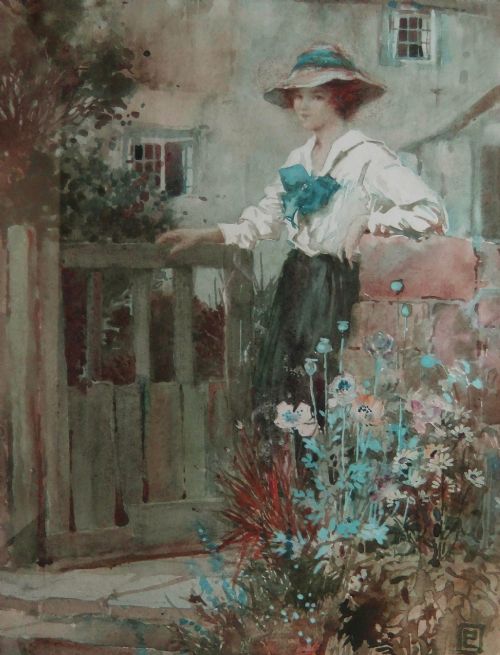
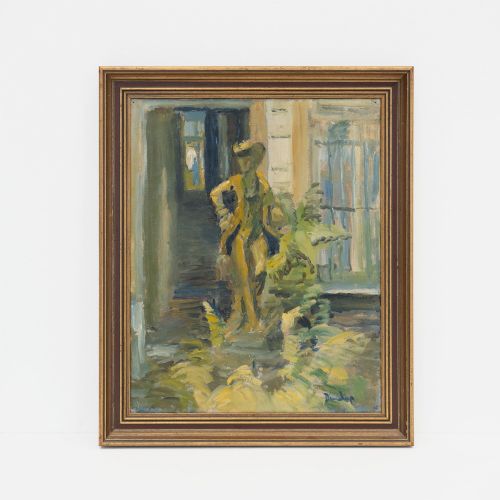
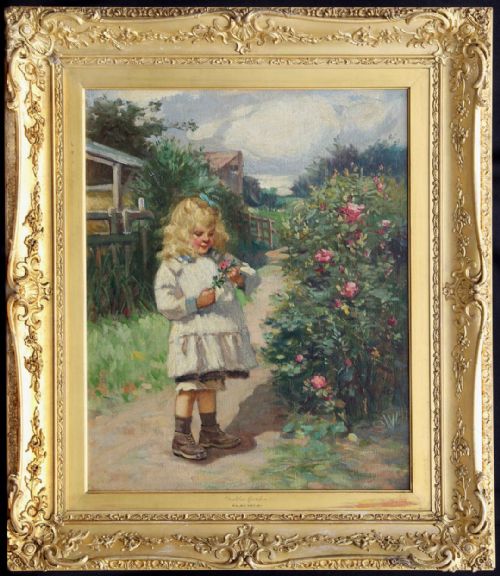
A vintage portrait in garden brings together human likenesses and outdoor settings across a span of decades, from Victorian canvases to mid-century compositions. These works capture subjects posed near cottage gates, walled gardens, and park landscapes.
Buyers will encounter oil paintings, watercolours, and mixed media pieces alongside sculptural busts and chrystoleums. The forms range from grand fine art paintings to intimate framed artwork.
Origins stretch from Victorian and Edwardian periods into the 1920s and 1950s, showing both British and continental European hands. Each piece places a figure within foliage, blending portraiture with landscape traditions.
Materials and construction
Painters applied oil and watercolour onto canvas and paper substrates, often housing their works in carved giltwood and gesso frames. Mixed media and chrystoleum techniques also appear, layering coloured pigments beneath convex glass.
Sculptural works utilise cast iron and terracotta, capturing young women in solid form rather than flat pigment. Wood provides the structural backing for stretched canvases and protective framing.
Vintage Portrait in Garden Retail Price Guide 2026
Typical asking prices for vintage portrait in garden among the pieces listed under this phrase on Sellingantiques today, from the lower quarter to the upper quarter. They describe what is for sale here now, not the wider market.
Materials across these listings include oil on canvas, paper, gesso, wood, giltwood, watercolour paint, gilt, and gouache.
Assessing quality
Quality rests upon the handling of light and atmosphere where the sitter meets the garden foliage, distinguishing masterly brushwork from stiffer commercial production. The integration of the figure into the surrounding flora dictates the visual success of the composition.
The preservation of the original surface, whether fragile watercolour or heavy oil on canvas, dictates the integrity of the piece. Frame work in period giltwood or gesso adds considerable presence to the painted surface.
Louis Reid Deuchars·Percy Lancaster·Ronald Ossory Dunlop·K & K Hof Atelier Pietzner·John Emms·Ralph Hedley RBA
The Vintage Portrait in Garden Glossary
- Chrystoleum
- A hand-coloured photograph placed under convex glass and rendered translucent. This Victorian technique produced a luminous, three-dimensional effect.
- Gesso
- A plaster-like mixture applied to wood surfaces as a base for gilding or painting. It allows intricate relief ornamentation on frames.
- Giltwood
- Timber coated with gold leaf or gold paint. It forms the decorative border for many fine art paintings.
- Gouache
- An opaque watercolour paint containing pigment and a binding agent. It dries to a matte finish that highlights details.
- Terracotta
- Fired clay used for sculptural busts and figures. The material ranges in tone from reddish-brown to earthy buff.
Vintage Portrait in Garden: Frequently Asked Questions
What periods do these pieces cover?
The selection spans from the 19th century and Victorian eras through Edwardian times and into the 1920s and 1950s.
Styles range from traditional academic portraiture to post-impressionist and modern British movements.
How were chrystoleums made?
A chrystoleum starts as a photograph mounted face down to convex glass, where the paper backing is rubbed away until only the thin photographic film remains.
Artists then hand-tinted the reverse side with oil or watercolour paint before sealing the back.
Are all these works oil paintings?
No, while oil on canvas is common, the category includes watercolours, mixed media works, and convex glass chrystoleums.
Sculptural works in cast iron and terracotta also represent the human form in garden settings.
How do I hang a heavy framed artwork?
Heavy oil paintings in giltwood frames require secure wall anchors and picture wire rated well above the weight of the piece.
Ensure the hanging hardware engages directly with wall studs for safety.