
Wall Mounted Hooks
Wall mounted hooks organise a hall or cloakroom with practical design, bringing period charm to everyday storage.
Wall Mounted Hooks
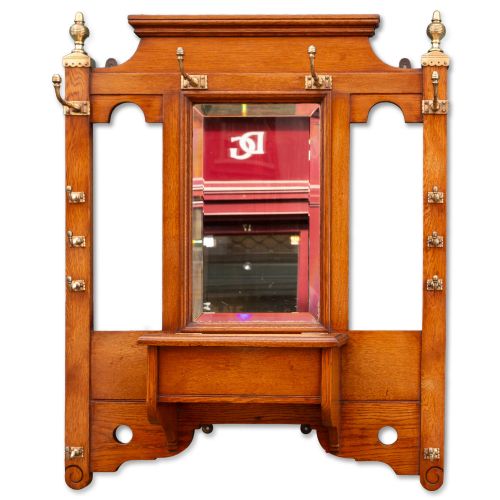
Wall mounted hooks encompass coat racks, hat stands, and individual hooks designed to secure garments and accessories in domestic spaces. These pieces emerge predominantly from the Victorian and Edwardian eras, alongside select French styles and earlier Georgian or 18th century examples.
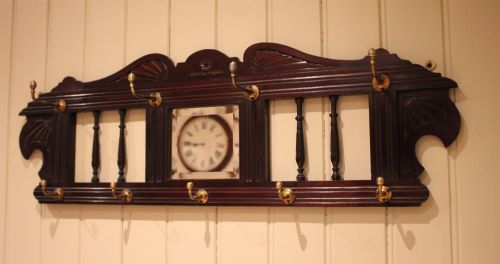
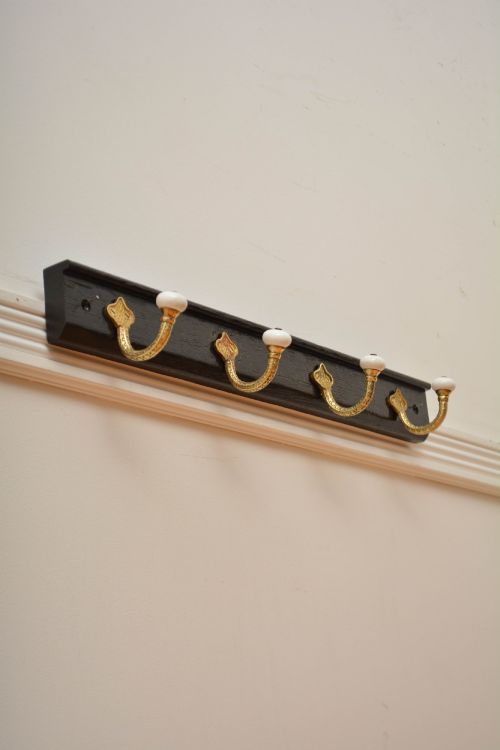
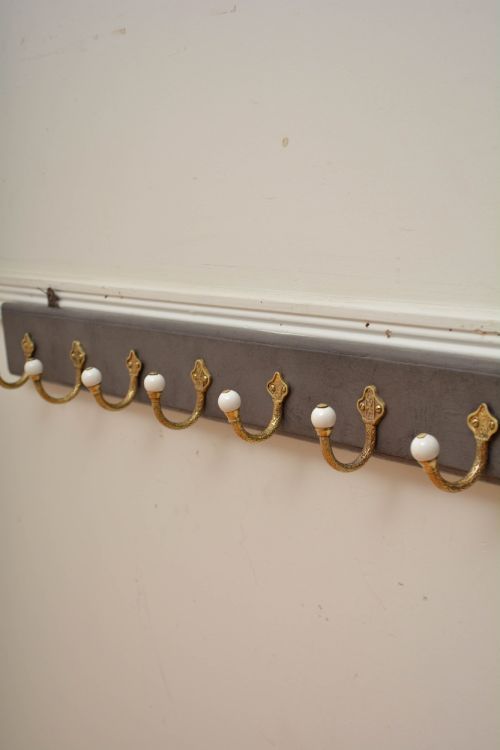
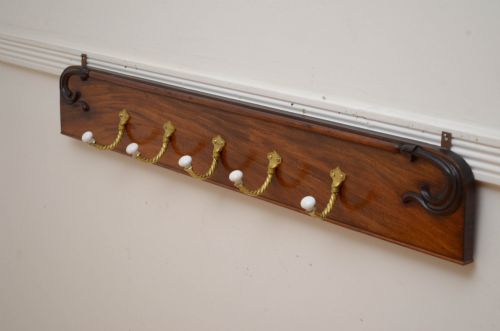
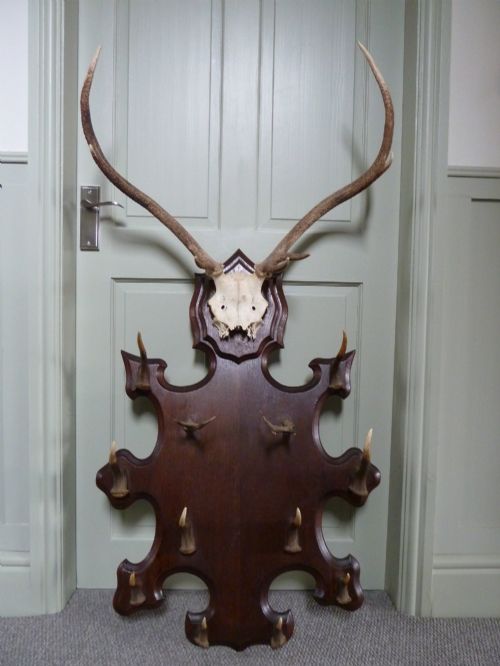
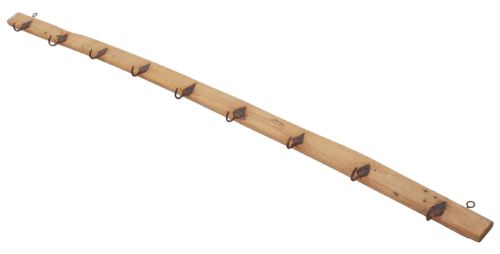
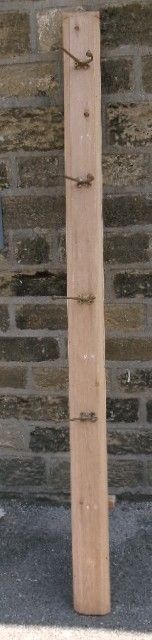
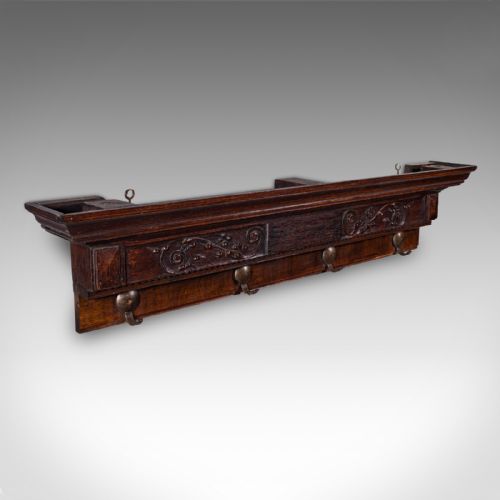
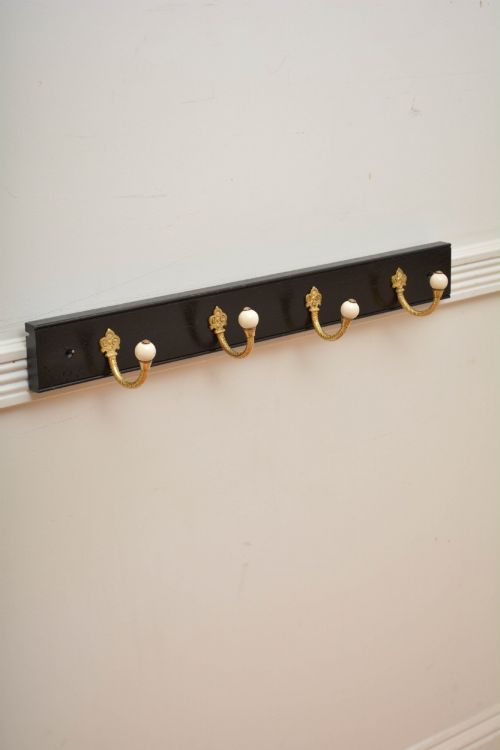
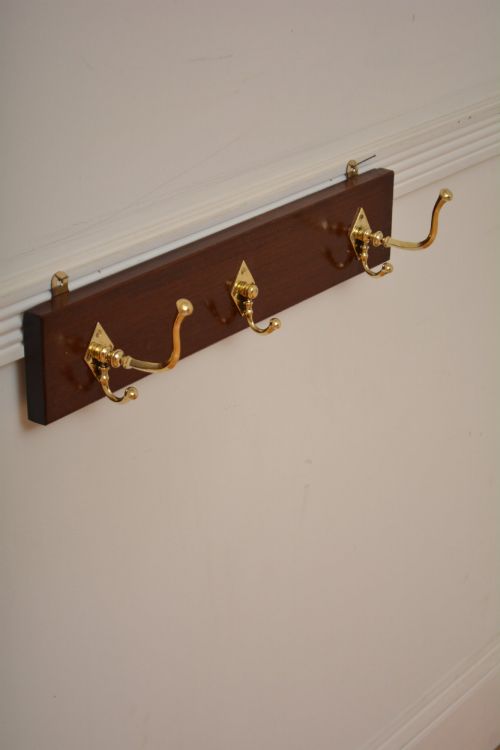
The most common formats on this page are timber backboards fitted with brass, ceramic, or iron hooks, often combining hat pegs with lower coat hooks. Variations span from simple pine or oak strips to elaborate French bronze, wrought iron, and stags horn arrangements.
How they were made
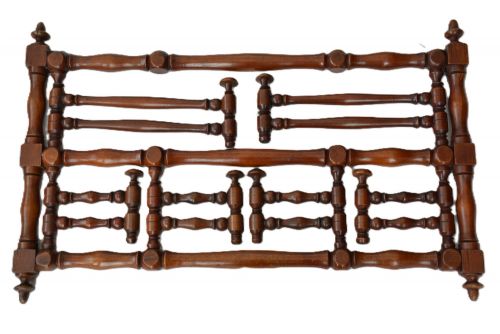
Timbers such as mahogany, oak, walnut, and ebonised wood form the substantial backboards and frames, shaped by turning, carving, and joining. These woods are paired with cast brass, iron, nickel plating, and bronze for the functional hooks, frequently secured with matching screws.
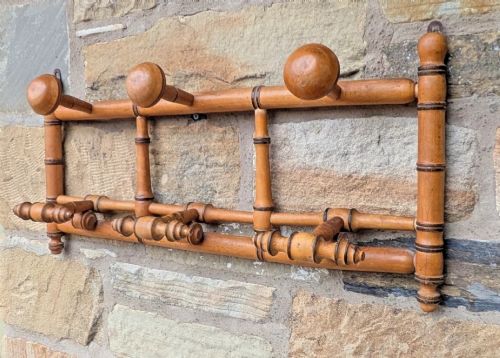
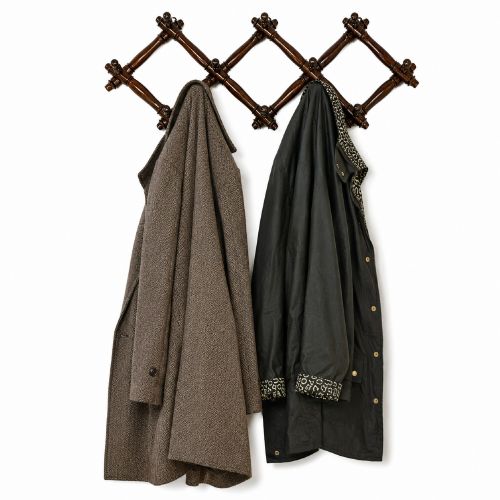
Detailing involves ceramic inserts, twisted rope motifs, faux bamboo turning, and hand-painted finishes on pine. Structural integrity relies on solid mounting plates and durable metal alloys designed to bear heavy garments.
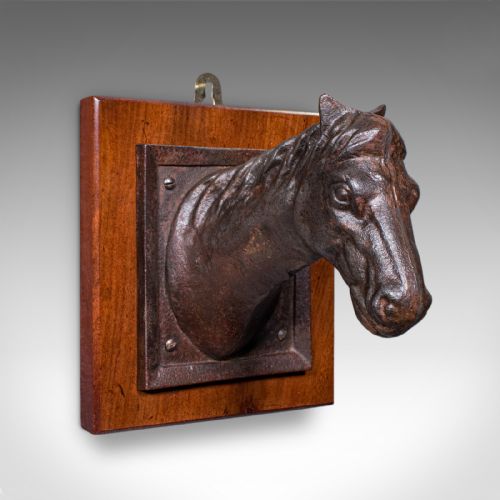
An antique horse bust emerges in iron as an equestrian tack hook, proving someone wanted Dobbin supervising the hallway.
What varies in quality
Quality rests in the weight of the casting and the density of the timber backboard, where heavy brass plates and dense hardwoods indicate superior craftsmanship. The precision of the joinery and the retention of original matching hooks separate standard utility items from finer decorative examples.
Artistic execution in decorative elements, such as cast mounting plates, bronze detailing, or carved stags horn, distinguishes standard production pieces from workshop creations.
The Wall Mounted Hooks Glossary
- Backboard
- The horizontal or vertical timber strip that anchors the hooks to the wall. It distributes weight and protects the plaster or panelling behind.
- Ebonised
- Wood treated with a dark finish to imitate ebony. This technique was popular in Victorian joinery to create high-contrast dark surfaces.
- Hat and coat rack
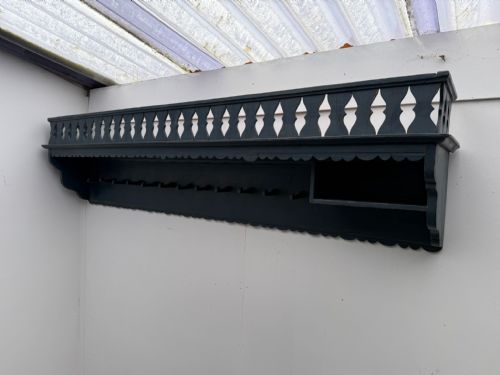
- A composite wall fixture featuring upper prongs for hats and lower hooks for coats. These often incorporate a small shelf above the pegs.
- Faux bamboo
- Turned woodwork carved to mimic natural bamboo stems. This decorative style appeared frequently in French and English pieces from the late nineteenth and early twentieth centuries.
Wall Mounted Hooks: Frequently Asked Questions
Where should I mount these hooks?
These pieces suit entrance halls, cloakrooms, and boot rooms where everyday outerwear requires sturdy hanging space. Ensure the fixtures anchor securely into wall studs or use appropriate wall plugs to support heavy garments.
Position the racks at a height that allows comfortable access for all users while leaving adequate clearance for coats to hang straight without pooling on the floor below.
How do I date an antique coat rack?
Dating relies on identifying the primary wood species, the casting style of the metal hooks, and the construction methods used on the backboard. Victorian and Edwardian examples often feature turned wooden pegs, cast brass fittings, and tongue-and-groove joints.
Earlier pieces from the eighteenth century typically display hand-carved elements and simpler, forged iron work rather than mass-produced machine components.
Are these hooks strong enough for daily use?
Period wall hooks were built for heavy daily service in nineteenth-century households, handling thick wool coats, hats, and wet cloaks. Solid brass, iron, and bronze variants offer exceptional structural strength.
Inspect the mounting screw holes on the backboard to confirm the wood remains sound before hanging exceptionally heavy items.
What is the difference between brass and bronze hooks?
Brass hooks contain an alloy of copper and zinc, yielding a bright golden or polished yellow appearance that responds well to traditional polishing. Bronze hooks use copper and tin, producing a darker, richer reddish-brown or patinated finish common in French designs.
Both materials provide the durability needed for load-bearing wall fixtures.