



Brass Hall Hooks
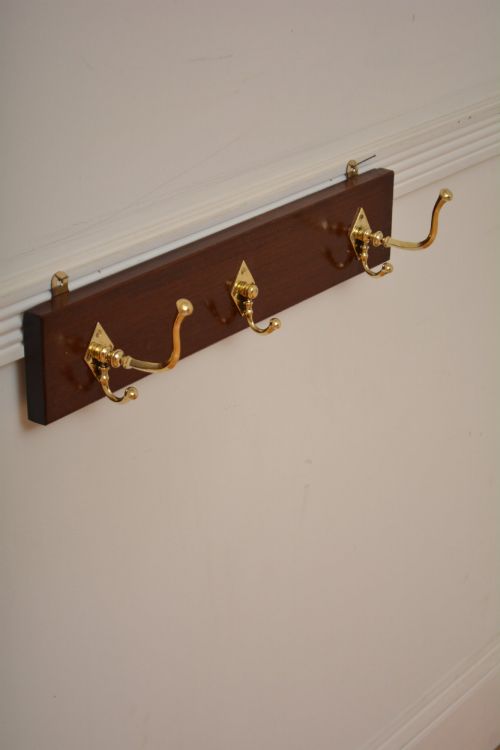
Brass hall hooks bring functional order to an entryway, securing hats and coats against sturdy backplates of mahogany, oak and walnut.
Brass Hall Hooks
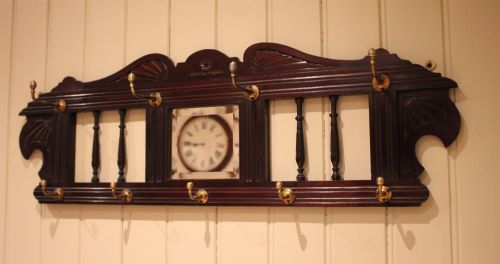
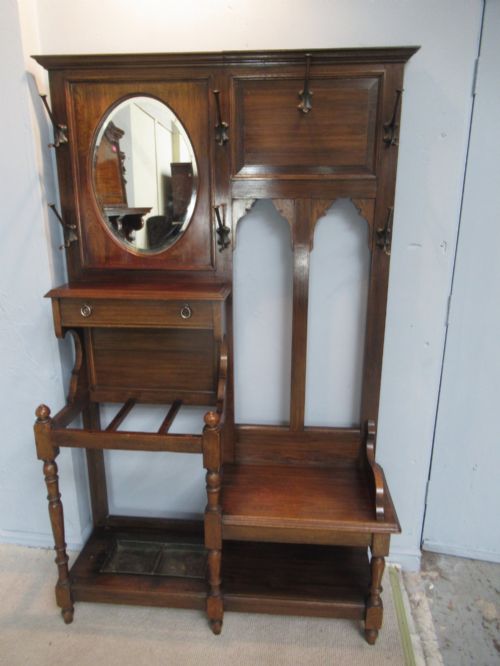
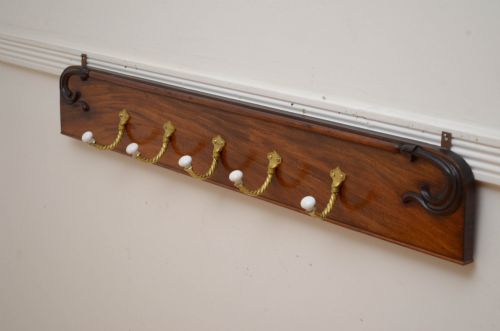
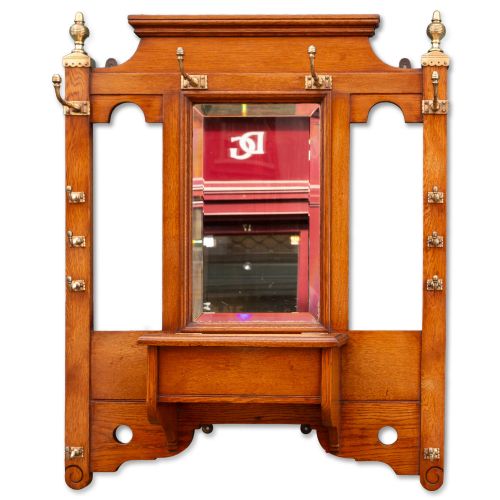
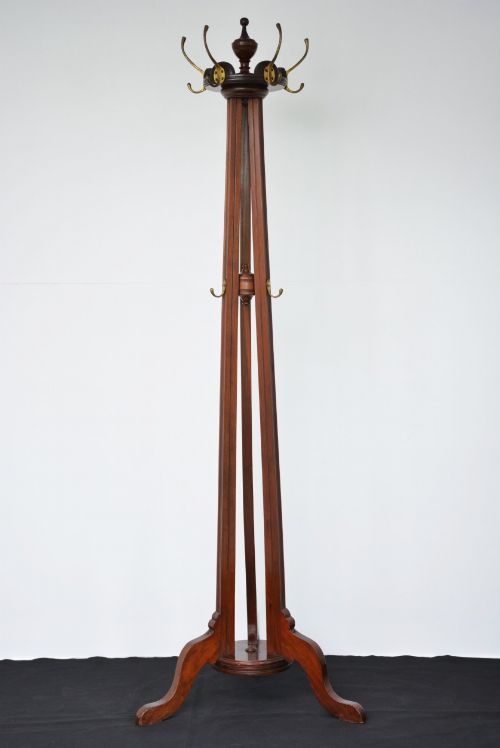
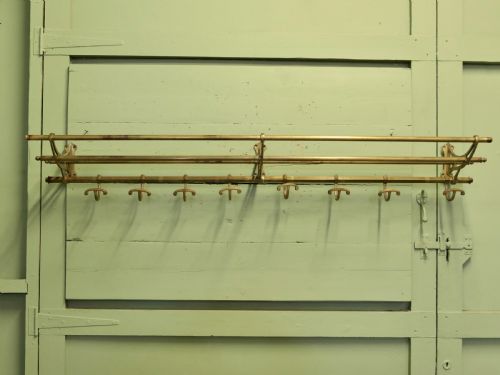
When you search for brass hall hooks, you encounter everything from single wall-mounted coat hooks to large French portmanteaus, coat racks, and complete hall stands. The pieces span the Victorian, Edwardian, and Art Deco periods, alongside distinct movements like Arts and Crafts and the Aesthetic Movement.
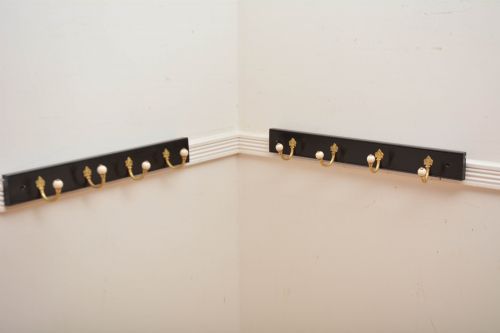
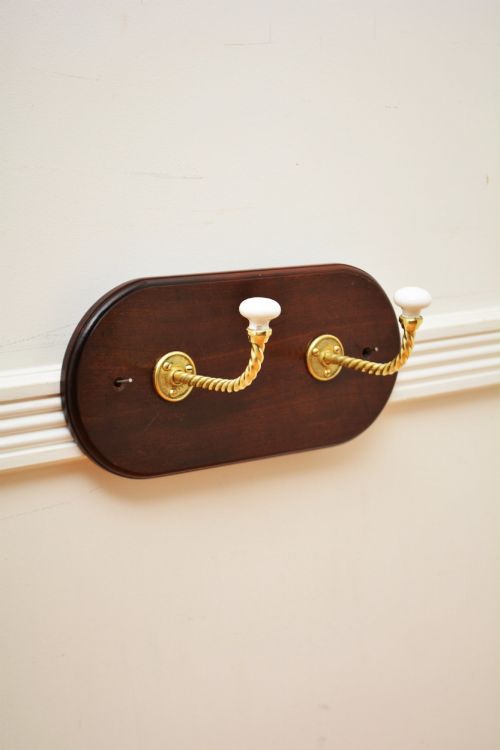
The most common forms on this page combine cast or stamped brass hooks with rich wooden backplates, ranging from compact pairs of hooks mounted on ebonised wood to expansive five-foot French hat and coat racks. Many incorporate useful extras such as umbrella trays, mirror plates, or barometer housings.
Origins stretch across Britain, France, and the Netherlands, taking in robust golden oak hallway valets as well as delicate William IV mahogany racks. Whether wall-mounted or freestanding, these items were built to handle daily household traffic in busy domestic interiors.
Materials and construction
Makers built these pieces using durable metals combined with dense hardwoods like mahogany, walnut, and oak, often mounting solid brass hooks directly to polished wood or ebonised surfaces. Some examples incorporate cast bronze, ceramic elements, or gilt finishes on the metalwork.
Joinery on the larger hall stands and coat racks relied on solid framing and secure wall fixings, while individual hooks were cast, shaped, and screwed firmly into place to bear heavy garments.
Many a Victorian visitor checked their hat, coat, and umbrella in one spot while sneaking a quick glance in the mirror.
Judging quality in brass hall hooks
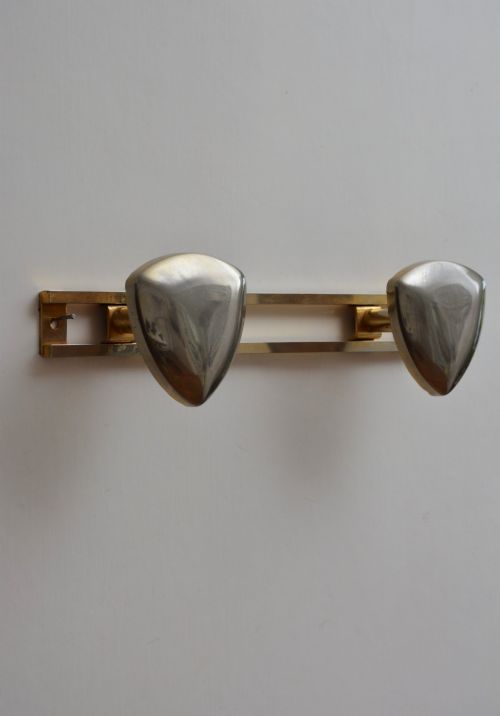
Quality shows in the weight and substance of the metalwork, with heavier, gutsy brass and bronze castings offering superior durability compared to thinner, pressed alternatives. The crispness of the hook design, whether twisted rope, scalloped, or shield-shaped, indicates the care taken by the maker.
The choice and treatment of the timber make a clear difference, as seen in richly polished mahogany, figured walnut, or golden oak backplates that complement the metal rather than merely serving as a backing. Original bevelled mirror plates, intact ceramic inserts, and solid structural integrity elevate the piece.
Jas. Shoolbred
The Brass Hall Hooks Glossary
- Portmanteau
- A wall-mounted combination hat and coat rack, frequently featuring a mirror and multiple brass brackets.
- Hall stand
- A large freestanding piece of hallway furniture combining coat hooks, umbrella wells, and often a central mirror.
- Ebonised wood
- Timber treated to resemble ebony, providing a dark, uniform contrast to bright brass hooks.
- Aesthetic Movement
- A late nineteenth-century design style focusing on visual beauty and artistic expression over strict historical revival.
Brass Hall Hooks: Frequently Asked Questions
How do I mount a heavy coat rack safely?
Heavy brass and hardwood coat racks require direct fixing into wall studs or solid masonry using appropriate screws and rawlplugs to support the weight of winter garments.
Because these pieces bear significant downward leverage when loaded with coats and hats, simple plasterboard fixings will not suffice.
Are these hooks strong enough for daily use?
Antique brass and bronze hooks were engineered for heavy coats, umbrellas, and hats in busy Victorian and Edwardian hallways.
Solidly cast metal hooks fixed to dense timbers like oak or mahogany remain entirely practical for modern daily use.
How do I clean tarnished brass?
A gentle polish with a specialist brass cleaner on a soft cloth will remove accumulated tarnish while preserving the underlying metal.
Care should be taken to avoid getting cleaning agents onto the surrounding wood or mirror plates.
What is the difference between a hall stand and a portmanteau?
A hall stand is a freestanding item of furniture that rests on the floor, often including umbrella stands and storage boxes.
A portmanteau is a wall-mounted rack that combines coat hooks, hat storage, and sometimes a mirror without touching the floor.