
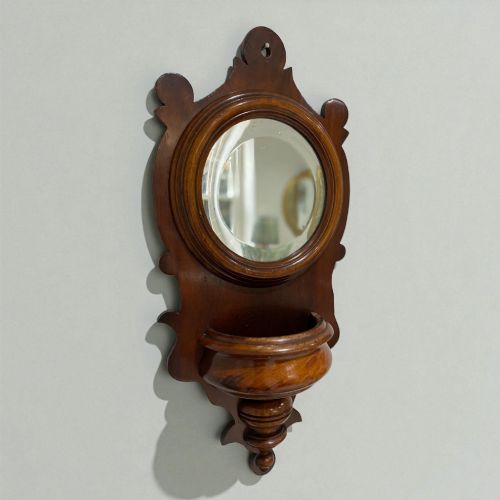
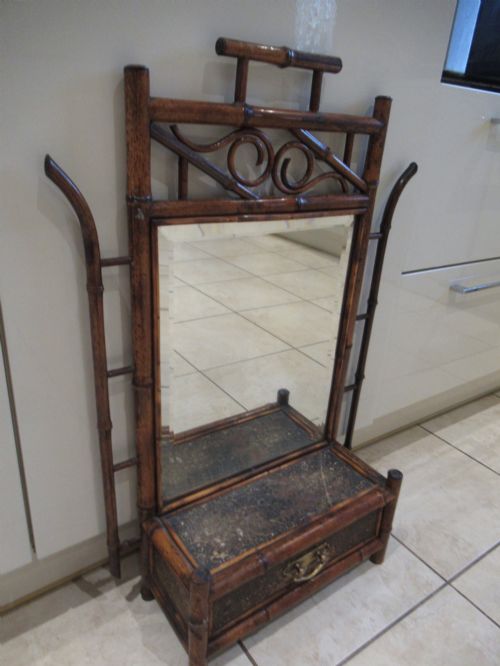
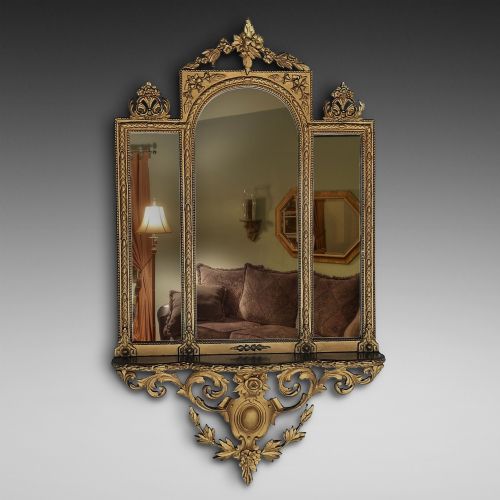
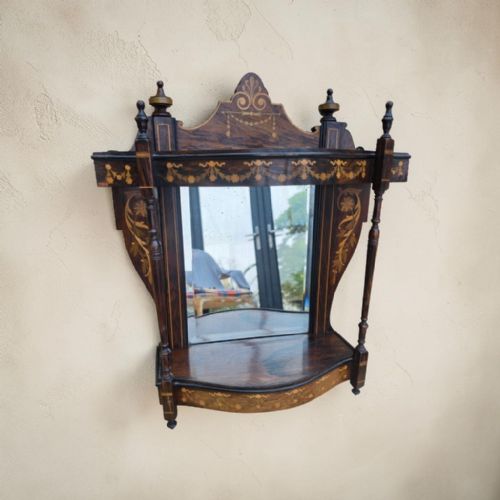




Wall Mirror with Shelf
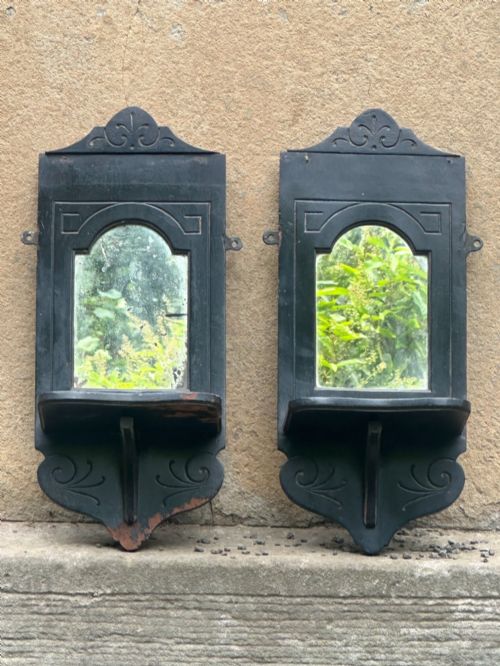
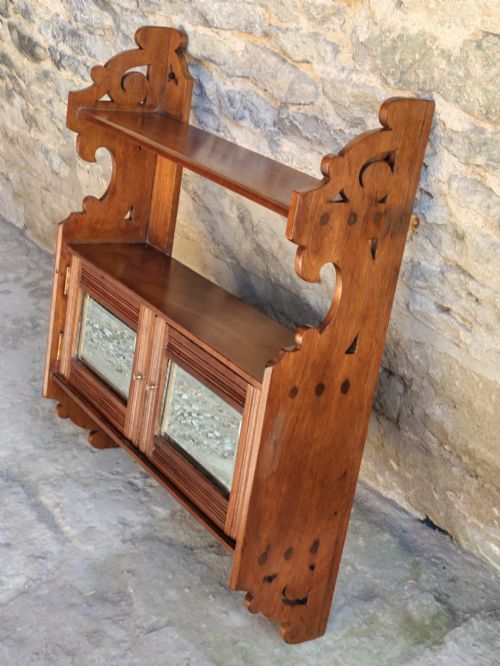
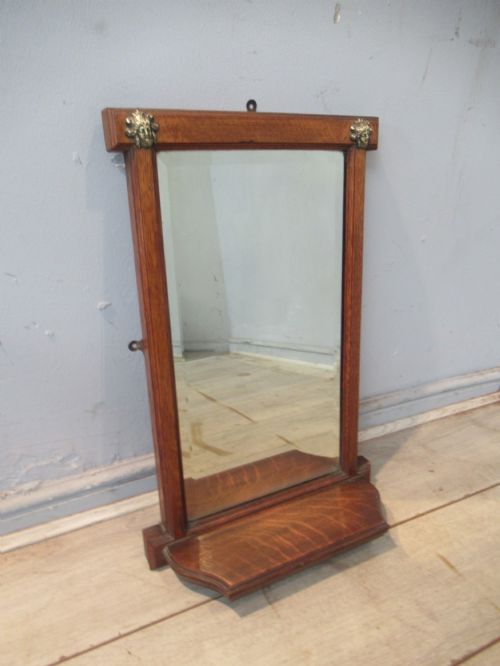
A wall mirror with shelf combines practical surface space and reflective glass, drawing the eye in hallways, bedrooms, and reception rooms.
Wall Mirror with Shelf
When you search for a wall mirror with shelf, you encounter pieces intended for functional hallway use, cloakrooms, and bedrooms. The selection on this page spans the Victorian, Edwardian, and Art Deco periods, alongside pieces dated across the nineteenth and early twentieth centuries.
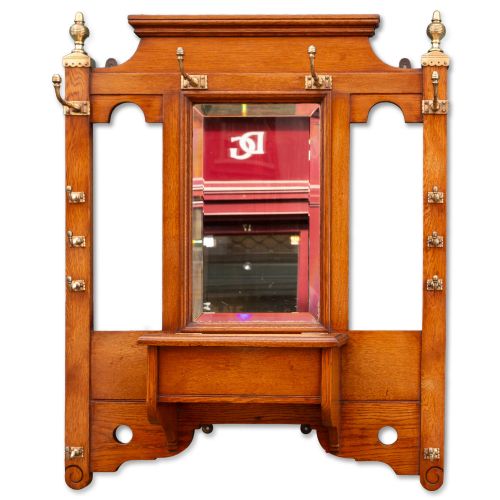
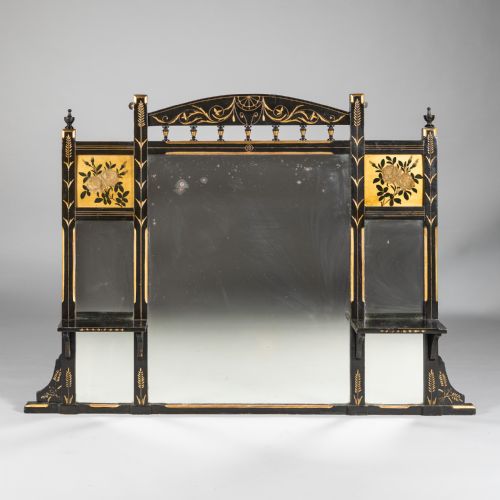
The primary forms take shape as wall-mounted mirrors fitted with integrated brackets, display ledges, or lower consoles. You will regularly find related hallway items such as coat racks, portmanteaus, and overmantel mirrors that incorporate display surfaces.
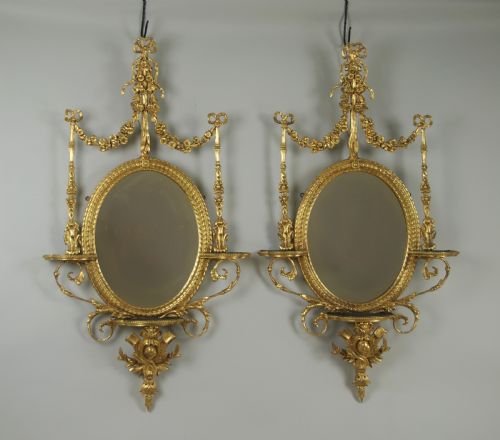
Makers utilised timber frames, carved mouldings, and gilt decoration to suit domestic interiors from the late nineteenth century onward. Pieces range from compact bedroom looking glasses to large architectural overmantels with built-in brackets.
Materials and construction methods
Craftsmen built these frames using traditional hardwoods like mahogany, oak, walnut, rosewood, and pine, occasionally applying giltwood, gesso, brass, or velvet coverings. Joinery techniques varied according to the period, employing solid timber construction and inlaid veneers.
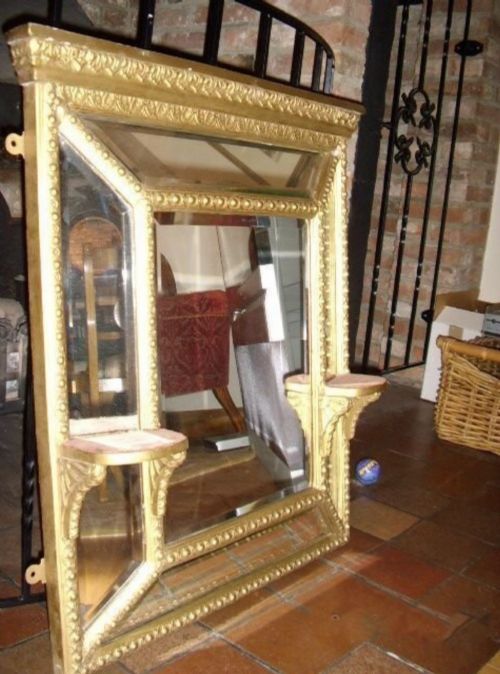
Reflective surfaces typically feature bevel-cut glass plates held within sturdy wooden or metal frameworks. Shelves and display brackets were secured to the lower frame or directly beneath the glass to support small objects and ornaments.
Listings for a wall mirror with shelf span from the Victorian and Edwardian eras through to Art Deco designs, featuring oak, walnut, mahogany, and giltwood.
Judging quality and craftsmanship
Quality rests in the precision of the timber joinery, the depth of the carved ornamentation, and the clarity of the mirror plate. Finer examples display meticulous marquetry inlay, original gilding, and robust structural mounting points.
Subordinate pieces rely on simpler construction, plain timber frames, and straightforward bracket attachments designed purely for utility. The presence of original bevelled glass and intact display brackets elevates the standing of any piece.
The Wall Mirror with Shelf Glossary
- Overmantel mirror
- A large wall glass designed to hang specifically above a fireplace mantelpiece. These often incorporate architectural mouldings and decorative display shelves.
- Pier glass
- A tall mirror intended to hang on the wall space between two windows. They frequently feature integrated console tables or lower ledges.
- Giltwood
- Timber carved and coated with a thin layer of gold leaf. This finish defines many formal Victorian and neoclassical wall mirrors.
- Bevel cut
- An angled edge ground along the perimeter of the mirror plate. This technique creates a refractive framing effect around the glass.
- Portmanteau
- A combined hallway furniture piece incorporating a mirror, coat hooks, umbrella stands, and a shelf. They served as central storage units in Victorian and Edwardian reception spaces.
Wall Mirror with Shelf: Frequently Asked Questions
Where should I hang a wall mirror with shelf?
These pieces suit entrance halls, cloakrooms, and bedrooms where a surface for small items proves useful.
Position the glass at eye level while ensuring the shelf sits at a comfortable height for daily use.
How do I date an antique wall mirror?
Examine the wood species, framing style, and the manufacturing characteristics of the glass plate.
Victorian pieces often display heavy giltwood or carved mahogany, whereas Edwardian examples favour lighter oak, walnut, and inlaid details.
Can these mirrors support heavy items on the shelf?
The weight capacity depends entirely on the construction of the frame and how securely it is fixed to the wall.
Ledges on these pieces were originally intended for light ornaments, brushes, or letters rather than heavy objects.
What is the difference between a pier glass and an overmantel?
Pier glasses are proportioned to hang on narrow wall sections between architectural openings.
Overmantels are broader horizontal mirrors built to span the width of a fireplace or sideboard.