
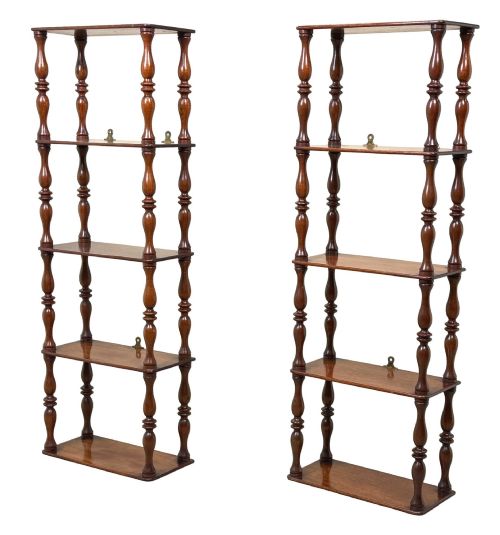
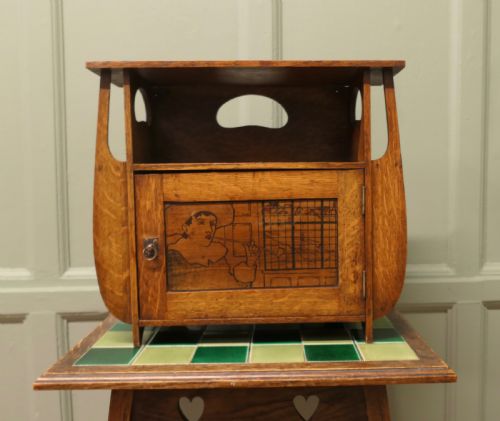
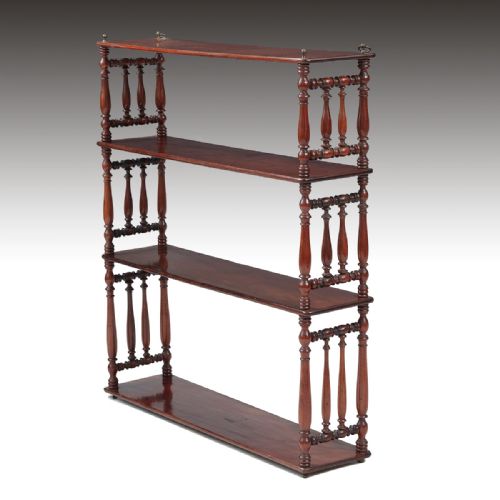
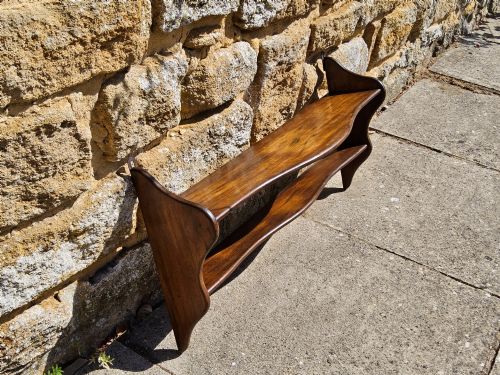




Wall Hanging Display Unit
These wall hanging display unit pieces organise domestic spaces by lifting storage off the floor.

Wall Hanging Display Unit
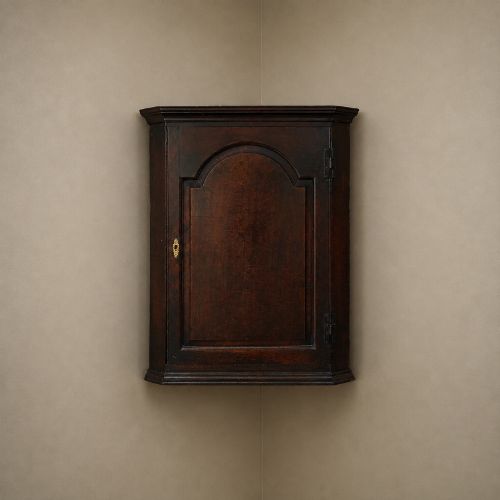
A wall hanging display unit brings vertical storage and surface space into rooms through hanging shelves, wall cabinets and corner cupboards. These pieces utilise corners and wall surfaces effectively to hold books, ceramics and decorative items.
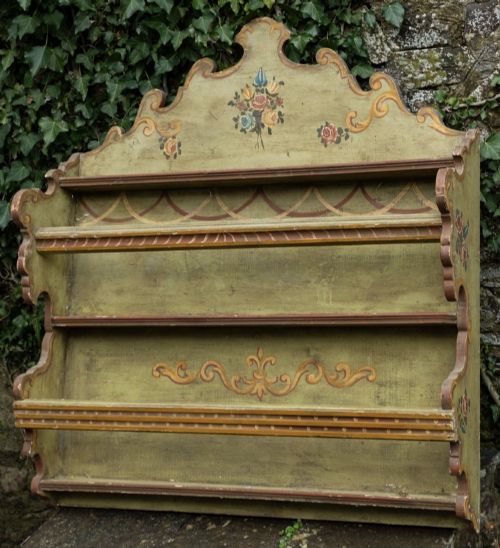
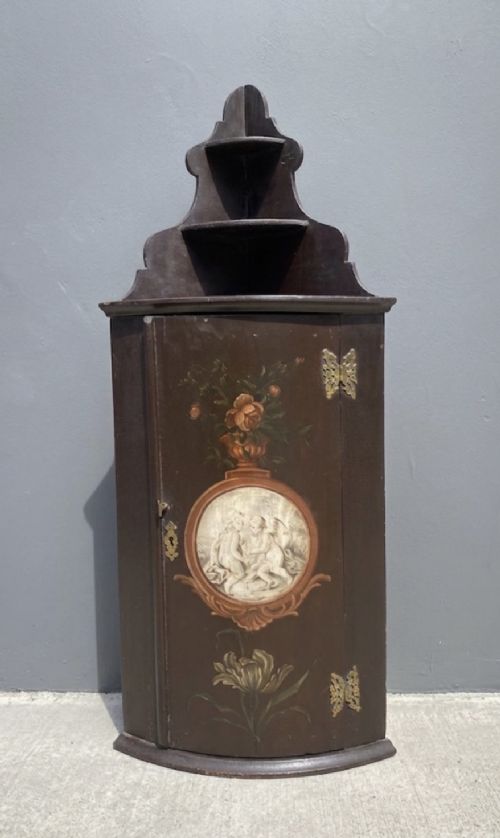
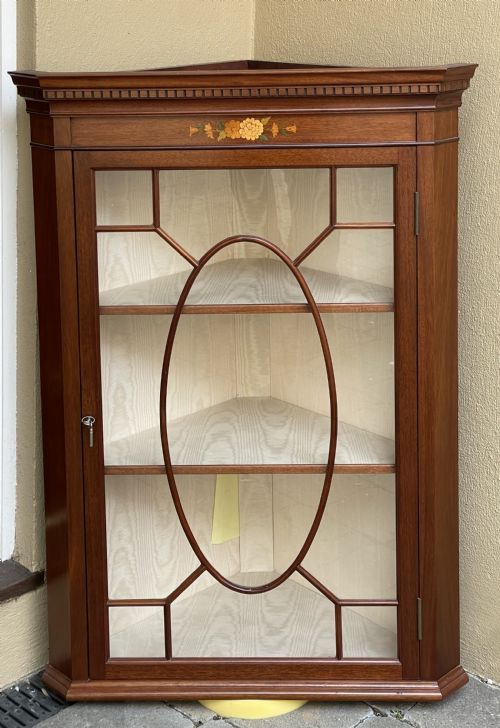
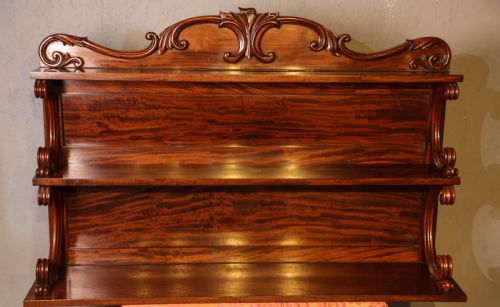
The selections span from Georgian and Regency forms to Victorian and Edwardian examples, alongside painted pieces. Buyers encounter various configurations, from open wall shelves to glazed display cabinets and bow front corner cupboards.
Originating largely from English workshops and continental makers, these pieces serve as practical furniture that simultaneously displays objects. They adapt to studies, living rooms and hallways by mounting directly to walls.
How they were made
Makers utilised solid timbers including mahogany, oak, walnut and pine, often enhancing surfaces with satinwood inlay, olive wood or painted finishes. Glazed doors protect contents in cabinet versions while open shelves rely on sturdy bracket supports.
Joinery techniques involve dovetailed corners, pegged joints and fitted backboards to ensure stability under load. Cabinet doors feature panelled construction and brass hinges, whilst painted surfaces utilise traditional pigments.
Period representation ranges from 18th century Georgian designs through Victorian iterations to Edwardian and later 20th century revival styles.
What varies in quality
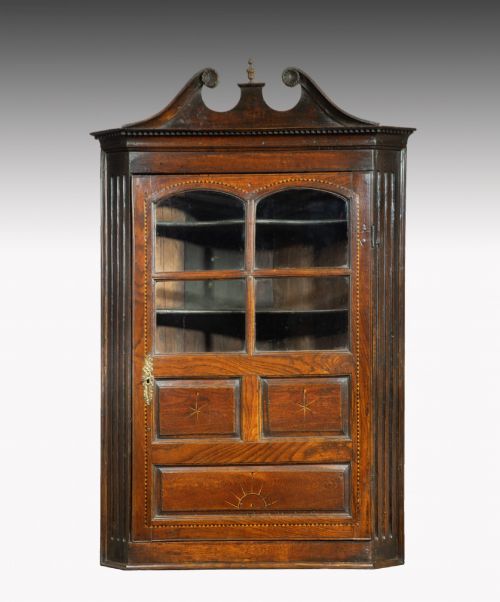
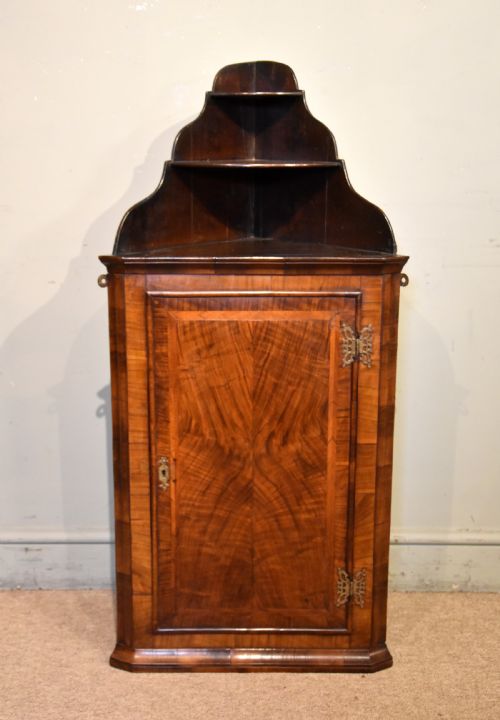
Quality rests in the selection of figured timbers, such as burr walnut or flame mahogany veneers, matched with crisp moulding details like broken arch pediments. Superior examples exhibit precise joinery, original brass hardware and well-balanced proportions.
Simpler pine or beech pieces finished with paint show quality through surface depth and decorative hand painting rather than expensive hardwoods. The integration of shelving heights and the retention of original glass or backboards define the better specimens.
The Wall Hanging Display Unit Glossary
- Pediment
- The decorative structure surmounting the top of a cabinet or bookcase. Broken arch versions feature a cleft centre often terminating in a scroll or patera.
- Bow front
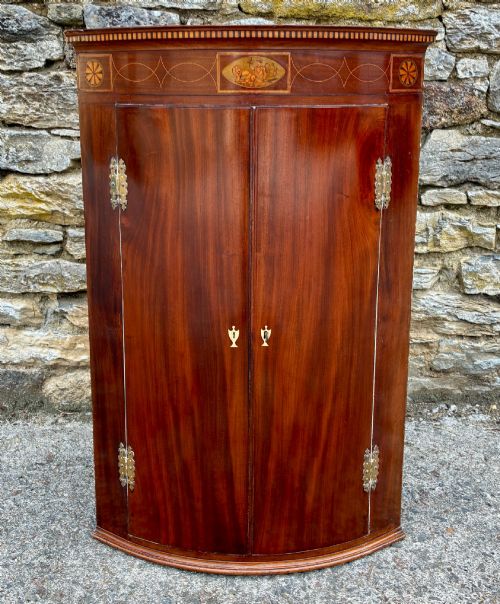
- A convex curved cabinet front that projects outward from the corners. This shape softens rigid wall angles and provides additional interior depth.
- Étagère
- A piece of furniture consisting of a set of open shelves for displaying small objects or ornaments. These wall-mounted versions elevate display space above floor level.
- Corner cupboard
- A triangular cabinet designed to fit precisely into the corner of a room. They maximise awkward spaces while housing tableware or books.
- Inlay
- A decorative technique where contrasting woods or materials are inserted into hollowed recesses of a base timber. Satinwood and olive wood frequently provide pale contrast against darker mahogany or walnut.
Wall Hanging Display Unit: Frequently Asked Questions
How do I hang a heavy wall display unit safely?
Secure the unit directly into wall studs or use appropriate masonry fixings matched to the weight of the timber and its contents.
Distribute heavier items on the lower shelves to maintain a stable centre of gravity once mounted.
What is the difference between a corner cupboard and wall shelves?
Corner cupboards enclose contents behind doors, often glazed, protecting items from dust and keeping them out of sight.
Wall shelves remain open to the room, offering immediate access for items intended for continuous display.
Where should I place a hanging display unit?
These units suit dining rooms, hallways and living spaces where floor area is limited and vertical wall space is available.
Corner units utilise dead space effectively, whilst flat wall shelves sit comfortably above sideboards or desks.
How do I identify a Georgian corner cupboard?
Georgian examples often feature architectural elements such as fielded panels, moulded cornices and solid oak or mahogany construction.
Many incorporate shaped shelving inside and brass H-hinges on the doors, reflecting period joinery methods.