
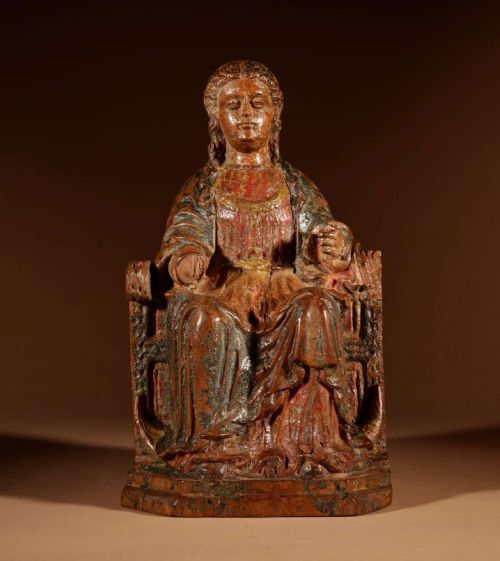
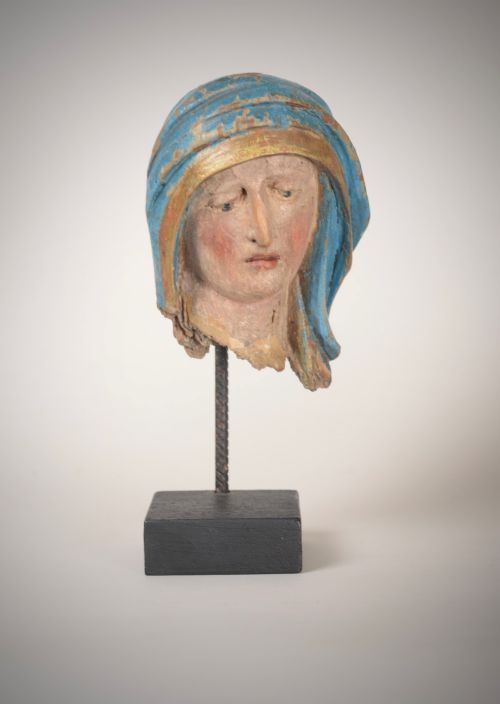
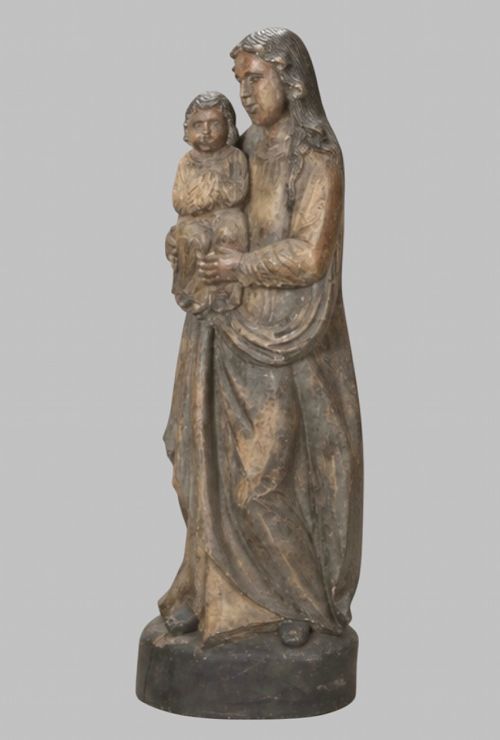
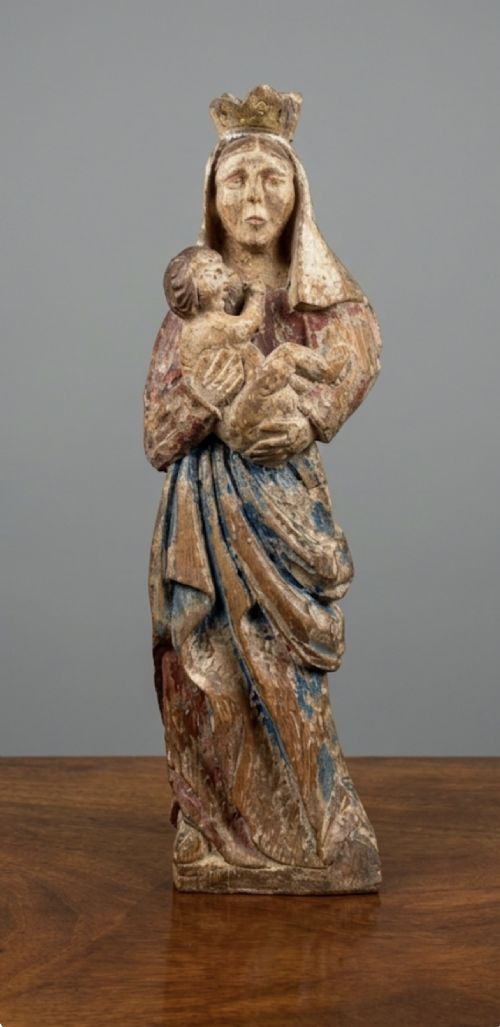


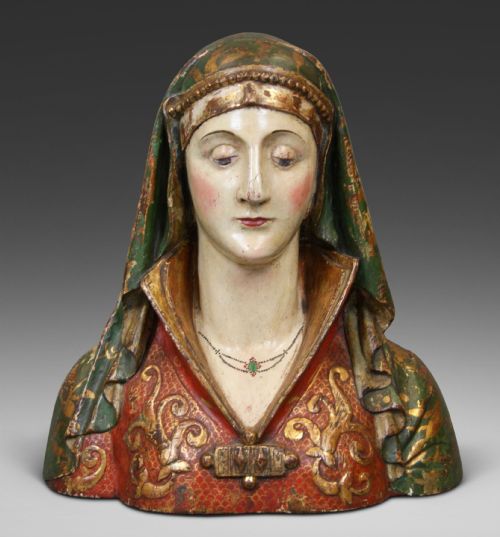
Virgin Mary Wooden Figure
A virgin mary wooden figure carries centuries of devotion, carved from solid timber to bring sacred presence into domestic spaces.
Virgin Mary Wooden Figure
A virgin mary wooden figure takes many devotional forms, most frequently appearing as a Madonna and child, a Pieta, or a single standing saint. These sculptures range from pre-sixteenth century Gothic works to later nineteenth-century interpretations.
Makers shaped these religious pieces for private contemplation, churches, and wall mounting, utilising regional European styles spanning the Renaissance, Baroque, and Gothic periods.
Collectors encounter figures seated on thrones, carrying the infant Christ, or expressing deep sorrow in carved applewood, oak, and walnut.
Materials and carving techniques
Carvers shaped these devotional pieces from solid timbers including oak, walnut, applewood, and hardwood, often employing gesso as a smooth base for subsequent decoration.
Many surfaces received layers of polychrome paint and gold leaf, adding rich colour and luminosity to the carved garments and facial expressions.
Listings feature oak, walnut, applewood, and hardwood sculptures spanning from pre-sixteenth century Gothic pieces to mid-twentieth-century works.
Judging the carving and condition
The sophistication of the drapery folds and the emotional expression of the face separate accomplished sculpture from simpler workshop production.
Original surface treatments, such as surviving polychrome paint or gold leaf, elevate the historical importance compared to stripped or heavily repainted timber.
The Virgin Mary Wooden Figure Glossary
- Polychrome
- Painted in several colours. This surface treatment brings depth and realism to carved wooden religious figures.
- Pieta
- A subject depicting the Virgin Mary supporting the dead body of Christ. This solemn form appears in medieval and baroque European woodcarving.
- Gesso
- A plaster mix applied to wood surfaces as a preparation for painting or gilding. It creates a smooth white ground for gold leaf.
- Madonna
- A representation of Mary, either alone or with the infant Jesus. These devotional sculptures formed the centrepiece of domestic and institutional shrines.
Virgin Mary Wooden Figure: Frequently Asked Questions
How old are these wooden figures?
These sculptures span from the medieval period through to the twentieth century, with many examples originating in the sixteenth, seventeenth, and eighteenth centuries.
Specific dates depend on the carving style, timber choice, and regional workshop traditions.
Where were these statues made?
Carvers produced these devotional works across various European regions, notably in Italy, Spain, Germany, and the Low Countries.
Local timber supplies and prevailing artistic movements shaped the distinct regional characteristics.
How should I care for antique wood?
Keep wooden sculptures away from direct heat sources and dramatic humidity fluctuations to prevent timber movement or cracking.
Dust gently with a dry, soft cloth and avoid modern chemical polishes on historic surfaces.
What is polychrome paint?
Polychrome paint refers to the multi-coloured pigments applied directly to the carved wood or over a gesso layer.
Surviving traces provide vital clues about the original appearance and date of the sculpture.