
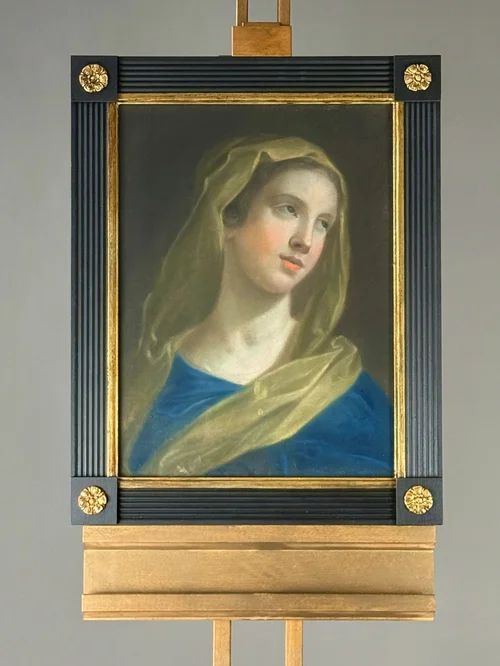
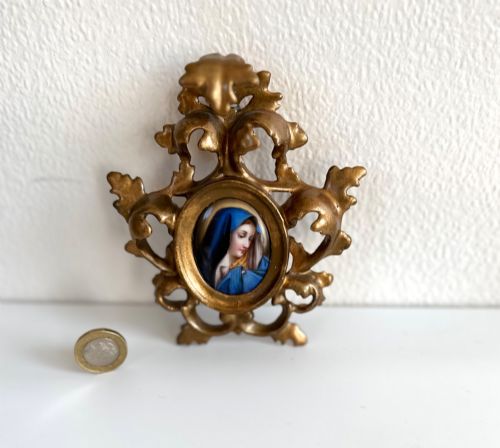
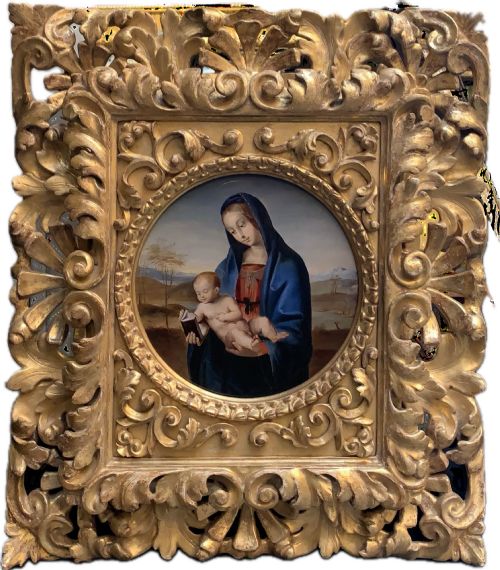


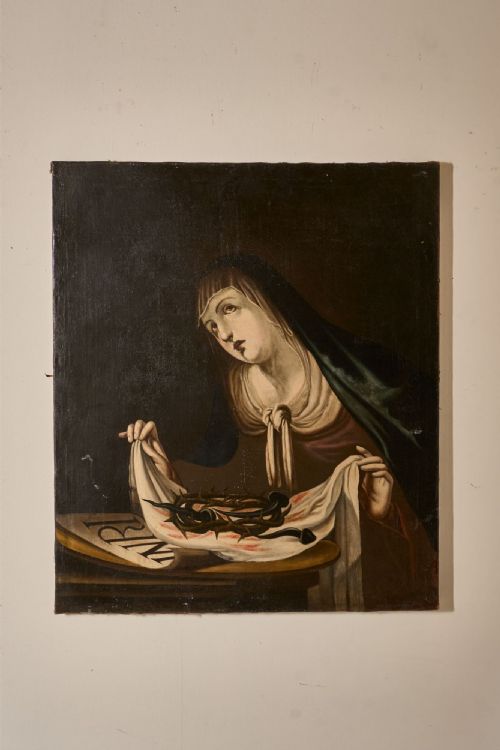


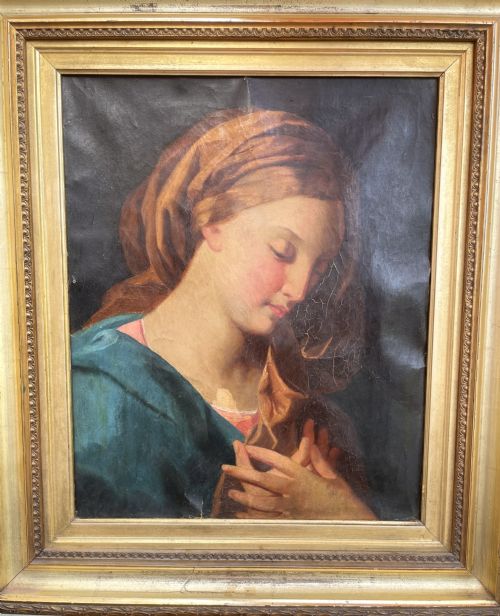
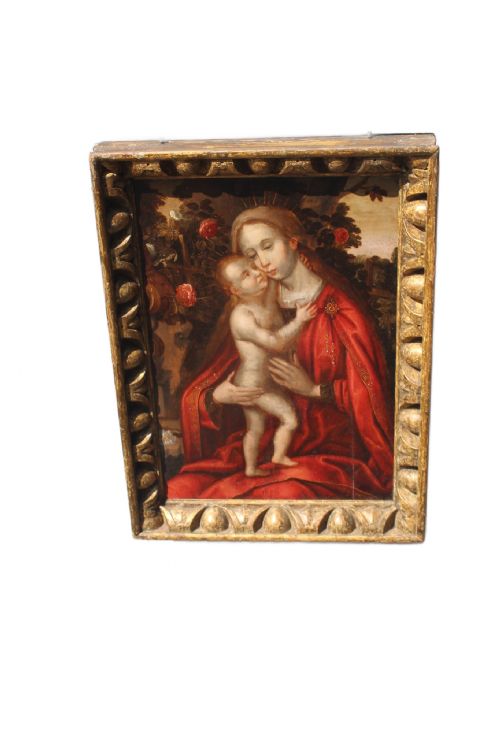


Virgin Mary Portrait Painting
A virgin mary portrait painting brings centuries of quiet devotion and masterful oil technique directly into a room.
Virgin Mary Portrait Painting
A virgin mary portrait painting captures centuries of religious devotion, most frequently appearing as depictions of the Madonna and child executed in oil.
The selection ranges from intimate 19th-century miniatures to large-scale Italian Renaissance school canvases and Spanish colonial works.
Buyers encounter everything from small fruitwood panel pieces to grand giltwood-framed compositions originating across European and colonial traditions.
Materials and methods
Artists relied primarily on oil paint applied to stretched canvas or wooden panels, frequently incorporating gold leaf to illuminate sacred figures.
Many works utilise traditional supports such as fruitwood or canvas, framed in ornate giltwood that reflects the period of creation.
Earlier pieces demonstrate the meticulous layering characteristic of Renaissance and Baroque schools, while later examples employ 19th-century oil techniques.
Several Madonnas keep eternal company with hidden angels and unexpected rose gardens.
Judging the execution
Quality rests in the subtlety of expression and the handling of drapery, distinguishing studio output from later academic copies.
The integrity of the original support, whether wood panel or canvas, dictates the stability and visual depth of the pigment over centuries.
Benedetto Luti·Bernardino Luini·Benvenuto Tisi·Costantino Frixione·Juan Ruiz Soriano·Pompeo Batoni·Ambrious Benson·Bartolomé Murillo
The Virgin Mary Portrait Painting Glossary
- Madonna
- A representation of Mary, mother of Jesus, typically shown alone or with the infant Christ. This central motif dominates sacred portraiture across European traditions.
- Oil on Panel
- A painting executed on a wooden support rather than fabric. Fruitwood and other dense timbers provided a rigid base for early compositions.
- Gold Leaf
- Hammered sheets of gold applied to surfaces to create luminous backgrounds or haloes. This material enhances the divine presence within religious art.
- Giltwood
- Wood carved and covered with a thin layer of gold leaf or gold paint. Frames of this type frequently accompany classical devotional paintings.
- School
- A group of artists working in a similar style or under a specific master's influence. Listings often attribute works to the circle or follower of established painters.
Virgin Mary Portrait Painting: Frequently Asked Questions
How do I identify a 16th-century portrait?
Sixteenth-century works typically employ wood panels and demonstrate Renaissance compositions influenced by masters like Raphael.
Pigment analysis and panel construction help separate these early pieces from later 19th-century revival works.
Where were these paintings displayed?
These portraits served as focal points for private devotion in homes or as pieces for institutional chapels.
Smaller miniatures were used for personal prayer, while large canvases adorned significant domestic and ecclesiastical spaces.
How do I care for an antique oil painting?
Keep the artwork away from direct sunlight and maintain stable room humidity to protect both canvas and wood supports.
Avoid chemical cleaners and consult a professional conservator for any cleaning or structural restoration.
What is the difference between an original and an after piece?
An original work stems directly from an artist or their active studio during a specific period.
An 'after' piece is a subsequent study or copy painted in homage to a renowned composition by a master.