
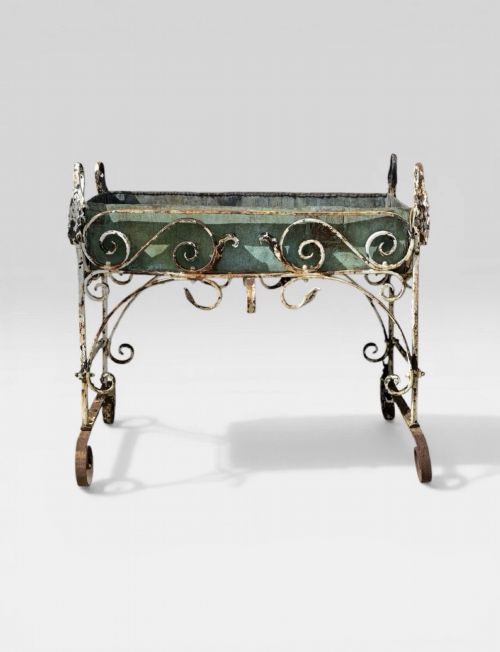


Vintage Wrought Iron Trough
A vintage wrought iron trough brings rugged garden utility and classical planting space to a terrace, drawing on nineteenth-century craftsmanship for durability.
Vintage Wrought Iron Trough
A vintage wrought iron trough serves as a robust container for greenery, drawing on forms like garden planters, window boxes, and conservatory plant stands. These items emerge from various periods including Georgian, Victorian, Edwardian, and mid-twentieth century origins.
Buyers will encounter distinct regional interpretations on this page, ranging from French country urns and strapwork designs to Gothic revival planters and English wirework stands. Many pieces function as architectural salvage, designed to hold earth and plants securely in outdoor or conservatory settings.
Construction and materials
These items rely on wrought iron, sheet iron, and wirework, often shaped into strapwork or linear frameworks to support heavy soil. Blacksmiths and metalworkers utilised sheet metal and zinc linings to protect the outer structure from moisture.
Surface finishes typically include weathered paint and natural oxidation, showcasing the raw metal underneath. Makers constructed these troughs to endure outdoor elements through sturdy riveting and welded joints.
Several items started life feeding livestock before finding a peaceful retirement holding geraniums on a sunny patio.
Assessing the grade
Quality rests on the integrity of the metalwork, where finely forged strapwork and complex wirework distinguish superior examples from plain utility pieces. The weight of the iron and the balance of the proportions indicate the original maker's skill.
Original surface patination and intact structural elements like zinc liners elevate an example above heavily altered or stripped pieces. Pieces featuring distinct period details, such as Gothic revival motifs or Regency wirework, demonstrate higher design ambition.
The Vintage Wrought Iron Trough Glossary
- Wrought iron
- A tough, malleable form of iron that blacksmiths beat and bend into decorative and structural shapes while hot. This material resists rust better than cast iron and allows for slender, resilient garden structures.
- Strapwork
- Flat bands of metal riveted or welded into geometric patterns across the body of a planter. This technique reinforces the vessel while adding visual rhythm.
- Wirework
- Metal strands twisted and soldered into intricate mesh or linear stands for plant display. Victorian and Edwardian conservatories frequently utilised this lighter construction.
- Hay rack
- A slatted metal trough originally designed to hold fodder for livestock in stables. Gardeners repurpose these agricultural items as wall-mounted planters.
Vintage Wrought Iron Trough: Frequently Asked Questions
How do I use a vintage trough in the garden?
These troughs suit direct planting with trailing flowers or structural shrubs. Position them along terrace walls or beneath windows to display seasonal greenery.
Ensure adequate drainage if the base retains sheet metal or zinc linings. Elevating the piece slightly on bricks prevents moisture retention underneath.
Are these troughs weatherproof?
Wrought iron withstands outdoor conditions well, though historical pieces benefit from sheltered placement during harsh winters. The protective layers of paint and natural oxidation shield the core metal from deep corrosion.
Applying a clear protective wax or rust inhibitor helps preserve vulnerable wirework and thin sheet iron.
How do I date an iron trough?
Dating relies on stylistic clues and construction methods, such as the lightness of Georgian wirework or the heavier strapwork of nineteenth-century pieces. Gothic revival motifs and Arts and Crafts copper elements point to specific Victorian design movements.
Examine the joints and fasteners for signs of hand-forging versus later machine manufacturing.
Can I use these indoors?
Lighter wirework stands and smaller troughs adapt easily to conservatory or interior room settings. They serve as plant stands for potted ferns and trailing houseplants.
Protect interior flooring by placing a waterproof tray beneath older vessels that lack intact internal linings.