



Vintage Writing Escritoire
A vintage writing escritoire brings centuries of craftsmanship into a modern study, offering a private writing surface behind a drop or cylinder front.
Vintage Writing Escritoire
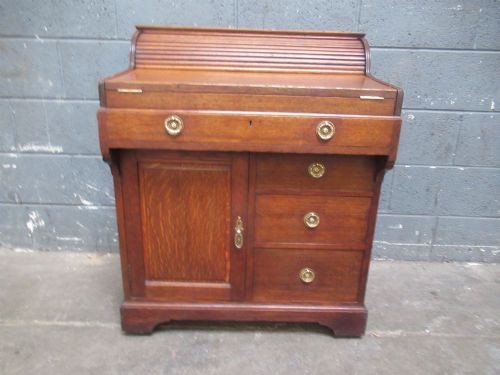
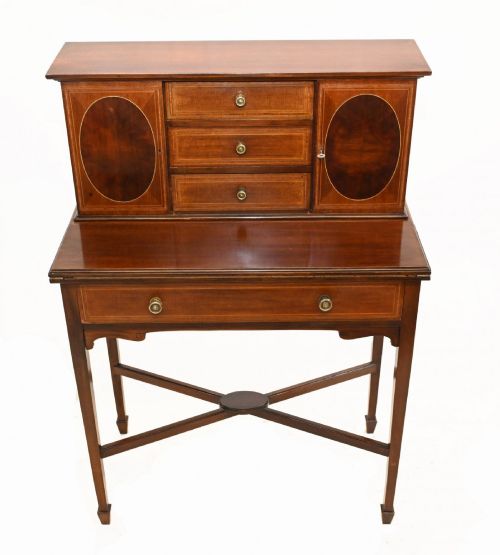
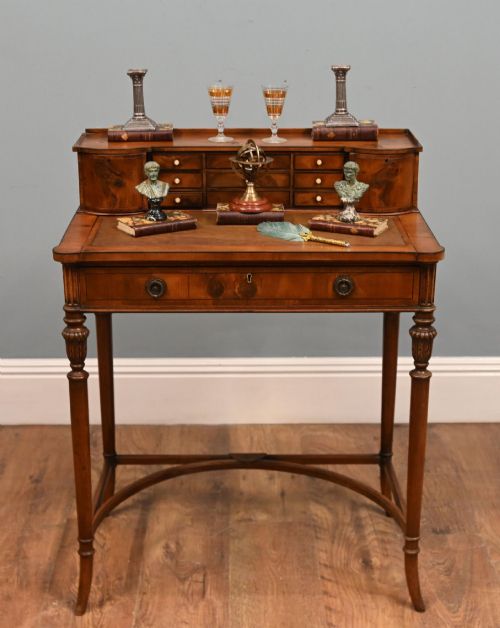
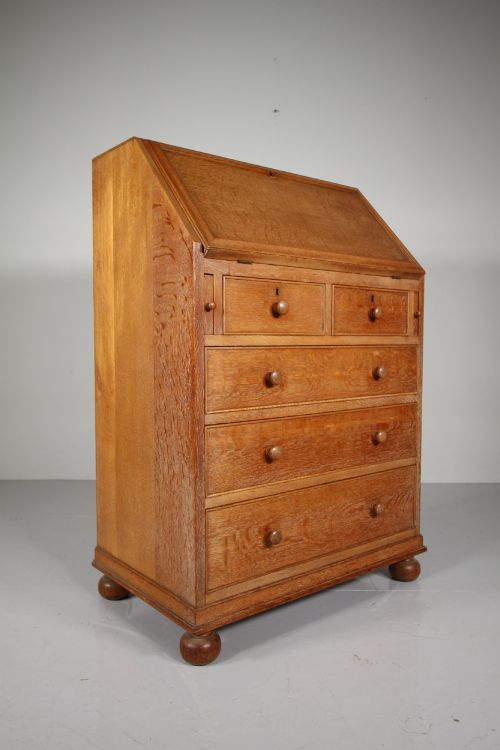
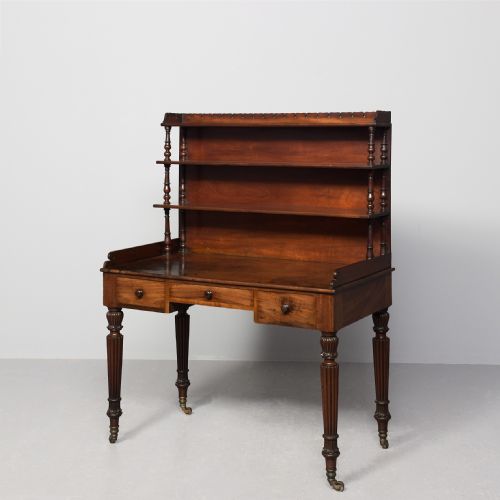
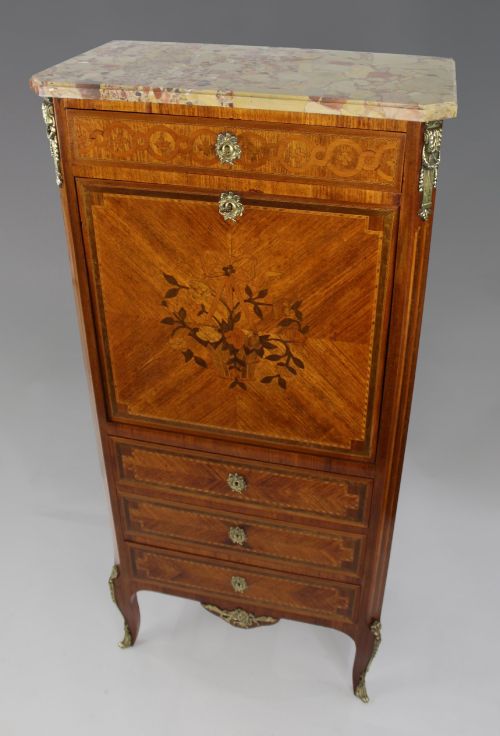
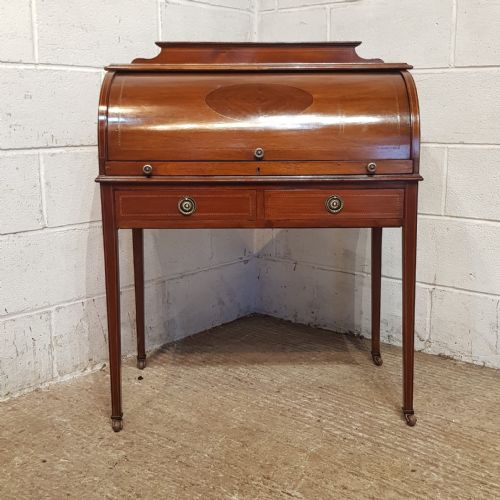
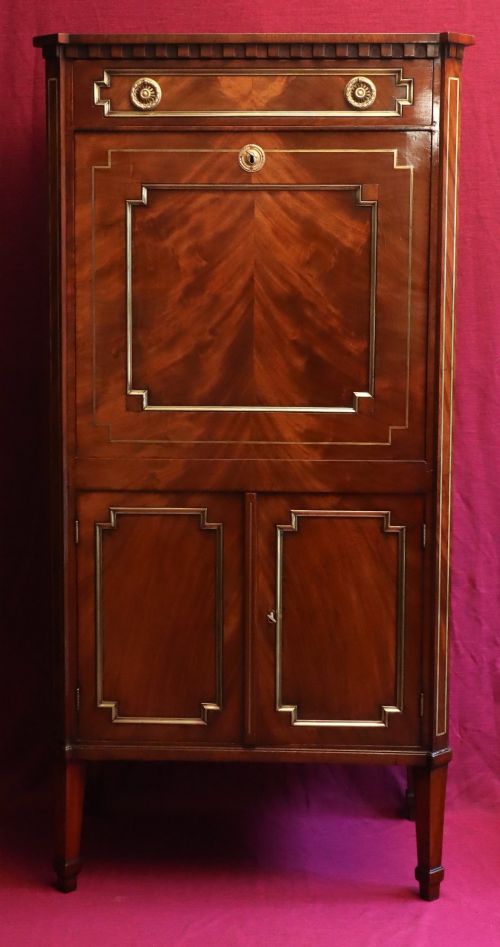
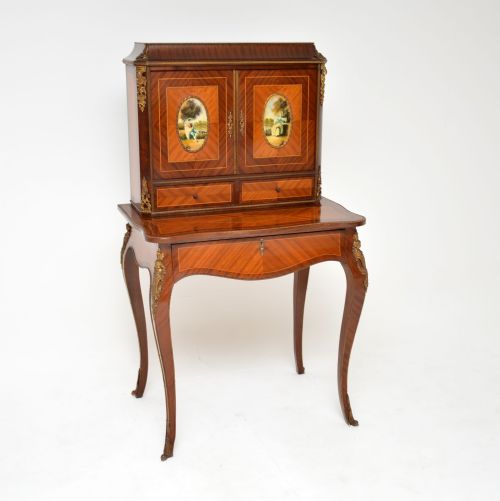
When you search for a vintage writing escritoire, you encounter case furniture designed specifically for correspondence, featuring fall-front panels, cylinder fronts, or abattant lids that conceal internal compartments and small drawers. These pieces range from restrained Victorian mahogany designs to decorative French Marquetry and ormolu-mounted walnut cabinets.
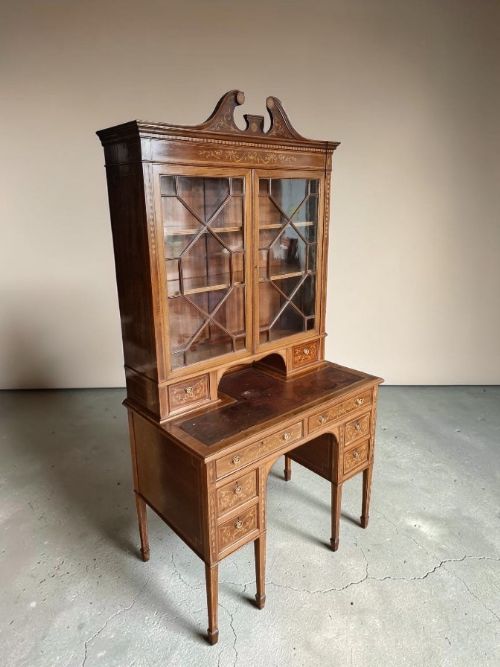
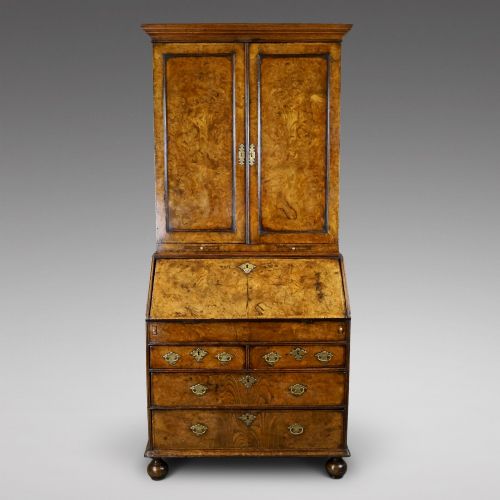
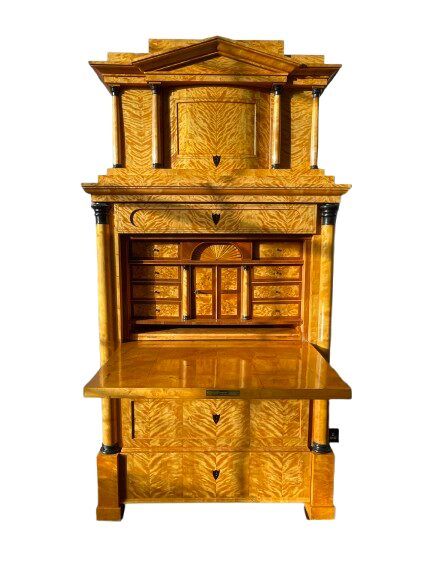
The selections span multiple eras, including 17th-century burr elm, 18th-century bureau bookcases, and Edwardian inlaid mahogany ladies writing desks. You meet Continental interpretations in Biedermeier and Baroque styles alongside British regional cabinetmaking by makers such as James Mein of Kelso.
Most examples combine a standing or chest-height cabinet with a fitted interior for letters and inkwells, sometimes extending upward into a bookcase or display section. This dual function of storage and concealed workspace defines the form across every period represented on the page.
Materials and construction
Cabinetmakers built these pieces using dense hardwoods like mahogany, walnut, kingwood, and burr elm as primary carcasses, often applying elaborate marquetry, satinwood stringing, or oyster veneers across the exterior surfaces. Brass hardware, ormolu mounts, and leather writing inserts provide functional contrast and decorative punctuation to the woodwork.
The fall-fronts and cylinder mechanisms rely on precise joinery to ensure smooth operation when concealing the writing desk interior. Internal pigeonholes and miniature drawers demonstrate fine dovetail construction and careful grain matching designed to endure daily use.
Vintage Writing Escritoire Retail Price Guide 2026
Typical asking prices for vintage writing escritoire among the pieces listed under this phrase on Sellingantiques today, from the lower quarter to the upper quarter. They describe what is for sale here now, not the wider market.
Secret spring-loaded catches inside these cabinets often demand a gentle tap in exactly the right corner to release hidden stationery drawers.
Assessing quality and finish
Quality rests upon the selection of veneer figures, such as burr elm or oyster walnut, and the precision of inlaid marquetry details across the fall-front panels. Finer examples retain original marble tops, undamaged ormolu mounts, and intact leather writing surfaces.
The integrity of the internal pigeonholes and the smooth movement of the cylinder or drop-front mechanism indicate the standard of the original workshop. Structural joinery in the secondary timbers and the presence of period-correct hardware distinguish master cabinetwork from standard production.
James Mein of Kelso
The Vintage Writing Escritoire Glossary
- Escritoire
- A writing cabinet with a fall-front panel that folds down to create a desk surface, concealing internal compartments. It shares lineage with the bureau and the secretaire.
- Secretaire a abattant
- A tall, upright writing cabinet featuring a vertical drop-front door that opens downward for correspondence. This form originates in French cabinetmaking.
- Cylinder desk
- A writing desk with a curved, quarter-cylinder rolling shutter that retracts to reveal a sliding writing slide and pigeonholes. It offers an alternative to the hinged fall-front.
- Marquetry
- Decorative veneer patterns formed by fitting together thin pieces of wood, ivory, or metal to create pictorial designs on furniture surfaces. It appears frequently on French revival pieces.
- Ormolu
- Gilded bronze ornamentation applied to the corners, feet, and friezes of decorative cabinets. It acts as both structural protection and visual embellishment.
Vintage Writing Escritoire: Frequently Asked Questions
What is an escritoire?
An escritoire is a piece of case furniture designed for writing, featuring a lid or panel that drops or rolls open to reveal a fitted interior with small drawers and pigeonholes.
Unlike standard tables, these cabinets keep correspondence and writing materials concealed vertically when not in use.
How do I use an escritoire today?
These cabinets function effectively as compact laptop desks or dedicated stationery stations in a living room, bedroom, or study. The drop-front creates a convenient writing ledge while keeping paperwork out of sight behind closed doors.
Internal compartments organise notebooks, pens, and modern correspondence accessories efficiently.
How do I date an escritoire?
Dating relies on identifying the primary wood species, secondary timber framing, construction methods, and stylistic revival influences. For instance, 17th-century pieces often display burr elm or oyster walnut, while Victorian and Edwardian examples utilise mahogany with machine-sawn internal elements.
Hardware styles, dovetail cuts, and regional cabinetmaking signatures also narrow the decade of production.