
Vintage Wooden Side Cupboards
These vintage wooden side cupboards range from compact bedside cabinets to substantial salon pieces, offering practical storage with distinct period character.
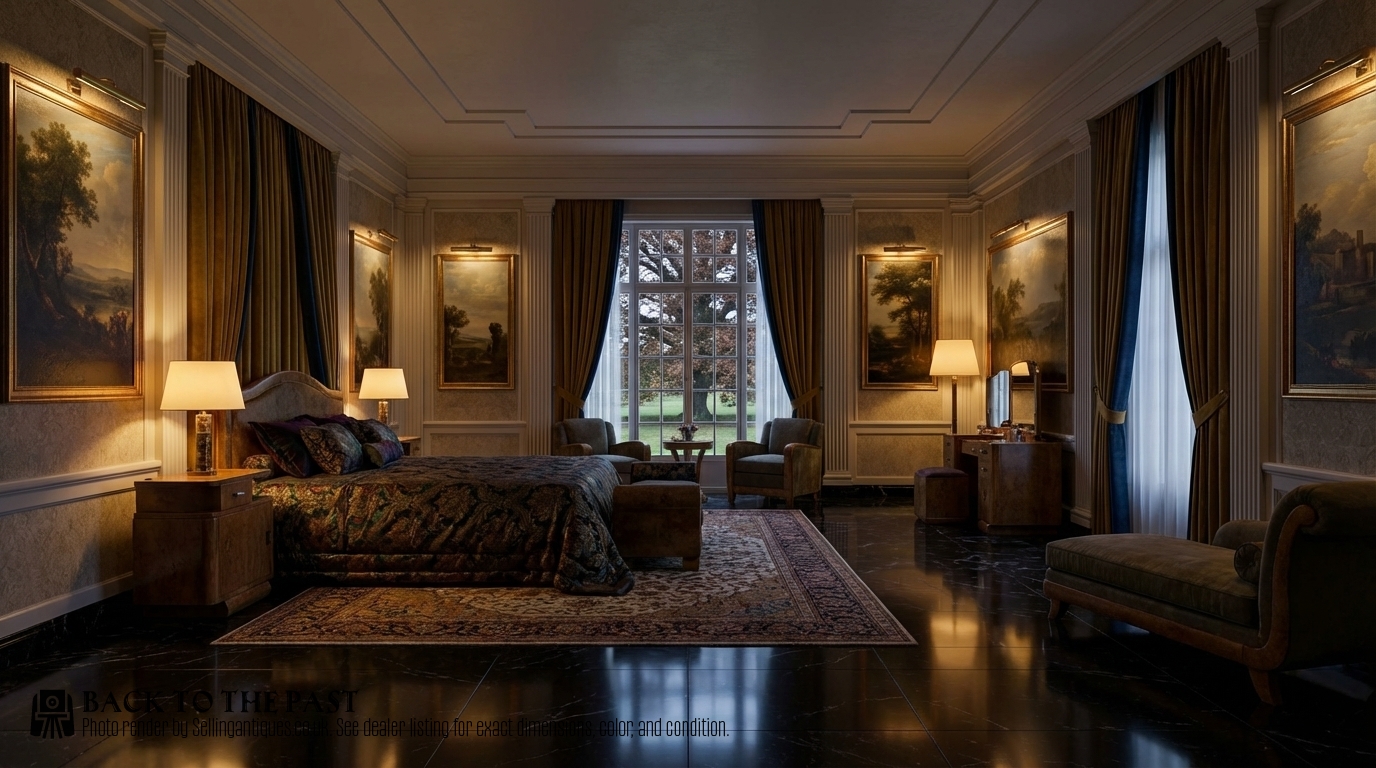
Vintage Wooden Side Cupboards
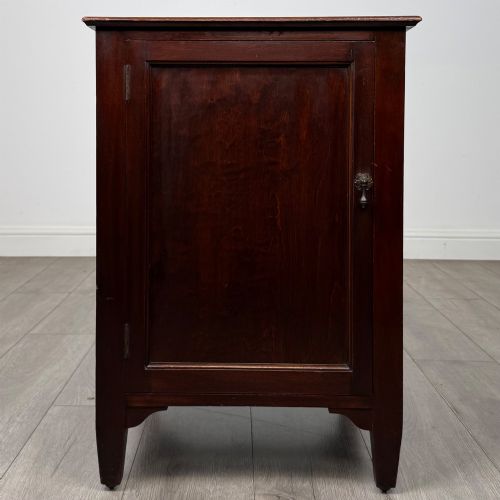
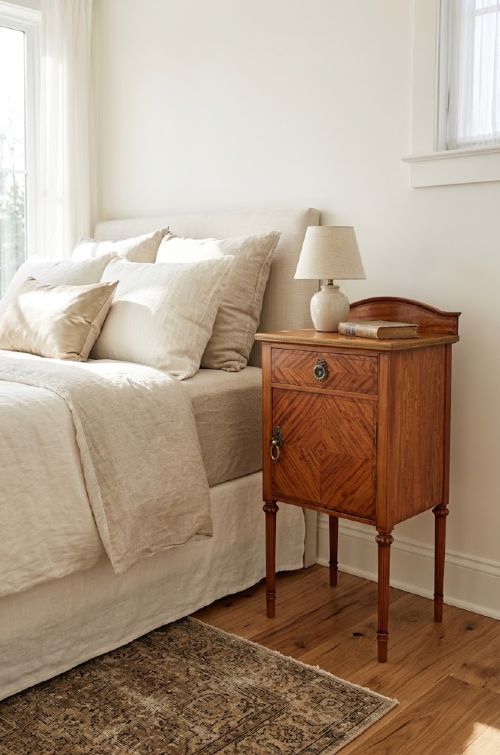
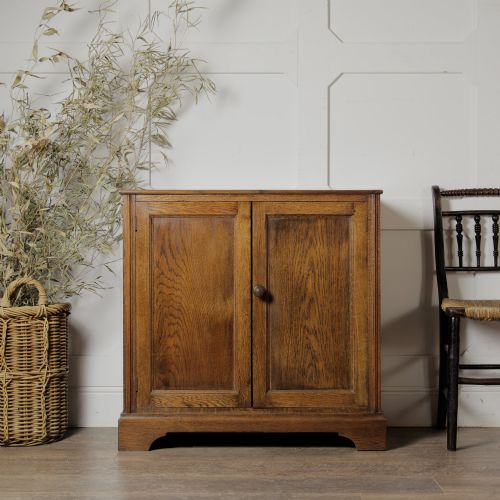
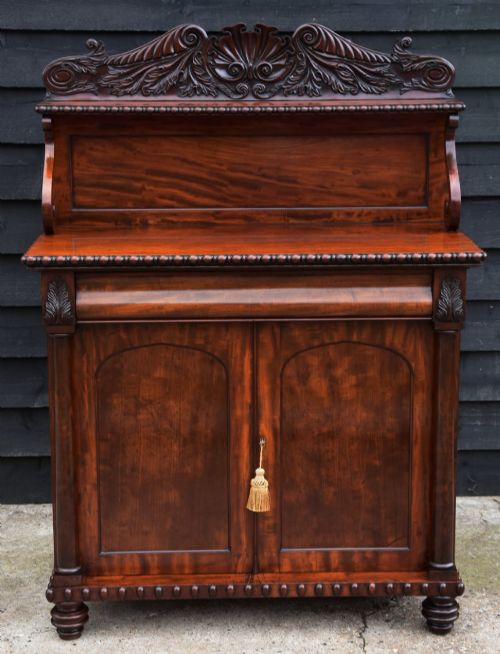
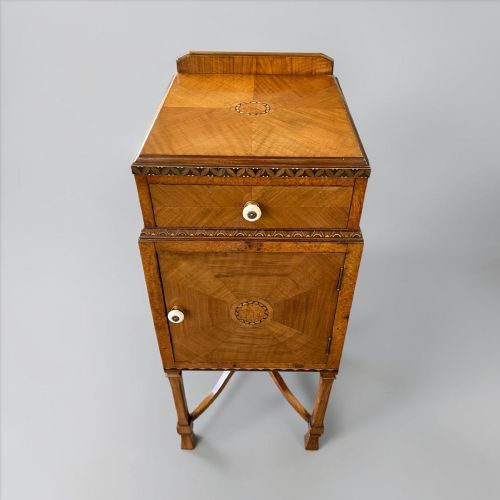
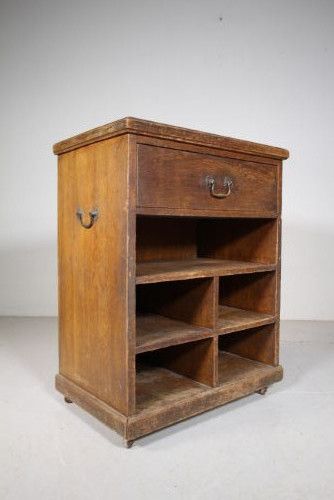
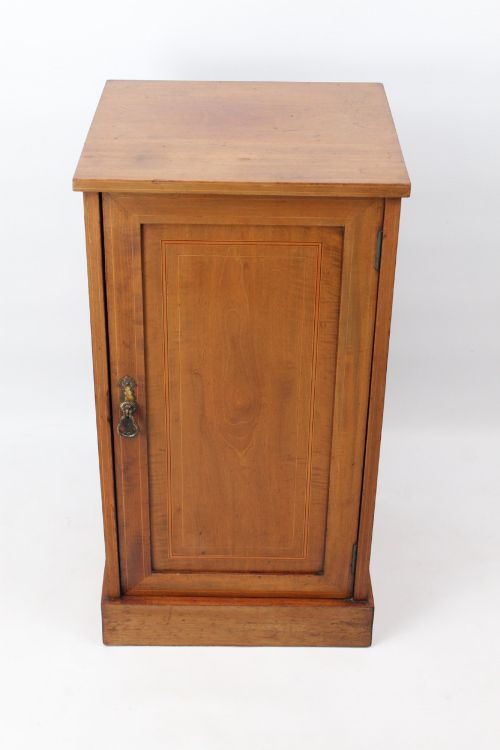
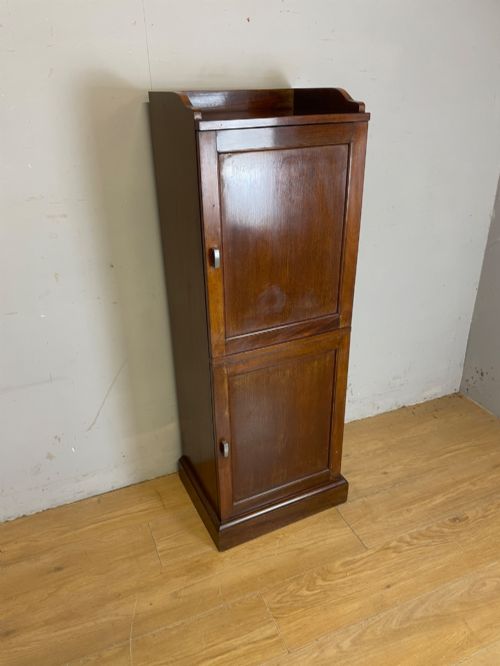
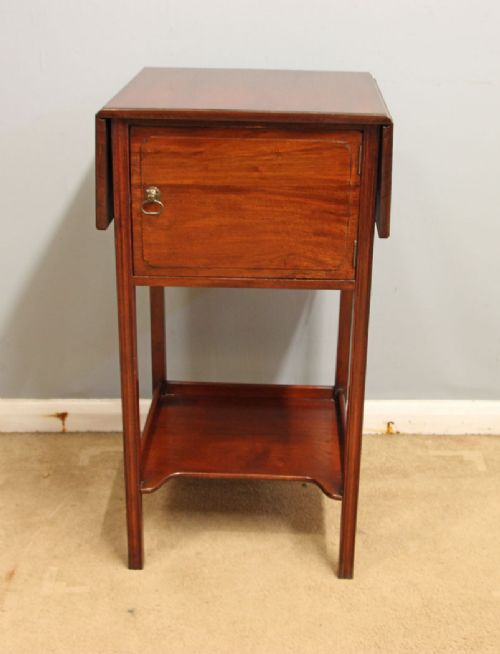
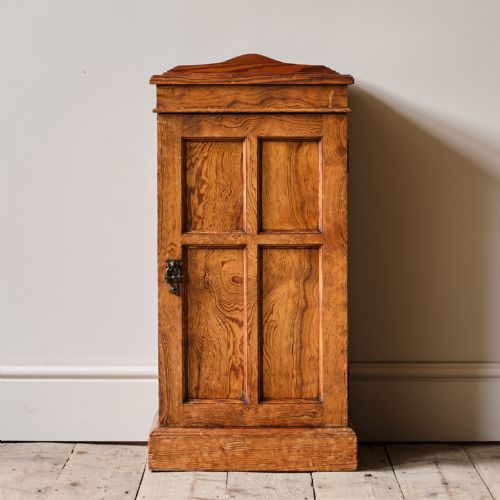
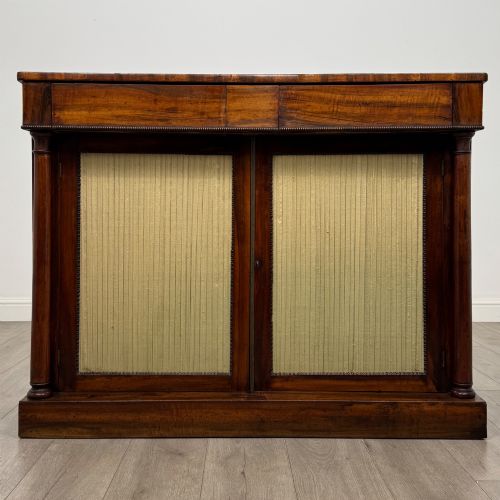
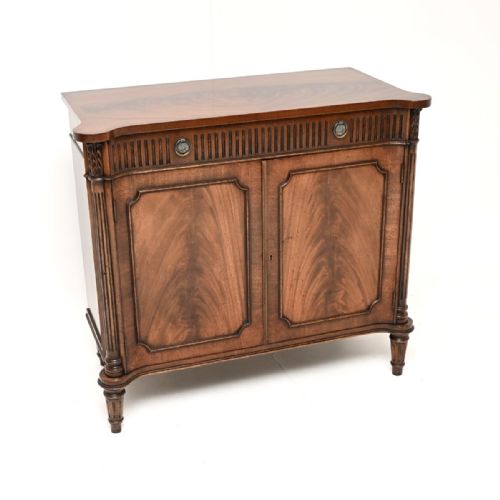
When you search for vintage wooden side cupboards, you encounter a varied selection of functional storage furniture spanning the nineteenth and twentieth centuries. The pieces on this page include bedside cabinets, pot cupboards, nightstands, and larger side cabinets designed for domestic utility.
You are most likely to meet Edwardian and early twentieth-century examples in oak, mahogany, and walnut, often featuring single doors or small drawer configurations. These items served practical purposes in bedrooms, halls, and reception rooms, fulfilling storage needs before fitted furniture became standard.
The selection extends from simple utilitarian pine and oak cupboards to decorative items displaying marquetry, satinwood, and hand-painted details. Regional variations and stylistic revivals, including Gothic Revival, Regency, and Art Deco, appear throughout the listings, reflecting the aesthetic preferences of their respective periods.
How they were made
Cabinet makers utilised a range of domestic and imported timbers, notably solid oak, mahogany, walnut, and burr walnut, alongside secondary woods like pine. Surfaces often display figured veneers, marquetry inlay, or painted decoration, mounted with brass hardware or fitted with marble tops.
Construction techniques combine traditional joinery with period-specific manufacturing methods, visible in dovetailed drawer boxes and panelled doors. Finishing processes involved polishing, staining, or painting, preserving the natural grain of the timber or providing a decorative surface layer.
The listings feature woods including mahogany, oak, walnut, burr walnut, pine, and satinwood, spanning the nineteenth and twentieth centuries.
What varies in quality
The standard of a piece depends heavily on the selection of timber, particularly where figured mahogany, burr walnut, or satinwood veneers are employed. Finer examples show careful book-matching of veneers and precise marquetry work that aligns seamlessly across doors and drawers.
Construction integrity separates standard utility items from finer cabinetwork, evident in the weight of the timber, the precision of the joinery, and the quality of original brass handles and mounts. The retention of original finishes and matching pairs further elevates the standing of individual items.
The Vintage Wooden Side Cupboards Glossary
- Pot cupboard
- A small bedside cabinet originally constructed to house a chamber pot. These compact units typically feature a single door and occasionally a small drawer.
- Marquetry
- Decorative veneer work formed by fitting pieces of various coloured woods into a design pattern. This technique appears on cabinet doors and drawer fronts.
- Burr walnut
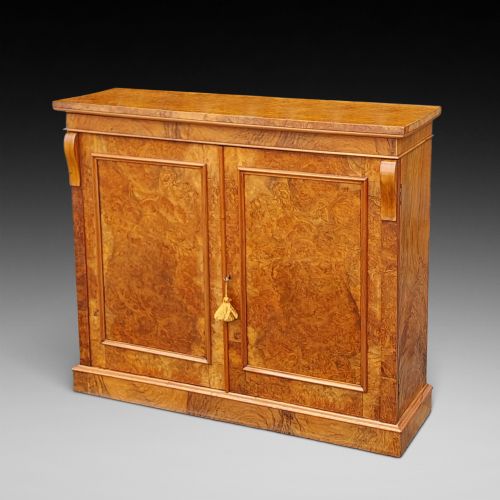
- Timber taken from the warted excrescence of a walnut tree, yielding highly figured, swirling grain patterns. It was favoured for high-status Victorian and Edwardian cabinetwork.
- Serpentine
- A curved furniture front characterised by a convex centre flanked by concave ends. This shaping requires skilled carpentry and frequently appears on commodes and side cabinets.
- Satinwood
- A durable, lustrous yellow timber imported from tropical regions, used extensively for fine stringing, inlay, and occasional furniture during the eighteenth and nineteenth centuries.
Vintage Wooden Side Cupboards: Frequently Asked Questions
Where were side cupboards used?
These cupboards served primarily in bedrooms as bedside tables or pot cupboards, providing enclosed space for night-time essentials. Larger versions functioned in hallways and salons for general storage.
Their compact footprints allowed them to fit into alcoves and smaller rooms where full-sized sideboards or wardrobes proved impractical.
How do I identify Edwardian pieces?
Edwardian cupboards often display lighter timbers such as satinwood, light mahogany, or stained oak, frequently accented with delicate inlay or stringing. Their forms tend to be lighter and more restrained than heavy Victorian furniture.
Many incorporate simpler lines influenced by Sheraton revivals while maintaining practical interior shelving or drawer space.
What is a pot cupboard?
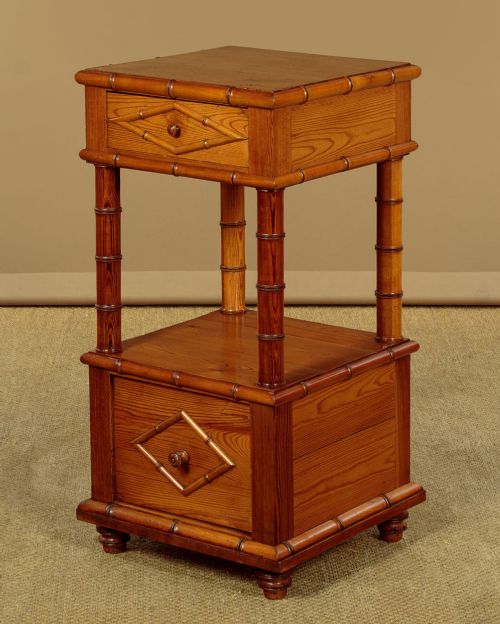
A pot cupboard is a small bedside cabinet designed in the nineteenth century to enclose a chamber pot. They usually feature a single cupboard door opening to a shelved interior.
Today, buyers utilise these compact units as bedside tables or lamp tables because their enclosed storage remains useful for modern items.
Are pairs common in these listings?
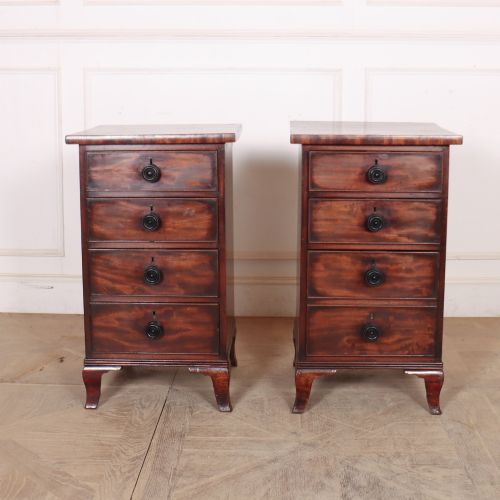
Matched pairs of bedside cabinets and side tables appear frequently, particularly from the Edwardian period and the nineteen-twenties. These pairs were manufactured together to flank a bed or fireplace.
Finding matching pairs of antique cabinets offers symmetry for bedroom and living room layouts.