




Vintage Wooden Paper Rack
A vintage wooden paper rack holds daily reading and correspondence within structured compartments shaped by cabinetmakers over two centuries.
Vintage Wooden Paper Rack
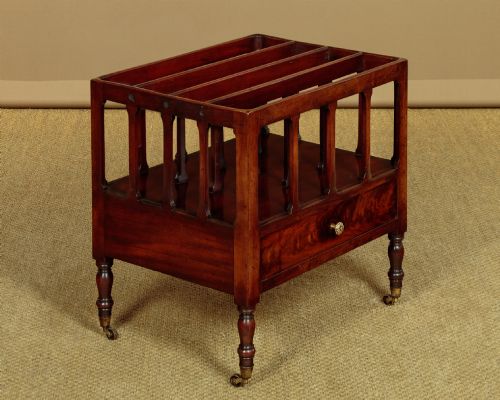
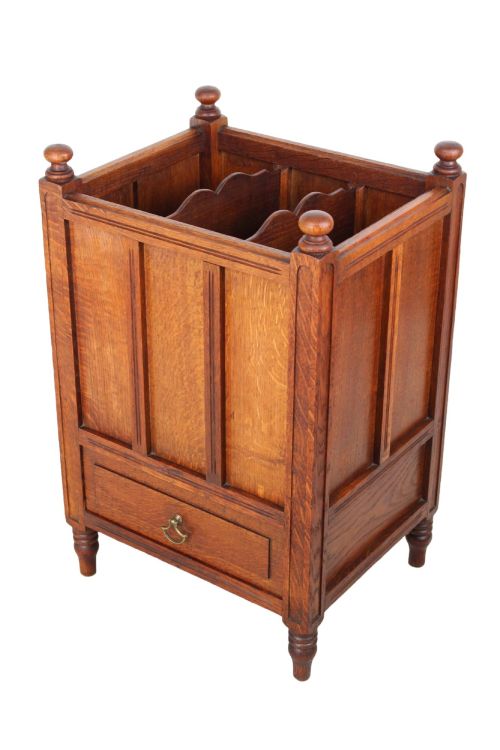
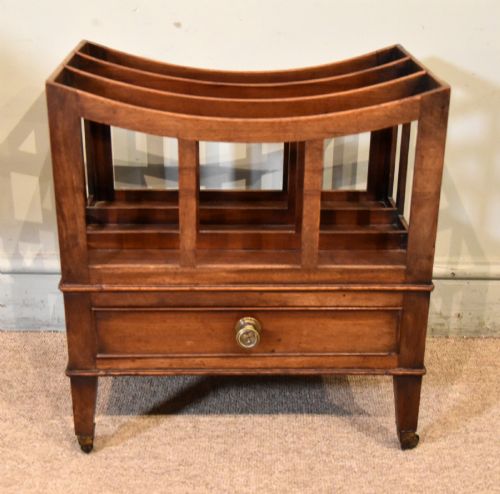
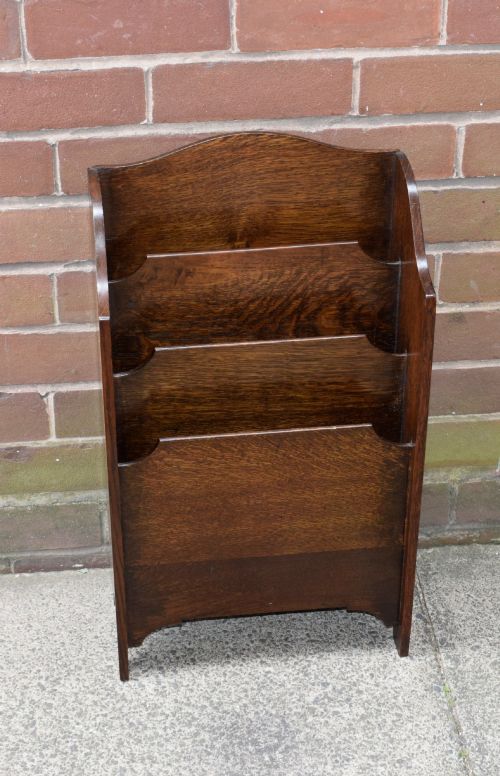
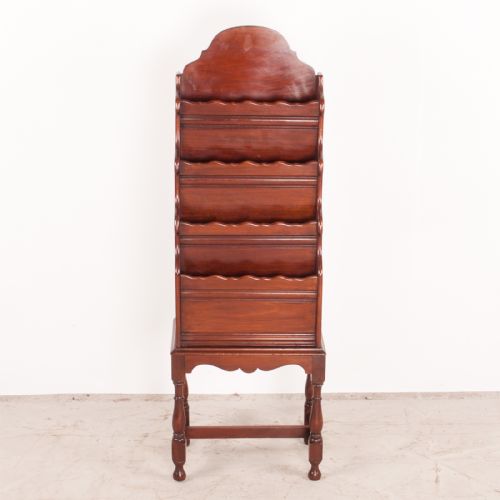
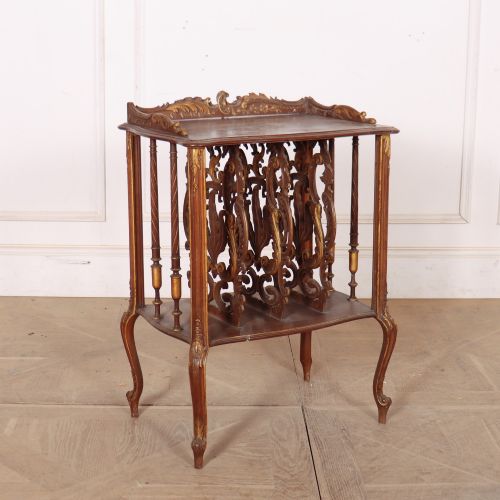
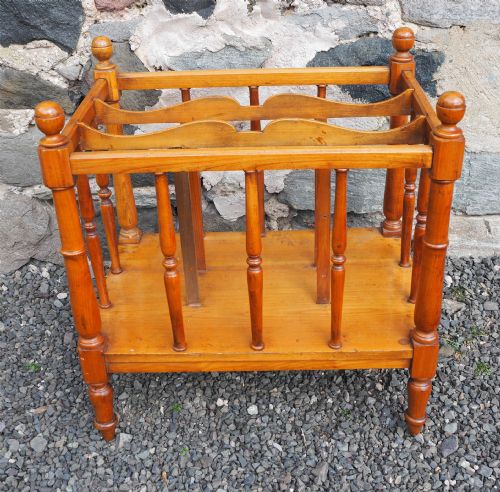
A vintage wooden paper rack gathers paper, folios, and periodicals into upright divisions designed for easy sorting. The examples met on this page range from early nineteenth-century mahogany canterburys to Edwardian oak newspaper holders and tabletop desk tidies.
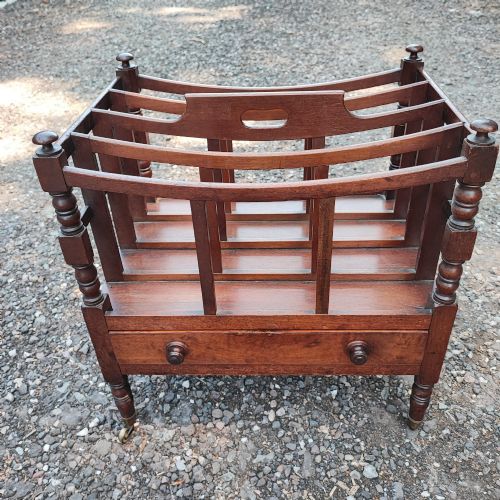
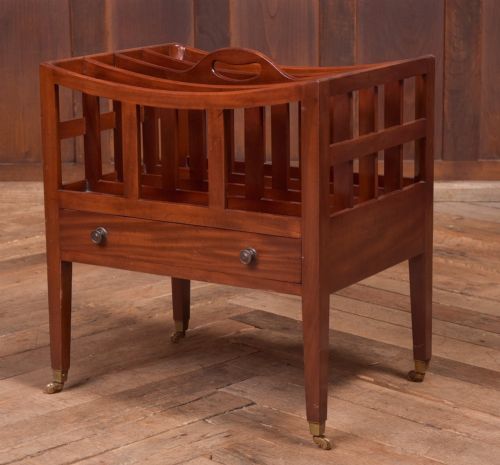
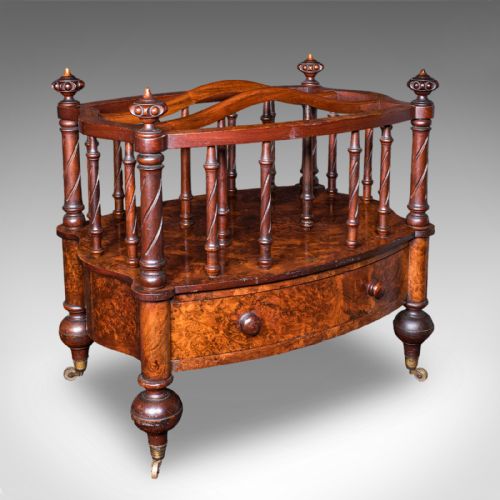
Makers shaped these items as floor-standing canterburys with under-tier drawers, compartmentalised desk boxes, and countertop dispensers. Mahogany, rosewood, burr walnut, and oak dominate the forms, reflecting the woods favoured in domestic studies and sitting rooms.
Materials and construction methods
Cabinetmakers constructed these pieces using solid timbers and decorative veneers such as mahogany, rosewood, and burr walnut, frequently incorporating brass castors and turned supports. Drawer linings typically utilise secondary timbers, and joinery relies on pegged or dovetailed joints to withstand daily handling.
Surface ornamentation ranges from plain polished grains to inlaid marquetry and carved details. Structural elements such as slatted dividers and carrying handles require precise timber selection to maintain stability under the weight of books and paper.
Several Victorian desk tidies still hide secret compartments designed for confidential correspondence.
Assessing quality in paper racks
Quality rests upon timber selection and the precision of the joinery joining the upright slats to the base. Finer pieces display figured grain patterns, such as burr walnut or select mahogany, matched across visible surfaces.
The integration of functional elements like smooth-running drawers, turned feet, and robust brass fittings distinguishes workshop production from standard utility items.
The Vintage Wooden Paper Rack Glossary
- Canterbury
- A low, freestanding stand with partitioned sections for holding sheet music, newspapers, or periodicals. It frequently includes a small drawer beneath the divisions.
- Desk Tidy
- A tabletop accessory featuring compartments, shelves, or pigeonholes designed to organise letters, documents, and writing materials.
- Marquetry
- The art of applying pieces of veneer to a structure to form decorative patterns and pictures. It appears on panelled surfaces of Victorian and Edwardian examples.
- Folio Stand
- A large rack designed to hold loose prints, drawings, or large-format books upright. These pieces often feature adjustable frames or sturdy folding supports.
Vintage Wooden Paper Rack: Frequently Asked Questions
What is the difference between a canterbury and a magazine rack?
A canterbury is a traditional partitioned stand, often originating in the Georgian or Victorian period, built with low legs and sometimes a drawer.
Later magazine racks tend to be simpler standing or countertop frames produced during the Edwardian era and the 1920s.
How were wooden paper racks used in period homes?
These pieces sat beside armchairs in drawing rooms or upon writing desks in studies to keep daily correspondence and periodicals orderly.
Larger versions held sheet music near pianos or folio sheets for artists and collectors.
How do I care for a vintage wooden paper rack?
Maintain the timber by applying a microcrystalline wax periodically to nourish the polish and protect the grain from drying out.
Keep the piece away from direct heat sources and strong sunlight to prevent veneer lifting and timber splitting.
How can I tell the period of a wooden paper rack?
Examine the timber species, joinery methods, and hardware style, such as turned legs or brass castors.
Georgian and Regency pieces favour solid mahogany and rosewood with refined turning, whereas 1920s items often utilise plain oak or simpler architectural lines.