
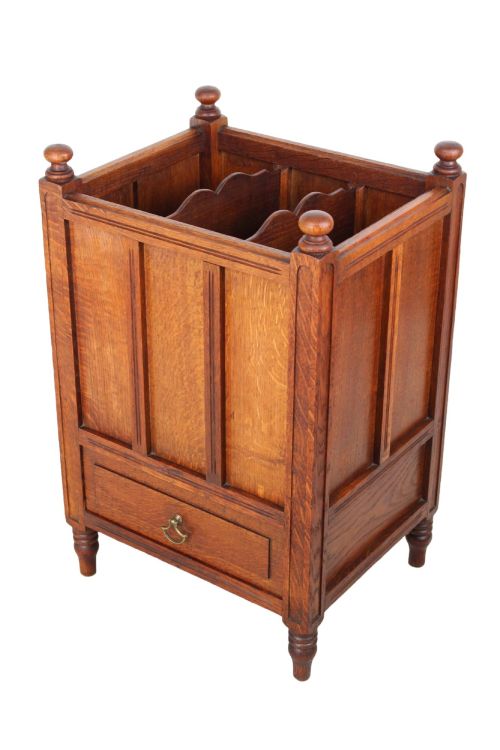
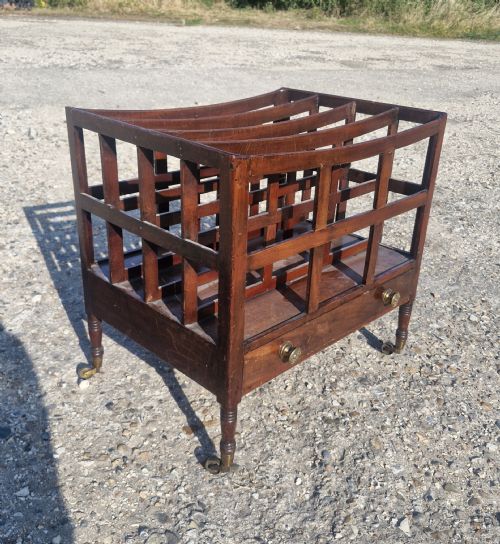
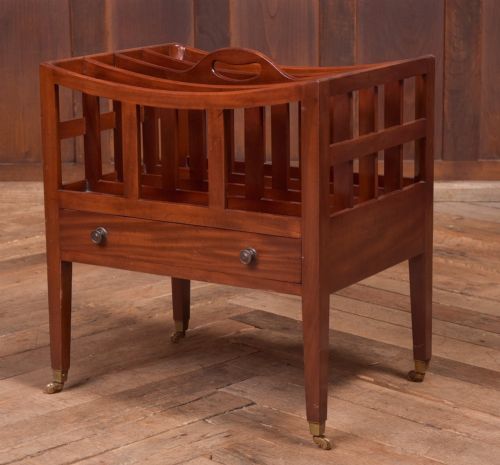


Traditional Music Canterbury
These traditional music canterbury stands are classic holders for sheet music and papers, offering a clever way to keep your living space tidy.
Traditional Music Canterbury
A traditional music canterbury is a dedicated stand designed to hold sheet music, papers, and magazines within domestic interiors. These pieces appear in forms such as magazine racks, music stands, and combined magazine racks and canterburys.
The versions you are most likely to meet on this page span several distinct periods, including the Regency, Victorian, Edwardian, and Arts and Crafts eras. Makers produced them in styles ranging from George III and George IV to William IV.
Originating primarily as English furniture, these items serve both functional and decorative roles in a room. Collectors encounter them most frequently constructed from solid timbers with compartmentalised sections for easy sorting.
How they were made
Traditional music canterbury stands rely heavily on quality cabinet timbers, predominantly mahogany and rosewood, alongside occasional oak examples. Workshops selected these hardwoods for their durability and rich grain patterns.
Metal components also play a structural or decorative role, with brass frequently utilised for castors, rods, or handle fittings. Joinery techniques connect the slatted divisions and drawer components securely to the main frame.
Named after an Archbishop of Canterbury who reportedly requested such a stand for his music scores.
What varies in quality
The refinement of the timber selection and the sophistication of the styling separate the top of the range from simpler examples. Pieces showing distinctive period characteristics like Regency or George III detailing display greater cabinetmaking skill.
The inclusion of functional additions, such as an integrated drawer or superior brass hardware, elevates the construction standard. Proportion and balance in the slatted dividers dictate the overall visual elegance of the stand.
The Traditional Music Canterbury Glossary
- Regency
- A British design style dating from the early nineteenth century. It draws inspiration from classical Greek, Roman, and Egyptian motifs.
- Rosewood
- A dense, dark timber prized for its distinctive grain and deep colour. Makers during the nineteenth century used it extensively for high-status furniture.
- Arts and Crafts
- A design movement valuing traditional craftsmanship and simple forms. Pieces from this tradition often emphasise honest construction over excessive ornament.
Traditional Music Canterbury: Frequently Asked Questions
What is a traditional music canterbury used for?
These stands were originally built to store loose sheets of music near a piano or music room. Today, they serve a similar purpose for organising magazines, newspapers, and contemporary papers.
Their compartmentalised design keeps reading materials upright and tidy. This makes them practical accent furniture for sitting rooms and studies.
How do I date a traditional music canterbury?
Dating relies on identifying the prevailing style and timber choices used in the construction. Pieces from the Regency and George III periods display classical lines and often feature rosewood or mahogany.
Later Edwardian and Arts and Crafts examples shift towards simpler oak frameworks. Comparing the hardware, such as brass castors, helps narrow down the production era.
Where should I place a canterbury in my home?
A canterbury suits a living room, library, or music corner where you keep periodicals or sheet music close at hand. Its compact footprint allows it to sit beside a sofa, armchair, or desk.
The open slatted design ensures the contents remain visible and accessible. It functions best in spaces valuing traditional timber furniture.