

Vintage Wooden Filing Cabinet
A vintage wooden filing cabinet brings practical organisation and period character into a room.
Vintage Wooden Filing Cabinet
A vintage wooden filing cabinet encompasses office storage solutions from periods including the Victorian era, Edwardian period, and the 1920s and 1930s. Buyers searching this phrase look for functional pieces that double as statement furniture for home studies or workspaces.
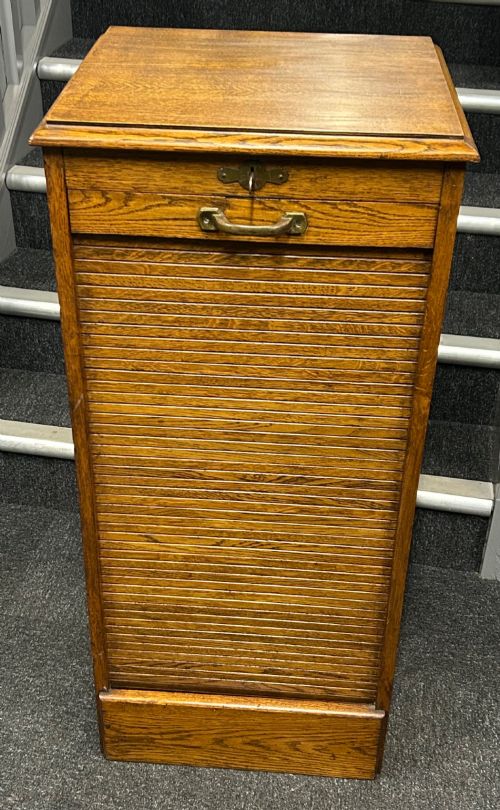
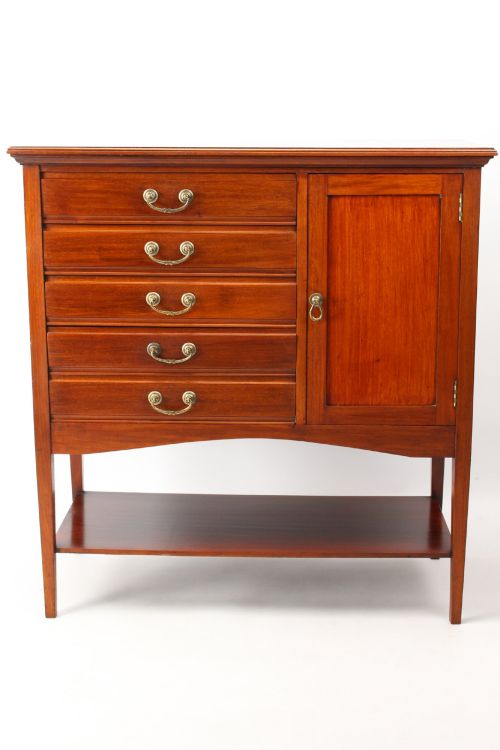
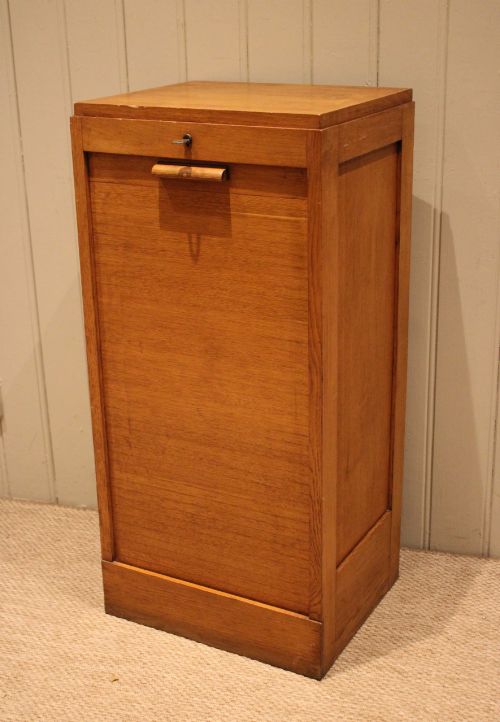
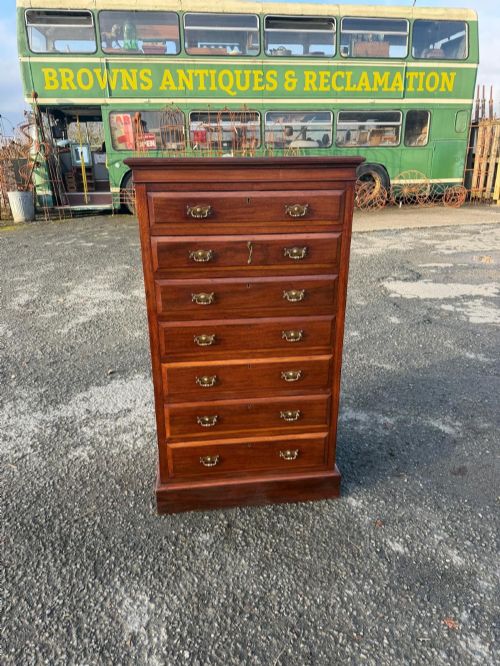
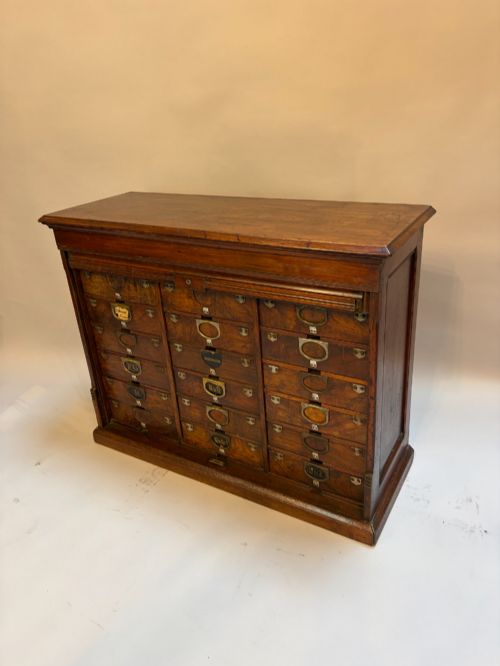
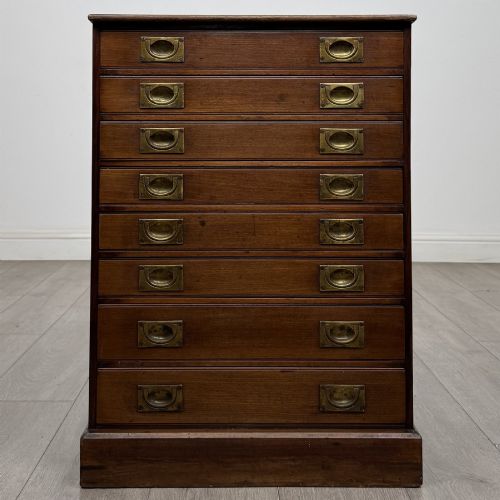
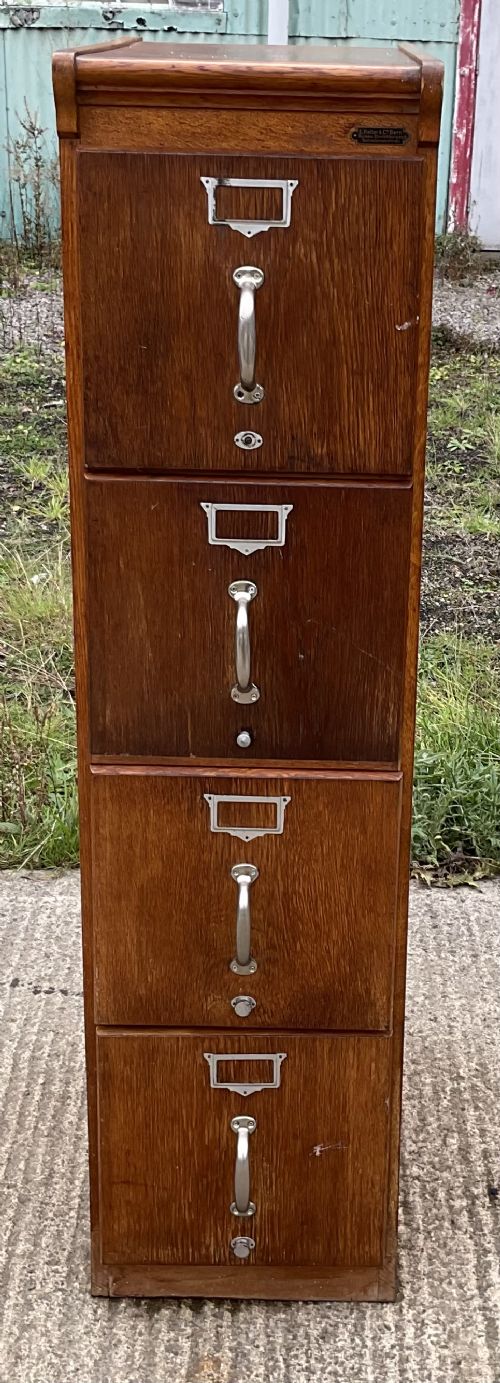
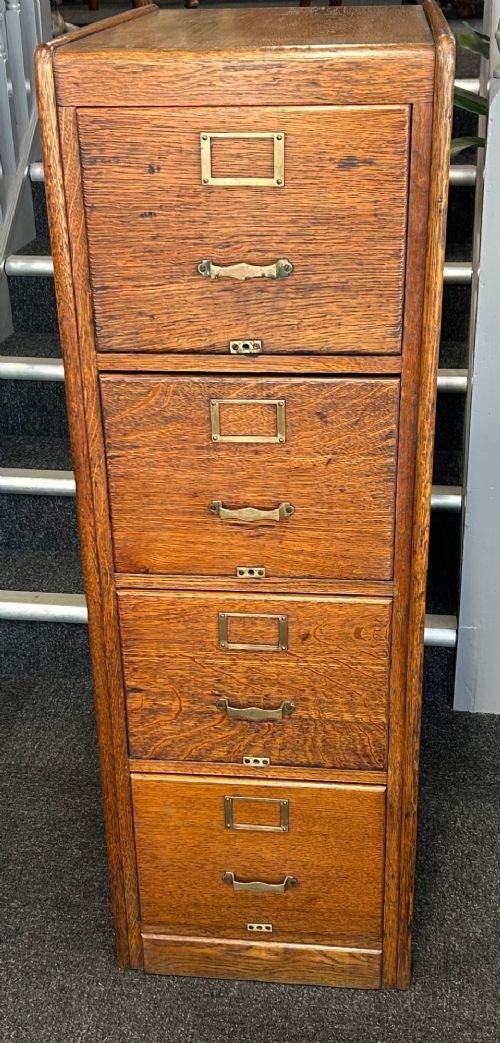
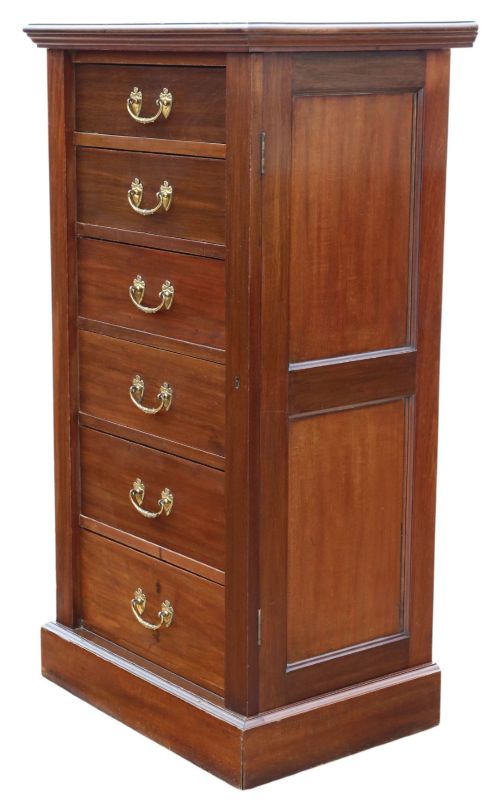
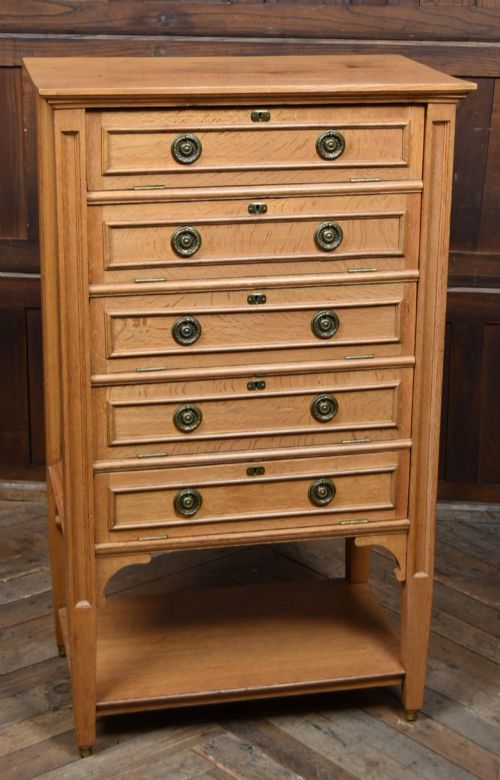
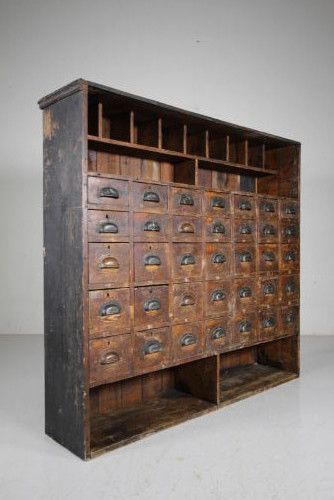
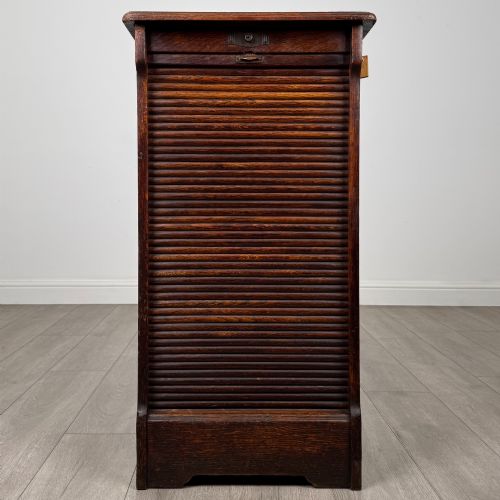
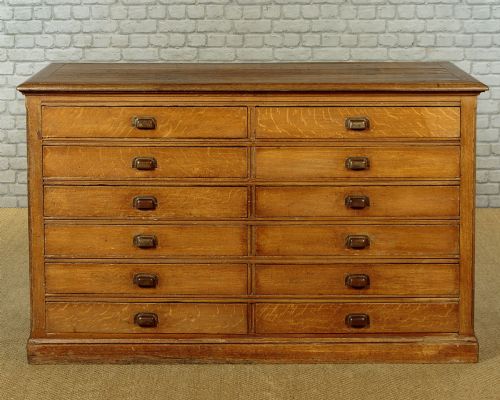
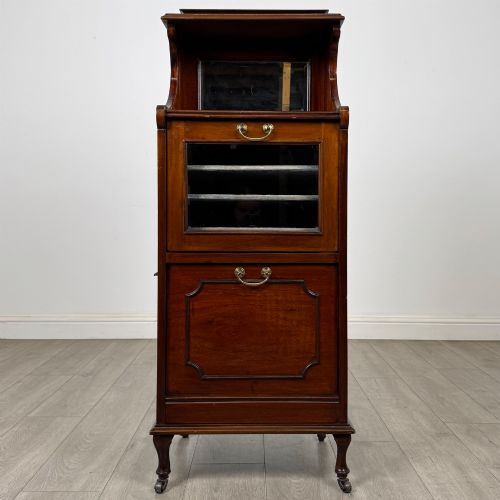
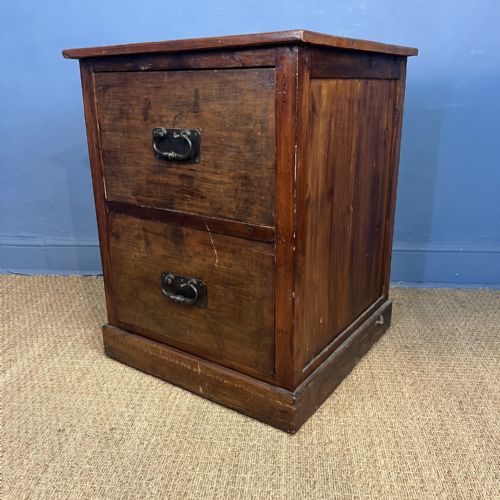
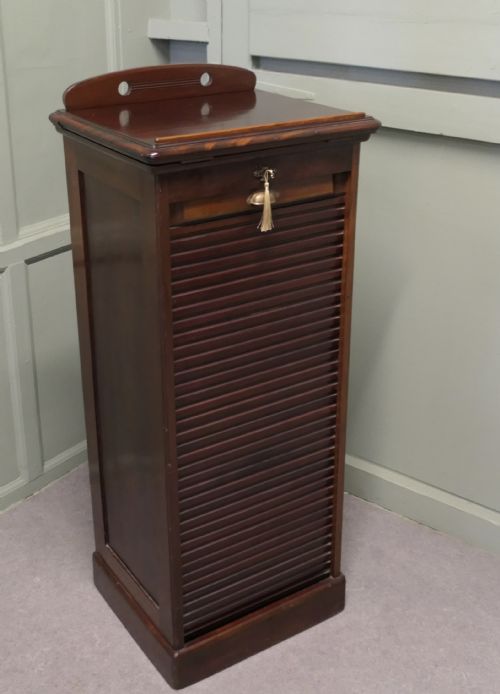
The pieces on this page appear in various forms such as vertical filing cabinets, tambour front office cabinets, banks of drawers, and collectors cabinets. Oak and mahogany versions dominate the selection, alongside examples in pine, walnut, teak, and rosewood.
Origins span English, French, and Anglo-Indian workshops, reflecting domestic, postal, and commercial uses. Buyers frequently encounter Edwardian oak models and 1930s tambour front designs among the current listings.
Materials and construction
Cabinet makers utilised hardwoods like oak, mahogany, walnut, and rosewood, alongside softer timbers such as pine. Construction methods often involved solid timber framing, dovetailed drawer joints, and fielded panels designed to withstand daily commercial use.
Hardware played a functional role, utilising brass handles, card holders, and patent locking mechanisms. Tambour fronts relied on individual wooden slats glued to canvas backing to slide smoothly around curved tracks.
Vintage Wooden Filing Cabinet Retail Price Guide 2026
Typical asking prices for vintage wooden filing cabinet among the pieces listed under this phrase on Sellingantiques today, from the lower quarter to the upper quarter. They describe what is for sale here now, not the wider market.
Several cabinets retain their original patent letter files, preserving the precise alphabetical dividers used by nineteenth-century correspondents.
Distinguishing quality
Quality rests in the choice of timber and the precision of the cabinetry, particularly in how drawers slide and how tambour doors operate along their tracks. Superior pieces display thoughtful secondary timbers, robust brass hardware appropriate to the period, and clean interior construction.
The integrity of mechanical elements, such as adjustable shelves and patent letter filing systems, separates standard utility furniture from finer workshop productions. The finish and grain matching across drawer fronts further distinguish the upper tier of pieces.
Amberg·D Napier and Sons
The Vintage Wooden Filing Cabinet Glossary
- Tambour
- A flexible shutter door formed of narrow wooden strips attached to a canvas backing, allowing it to slide around a curved track to conceal cabinet interiors. This mechanism proved popular in office furniture to save exterior space.
- Wellington chest
- A tall, narrow chest of drawers secured by a hinged locking side stile that fastens with a padlock or key. Originating in the nineteenth century, it provides secure vertical storage.
- Bank of drawers
- A multi-drawer storage unit designed for commercial, workshop, or library use to organise papers, cards, or specimens. These configurations often feature numerous shallow drawers.
- Collector's cabinet
- A specialised piece of cabinetry fitted with shallow drawers intended for sorting and housing specimens, letters, or sheet music. They frequently incorporate glazed doors or fine internal dividers.
Vintage Wooden Filing Cabinet: Frequently Asked Questions
How do I use a vintage filing cabinet today?
These cabinets adapt easily to modern home offices for storing stationery, paperwork, or craft supplies. Their classic timber finishes also allow them to function as sideboards or bedside tables in living spaces.
Larger banks of drawers suit kitchens or studios for organising larger quantities of items while adding distinct period character to the room.
How do tambour doors work?
Tambour doors consist of vertical wooden slats fixed to a flexible canvas or fabric backing. This construction lets the door slide smoothly along a concealed track around the side or back of the cabinet opening.
When opening the cabinet, the slats disappear into the body of the unit, keeping the mechanism compact and out of the way.
What is the difference between an Edwardian and a Victorian filing chest?
Victorian filing chests typically feature heavier proportions, darker mahogany or walnut timbers, and traditional brass pull handles. They reflect the formal office environments of the nineteenth century.
Edwardian examples often utilise lighter oak frames, simpler lines, and early patented filing mechanisms as office organisation evolved towards greater efficiency.
Are these cabinets suitable for standard paper sizes?
Many older filing chests and card indexes were built for specific historical paper sizes or correspondence systems rather than modern international standards. It is sensible to check the internal drawer dimensions against your intended use.
Collectors chests and music cabinets offer shallow drawers ideal for documents, notes, or flat ephemera rather than bulky folders.