
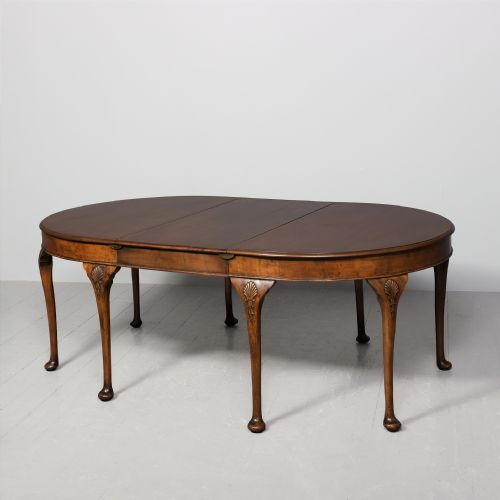


Vintage Wooden Extendable Table
A vintage wooden extendable table solves the perpetual dining dilemma by expanding to seat guests and shrinking back for daily family life.
Vintage Wooden Extendable Table
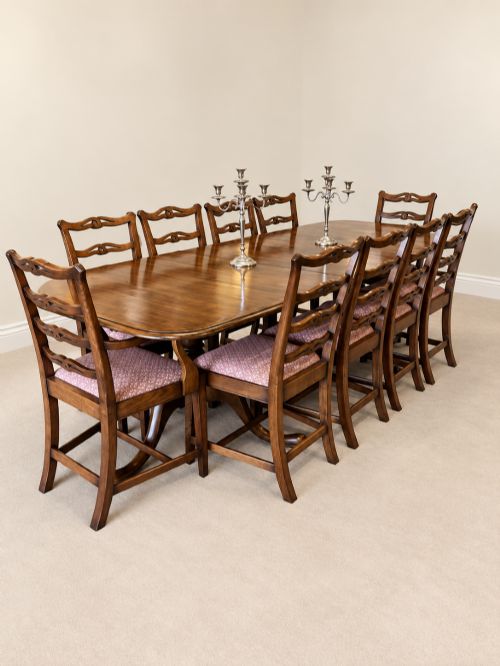
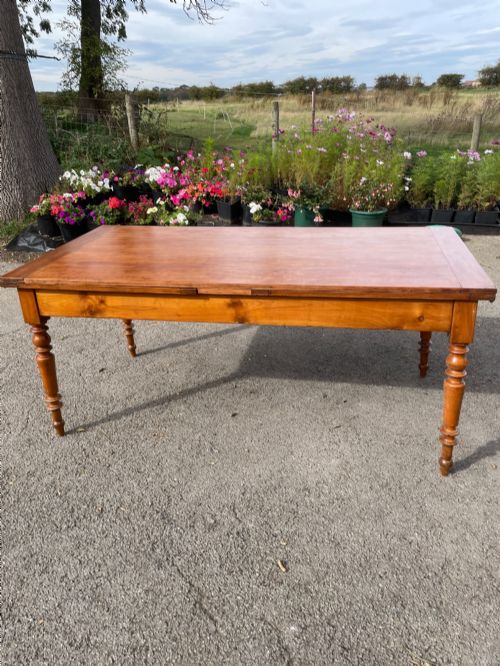
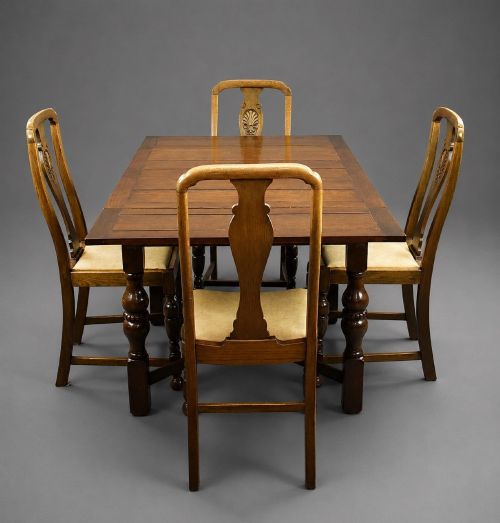
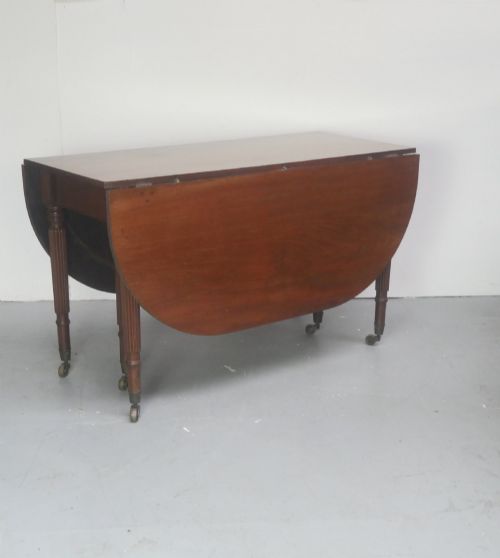
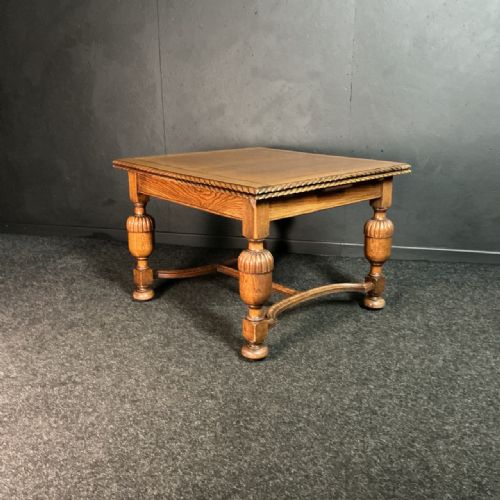
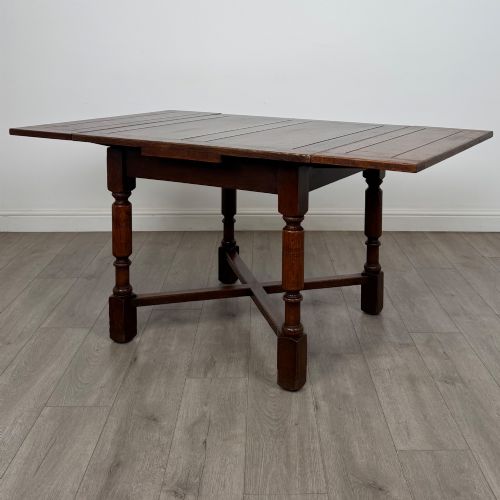
A vintage wooden extendable table covers a wide geographical and chronological span, stretching from Georgian examples down through Victorian, Edwardian, and 1920s workshops. Buyers searching for a vintage wooden extendable table encounter several distinct forms, including multi-pillar dining tables, drop-leaf designs, gateleg tables, and draw-leaf variants.
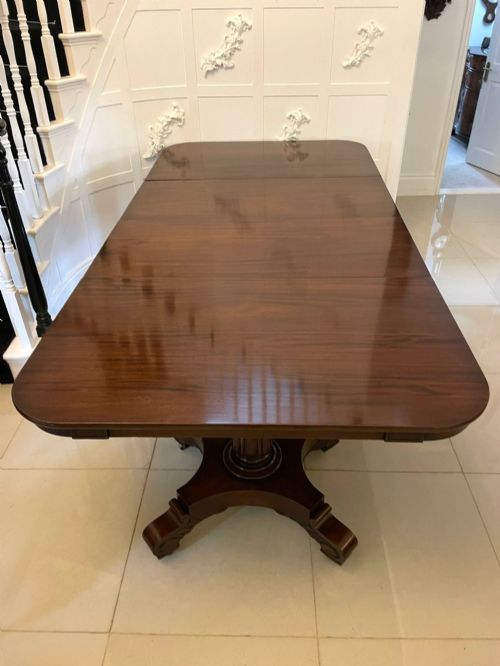
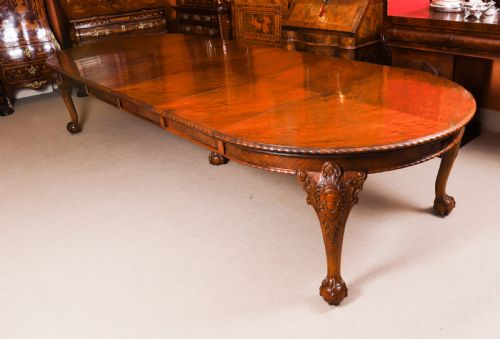
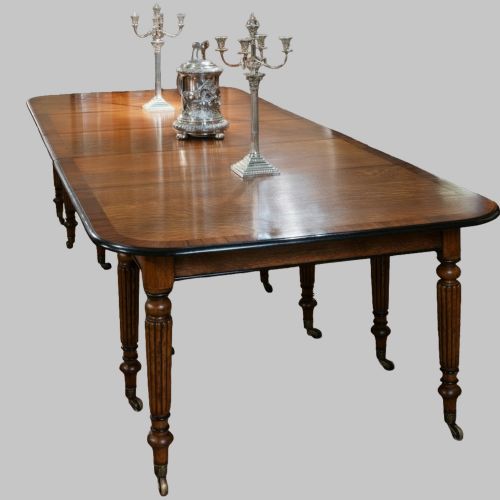
Mahogany and oak dominate the timber selection, frequently styled in Regency, Victorian, or revival modes like Chippendale and Queen Anne. The most common iteration on this page is the mahogany extending dining table, often incorporating drop leaves or extra leaves for length.
Materials and Technique
Cabinetmakers constructed these tables using solid hardwoods such as mahogany, oak, and walnut, frequently enhancing surfaces with burr walnut veneers or satinwood inlay. Brass components appear regularly, utilised for castors, feet, and leaf-inlaid details that assist the extension mechanism.
Extension systems rely on clever internal runners, draw leaves, drop leaves, or removable central leaves supported by multiple pedestals or gateleg framing. Carved bases, claw and ball feet, and turned legs provide stability beneath heavy hardwood tops.
Markers of Distinction
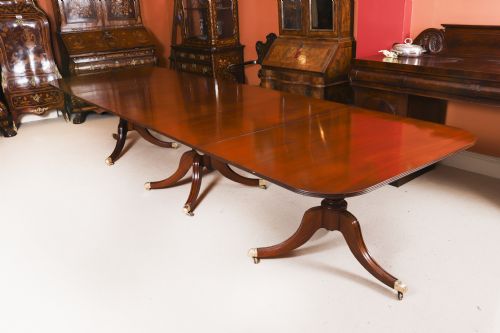
Quality rests in the selection of figured timber veneers, the precision of the joinery, and the smoothness of the extension mechanism. Heavy triple pedestal bases with finely carved claw and ball feet separate high-end dining tables from simpler utilitarian gateleg or farmhouse tables.
Renowned cabinetmakers like Maple & Co or Whytock & Reid demonstrate superior cabinetwork through refined proportions, solid brass fittings, and seamless integration of additional leaves.
Maple & Co·Whytock & Reid
The Vintage Wooden Extendable Table Glossary
- Draw Leaf
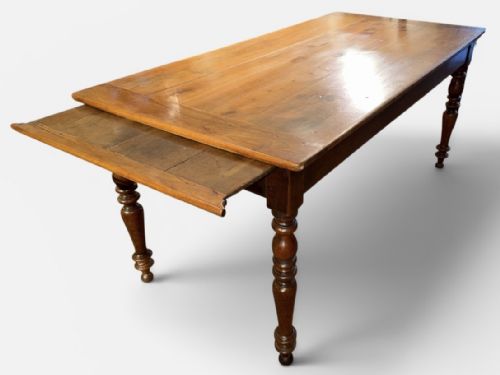
- A table design featuring leaves stored beneath the main surface that pull out to extend the top. This clever mechanism allows rapid adjustment without removing loose leaves.
- Pembroke Table
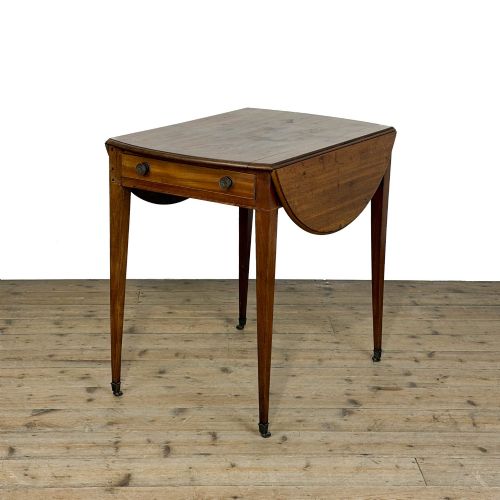
- A small occasional or dining table with hinged drop leaves on two opposing sides. These leaves fold down when space is tight.
- Triple Pedestal
- A heavy base construction supporting long dining tables using three separate pillars. Each pillar typically stands on tripod or quadruped brass-castor legs.
- Gateleg Table
- A table with hinged leaves supported by swing-out legs that resemble a opening gate. This form dates back centuries but appears in later revival pieces.
- D-End
- A dining table end shaped in a semi-circle, resembling the letter D. These sections often detach or fold away in multi-part extending tables.
Vintage Wooden Extendable Table: Frequently Asked Questions
How do extendable tables work?
Most antique extending tables use either draw leaves hidden beneath the top, drop leaves on hinges, or removable centre leaves supported by extension runners.
Larger pedestal versions pull apart centrally to accept extra timber leaves, which are then secured with brass clips underneath.
What wood are these tables made from?
Makers predominantly used mahogany, oak, and walnut, occasionally adding burr walnut veneer or satinwood inlay for decorative contrast.
Secondary timbers like fruitwood sometimes appear in smaller components or regional country pieces.
How do I date a wooden table?
Dating relies on architectural styles, leg designs like Regency reeding or Victorian claw and ball feet, and construction methods.
Makers' marks or stamps from firms like Maple & Co or Whytock & Reid also help pinpoint precise decades.
Can I use an extendable table daily?
These hardwood tables are built for heavy everyday use and withstand regular dining, family meals, and workspace tasks.
Protecting the polished timber surface with heat mats and coasters prevents water rings and accidental damage.