


Vintage Wooden Dumb Waiter
A vintage wooden dumb waiter brings tiered practicality to the dining room or parlour, offering multiple tiers for serving or display.
Vintage Wooden Dumb Waiter
When you search for a vintage wooden dumb waiter, you encounter tiered serving stands, revolving lazy susans, and multi-shelf occasional furniture designed for practical use. The selection spans periods from the Georgian and Regency eras through the Victorian and Edwardian decades up to the 1920s.
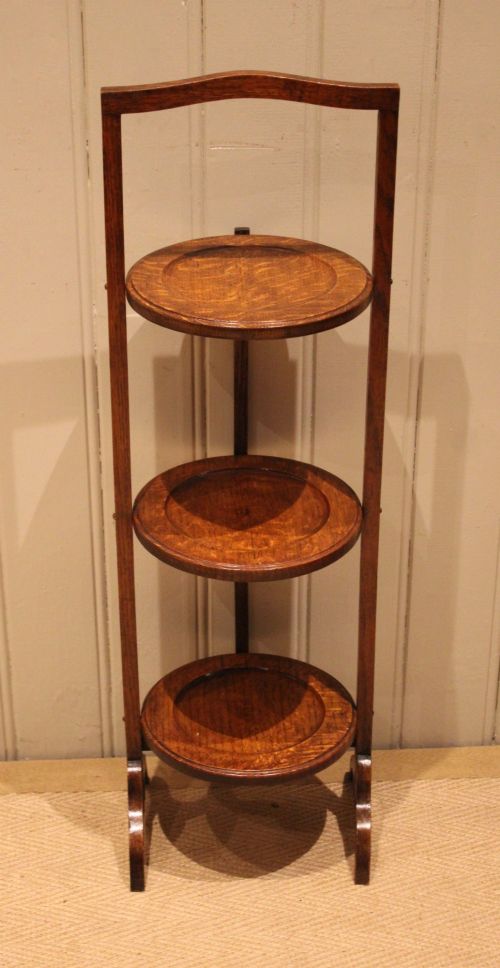
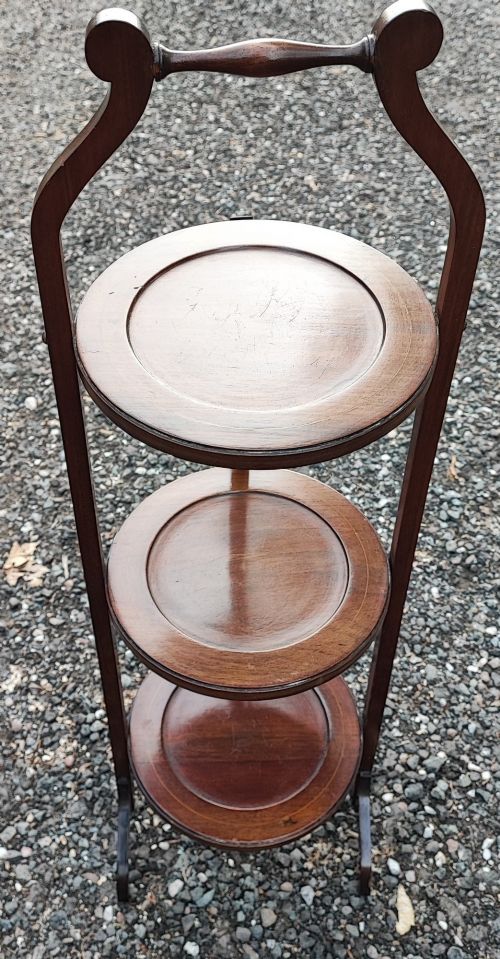
You are most likely to meet three-tier cake stands in mahogany or oak, alongside revolving lazy susans and traditional dumb waiters with graduating shelves. These forms originate from English workshops and include styles such as Sheraton Revival and English Country.
The objects range from folding cake stands and occasional tables to serving trays and tiered buffets. Each piece serves a distinct function for holding items near a table or display area.
Materials and construction
Cabinet makers utilised dense hardwoods including mahogany, oak, rosewood, and satinwood to build these tiered structures. Brass fittings frequently secure joints, handles, and revolving mechanisms on lazy susans and dumb waiters.
Surfaces often feature intricate satinwood inlay, boxwood stringing, and detailed carved wood elements. Folding frames rely on precise wooden hinges and joints to allow tiers to collapse flat when not in use.
The listings span the Georgian, Regency, Victorian, and Edwardian periods, featuring materials such as mahogany, oak, rosewood, and brass.
What separates the finest examples
Quality rests upon the selection of timber figures and the crispness of any carved decoration or inlay work. Mahogany with rich grain patterns and well-matched satinwood banding distinguishes finer pieces from plain utility items.
Mechanical operation marks the difference in revolving items like lazy susans and dumb waiters, where smooth rotation without friction signifies superior assembly. The stability of multi-tiered frames and the precision of folding hinges indicate higher standards of cabinet making.
The Vintage Wooden Dumb Waiter Glossary
- Dumb waiter
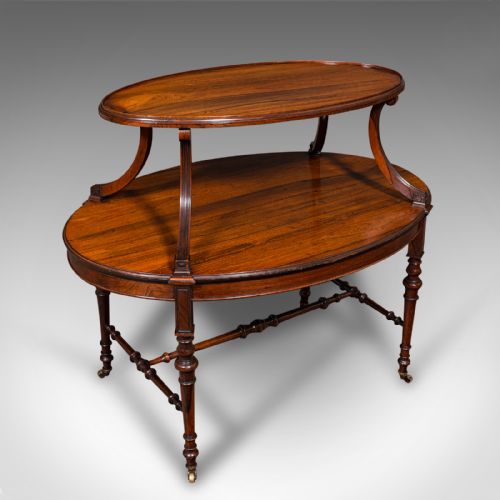
- A freestanding piece of furniture with multiple shelves or tiers used for serving food or holding tableware without the need for a servant. These items appear in various heights and tier counts.
- Lazy Susan
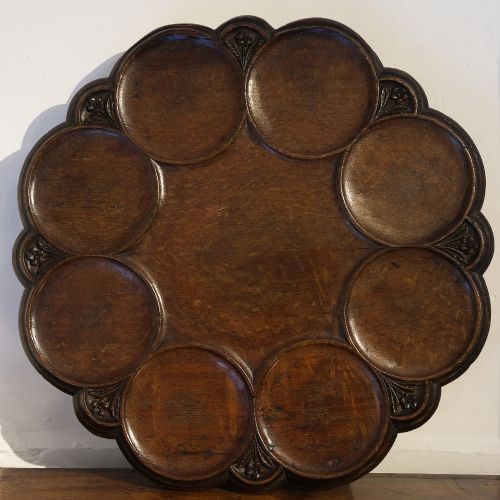
- A revolving tray or tabletop placed on a pivot to allow food or items to be easily shared around a group. They frequently feature carved wood or inlaid surfaces.
- Sheraton Revival
- A late nineteenth-century design style inspired by the furniture of Thomas Sheraton, characterised by refined proportions and delicate inlay. Pieces in this style often use mahogany and satinwood.
- Inlay
- A technique where pieces of contrasting timber such as satinwood or boxwood are inserted into recesses in the primary wood surface to form patterns. It adds decorative contrast to table tops and tiers.
Vintage Wooden Dumb Waiter: Frequently Asked Questions
How were dumb waiters used?
Dumb waiters served as auxiliary tables in dining rooms, holding extra dishes, wine bottles, and tableware close to the main table. This allowed diners to help themselves during a meal without constant interruption.
Over time, the form evolved to include tiered cake stands and revolving party turntables used for serving afternoon tea and refreshments.
What is the difference between a dumb waiter and a lazy susan?
A traditional dumb waiter is a vertical piece of furniture with two or three stacked stationary shelves supported by a central pillar or legs. It stands beside a table or in a corner to hold items.
A lazy susan is a low, flat revolving tray designed to sit in the centre of a table or surface so dishes can spin within reach of everyone seated.
How do I date an Edwardian cake stand?
Edwardian pieces date from the reign of King Edward VII between 1901 and 1910, though the style extends slightly either side. They frequently exhibit lighter mahogany timbers and subtle satinwood inlay work.
Examining the construction methods, such as screw types and the neatness of the folding mechanism, helps confirm this early twentieth-century period.
Can I use these pieces for daily serving?
These items are sturdy enough for regular use in serving afternoon tea, holding small plants, or displaying decorative objects in a living space. Their tiered designs make efficient use of floor space in smaller rooms.
Care should be taken with moisture and heat to protect the polished wood surfaces and delicate inlay.